
Claves
The Art of Narrative Architecture
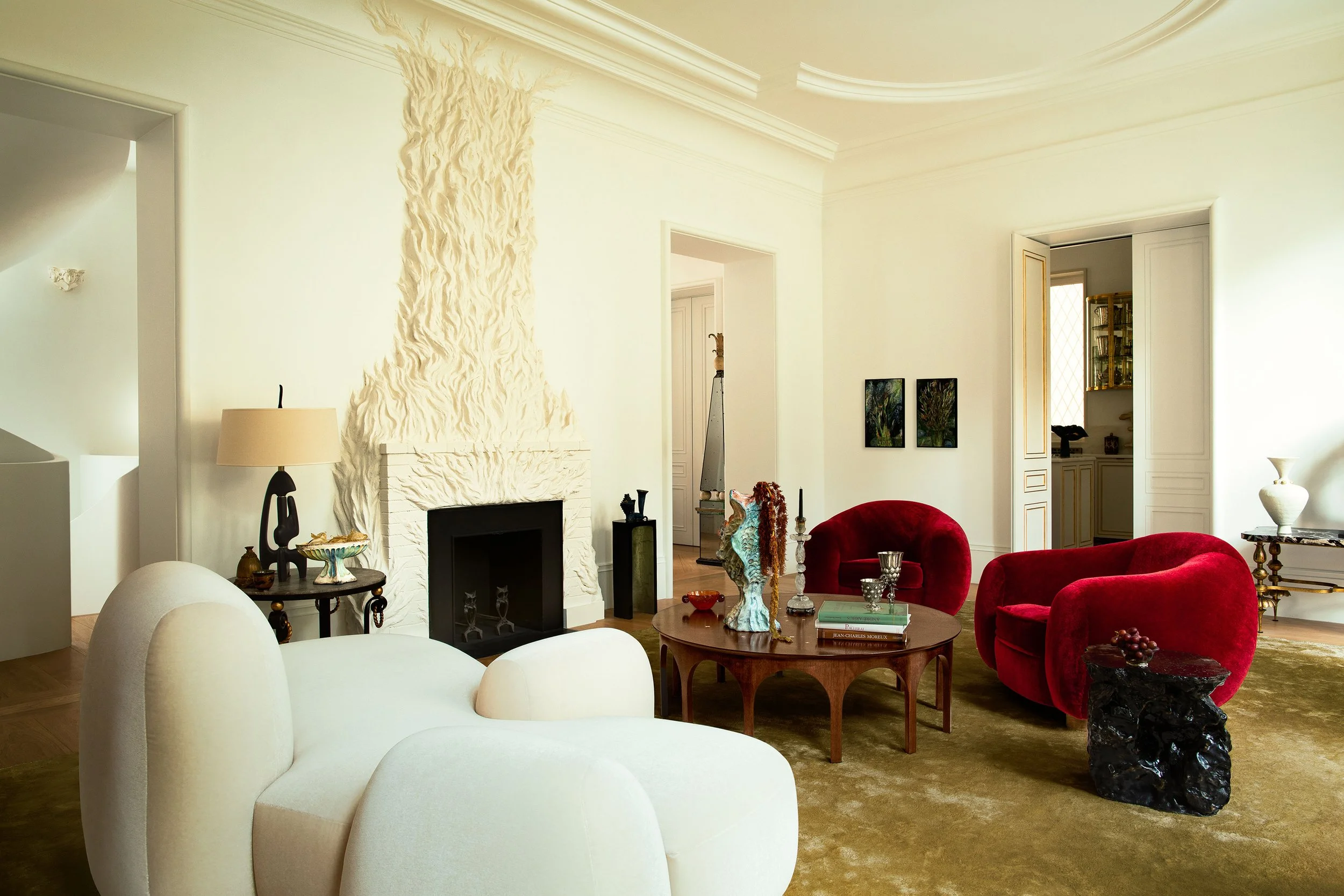
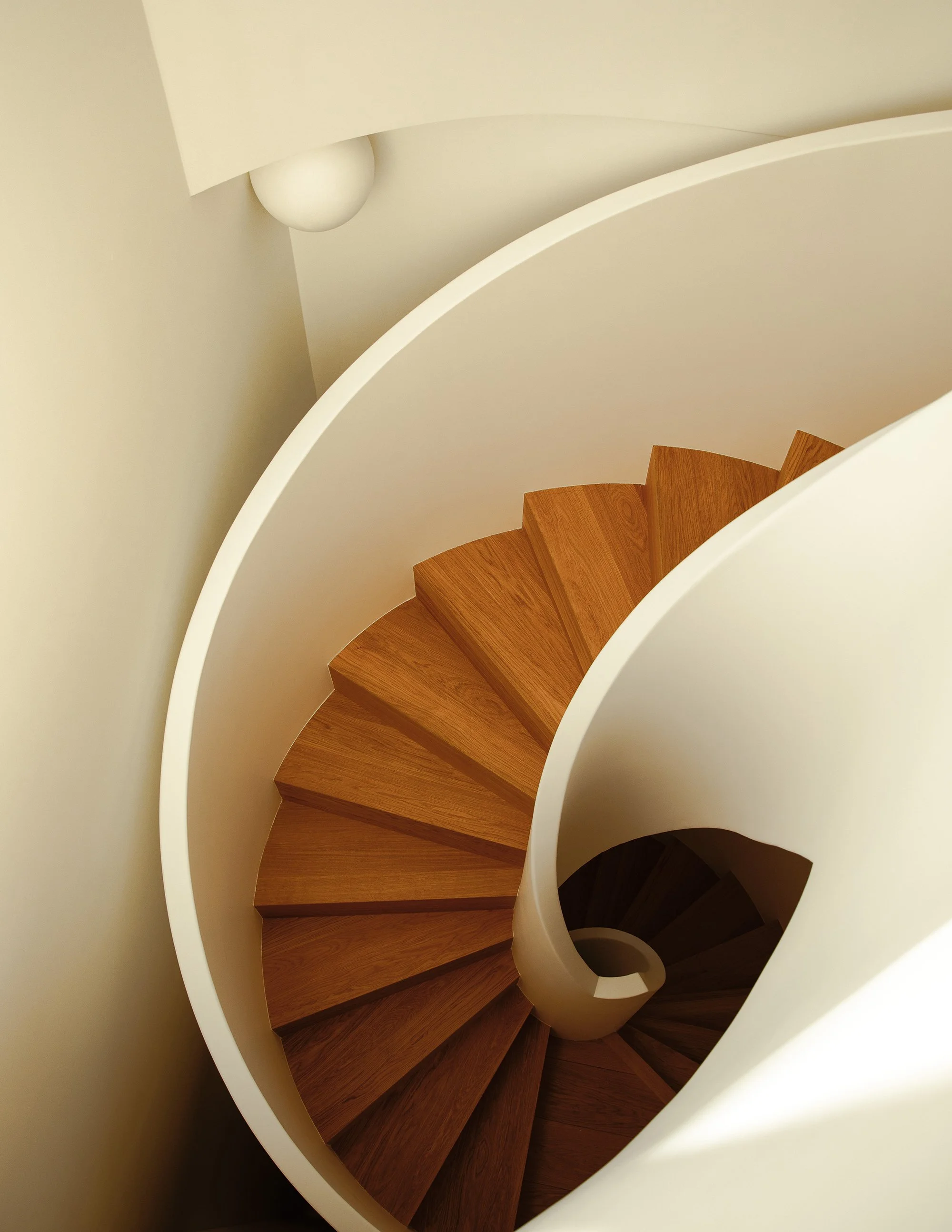
Meet Laure Grave and Soizic Fougeront, founders of Claves, the Parisian interior architecture agency. Laure and Soizic have established a signature style rooted in the tradition of French decorative arts, focusing on “narrative vision” in design. In this interview, they share the creative journey behind the Guignier residence. This project masterfully blends classical charm with a contemporary spirit, notably featuring the magnificent sculptural staircase and the iconic Poillerat wrought iron grille that set the tone for the entire house. Join us as they tell us all about their collaborative process, their commitment to working with exceptional artisans, and their philosophy for transforming high-level aesthetic refinement into a truly warm and lived-in home.
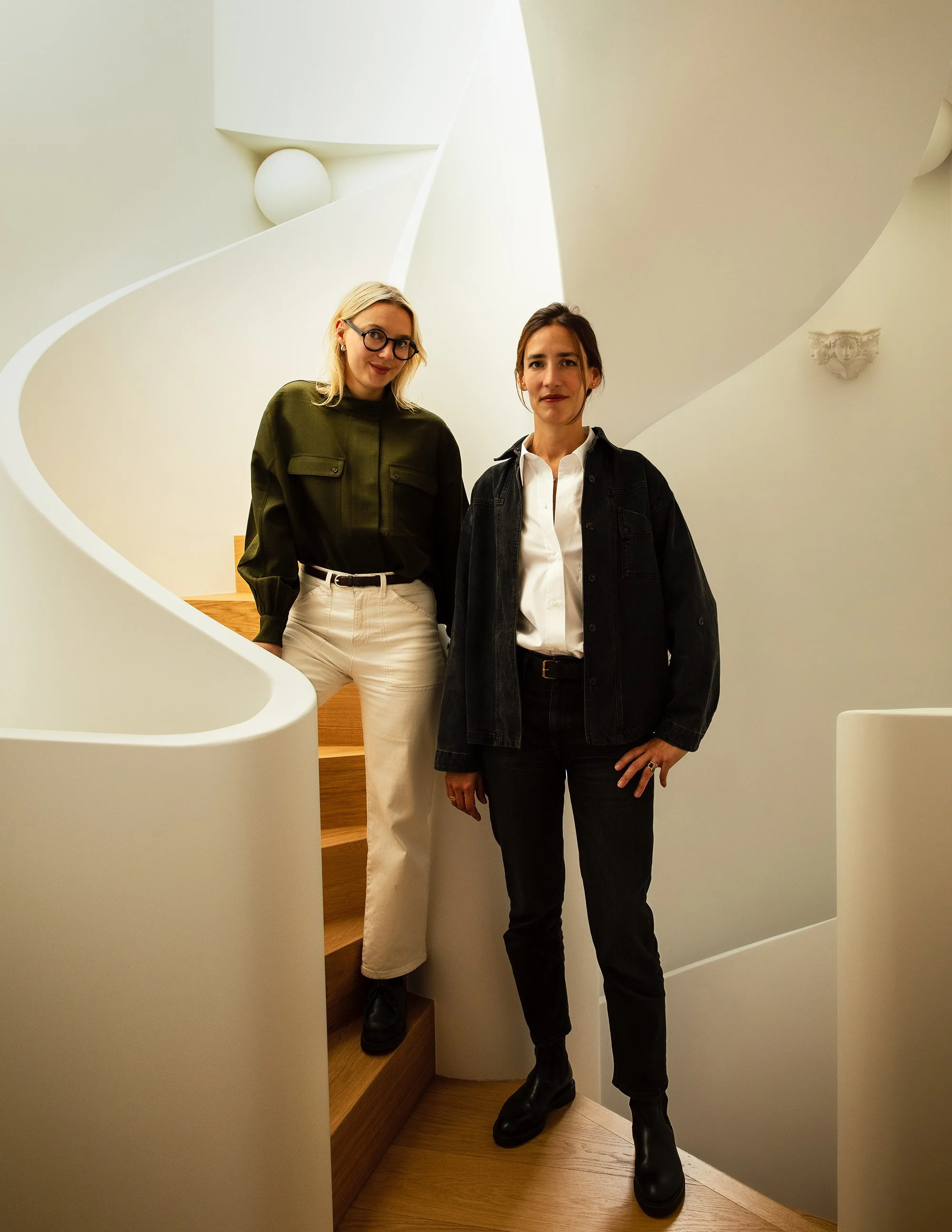
Hello Laure and Soizic, how are you? Can you tell us a bit about yourself, who you are, where you’re based, and what you do?
LAURE: Soizic and I met at Pierre Yovanovitch’s office, where we worked for several years. I spent 7 years with Pierre, and in the final years, I was in charge of the artistic direction of architectural projects, as well as the design of the furniture collections. Soizic, for her part, coordinated the furniture business and the production of the collections.
One day, I felt the urge to spread my wings and explore different decorative registers. Hugo’s project gave me this opportunity, and I gradually left the agency to set up my own business. Soizic then proposed a partnership, and I was delighted. We have two very different profiles: mine is very creative, with a fairly classic background from an applied arts school and a degree from the École Camondo, while Soizic has a more generalist and business profile, having studied at Sciences Po and then worked in consulting for several years.
Our complementary skills have allowed us to quickly structure the agency to work on large-scale projects. We now have our offices in the 2nd arrondissement of Paris with a great team of freelancers who support us on various projects.
SOIZIC: We undertake both private residential and “contract” projects (restaurants, hotels, boutiques...). We greatly appreciate this diversity, which offers very different creative perspectives and human relationships!
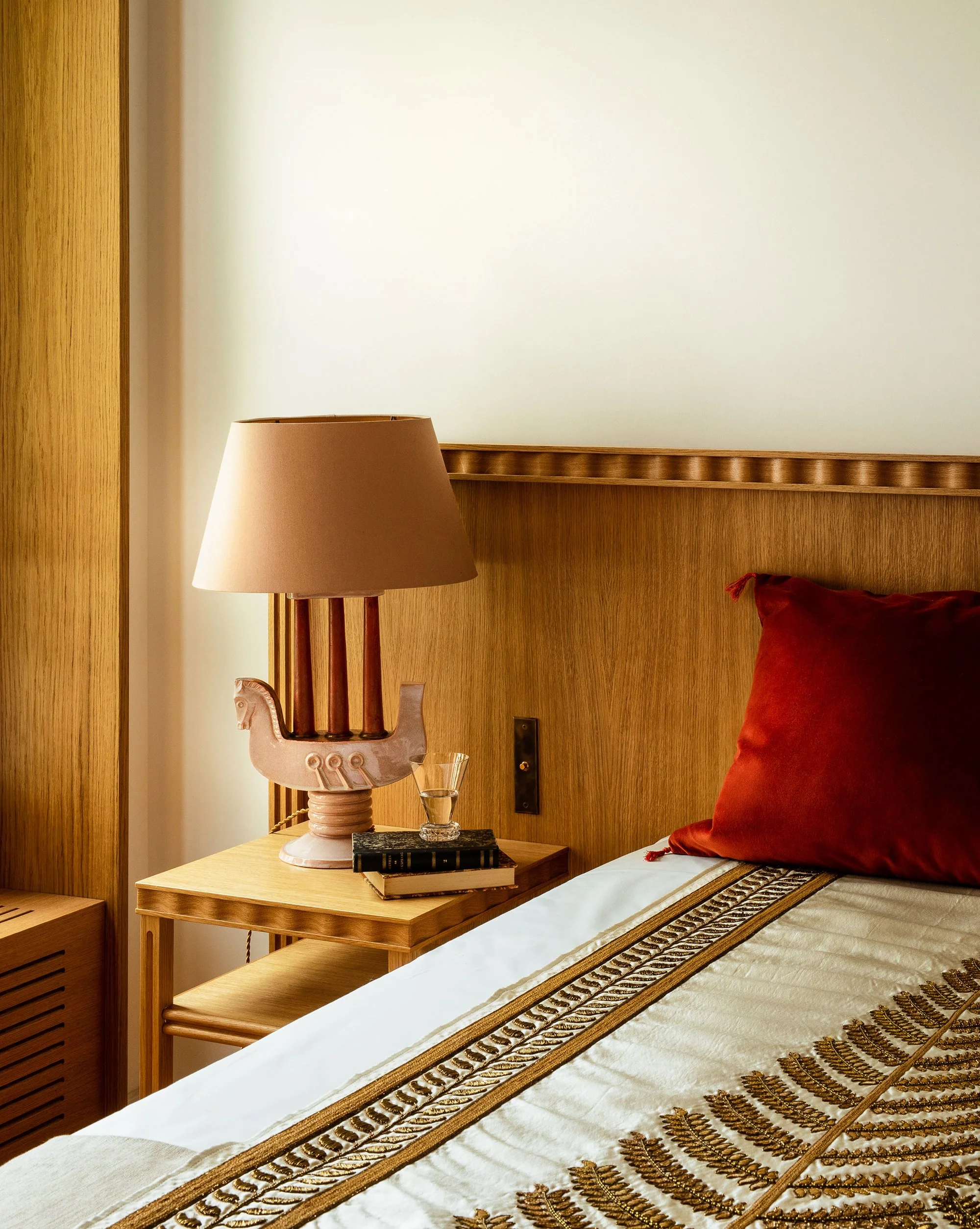
The Guignier project masterfully blends classical charm with a contemporary spirit, having been designed for a couple passionate about art and heritage. How did your initial discussions with the owners, particularly Hugo Marchand, influence this unique vision, and what specific elements did you prioritize to achieve this balance?
LAURE: I met Hugo at a party hosted by a mutual friend. We immediately connected on a friendly level and laughed a lot that evening. Very quickly, we saw each other again, and Hugo told me about this house in the 20th arrondissement, where the work on the upward extension had already begun with a DPLG architect.
Hugo and Arturo are great collectors of pieces from the 1930s and 1940s, and we share this taste for the refinement of that period. While familiarizing ourselves with this collection, we also had to define the layout and the circulation. We redefined the spaces, created sight lines (perspectives), positioned the sculptural staircase, knocked down walls, and enlarged some windows so that the interior spaces would articulate correctly and reveal the house's full potential.
This general restructuring of the house allowed us to combine very contemporary elements (like the staircase, ceiling details, and staff skylights) with classical elements echoing original cornices or architectural details.
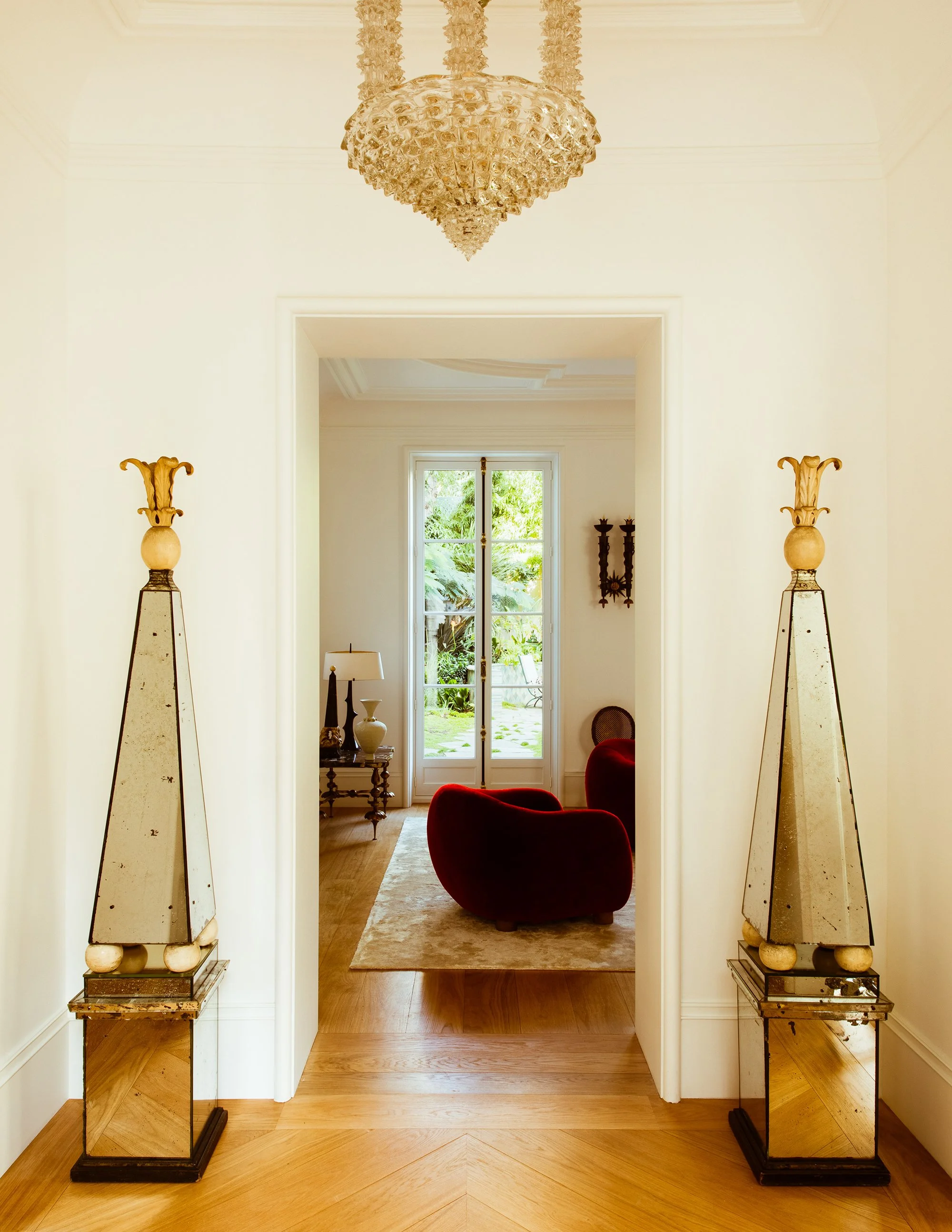

It has been noted that the renowned Poillerat wrought iron grille was one of the first elements chosen, setting the tone for the entire project. Could you elaborate on how a single piece became such a central motif, influencing various architectural features throughout the house? What challenges or creative opportunities did this present?
LAURE: Indeed, this famous grille set the tone for the house. It’s true that we like to rely on certain decorative elements to develop an ornamental register in our projects. Hugo bought this grille very early in the creative process, so we instinctively adopted the diamond/lozenge pattern. It appears on the radiator cover grilles, in the brass pattern of the winter garden fittings, in the terracotta of the garden, and even in the mosaic decor of the exterior plinth of the winter garden.
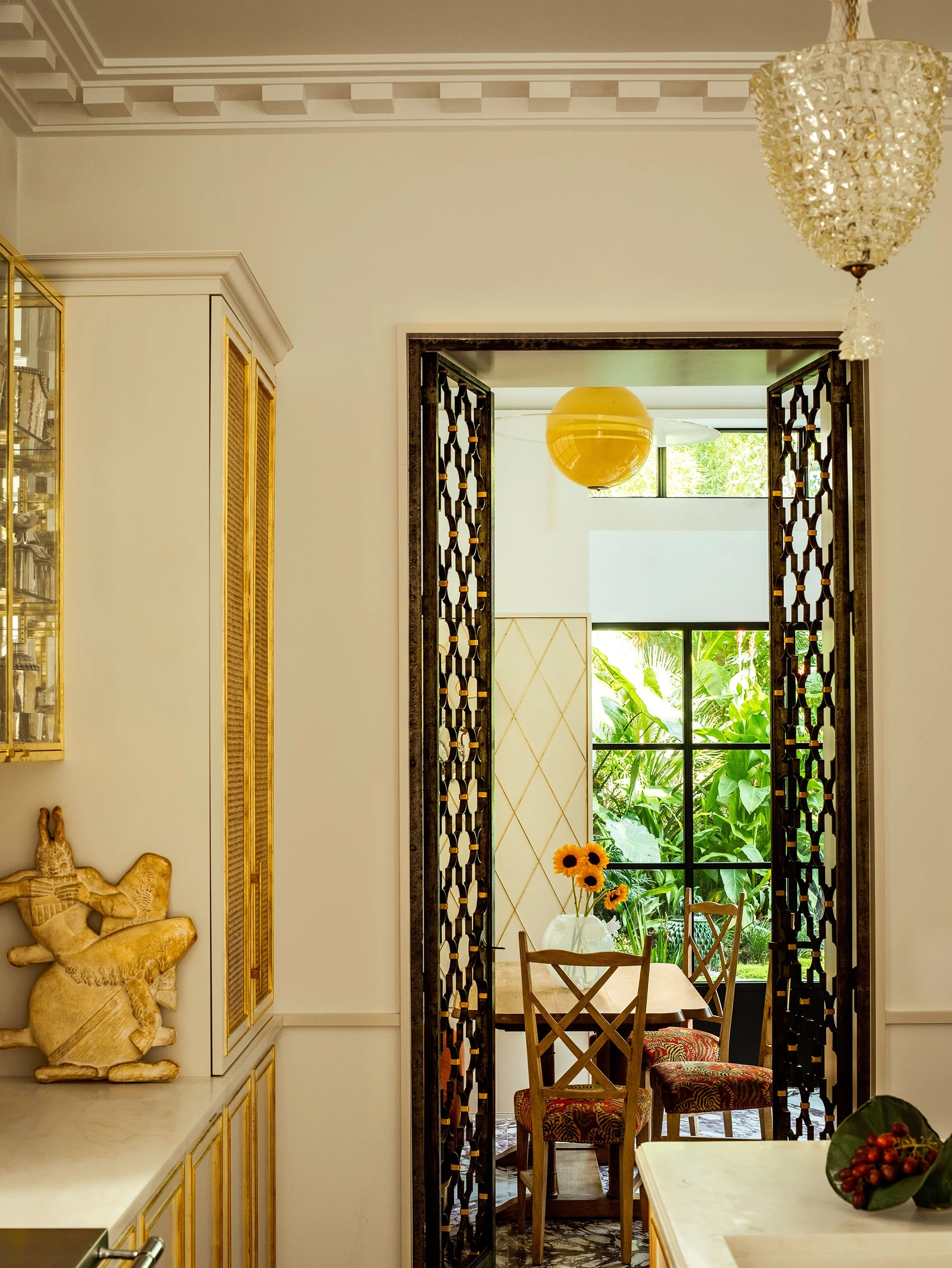
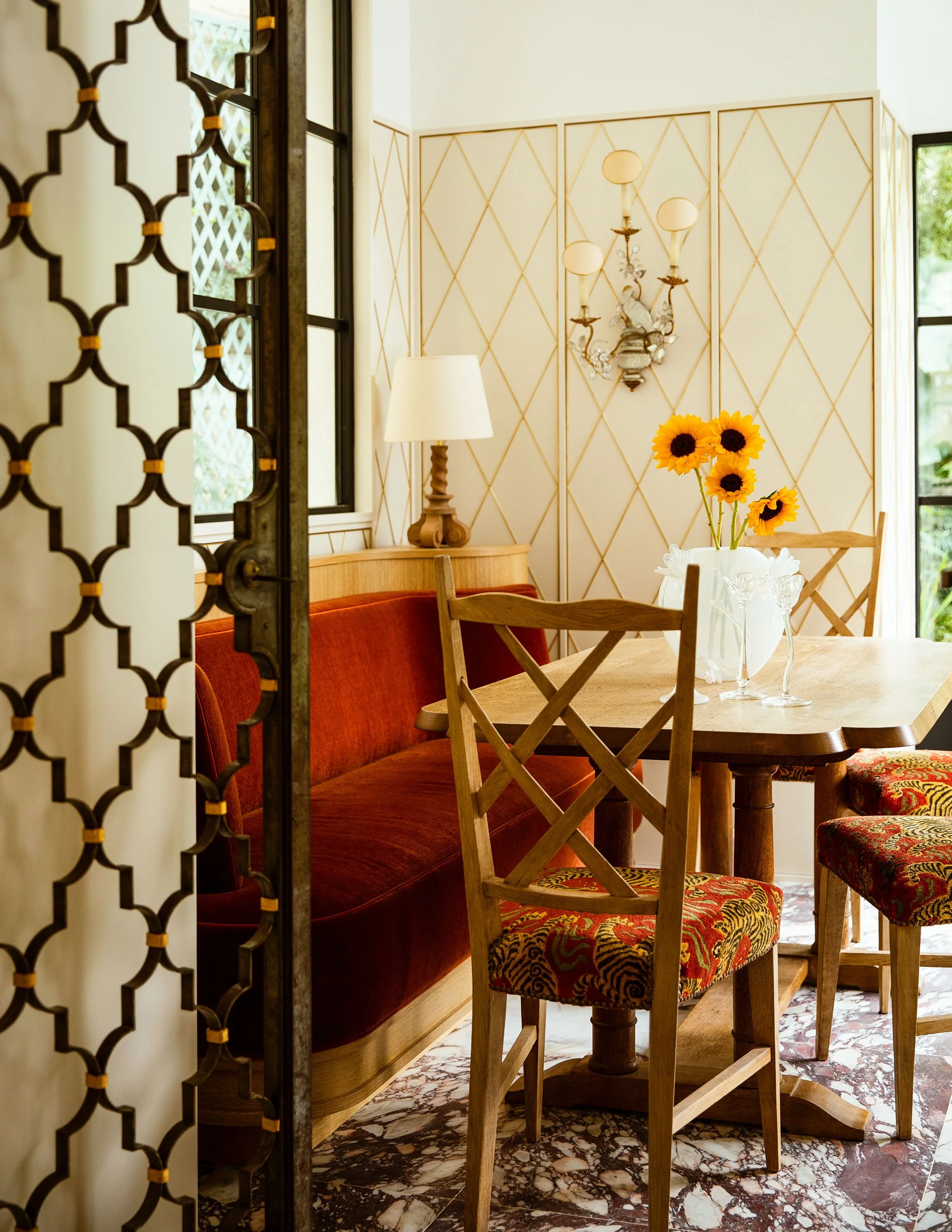
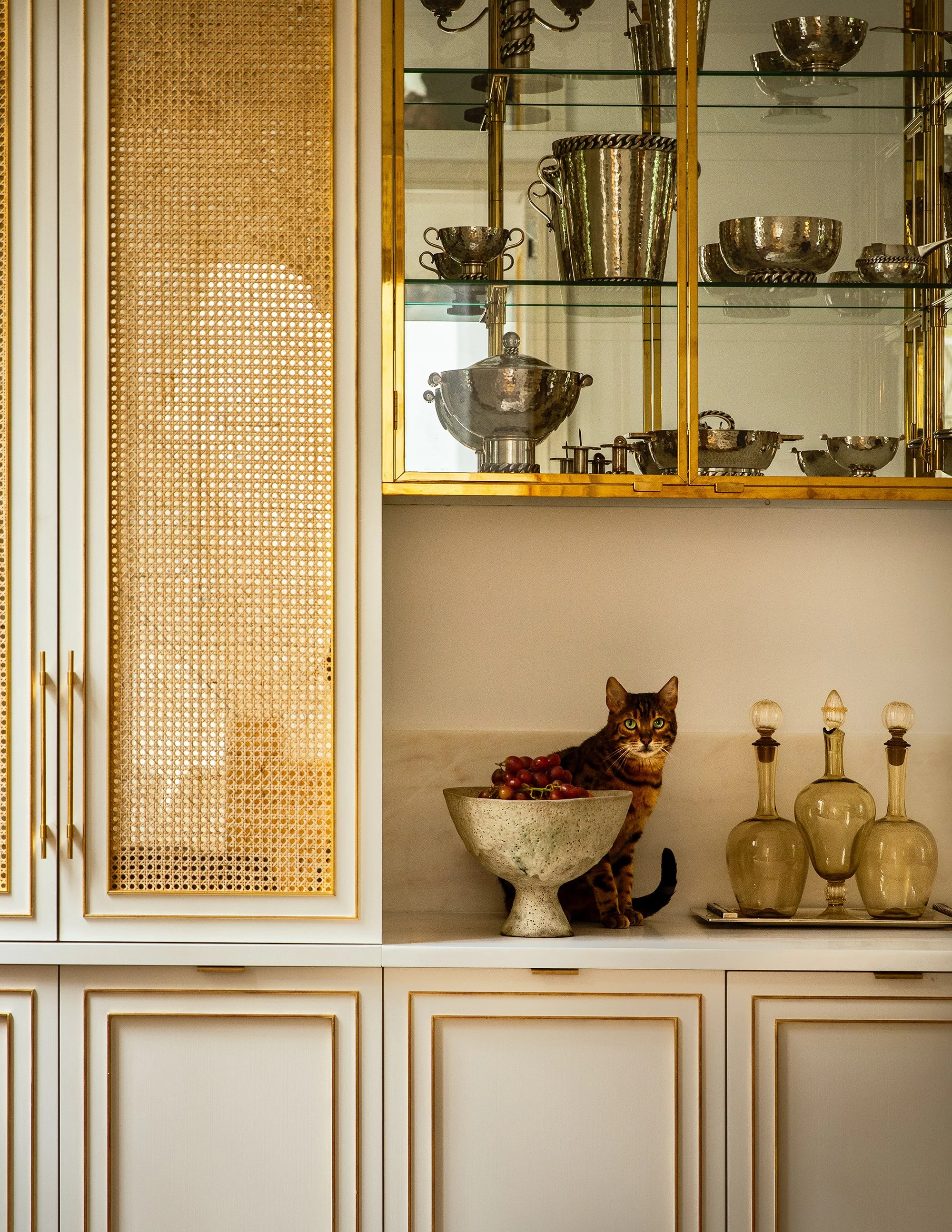
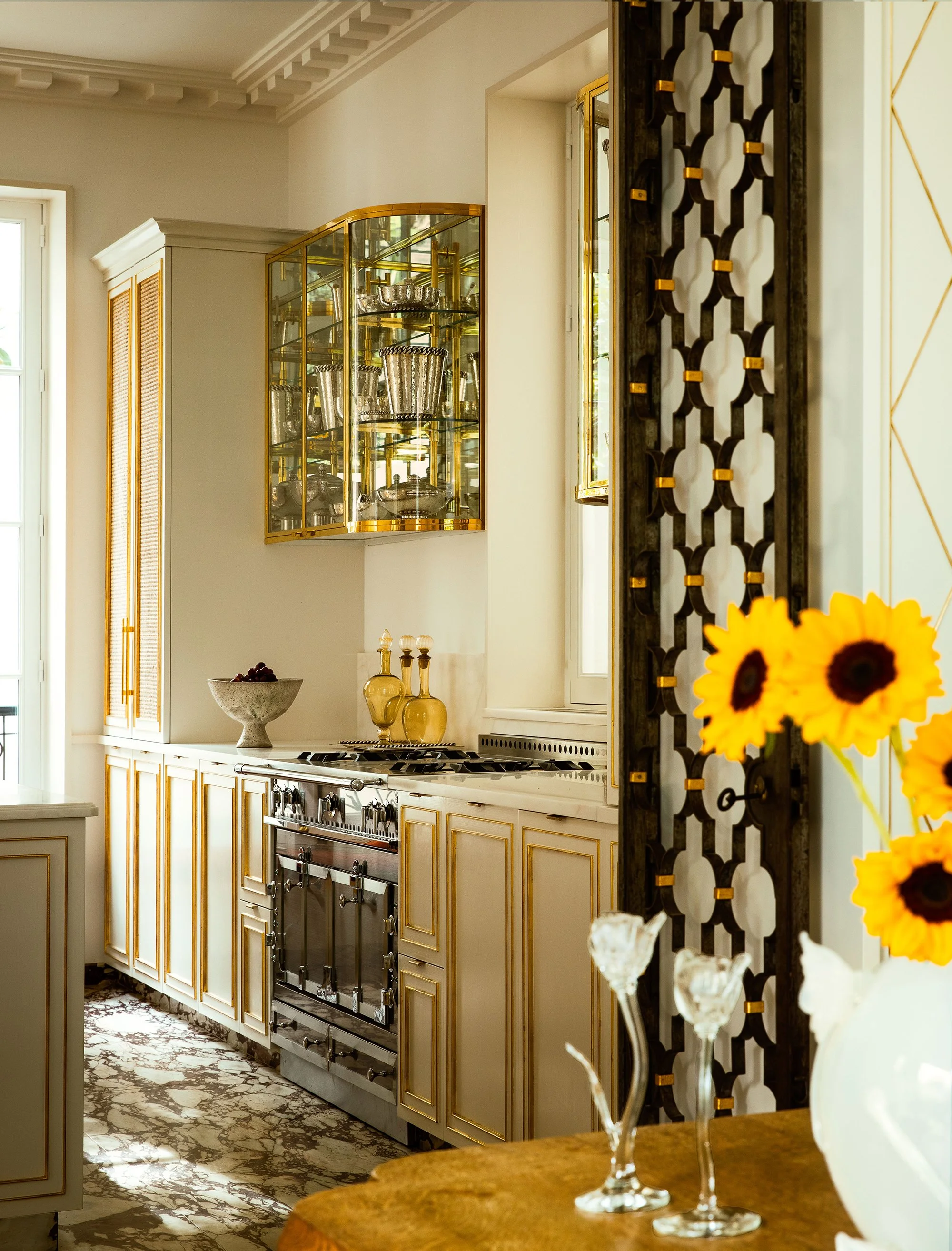
This project featured a strong emphasis on collaboration with exceptional artisans, such as Maison Chabot and Mineral Expertise. How do you approach selecting these artisans, and what was the most rewarding aspect of working with them on the Guignier residence?
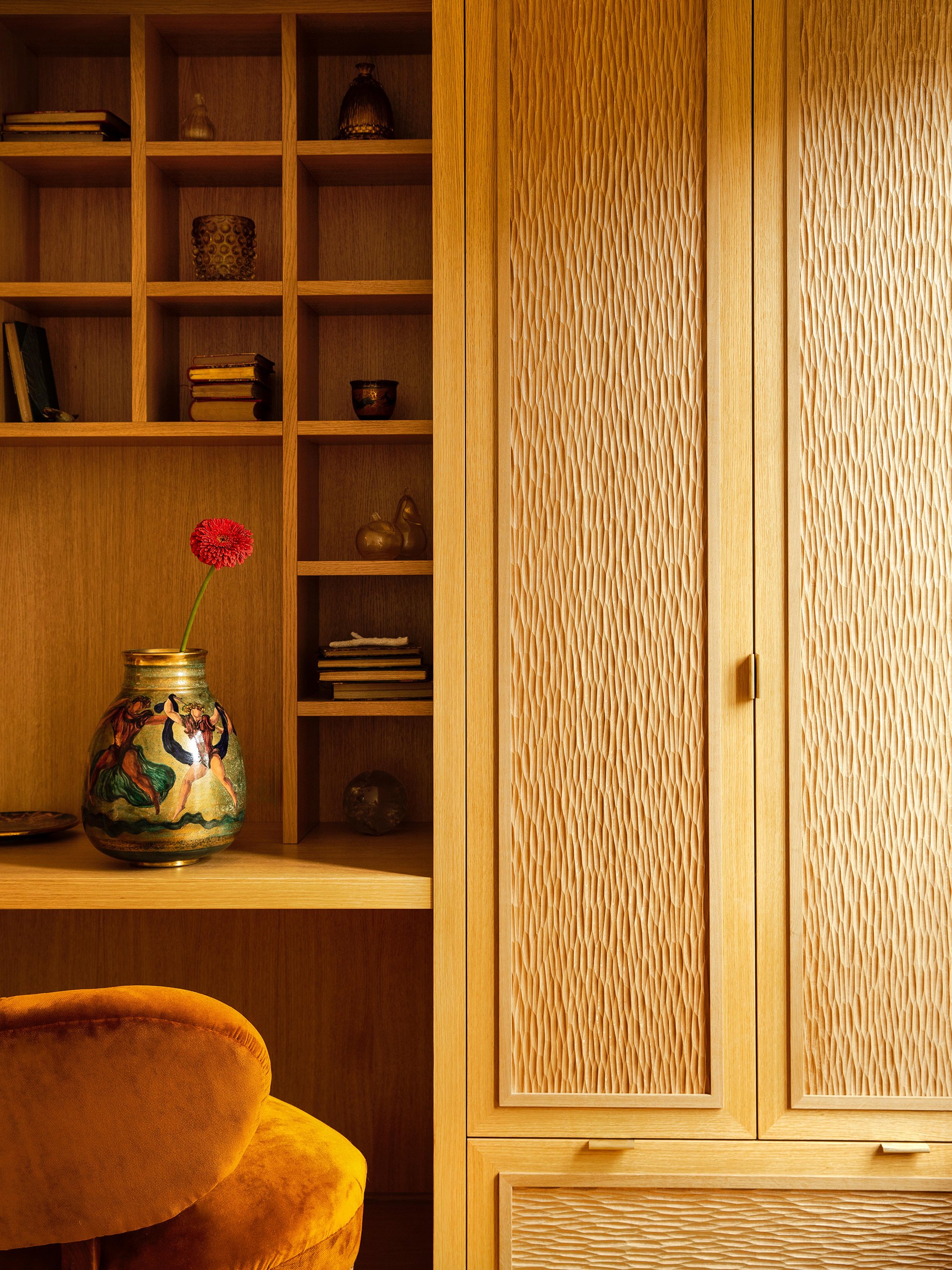
LAURE: An architectural project only comes to life thanks to a multitude of protagonists working on it. On this project, we were fortunate to work with exceptional artisans. Throughout the design process, we were in discussion with the various workshops to adjust feasibility and refine the materials. Hugo was very involved in these meetings with the artisans. He himself is used to working with talented artisans for the making of shoes. All these exchanges greatly nourished the project, which was refined thanks to the expertise of the companies that worked on it.
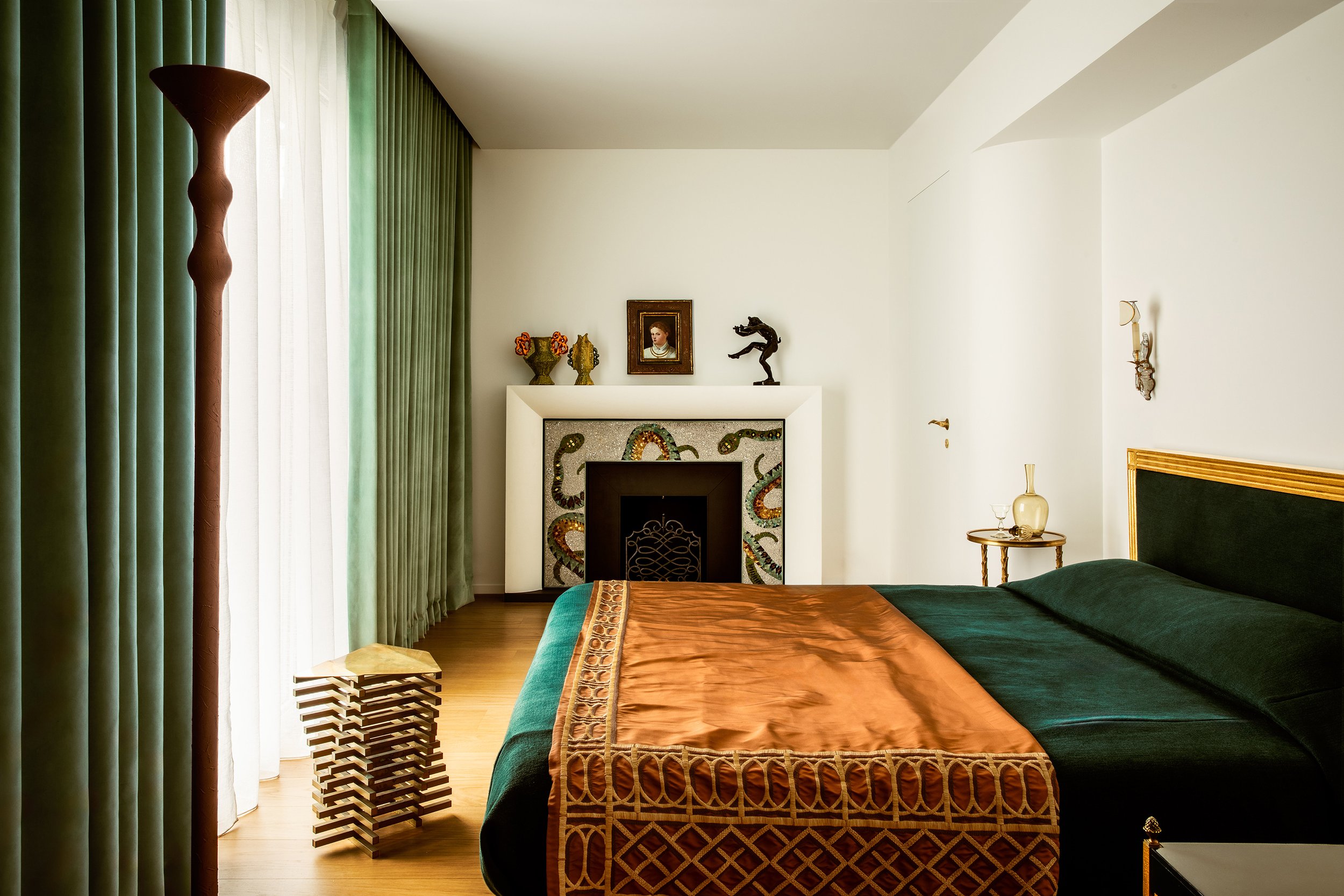
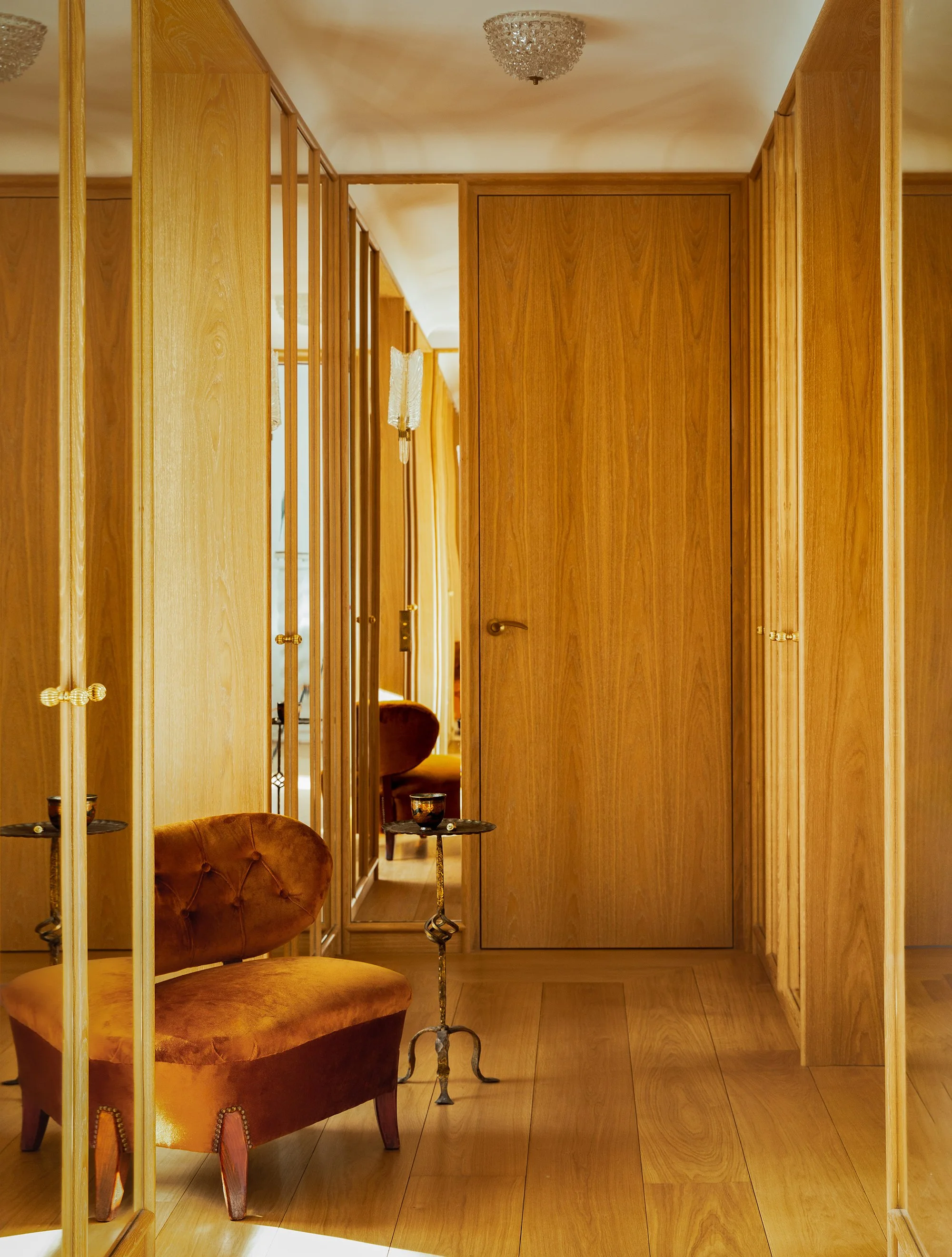
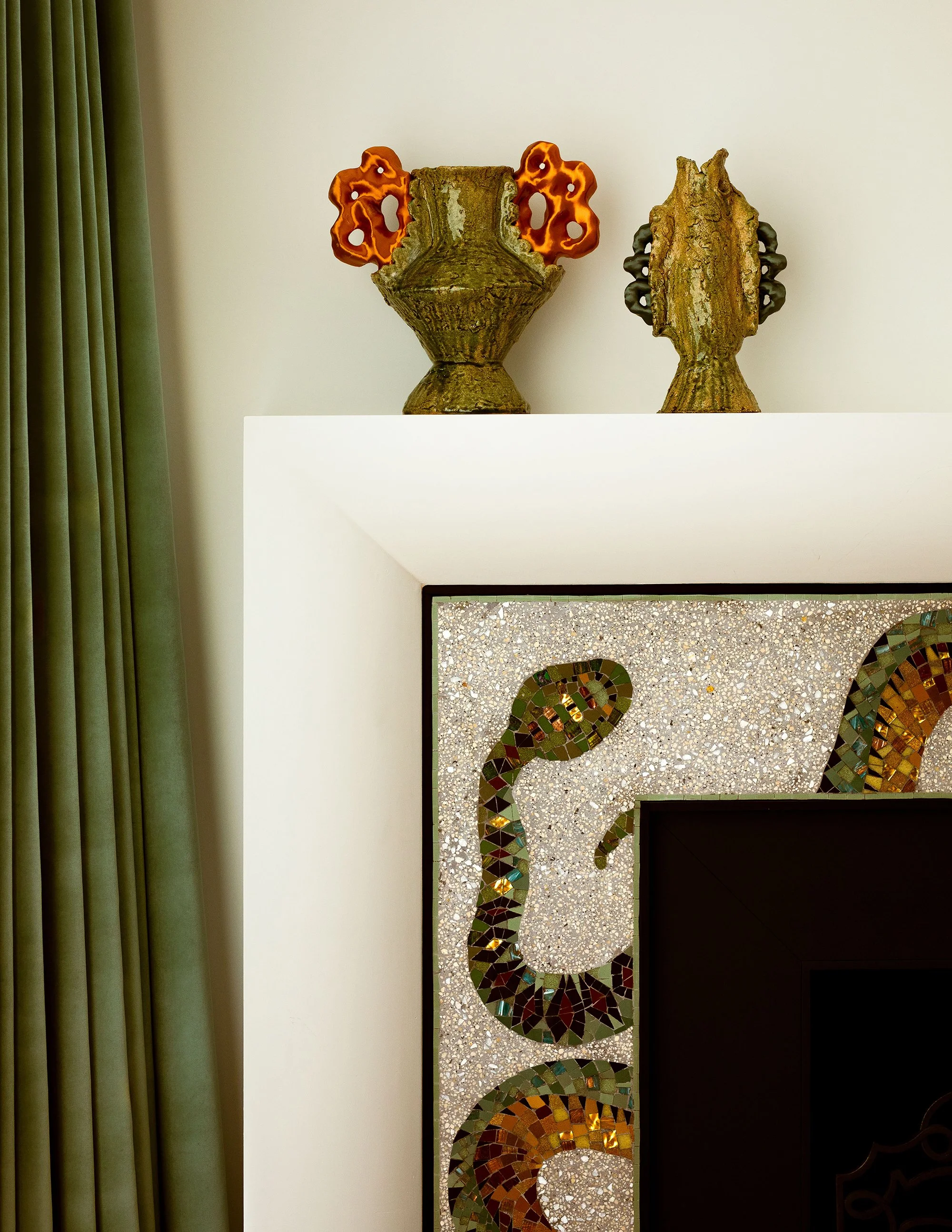
Hugo Marchand mentioned that despite the refined details, the house feels very much like a lived-in, warm home, not merely a “magazine decor”. How did you ensure that such a high level of aesthetic refinement and the integration of unique pieces (like Royère armchairs or Jean Mayodon ceramics) remained welcoming and comfortable for daily life, rather than purely ornamental?
LAURE: I think it is also Hugo’s philosophy that allowed the project not to become a mere magazine decor. When the client enjoys hosting friends and family, when he himself allows himself to sit in a collection armchair, when he doesn’t panic when a cat passes behind a precious ceramic, it unblocks the decor. We work hard to ensure that all the rooms in the house are not only aesthetic but very comfortable, and we strongly hope that the spaces will continue to live and be filled with objects. This is what is happening in this house.
Claves was founded in 2022, stemming from your complementary experiences at Pierre Yovanovitch’s agency. How did your respective backgrounds and shared sensibilities lead to the “narrative vision” of interior architecture that defines Claves?
SOIZIC: We see our discipline as the writing of a demanding and evocative narrative applied to the habitat. Projects are composed by four hands and thought out by two minds. We have two different ways of thinking that articulate quite well. Laure is about abundance; she has a great culture of decorative arts and an immense, diverse atlas of images that she draws from at the start of each project. I am more analytical; I need to articulate ideas and define a good angle of attack to set a concept. Together, we unfold the thread of our narrative, using all of our references.
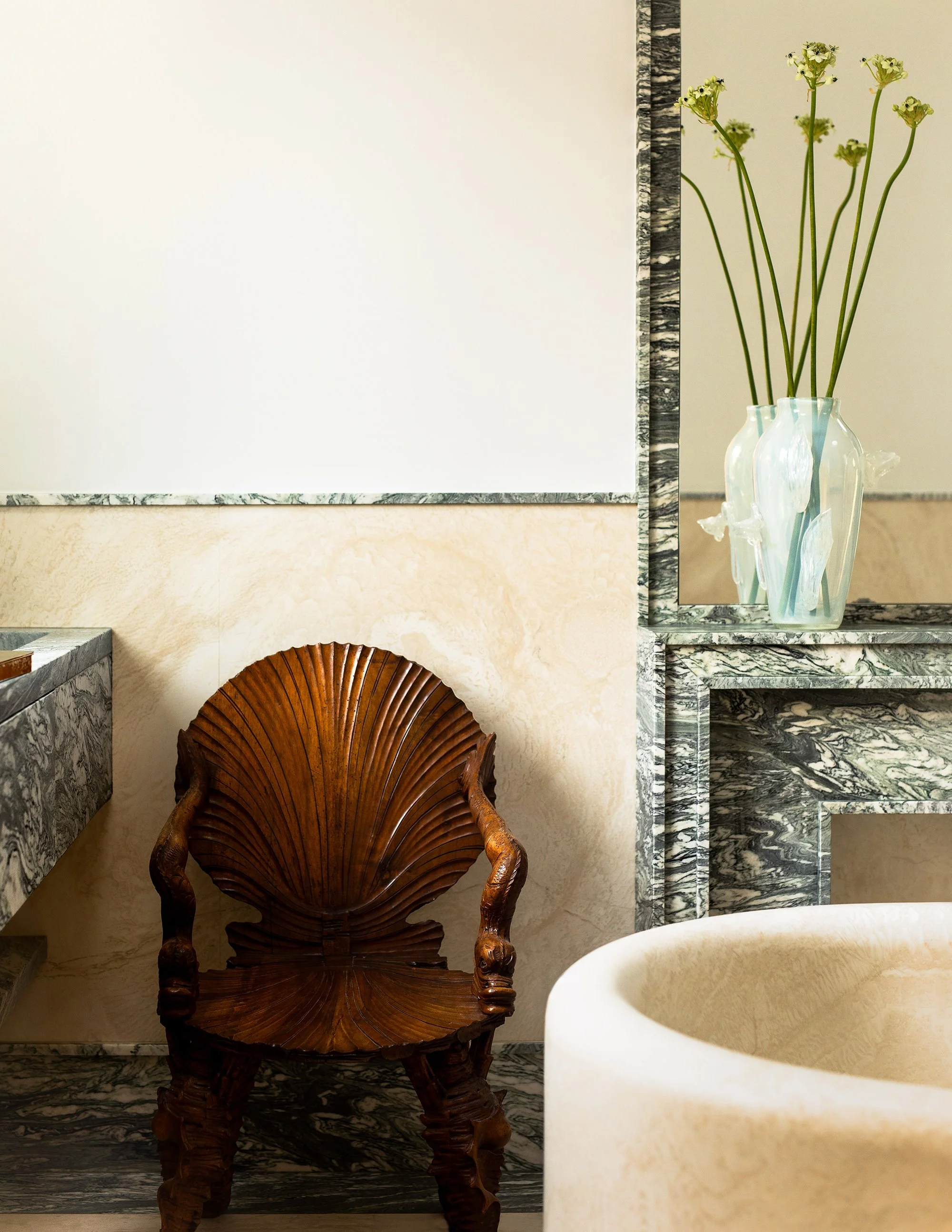
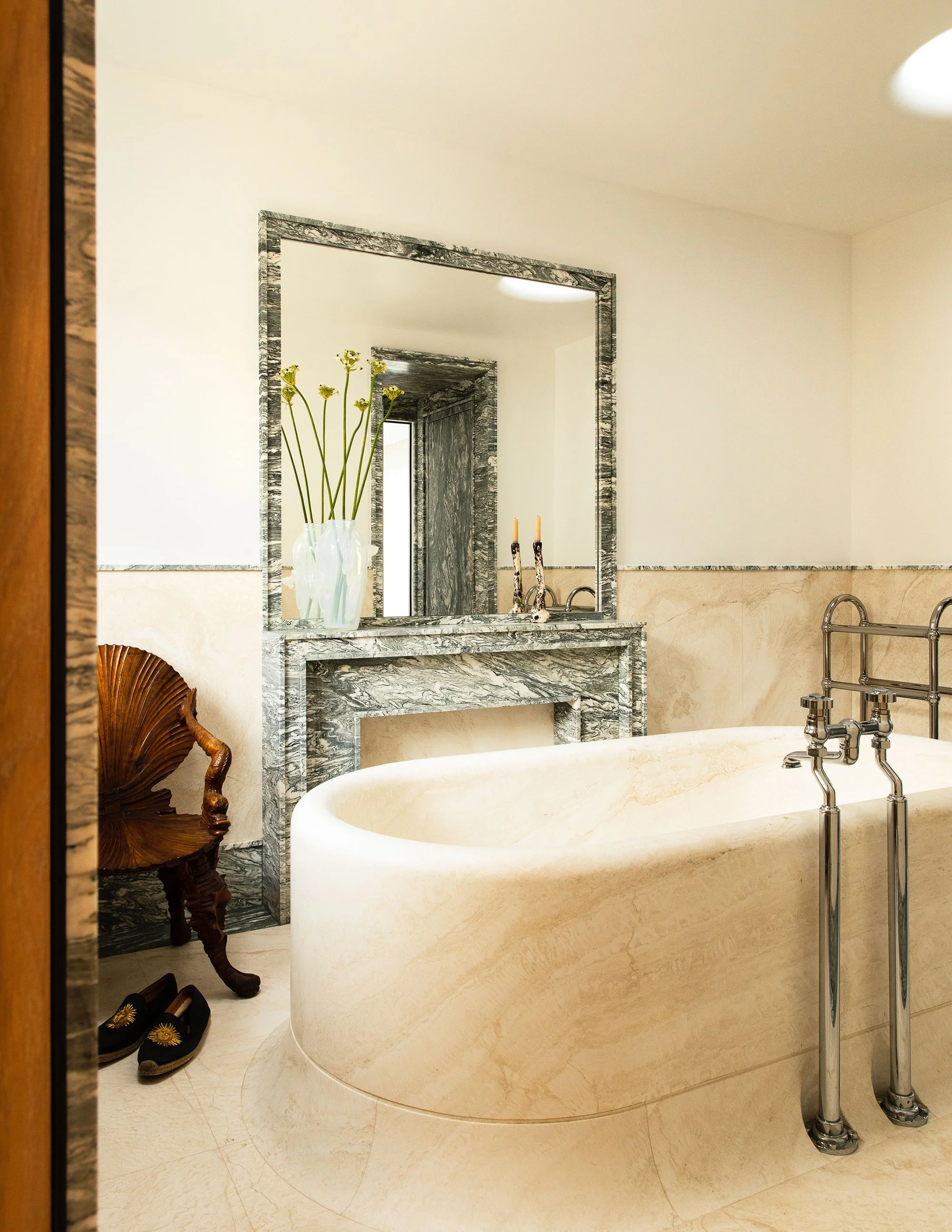
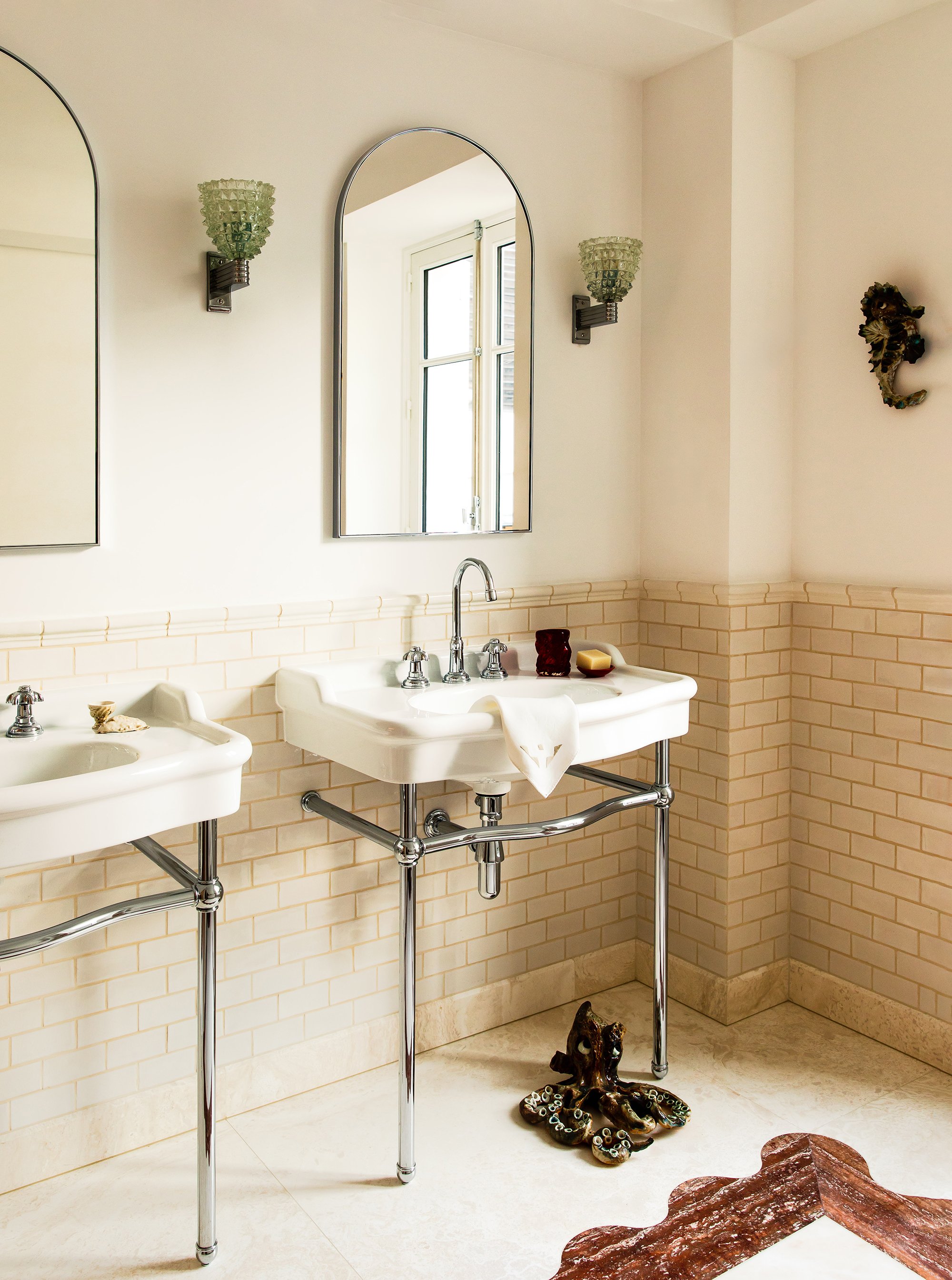
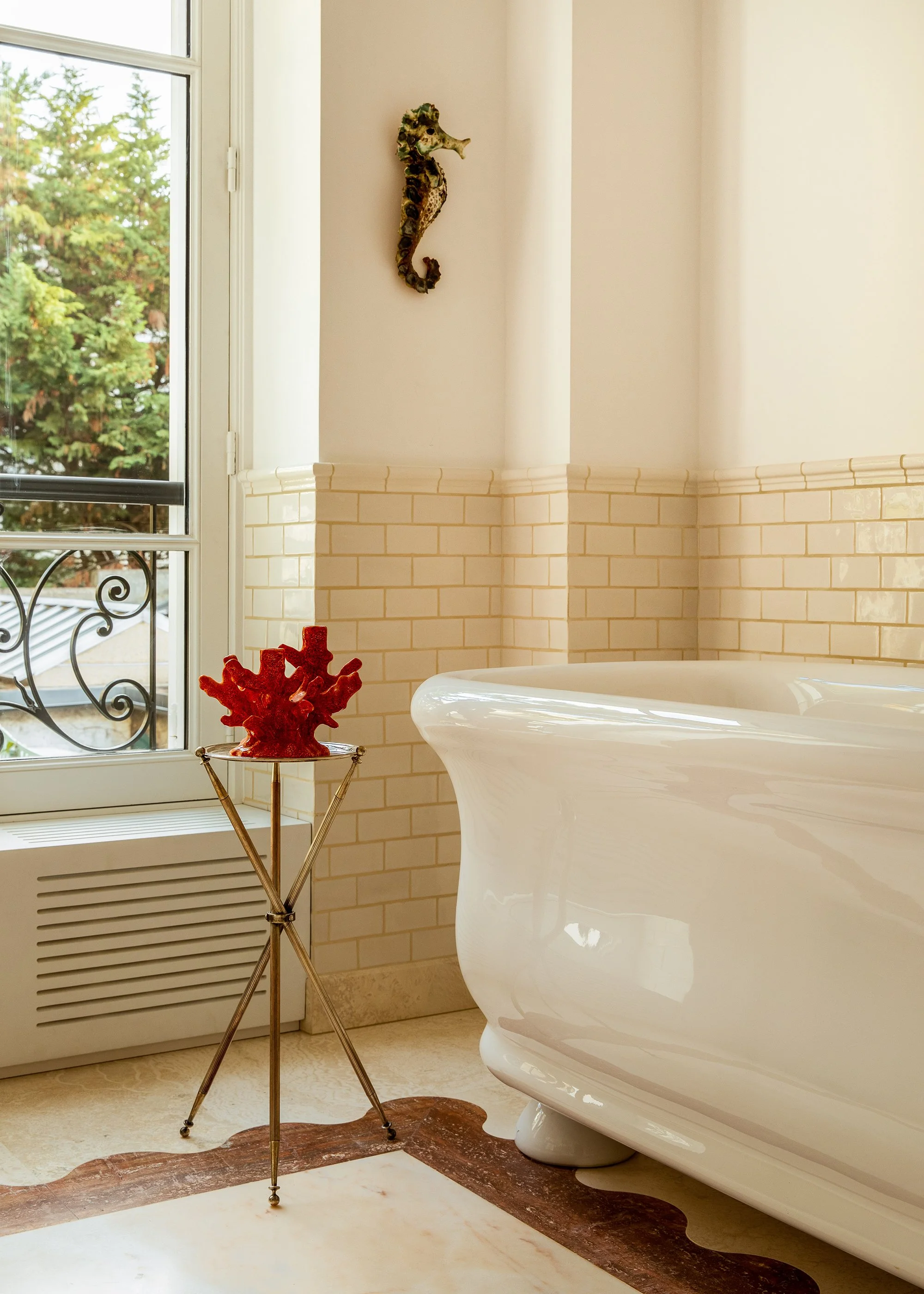
Claves seeks a “just balance between extreme refinement and wonder” and aligns with the tradition of French decorative arts. How do you consistently achieve this balance across diverse projects, from residential spaces to public areas like the Le Cornichon restaurant?
SOIZIC: We share the same vision: to create joyful and highly documented places (on the history of the location, the decorative arts involved, the expected uses...). We want to maintain our capacity for wonder and storytelling. Tapping into our inner child greatly nourishes the projects. We love the idea that people inhabit the places we design as if they were evolving in a film. As a result, our aesthetic is very much fed by artistic references but also deeply imbued with cinematography.
That being said, we are committed to designing lively places that resemble our clients, not frozen decors. We need our clients to appropriate the spaces and decors, and sometimes, to ensure this, we have to push them out of their comfort zones.
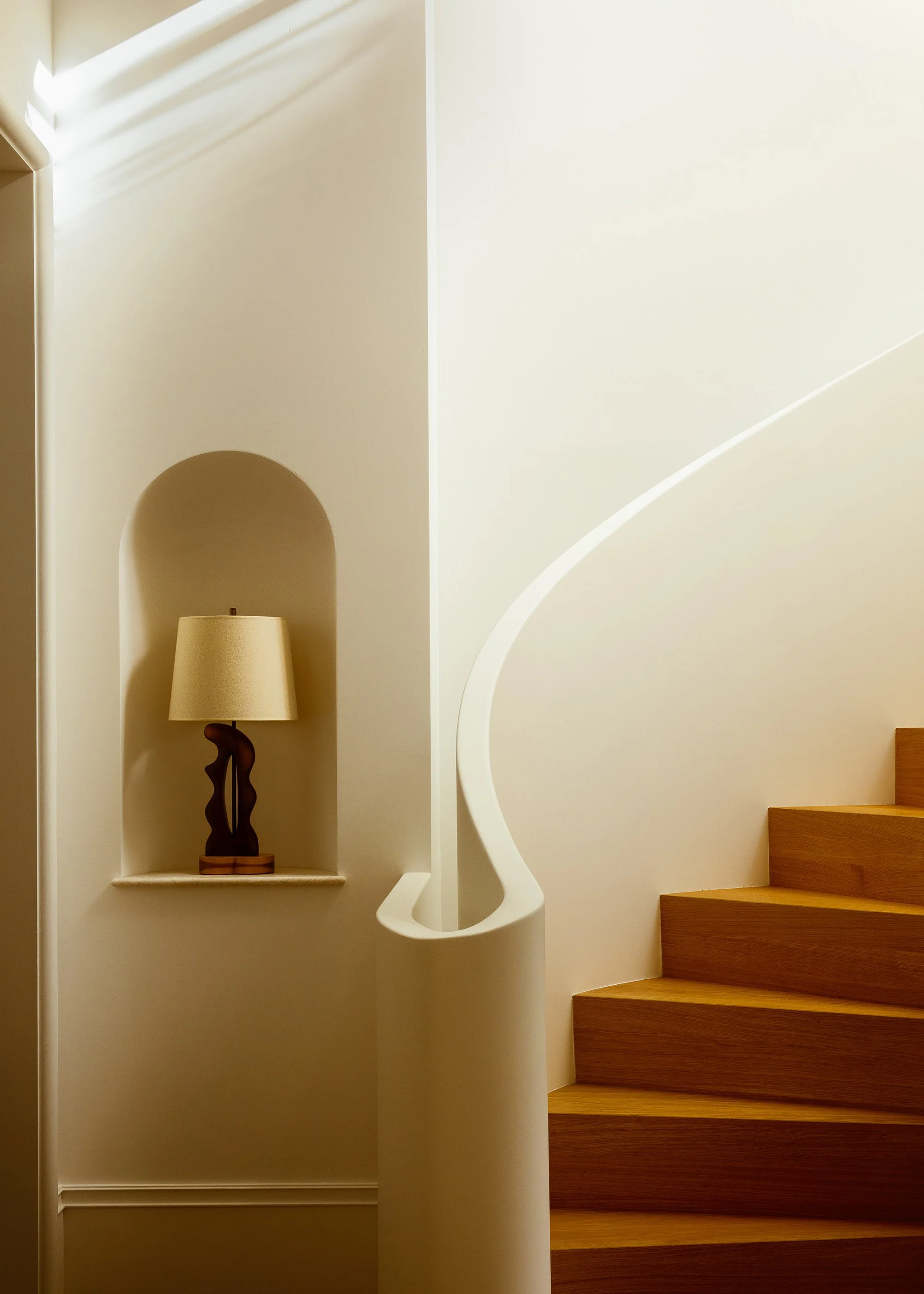
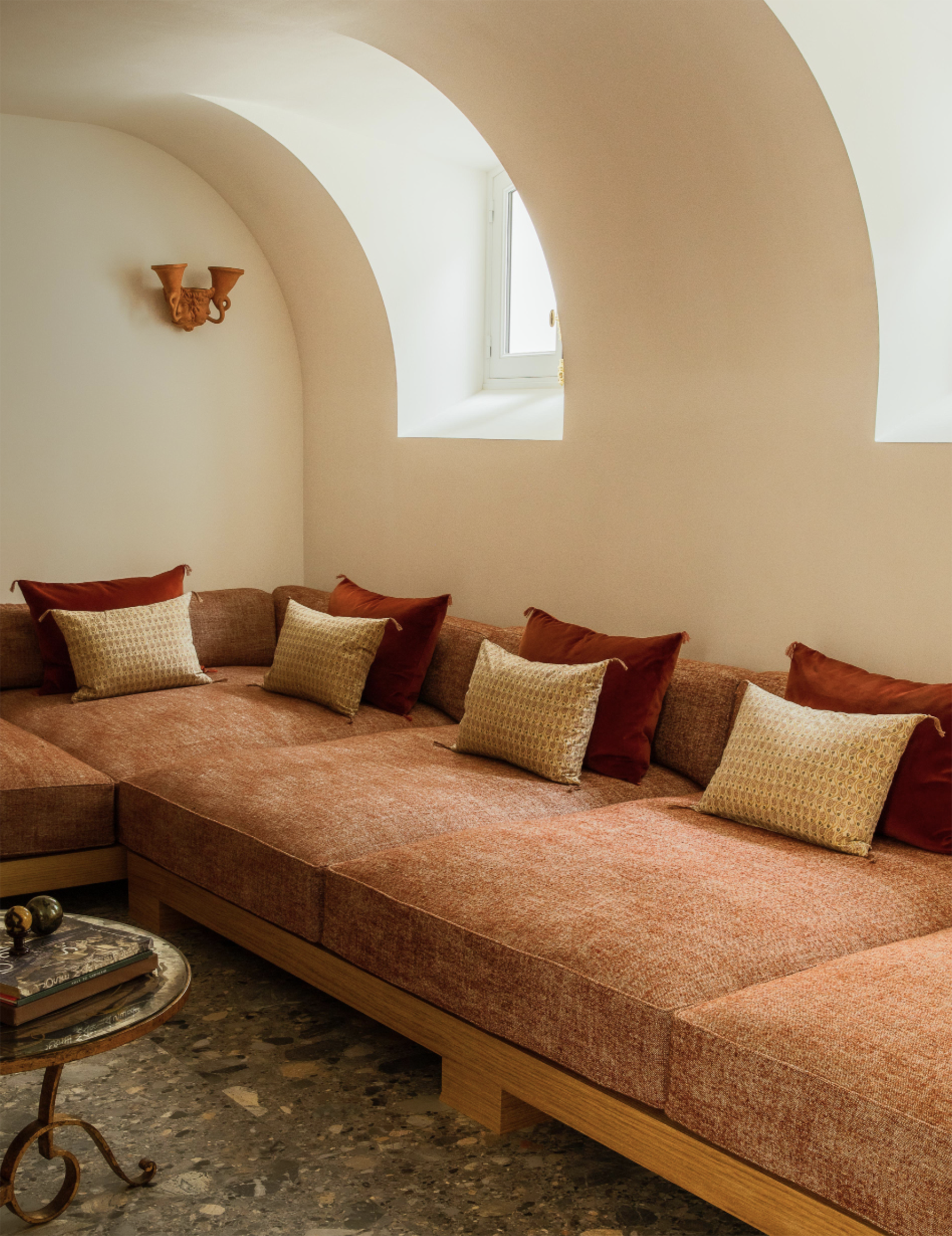
How do you translate initial design concepts and intricate details from drawing to reality, ensuring such a high level of precision and execution?
SOIZIC: So that our spaces do not look like cardboard decors, we are very rigorous in the choice of artisans and the execution of the work. This requires a lot of work and time on the construction sites. We also take care to use artisanal techniques consistent with the original construction years of the places we are working on. Depending on the projects, we use staff (plasterwork), mosaic, stained glass, decorative painting (...). For each material, a sample is produced to validate its quality. Also, we try as much as possible to preserve historical decors when they are relevant. The greatest compliment we can receive at the end of a project is for people to think that the decors were already there before our intervention. In that case, we know that our work rings true.
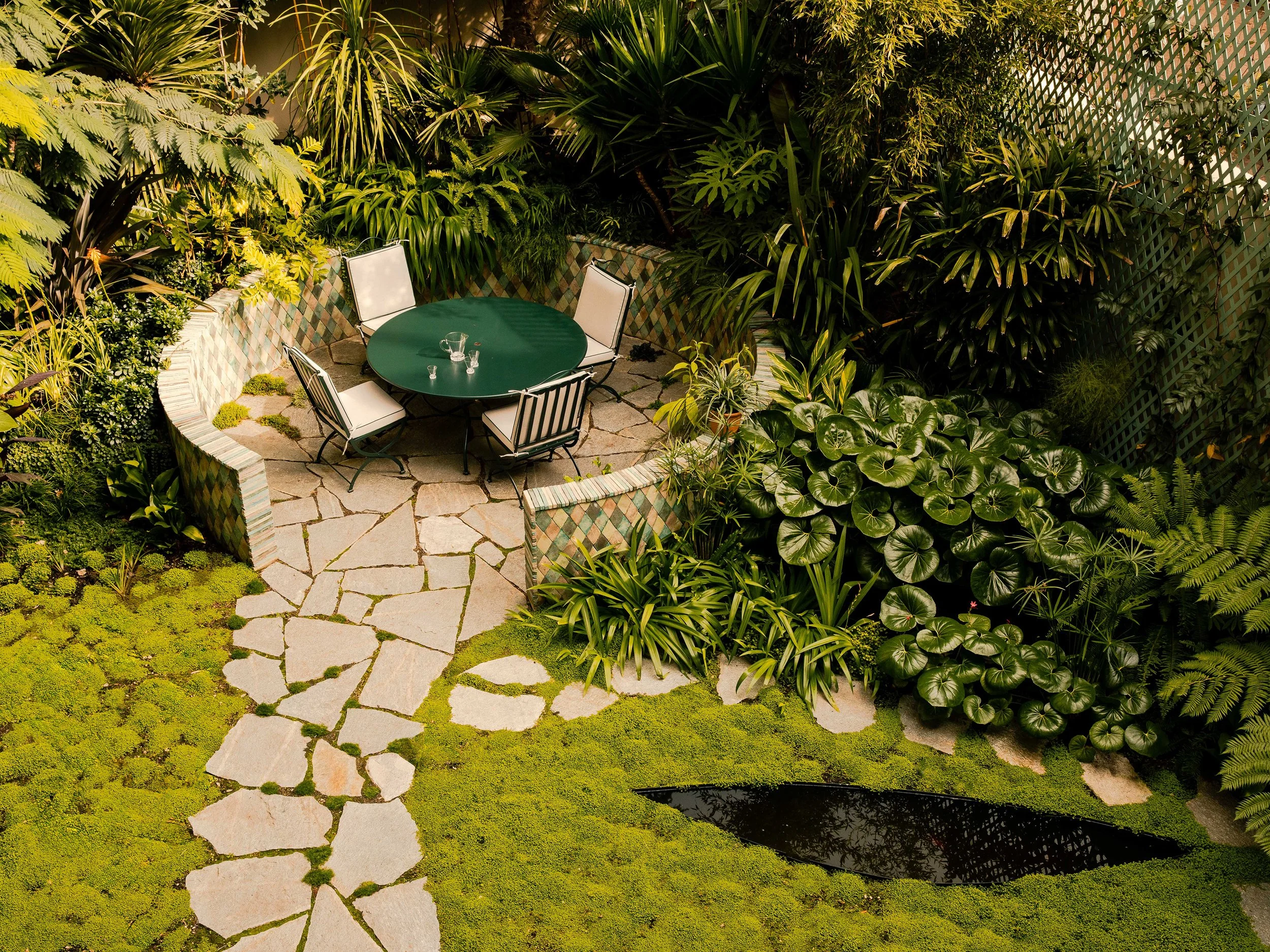
Beyond aesthetics and functionality, what is the primary emotion or feeling you aim to evoke in people who live in or visit a space designed by Claves? Is there a specific atmosphere or sensation you consistently seek to create across your projects?
LAURE: Our priority is for people to feel good. Symmetry, perspectives, axes, light treatment, and comfort contribute to this sensation that one feels immediately upon entering a space. After this initial reassuring feeling, we like to create surprise. Each project includes details that echo the place, which surprise or delight (a "smoked" frieze at Le Cornichon, a plaster fireplace with a flame motif for the Guignier project, lobster handles for the beach brasserie...)
To conclude, what future projects do you have in mind for Claves, and is there a particular “dream project” you aspire to realize one day that would fully embody your artistic and architectural vision?
SOIZIC: All projects interest us as long as they have the ambition to tell a story that takes shape through the decorative arts. What's great about renovation is that we don't start from a blank page. Existing places are often full of details that guide the development of the new project and allow us to anchor ourselves in reality. Furthermore, we enjoy working on projects where we can also handle the art and object curation. This provides overall coherence to the location we are working on. If all these ingredients are combined, then it's the dream project!