
At The Threshold
with Chloe Berlin
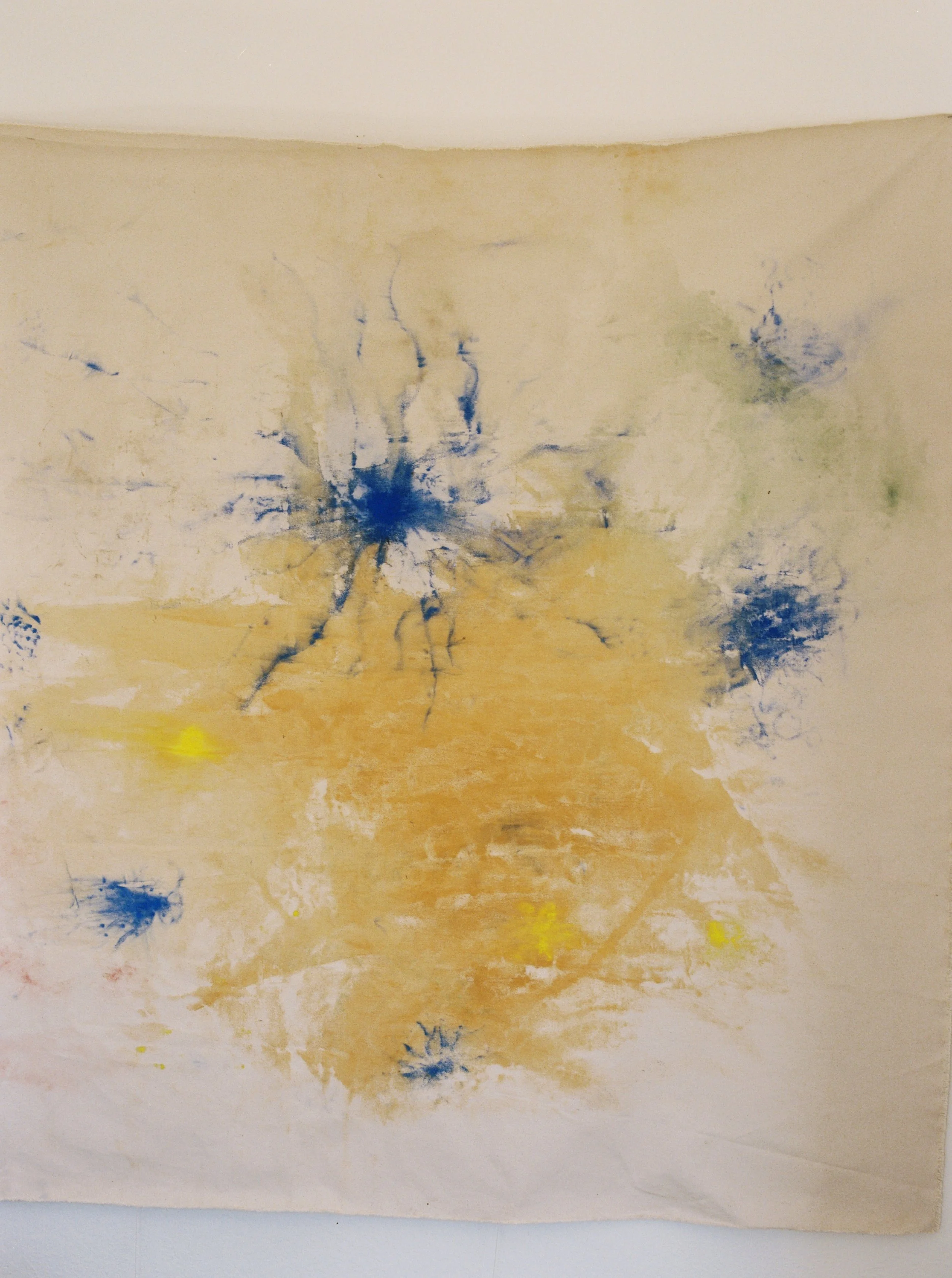
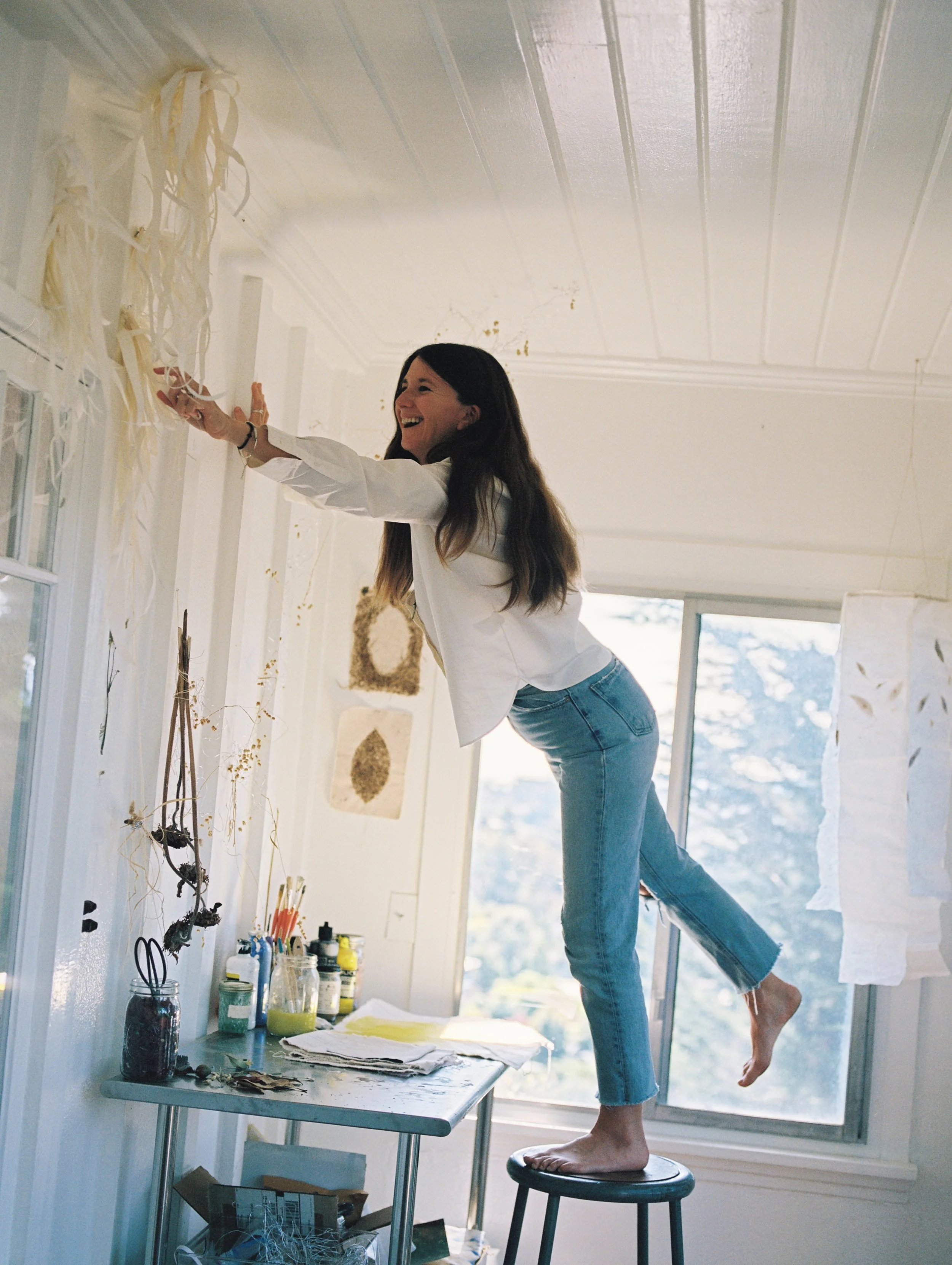
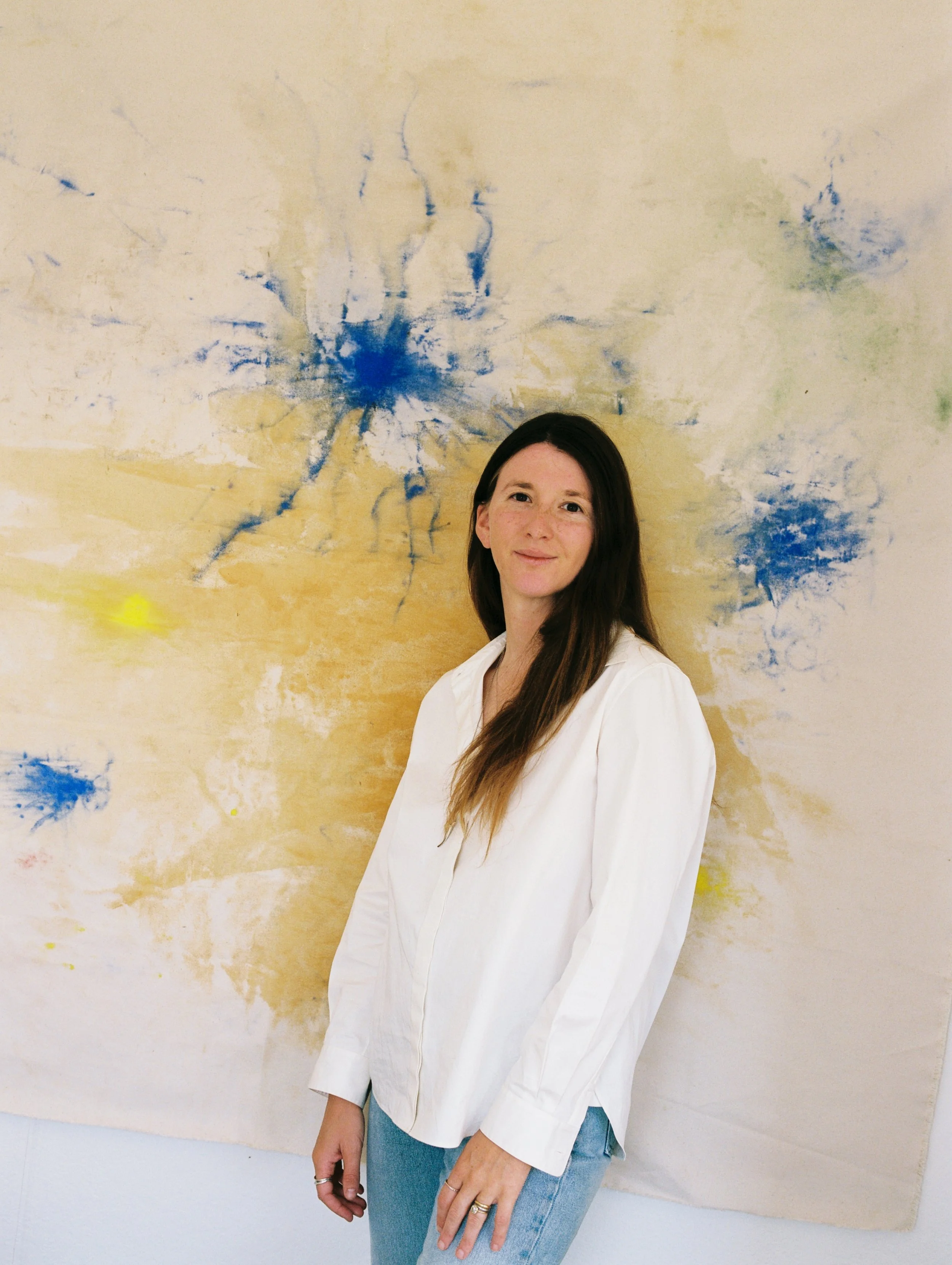
From painting to ephemeral installations in the wild, Chloe Berlin’s visual language draws on mesmerizing symbols borrowed as much from the cosmos as from the flowering tree next door: it explores the universal language and interconnectedness of life through nature. Chloe is a conceptual artist living and creating in Northern California, where she moved in 2024. The wild landscapes and abundant flora of her new surroundings sparked profound reflections and led her toward a deeper harmony with herself, her art, and the natural world, just as she was about to step into another all-encompassing transformation: motherhood.
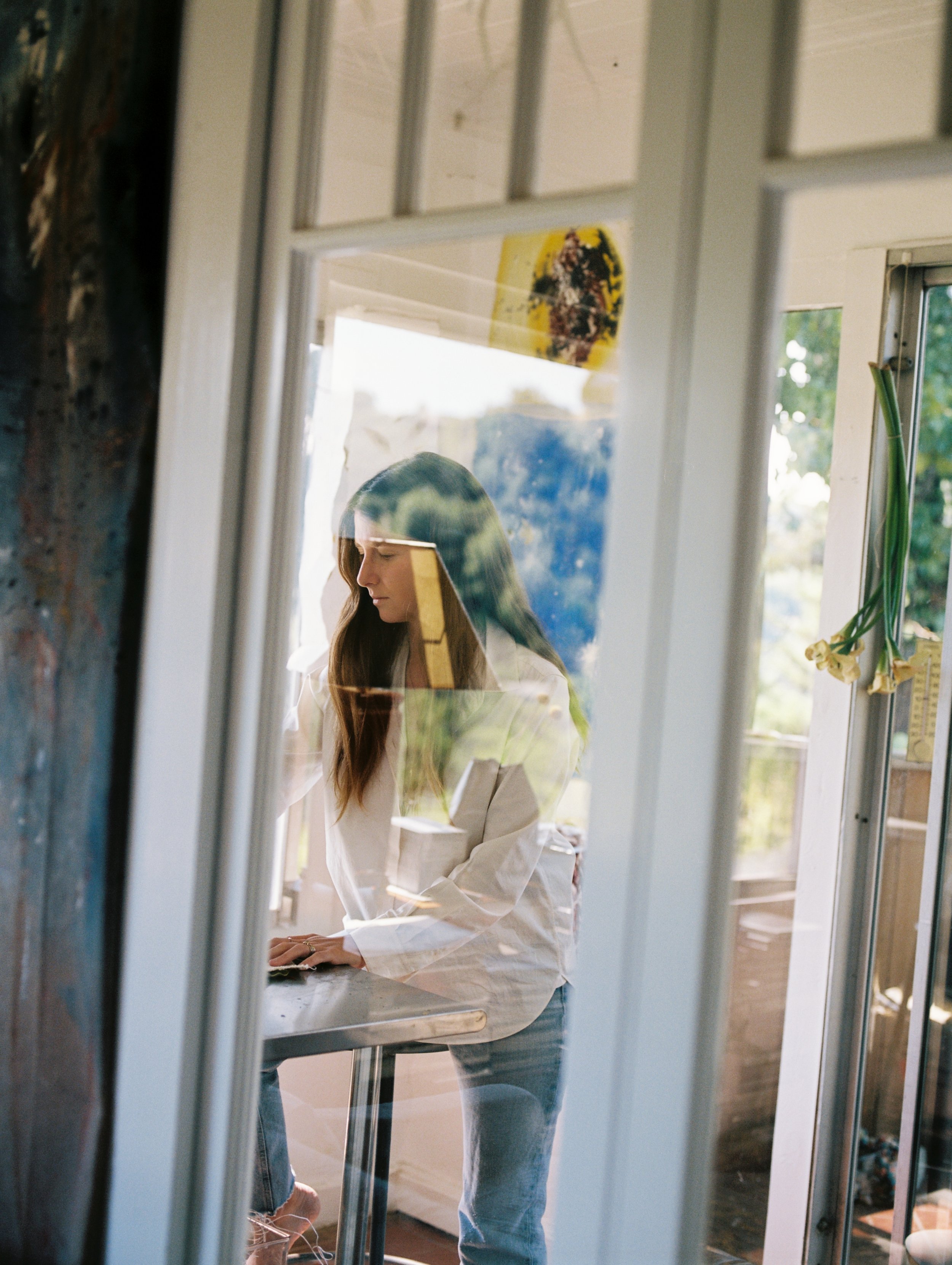
I met Chloe at her home studio in Marin County in the spring of 2026, where we spoke about the nature of her work and how her artistic practice has evolved over the past few years since moving to California and becoming a mother.
Your mom was an artist and some of her pieces are hung in your home. What was it like growing up in her aura and what influence has that had on you?
My mom imbues everything she touches with beauty, from her paintings to our home to the food we eat. It all comes from the same source: a way of artful living that inspires me every day as I create my own life. I feel incredibly grateful to have had art as such a central pillar in my formative years. Racing through museums, learning about the masters and contemporary artists, hearing about the mistakes within a painting that later became breakthroughs. Watching her paint while I painted beside her, helping stretch canvases, installing work in galleries and clients’ homes. She brought me along every step of the way.
For my mom, there was never a line between her work and our life. Now, as a mother myself, I feel deeply grateful to have grown up with such a powerful example of what it means to live fluidly. Living itself was an act of art. It gave me an entirely different way of perceiving the world.
I grew up deeply attuned to the spiritual and emotional realms through my mom’s work. The language we spoke was often visual, using imagery to understand feelings and emotions, this heightened sensitivity to spirituality, art, and creating alongside the universe. That remains at the center of my ethos, in both my life and my art.
My mom gave me art, but my dad gave me a love of nature. Playing in the garden, watching sunsets, thanking God not as a man in the sky but through the beauty nature offers us. I can directly trace so much of what I create back to that combination.
I believe we choose our parents before coming to this plane, and now I understand why I chose mine. Not only because they are incredible people, but because they laid the foundation that allowed me to bloom into who I am.
What was your journey to becoming an artist?
What was very challenging for me in my youth was that I wanted to do something different. Like a child groomed for the family business who wants to rebel. I needed to find my own path. I had to put art aside for a while and come back to it on my own terms, through my own medium. Whenever I painted, I was frustrated because everything I made felt like my mom’s style. My mom and I are best friends. We look alike, and I felt this deep need to become my own person. In hindsight, that struggle feels almost silly, but I needed it to arrive where I am now. To build my own creative identity while realizing she is a part of my style and I her, how special it is to carry on that lineage building on her work.
After years of battling chronic illness, I realized I was sick because I wasn’t listening to what my soul was asking for. I was creative, but I wasn’t nourishing that part of myself. Then I found flowers, and they became a way for me to carve out my own identity and my own language of beauty. It opened me up to entirely different ways of creating and helped me bridge the gap between a corporate job and something more tangible.
Saying “I want to become an artist” felt far too big and frightening, especially because the kind of art I love to make is installation work. How do you go from working a 9-to-5 to that? Flowers became the bridge. I’m so grateful for that period of my life, learning how to compose shapes in negative space, working with color, taking something already beautiful and making it even more so.
But as I’ve evolved creatively, I’ve slowly moved away from that girl at home playing with flowers. After living in New York, all I wanted was to reconnect with the land, and land art became the exact way to do that. Moving to California opened something inside of me, a deep connection to my surroundings and to the natural rhythms and quiet synergy of Mother Earth.
What is it about California that fuels you artistically?
When you think about coming out West, you think of generations of people arriving here to forge something new. A compilation and mishmash of different backgrounds coming together in a way that feels so different from the East Coast. There’s a freshness here, a willingness to let go of old ways of thinking and create new ones. I felt that energy immensely when I first moved here.
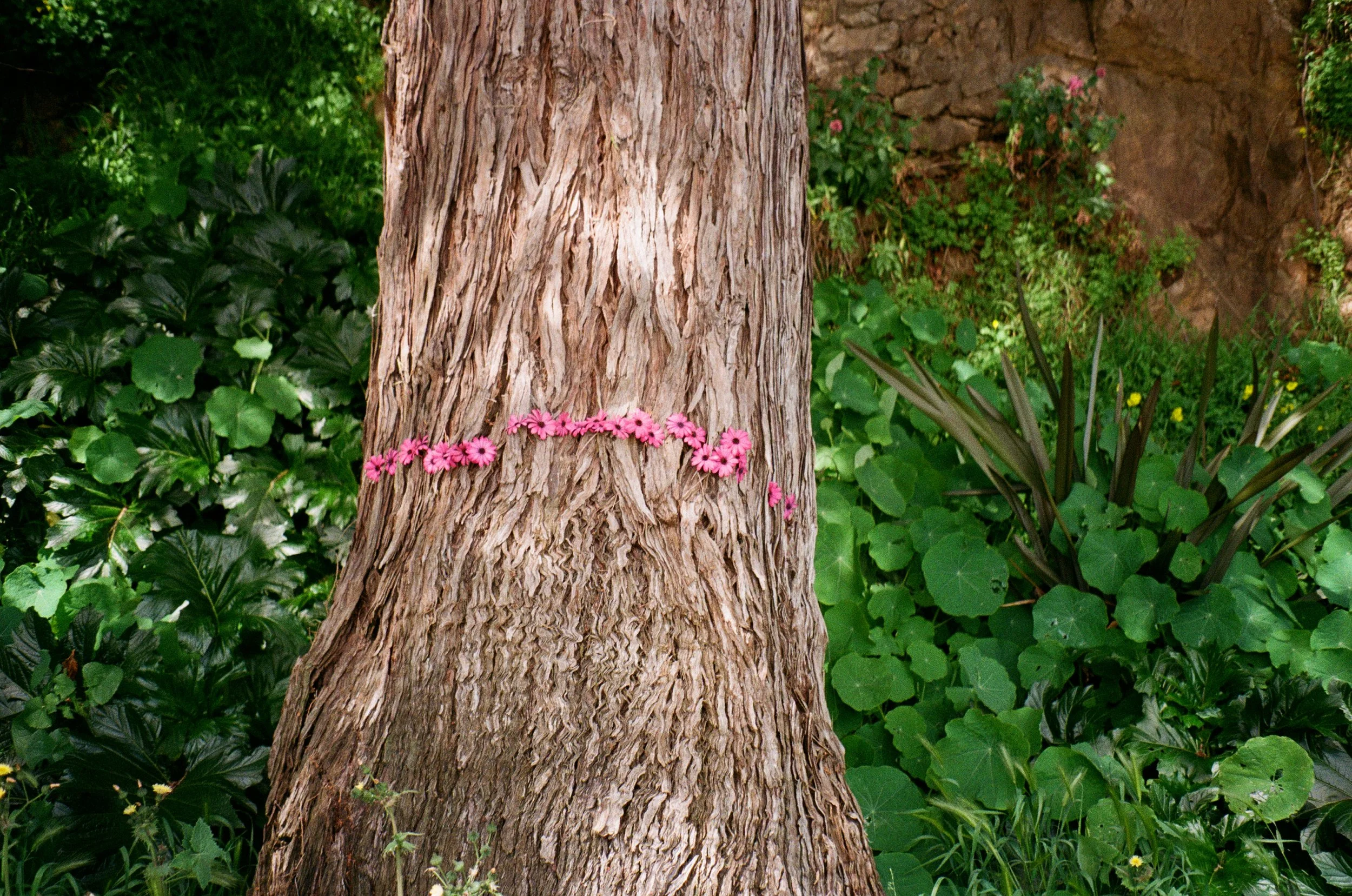
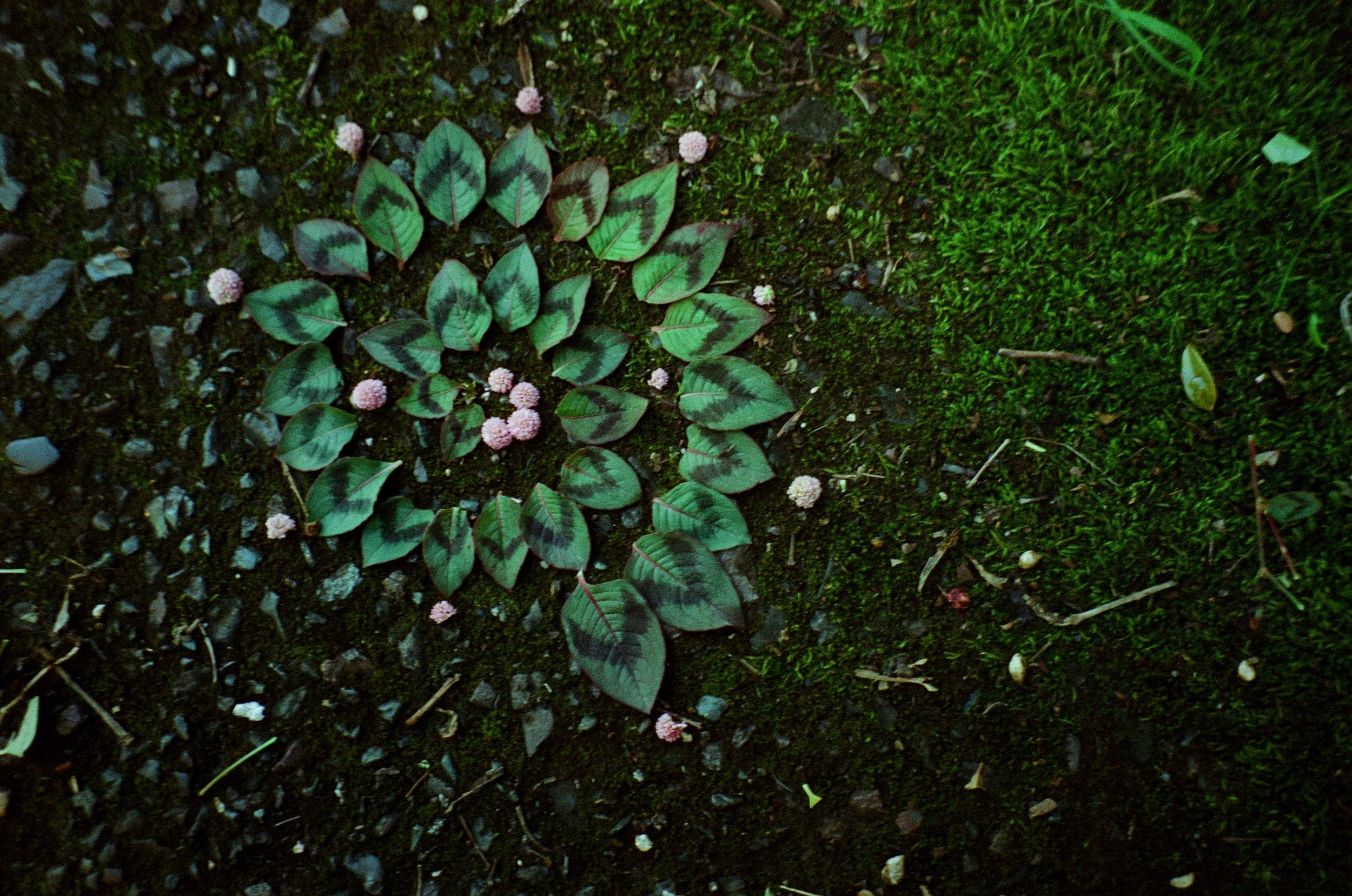
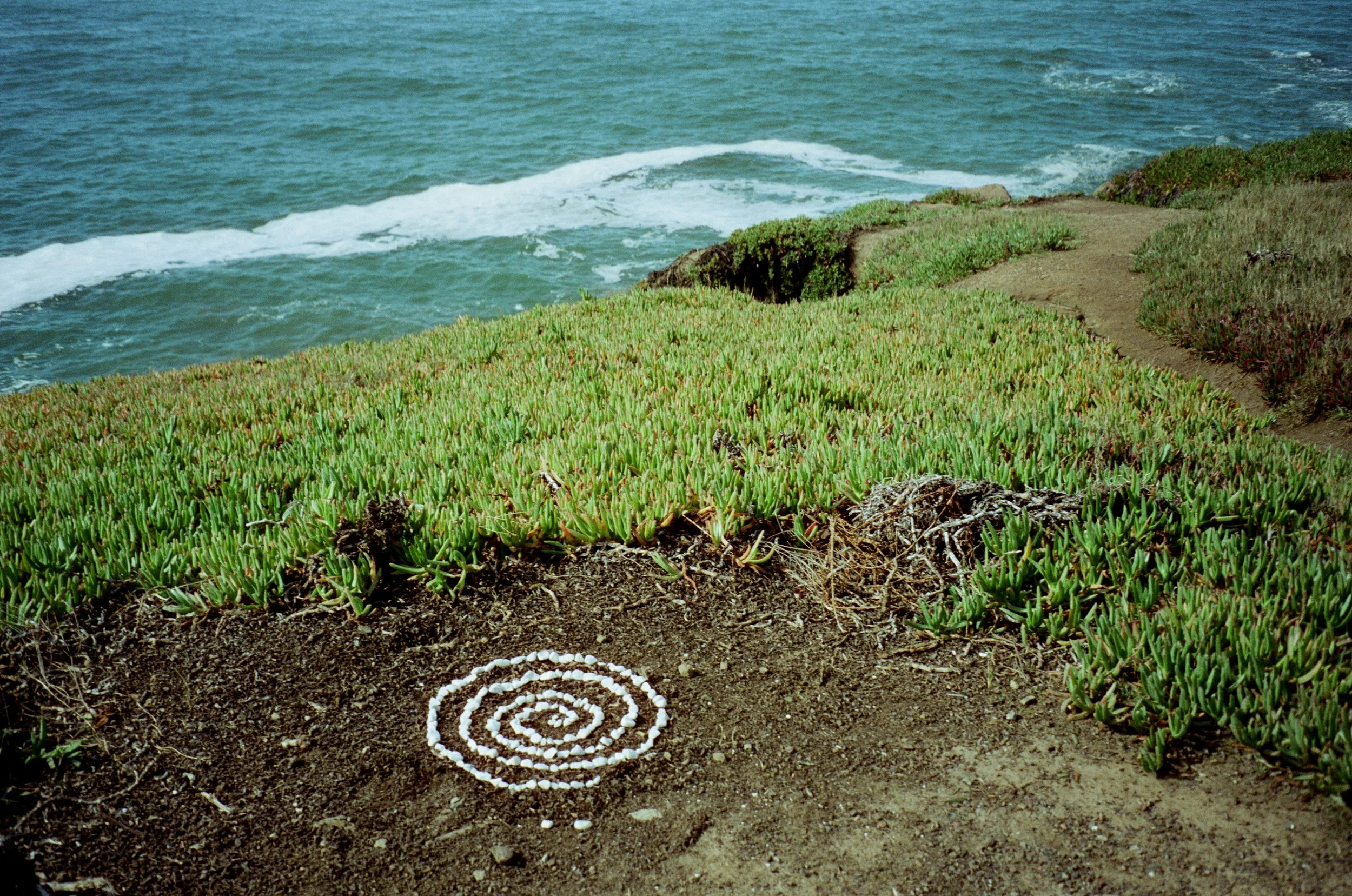
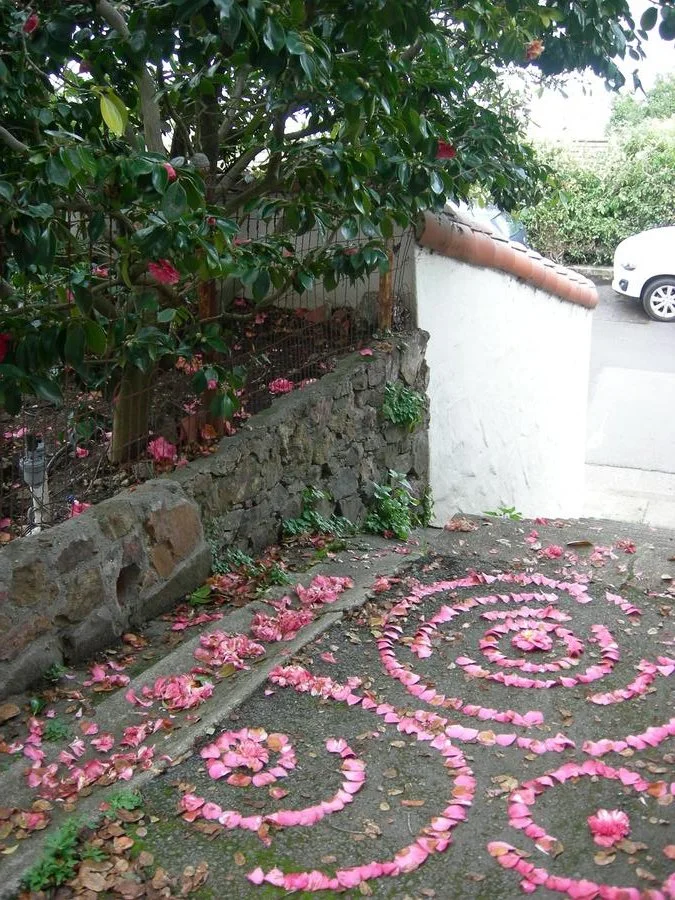
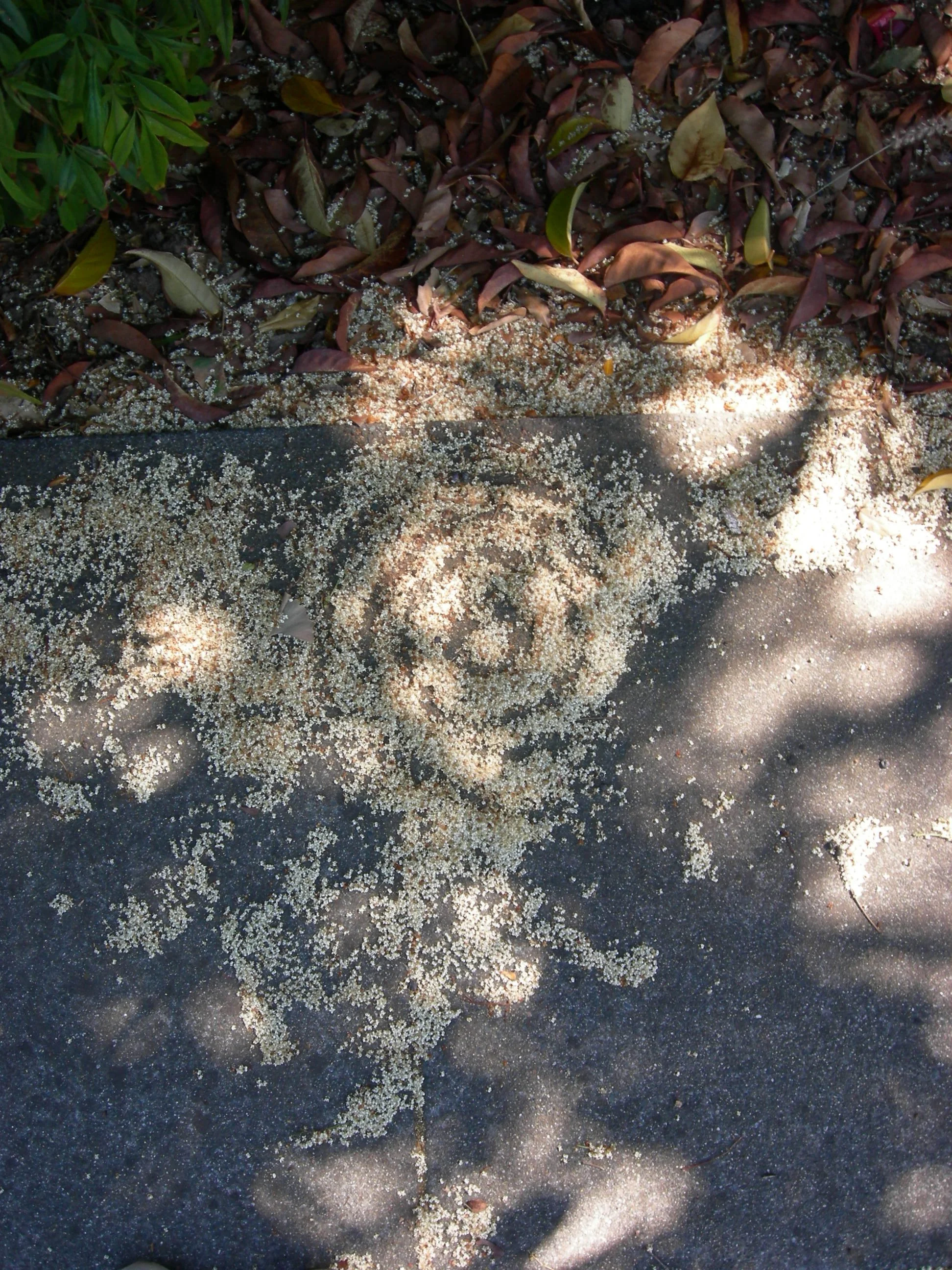
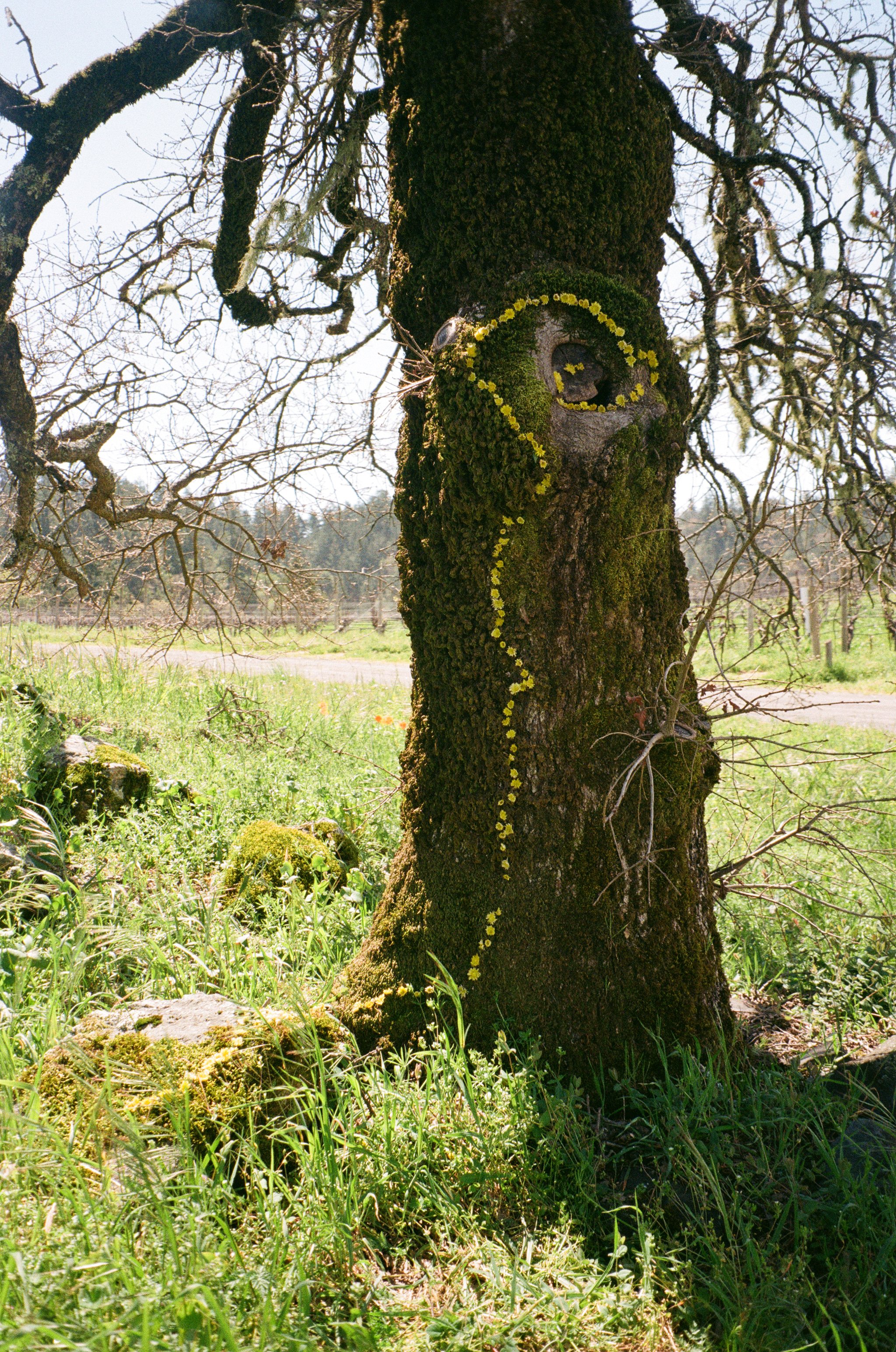
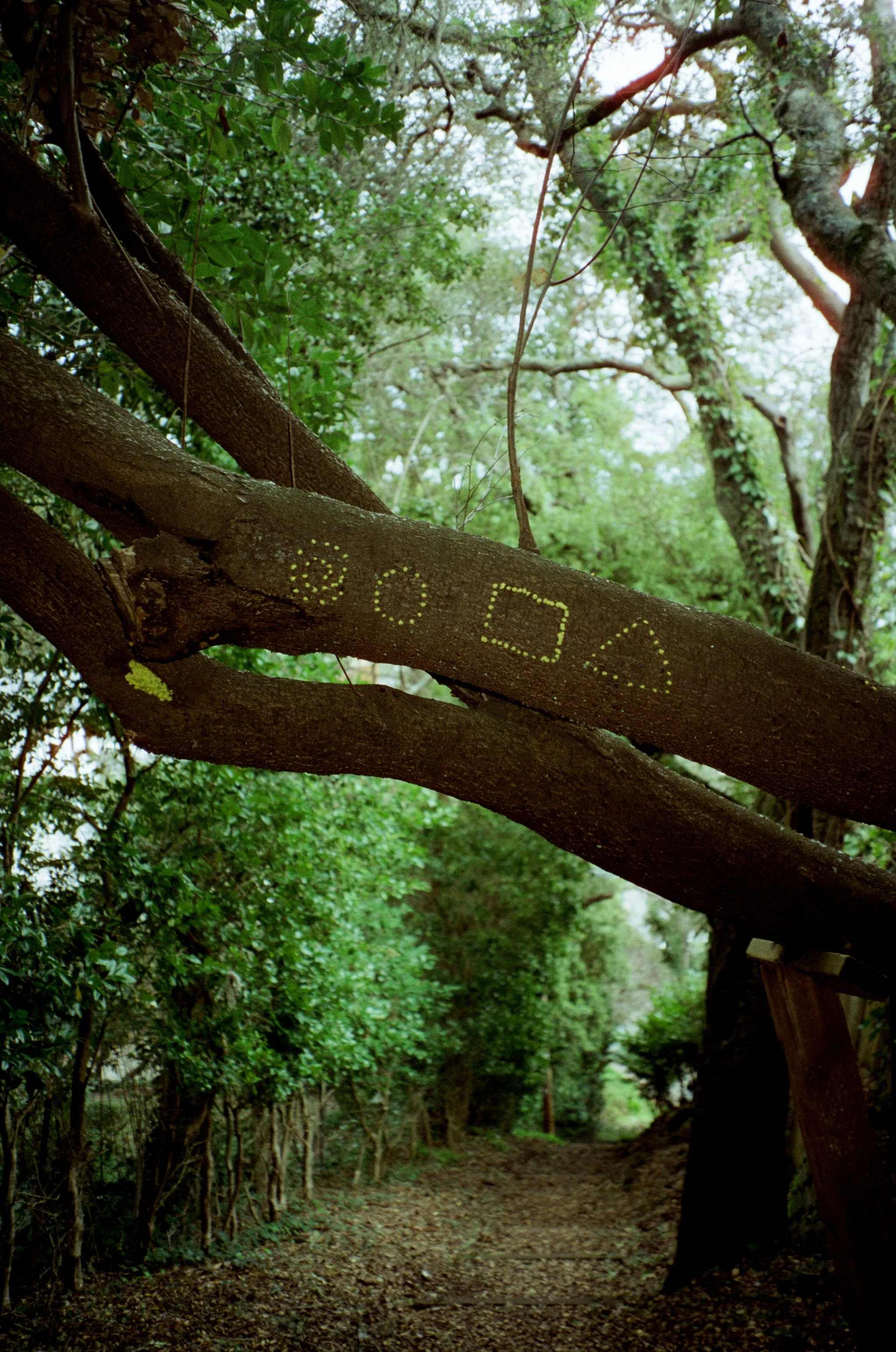
When I made the move, I let go of everything I had been doing in New York and allowed myself to see where my art wanted to take me. I wanted to stay open, to observe, and to let whatever needed to come through, come through. It led me to a really profound moment in my creative life: creating Threshold, a body of land art primarily created throughout the staircases and beaches of Sausalito.
It was the work I had so badly wanted to make in New York, but it didn’t feel aligned with the natural landscape. Being in a completely new place and looking at the world with fresh eyes allowed me to learn an entirely different landscape. I would spend hours alone watching the leaves, studying the patterns woven throughout nature, watching flowers bloom, learning the rhythms of the seasons, and understanding how the land moved and behaved.
It felt like a reclamation of self through the land, threshold into a new creative language, and a deeper understanding of who I was in that moment before becoming a mother.
It was such a beautiful period of my life, one where I felt in complete connection with nature and with myself. I’m incredibly grateful for that time, especially because it became the final year before having my son.
How did becoming a mother transform your art?
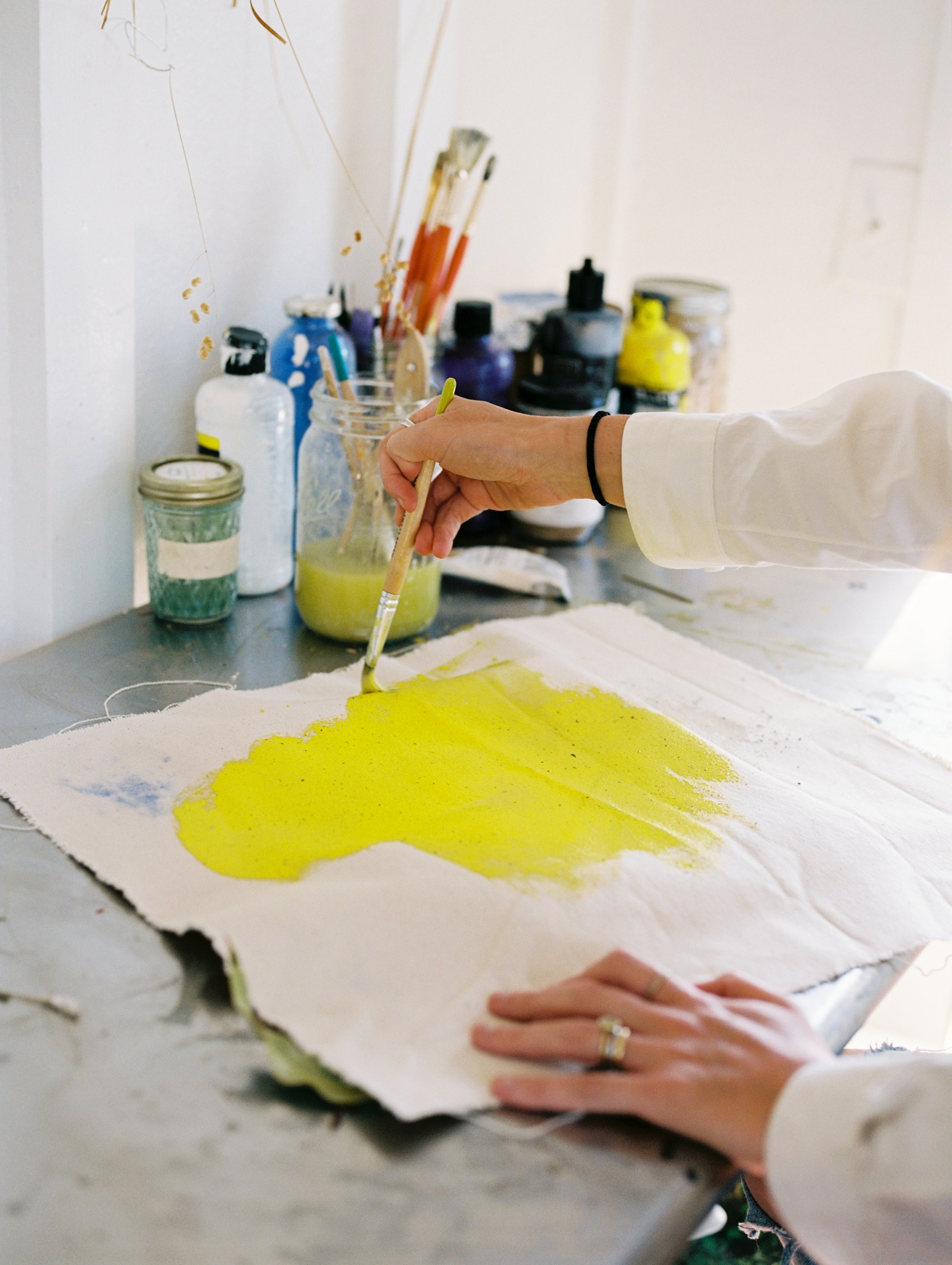
The time constraints of motherhood, being tied to home through naps and meals, having so little time to myself when my work once required so much spaciousness and isolation, completely changed the way I created. But my need to create never went away. If anything, it only deepened when my son arrived. It simply pushed me in new directions, eventually leading me back to painting.
Motherhood softened something inside of me. Returning to painting felt deeply full circle, not only creatively but spiritually. It gave me an entirely new understanding of how extraordinary my mother truly is. Raising six children while sustaining a lifelong creative career feels almost mythical to me now that I understand firsthand what motherhood asks of you.
What always challenged me most about painting was the feeling of making something from nothing. With land art or flowers, I had a foundation to respond to, something already alive that I could shape and build upon. But I think the act of creating life itself gave me the confidence to move through that fear, to trust that I could create something from nothing but what already existed inside of me.
In my earlier work, I was always searching for balance, harmony, and perfectionism, things that never fully felt natural to me. Becoming a mother showed me that the chaos I live within is part of who I am. I can’t separate myself from it, so why not welcome the whimsical playfulness I’ve always been drawn to? That realization felt incredibly freeing.
My time became so much more precious. I no longer had endless hours to obsess over making the perfect circle or controlling every detail. Motherhood forced me to let go and listen more deeply to myself instead of working against my nature. It showed me that no matter what the day holds, I can still be creating. I can create in my mind while doing daily tasks or bring my son alongside me in the process.
I leave drawings, paintings, and sculptures spread throughout the house so that when a moment opens itself up, I can immediately tap back in. There’s something thrilling about engaging with work this way, staying on my toes, allowing creativity to weave itself into everyday life. Foraging on walks with my son, showing him the subtle shifts of the seasons, teaching him to notice the world around him.
What is your approach to materials?
There’s always a season and a reason why certain materials come to me. I think I’m more obsessed with the ritual and feeling behind creating than the medium itself. To define myself by one thing feels limiting, and that’s why I’m so drawn to being an artist. There’s a limitless potential in exploring one’s inner world in relation to the world and universe around them. Everything else is simply a vessel for expressing that.
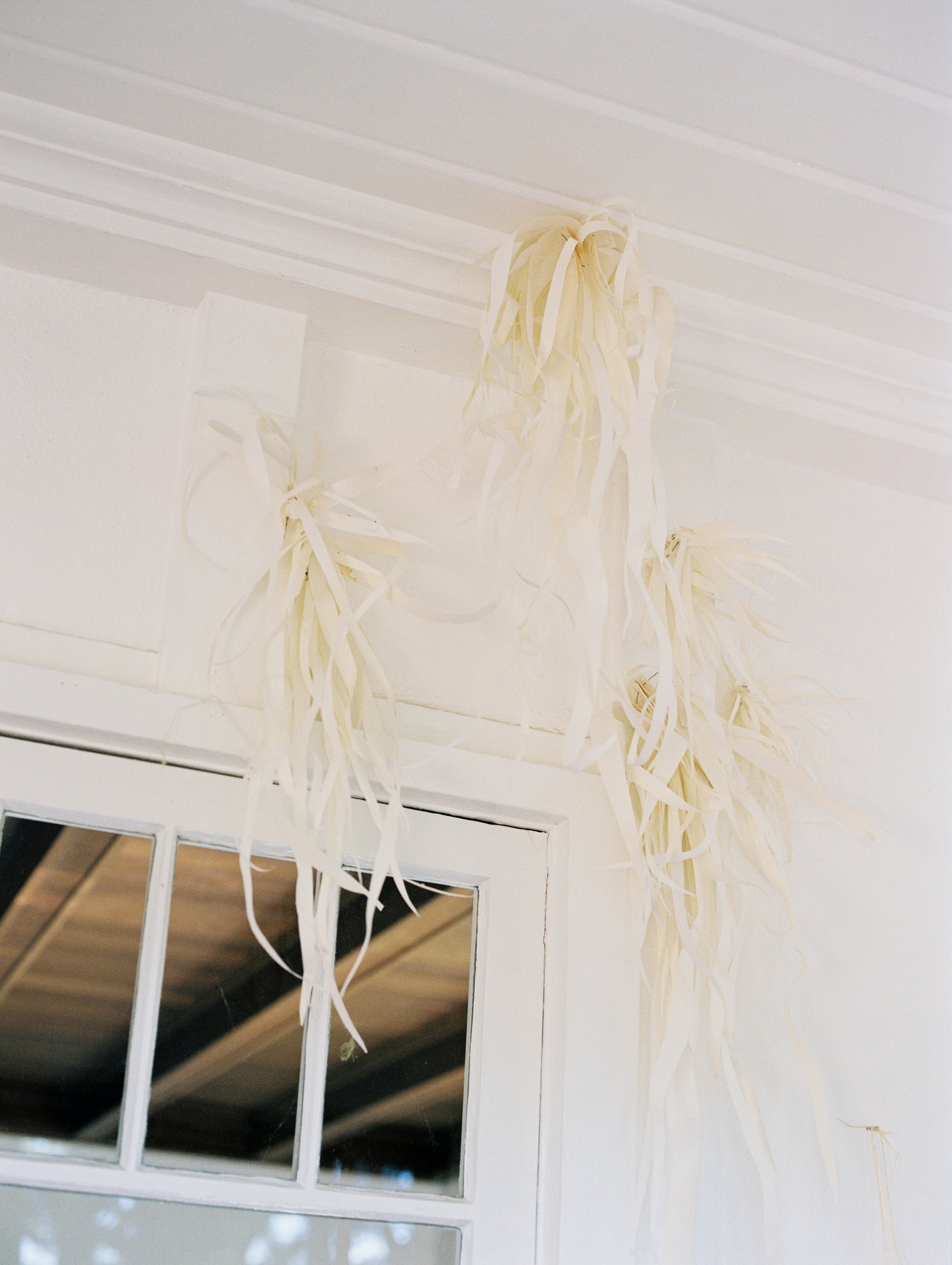
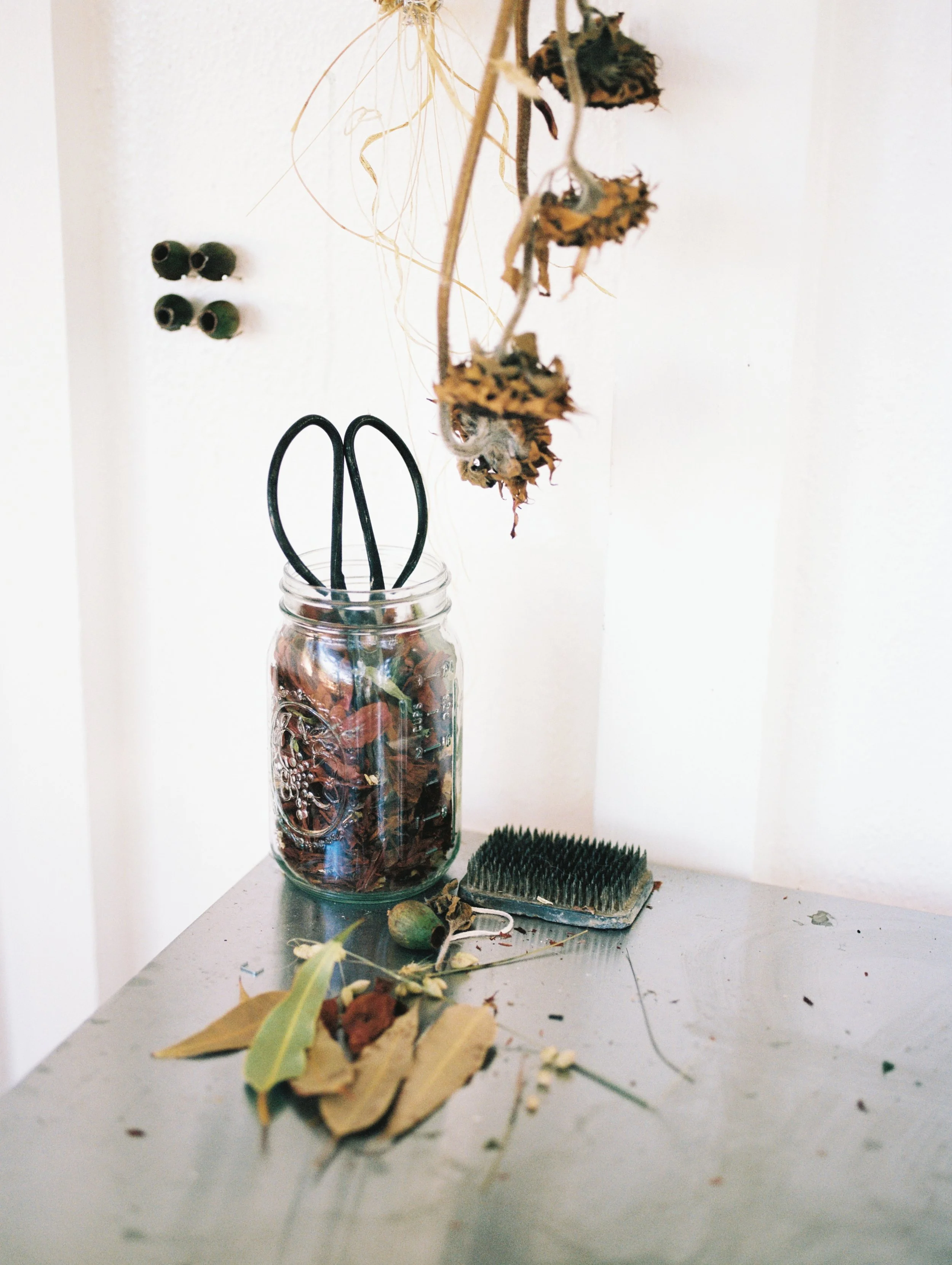
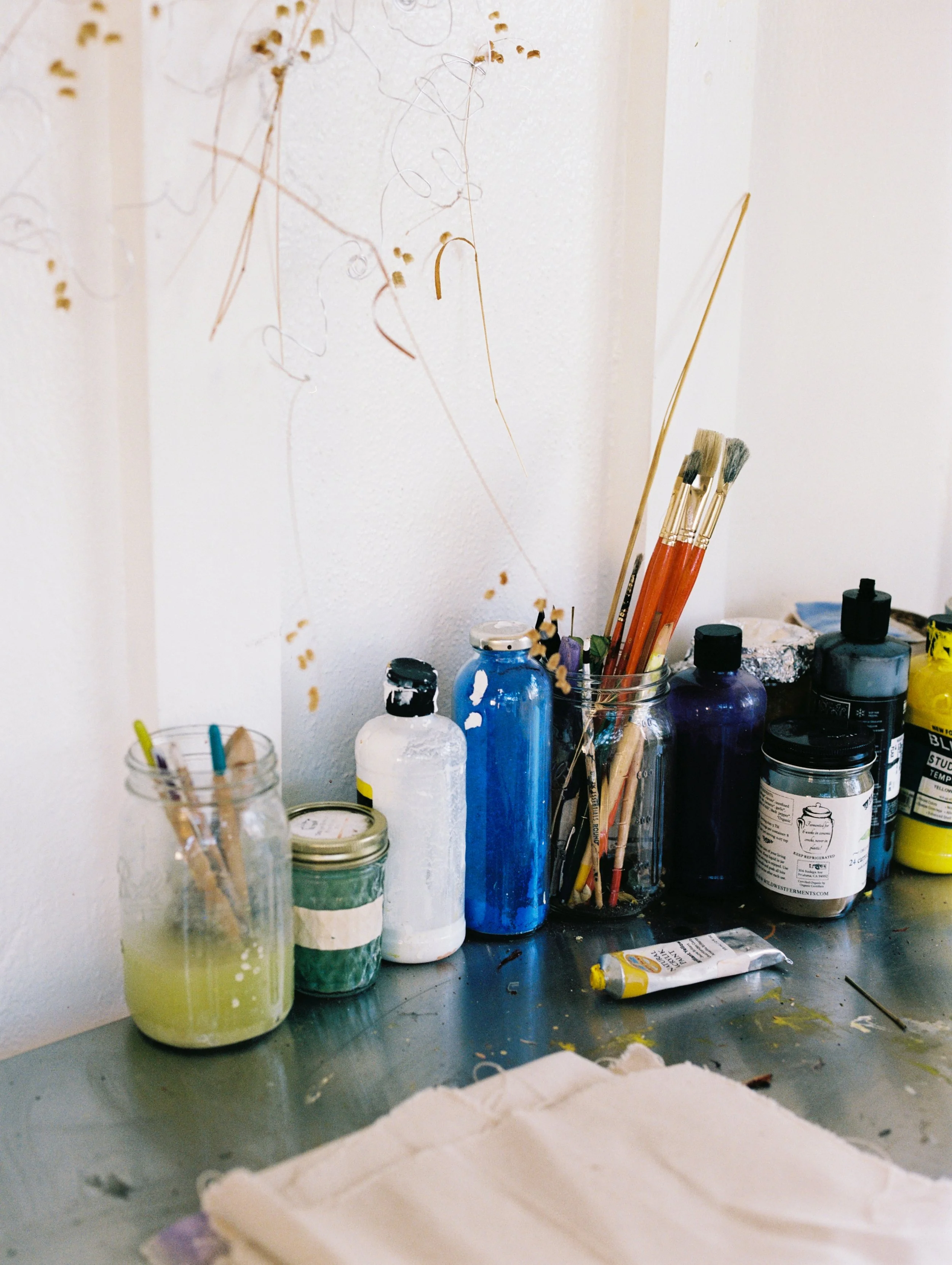
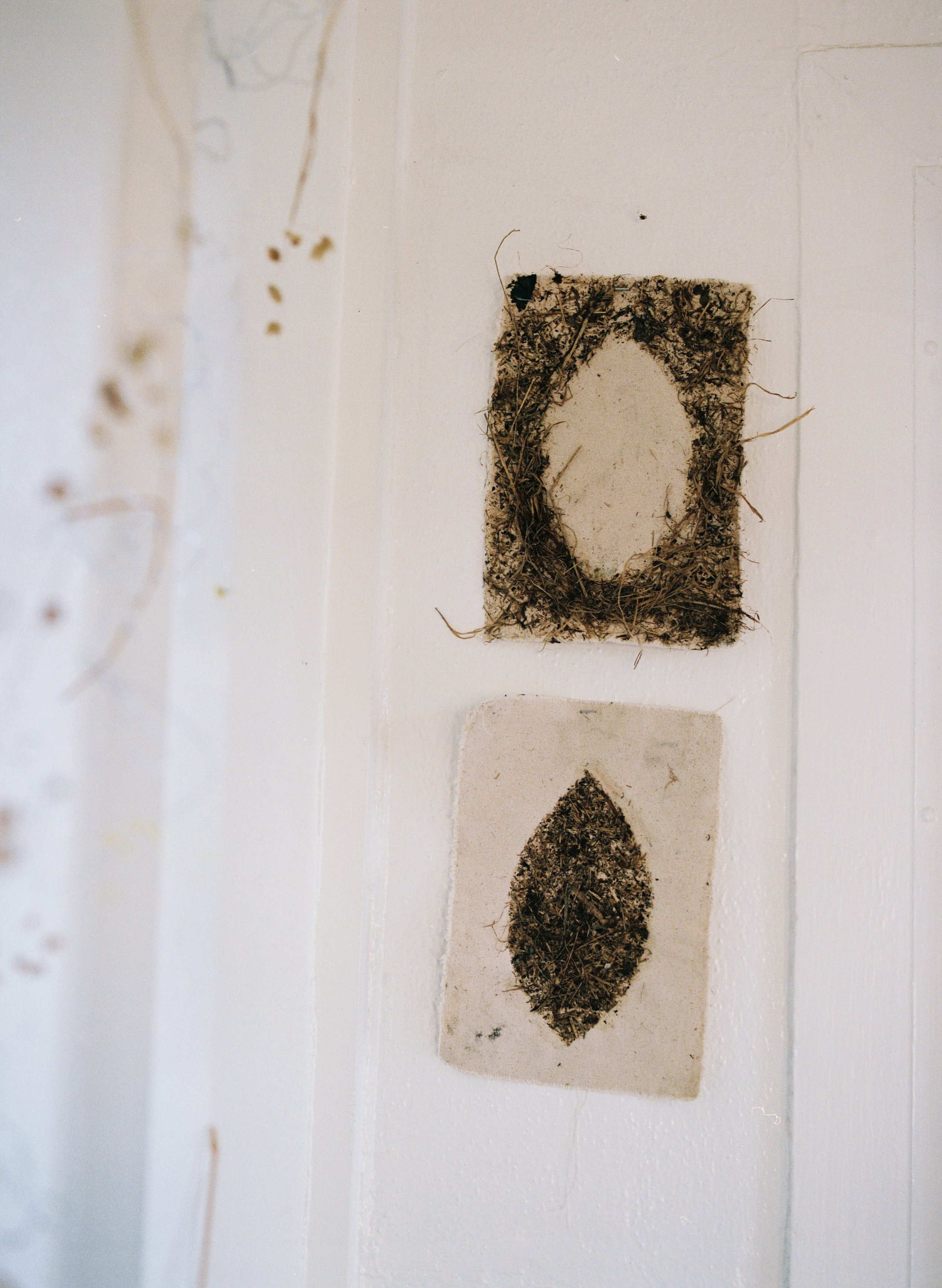
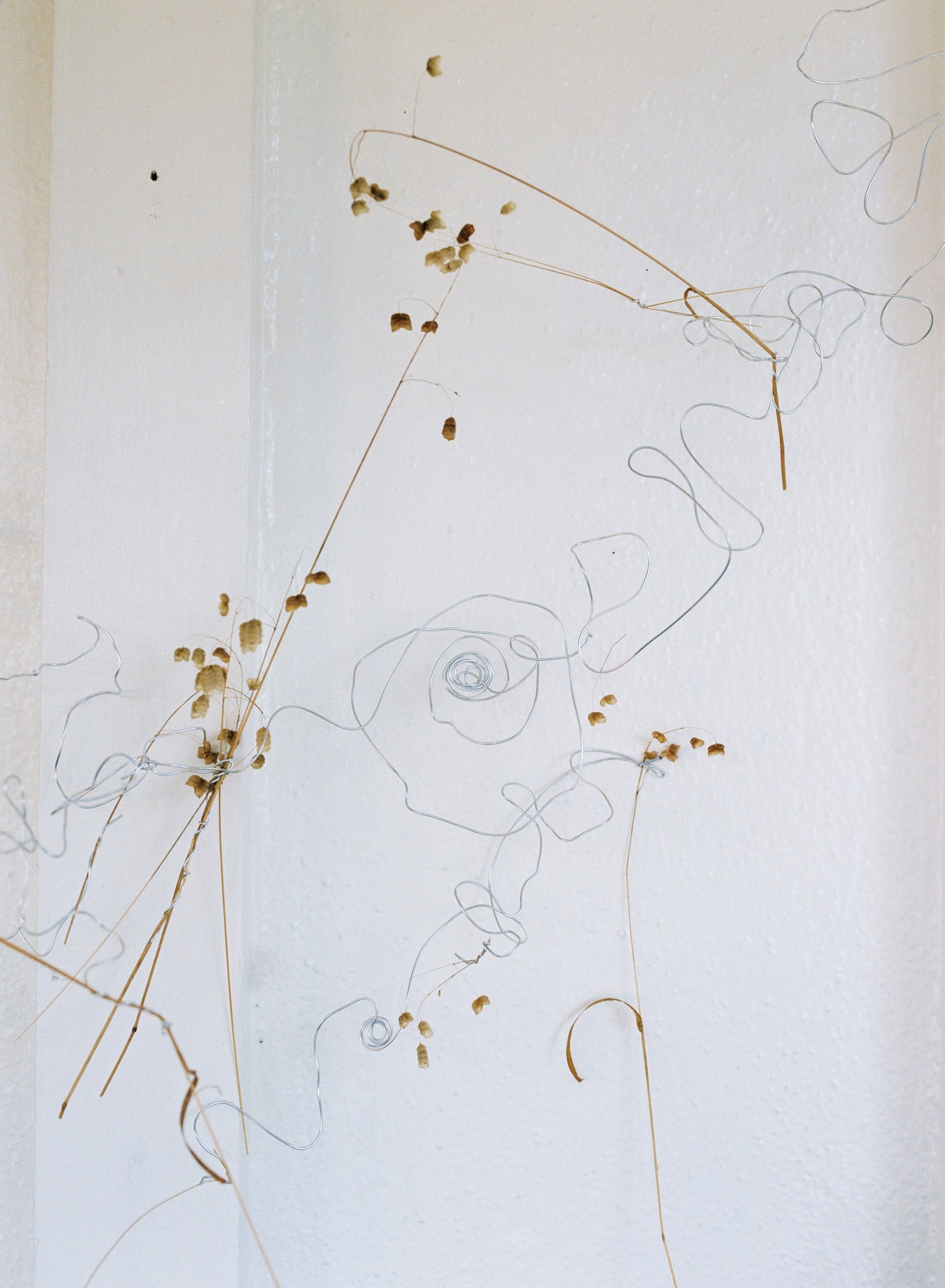
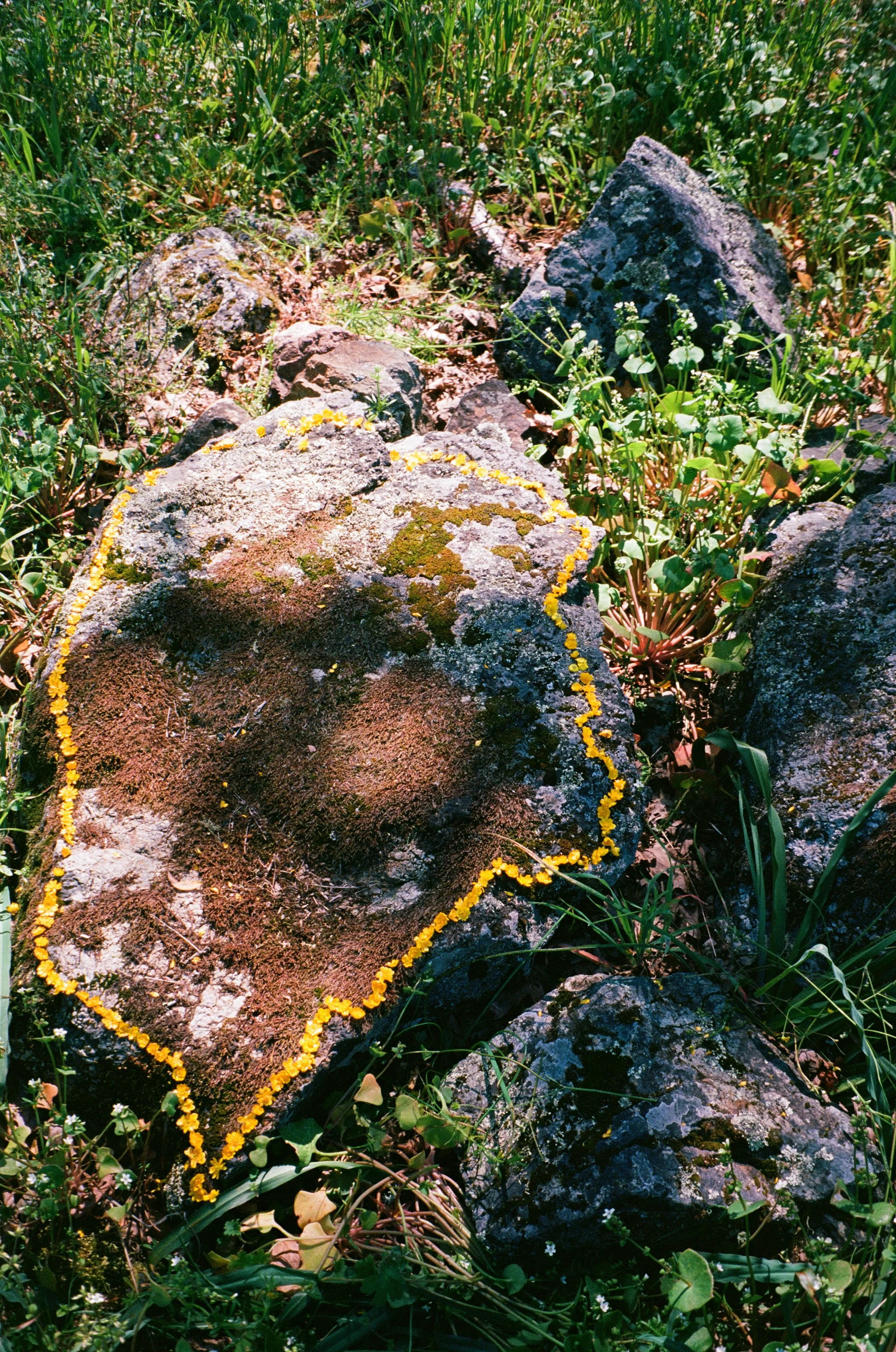
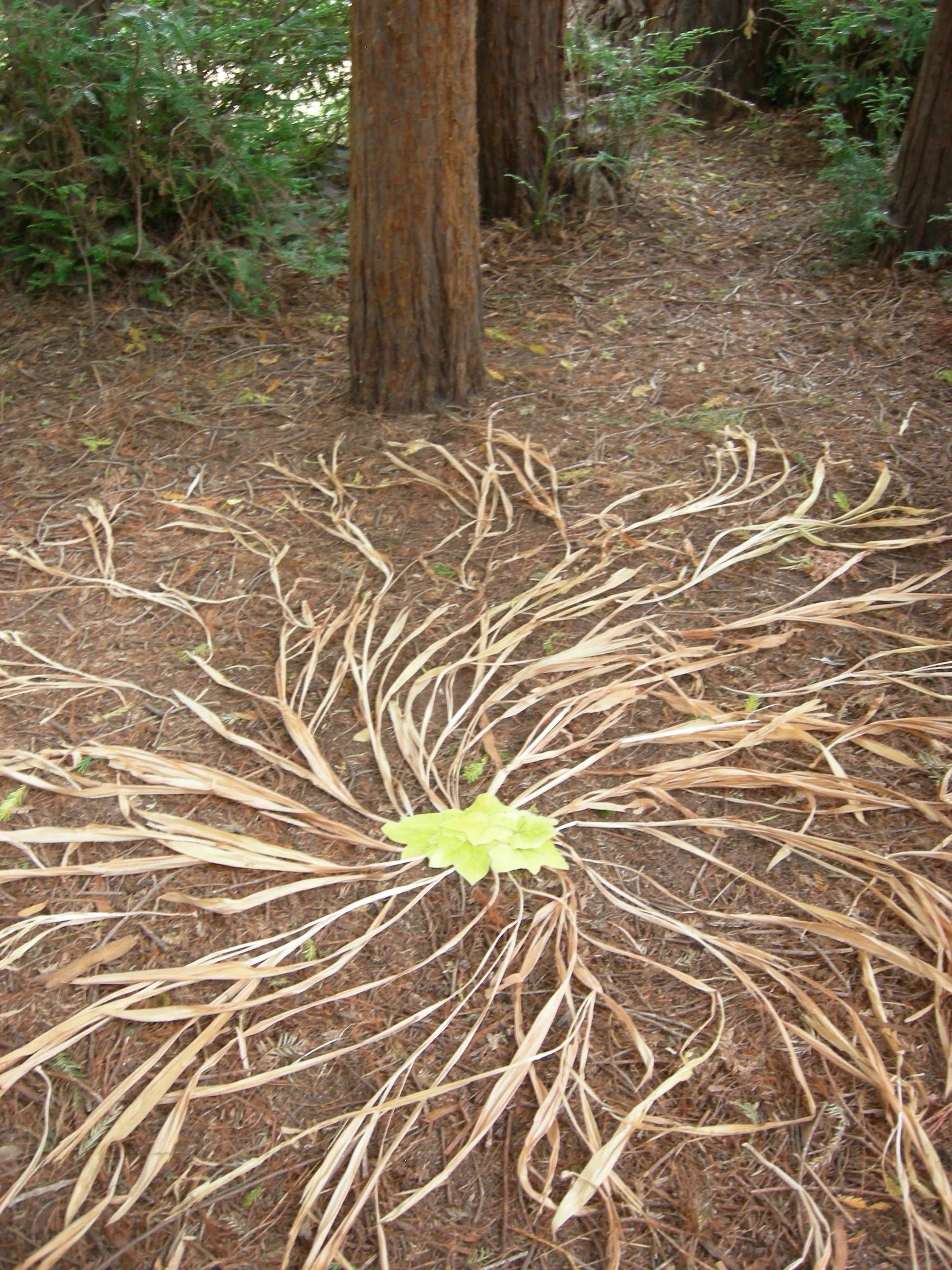
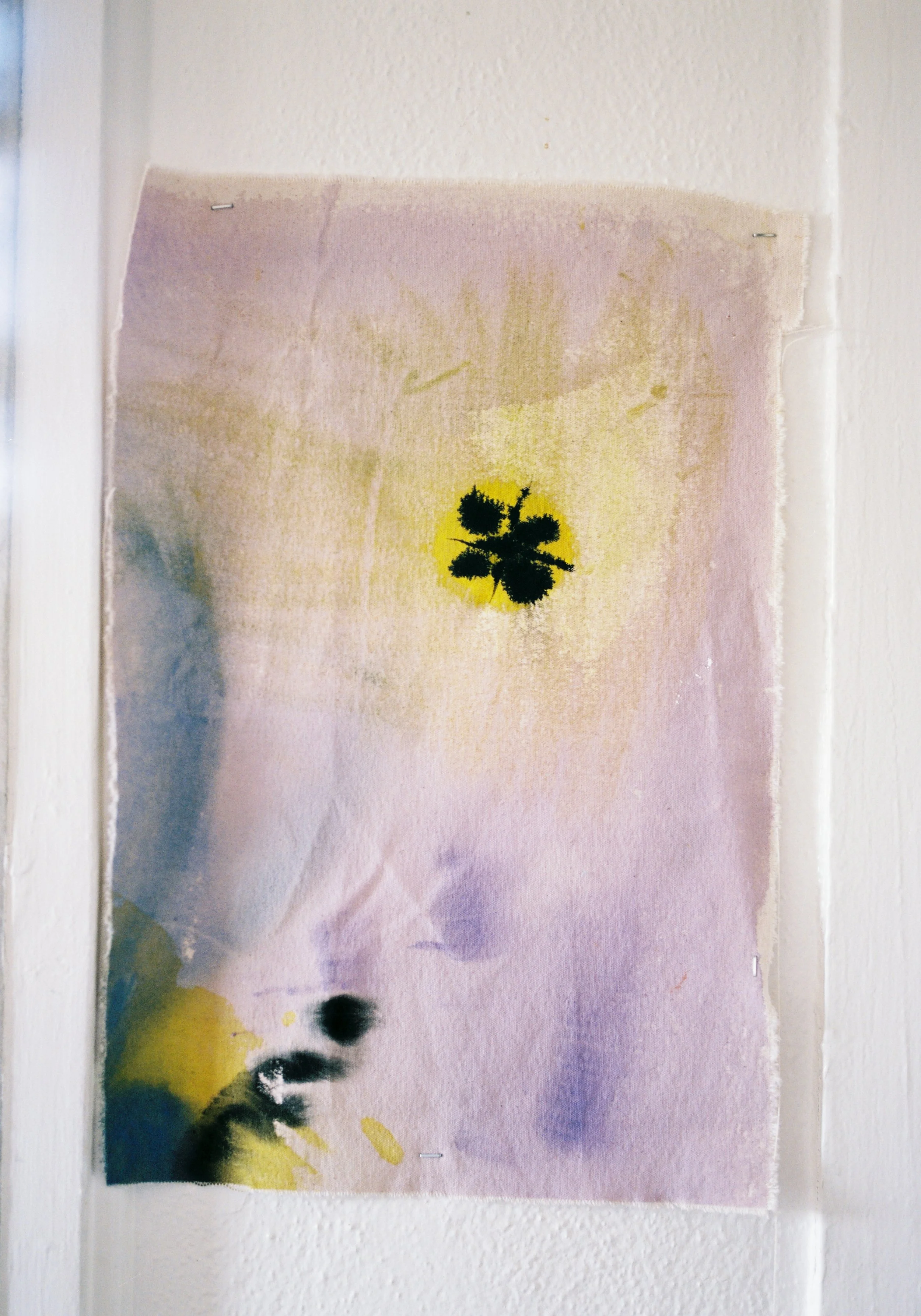
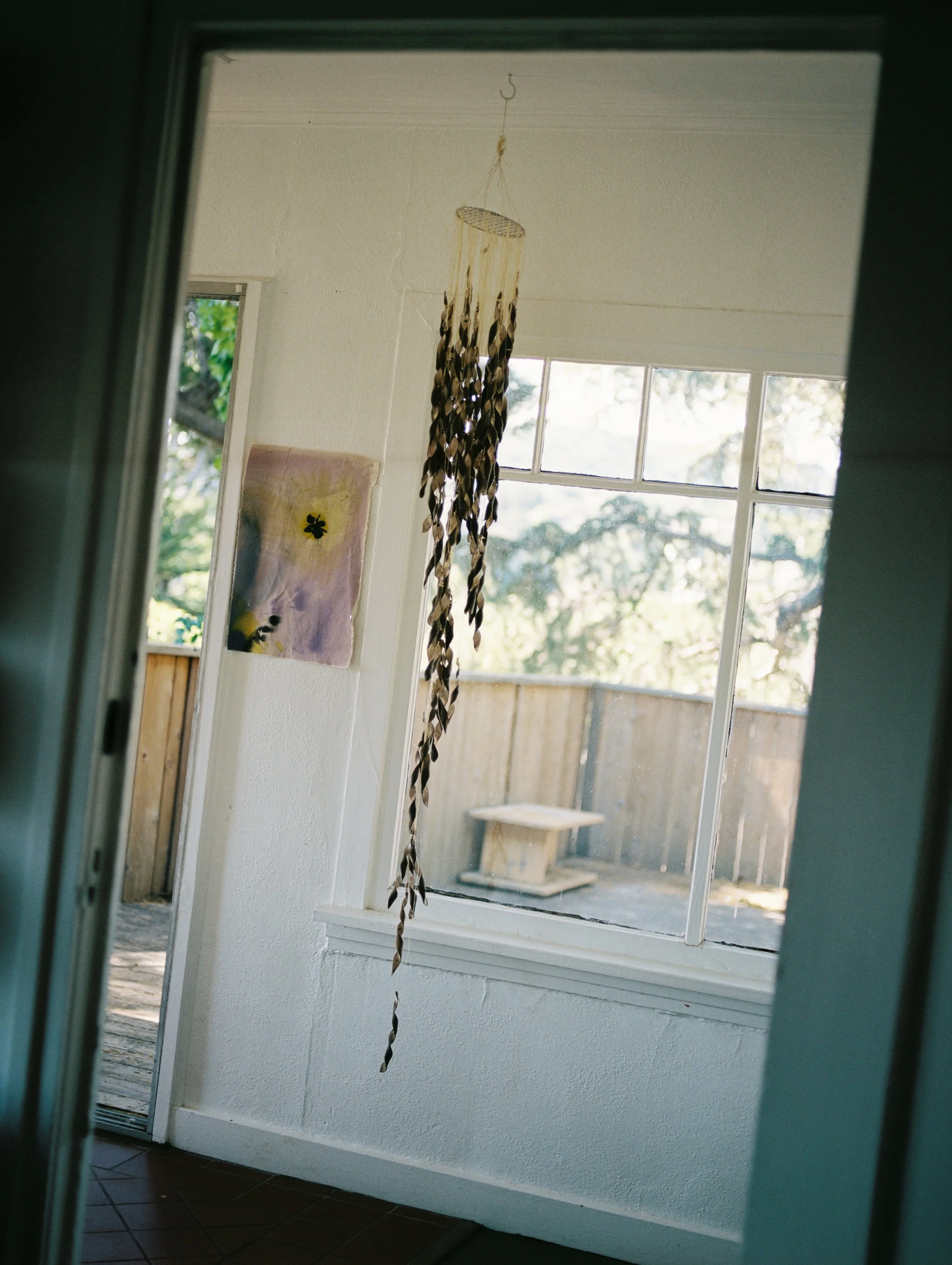
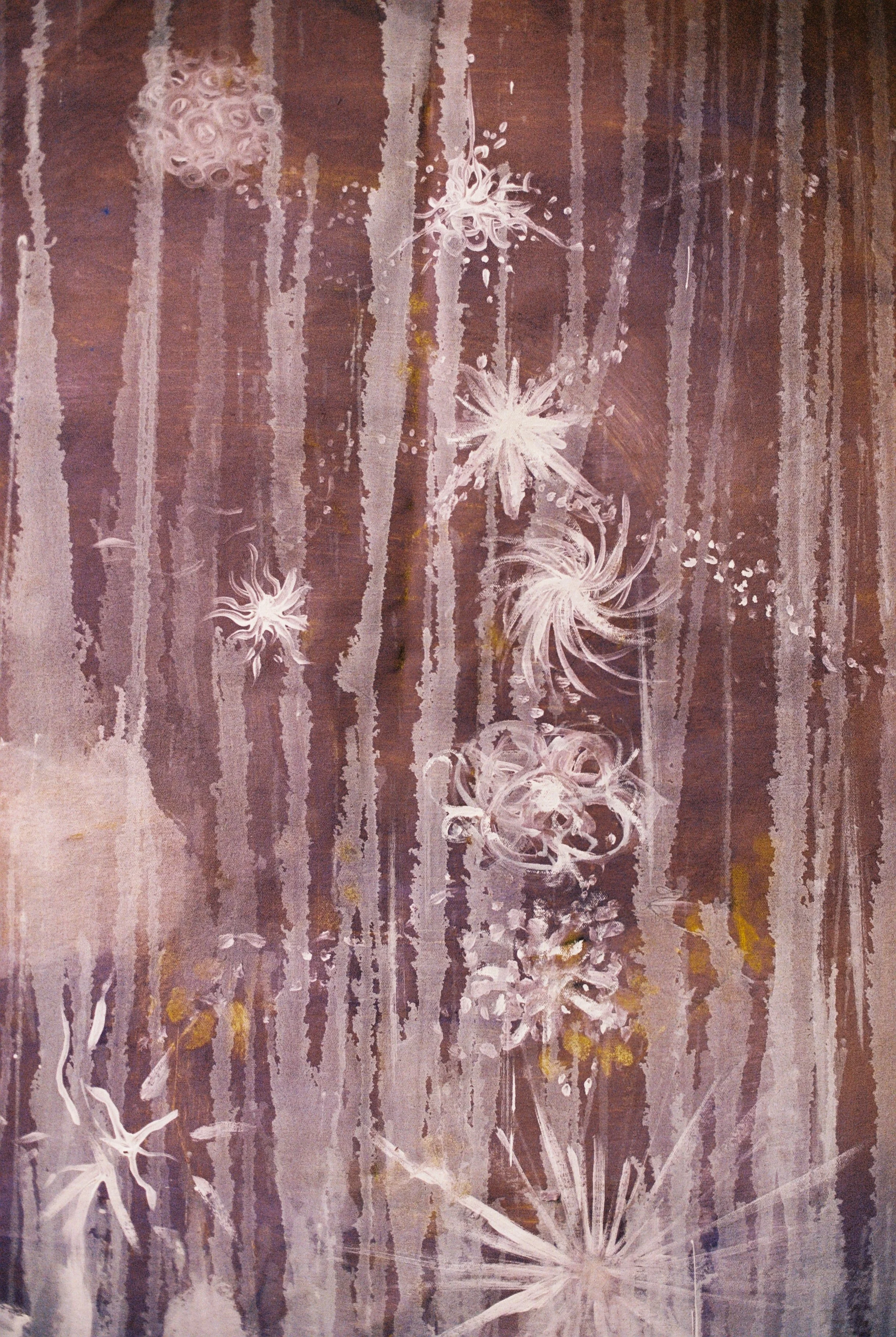
There are materials that continually find their way into my work. Nature and the manmade, bridging the space between the two to remind us that we are not separate, but one living unit co-creating together. My paintings are made with earth pigments, often scattered with petals. My installations use plants, paper, string, and fabric. My land art is nature in its purest form, with the manmade element being my interaction and manipulation of it.
The environment always dictates what wants to emerge, so maybe that is the medium itself. Creating feelings in direct relationship to a place, a moment, an atmosphere. Whatever materials are needed to express that always seem to find their way to me.
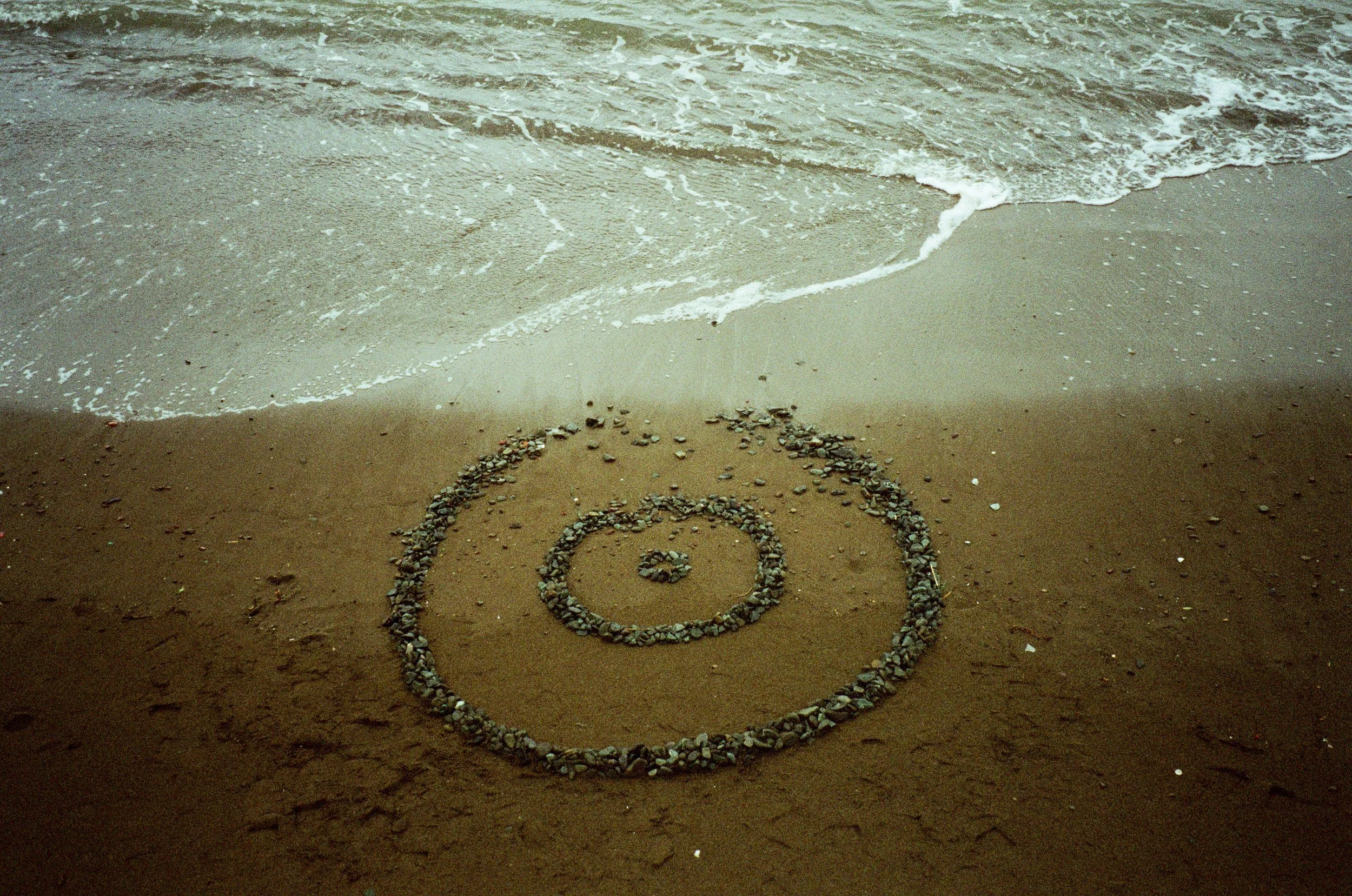
Can you expand on the cosmic spiral motif present throughout your work?
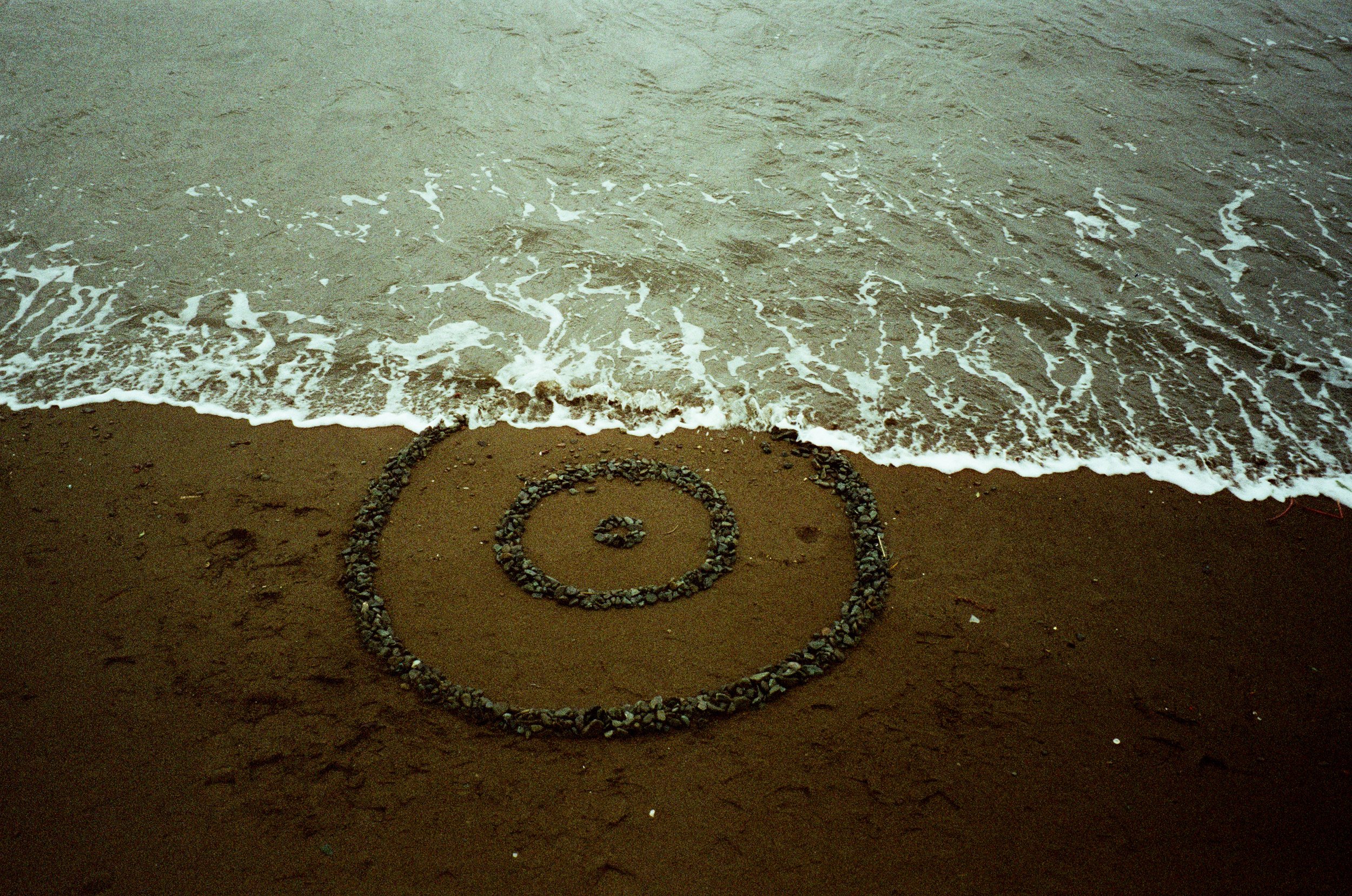
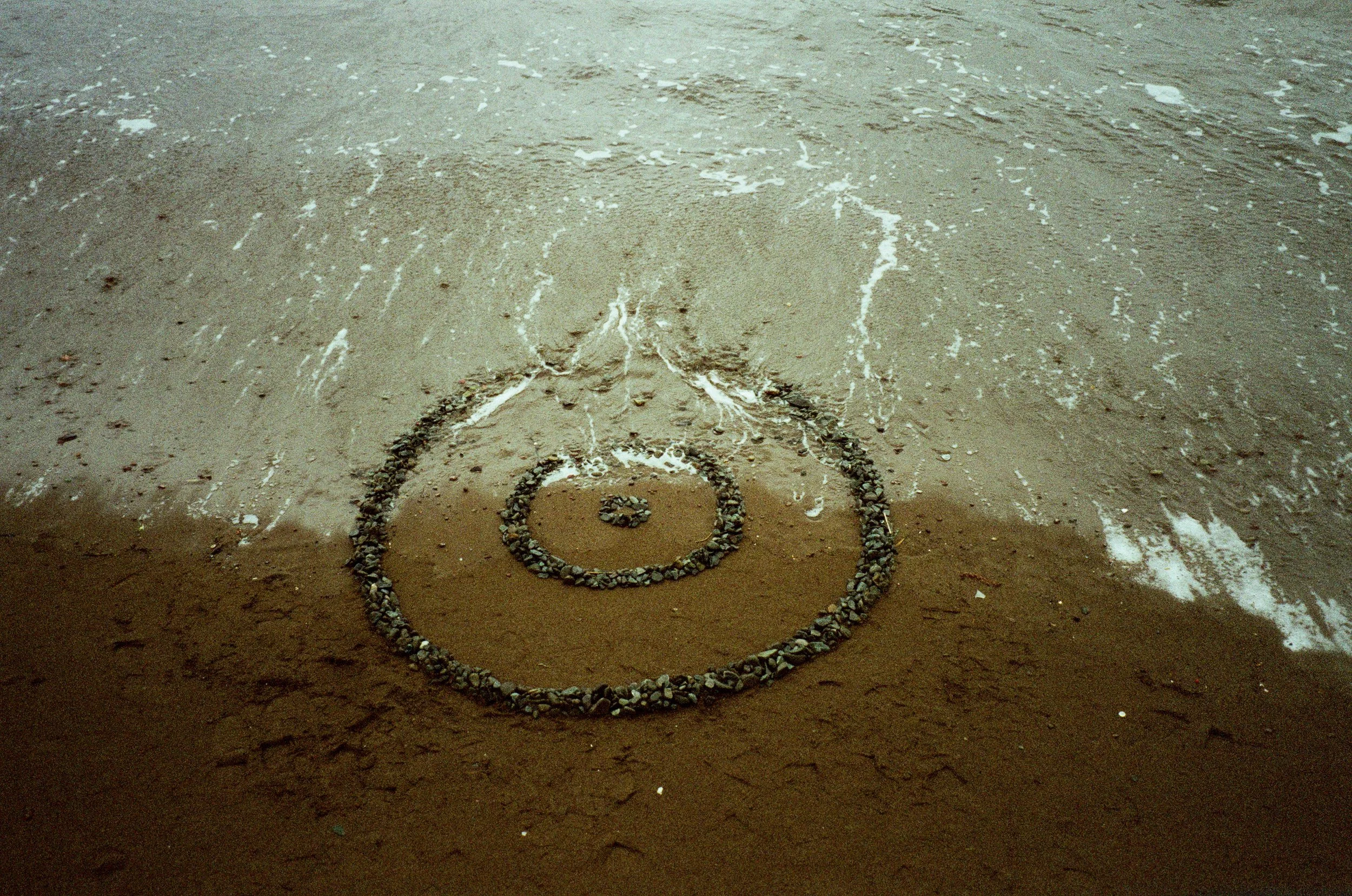
Much of my work happens through play, through letting go of the world’s expectations and surrendering to whatever a moment wants to bring me. The symbols that appear in my land art feel like nature’s universal language, the patterns and forms everything is governed by. Using these shapes to create symbols within nature itself became a way of expressing that we are all unified, all made from the same source.
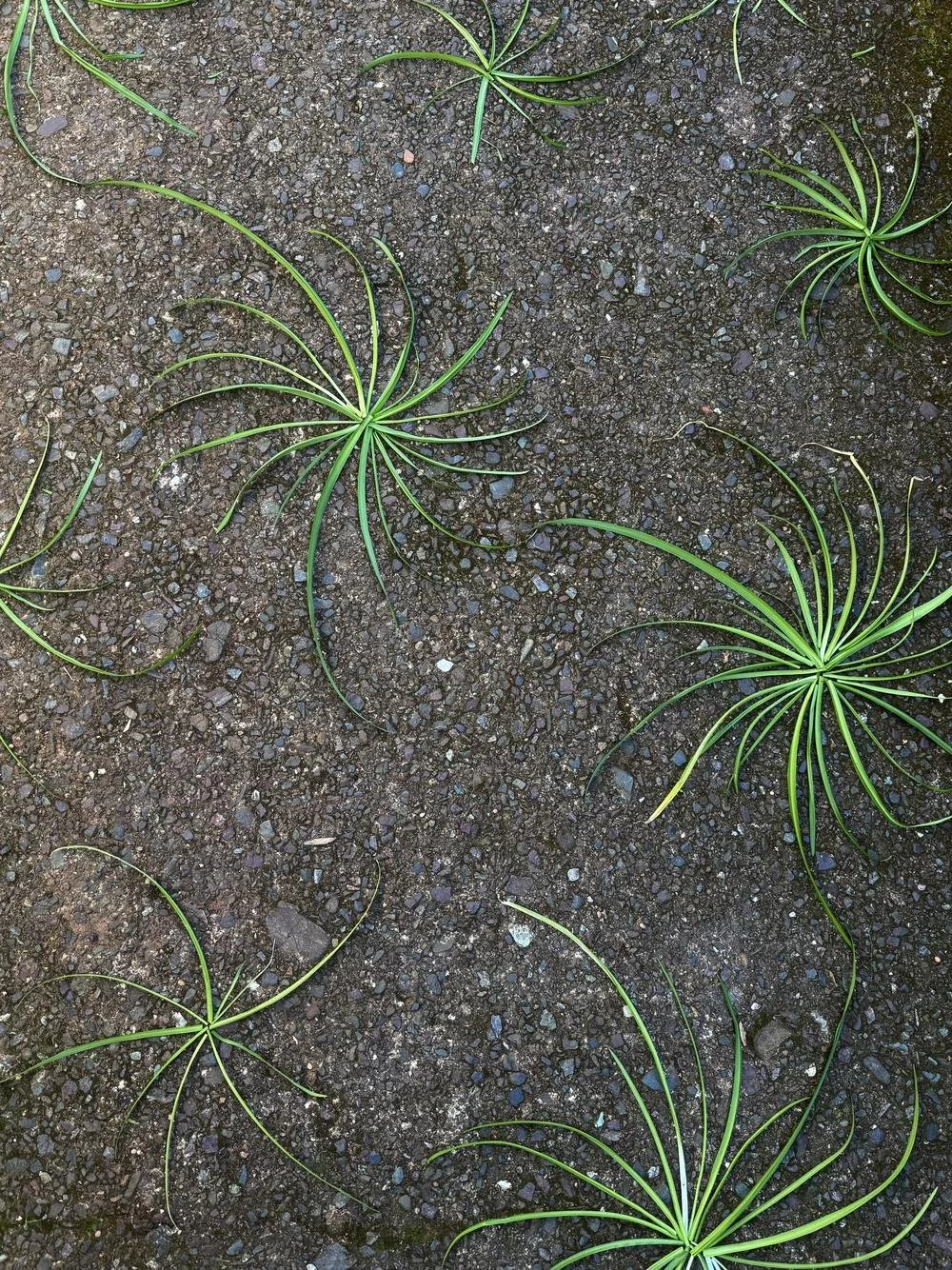
The star motif first came to me one day on the stairs in Sausalito. There was onion grass growing between the cracks, and I began slowly laying it out, creating these galaxies and stars. I became obsessed with the idea that something so grounded, ordinary, and earthly could simultaneously mirror the cosmos. That connection felt deeply important to me.
My work is always rooted in inner contemplation, my relationship to self, bringing those quiet internal worlds outward only to realize they are connected to everyone else’s. We are all made of stars, and I want my work to remind us of that. Flowers feel like fallen stars to me, briefly gracing us with their presence before disappearing again.
It’s funny because when I speak about my work, it can sound childlike, but I think there’s a real purity in that. A kind of openness and wonder that we lose as adults. For me, it’s also a deeply spiritual practice, this belief that we are never truly alone in existence. That someone alone on a staircase in Sausalito can create something small that shifts another person’s day in exactly the way it needed to. The ripple effect of that feels profound to me.
We’re able to tap into unseen realms and create from that place. How magical is that?
Do you have a favourite flower?
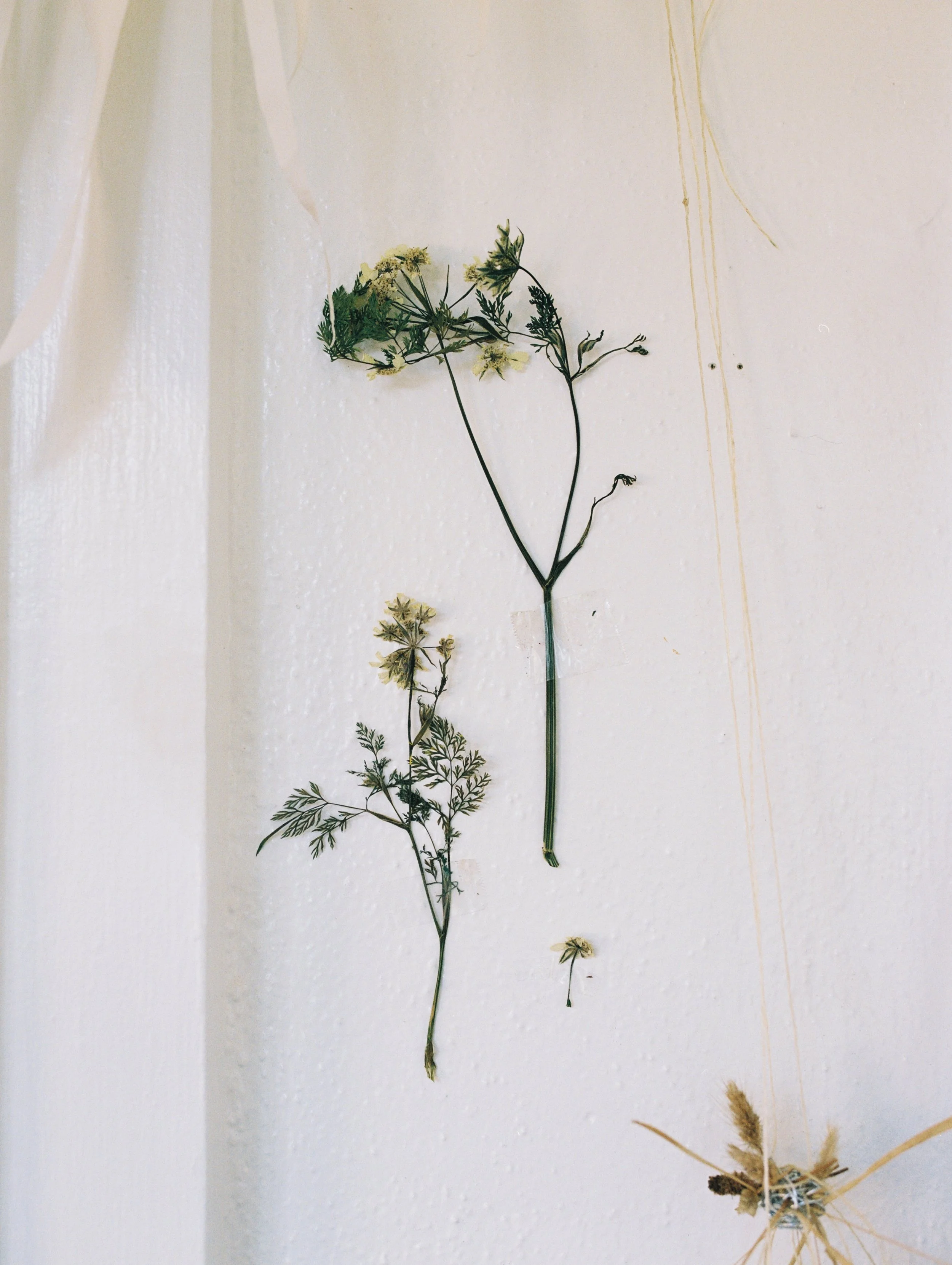
I find that certain flowers come to me at the exact moments I need them. This year, magnolias have really been speaking to me. Maybe it’s their star-like shape, their femininity, their quiet strength. But I’ll forever love lilacs, their scent signaling the arrival of spring, reminding me of home.
Flowers hold so much memory and symbolism for me. The way something so fleeting can instantly transport you to another place, another version of yourself, another moment in time.
Are there upcoming projects you’re working on at the moment?
I have a new series of paintings coinciding with light sculptures! I'm preparing for a public installation in a secret garden next year. The garden is incredibly sacred and protected by its community so the location won't be disclosed only for those who happen to stumble upon it. This way we can protect the nature of this space.
Photography & words collected by Pauline Chatelan @paulinechatelan
@chloeberlinstudio