
An Escape to Hawarden
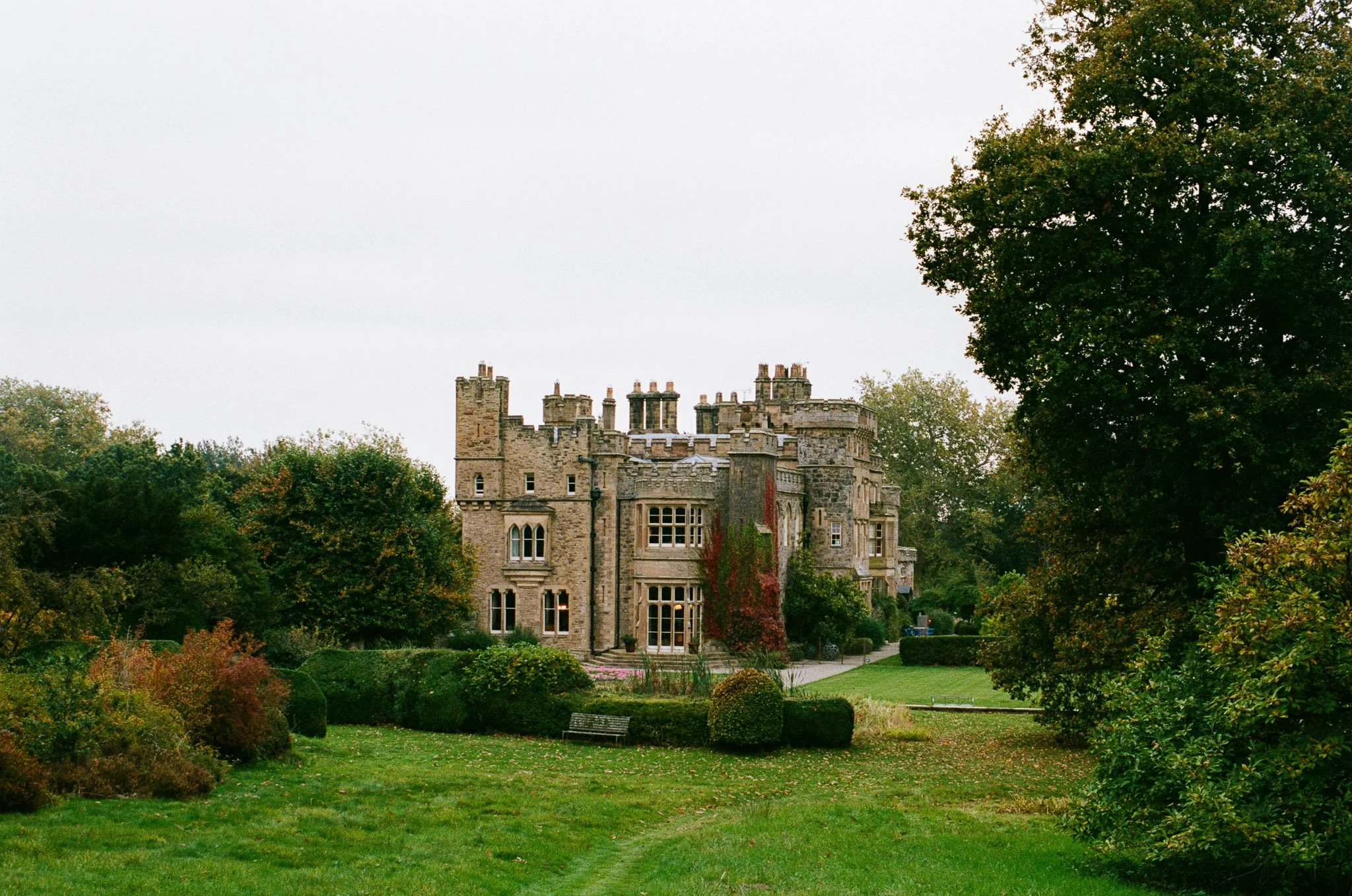
What if a fortress built by the Normans, later restored as a delightful 17th-century ruin—a real folly, half-history, half-fantasy—could be reanimated by the energy of the 21st century?
Hawarden Castle is a place where things are profoundly not what they seem, from the massive, whale-shaped Beluga aircraft unexpectedly screeching overhead, to the hidden “Temple of Peace” where Prime Minister William Gladstone once studied.
Enter this dreamlike world with Charlie Gladstone, great-great-grandson of the statesman, who has embraced his weighty history not as a burden, but as fuel. Discover how this 3,500-acre estate, imbued with the spirit of Cecil Beaton and the grit of its ancestors, transforms heritage into a source of unique beauty and craftsmanship. Prepare to be beckoned in by the warm, glowing light of this place, through Isaac Zamet words and Aniella Weinberger eyes.


The Airbus A300-600ST or Beluga, looks, as its name suggests, like a whale. Seeing it on the tarmac, I sense that it ought to be flightless, like all whales; but this thought is neatly skewered when I catch sight of it later, dangling above the motte-and-bailey of old Hawarden Castle, screeching the sandstone blocks back to the Triassic era.
Things are not always what they seem. So too with the castle; this particular fortification belongs to the Norman period: built to defend the border of England from Welsh raiders. It fell into disrepair after Edward I’s final conquest of Wales in the 14th century, before it was restored in the 17th century – as a ruin; a real folly; half-history, half-fantasy.


I'm standing on the motte with the present custodian of Hawarden estate, Charlie Gladstone: an entrepreneur, enthusiast and great-great-grandson of the late prime minister, William Gladstone. The prime minister was famed for his piety, doggedness and density of character. Over the generations this Gladstonian grit has fermented into a crackling enthusiasm visibly present in Charlie. Wickedly engaged, self-possessed and a little mischievous, Charlie has emerged from the challenge of bearing a weighty history – and inheriting a complex and costly property – with all the alacrity of the stoats feeding merrily from the wet turf of the castle.
Over the past two decades, Charlie and his wife Caroline have turned Hawarden into a regional hub of retail, hospitality and events in this semi-metropolitan corner of the northwest. The mantra has always been ‘relevance through commerce’: the purpose of restoring Hawarden was never, as Charlie says, ‘just so you could go for a walk here’, but rather to create a myriad of pleasure and work-related reasons why people might want/need to be here.

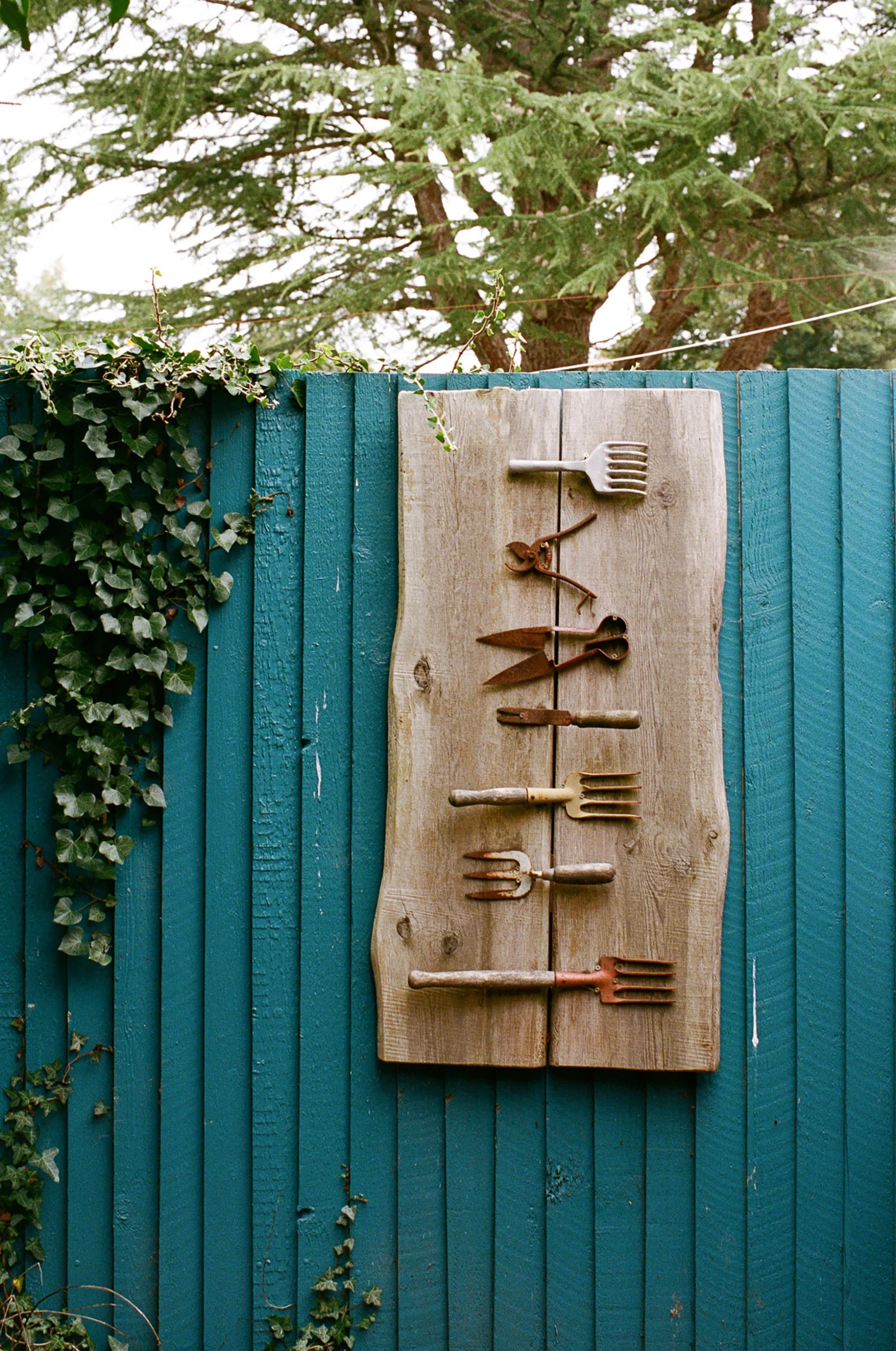

Charlie leads me to the workshops adjoining the house which belong to Gladstone/Hellen, the 13-month-old design business on which he is collaborating with Sarah Hellen. The workshop, like seemingly every room at Hawarden, is warmed both by a crackling fire and ample hi-fi, with an impressive array of analogue kit. On display everywhere are elements of outstandingly finished items of clothing and homeware: lush cushions, cashmere football scarves, denim jackets. Particularly eye-catching are the elegant belts of British pasture leather, fabricated here by Ruby Creagh and finished with subtle stitched motifs.
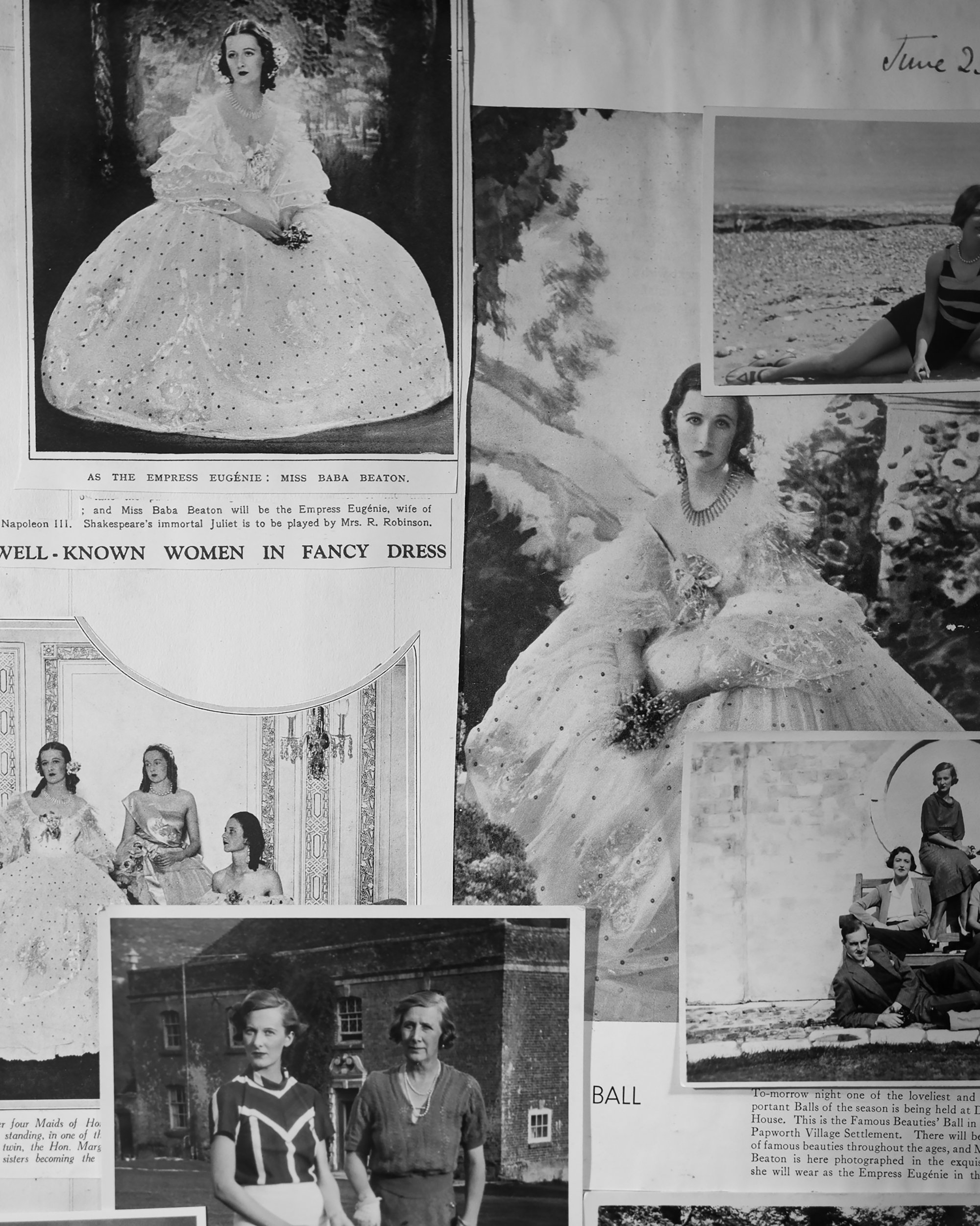
Also currently occupying the workshop is an exhibition of the Cecil Beaton archive: the famous diarist and society photographer was also Charlie’s great uncle. All the texts for the have been written by Charlie by hand; rendering a tactile and personal display of Beaton’s early life that shows how the photographer’s young eye was always drawn to the candour of the home and the charisma in in the faces of his own family.


Lowri, one of the over 100 employees at Hawarden, joins us in the workshop. I learn from her what the estate has done to keep local talent in the region. ‘Many of us came back here as graduates, but only to pass through. Always with plans to go elsewhere. But we found this place [Hawarden] and stayed, and now we’ve all got families here’. The integration and belonging that the businesses of Hawarden represent are reflected in a beautifully shot photo album of all 100 employees I find on a coffee table. Charlie glosses, ‘If there are 100 people, there are a hundred cogs of equal importance. You are only as good as the people around you – and I think we run a very non-hierarchical business’.
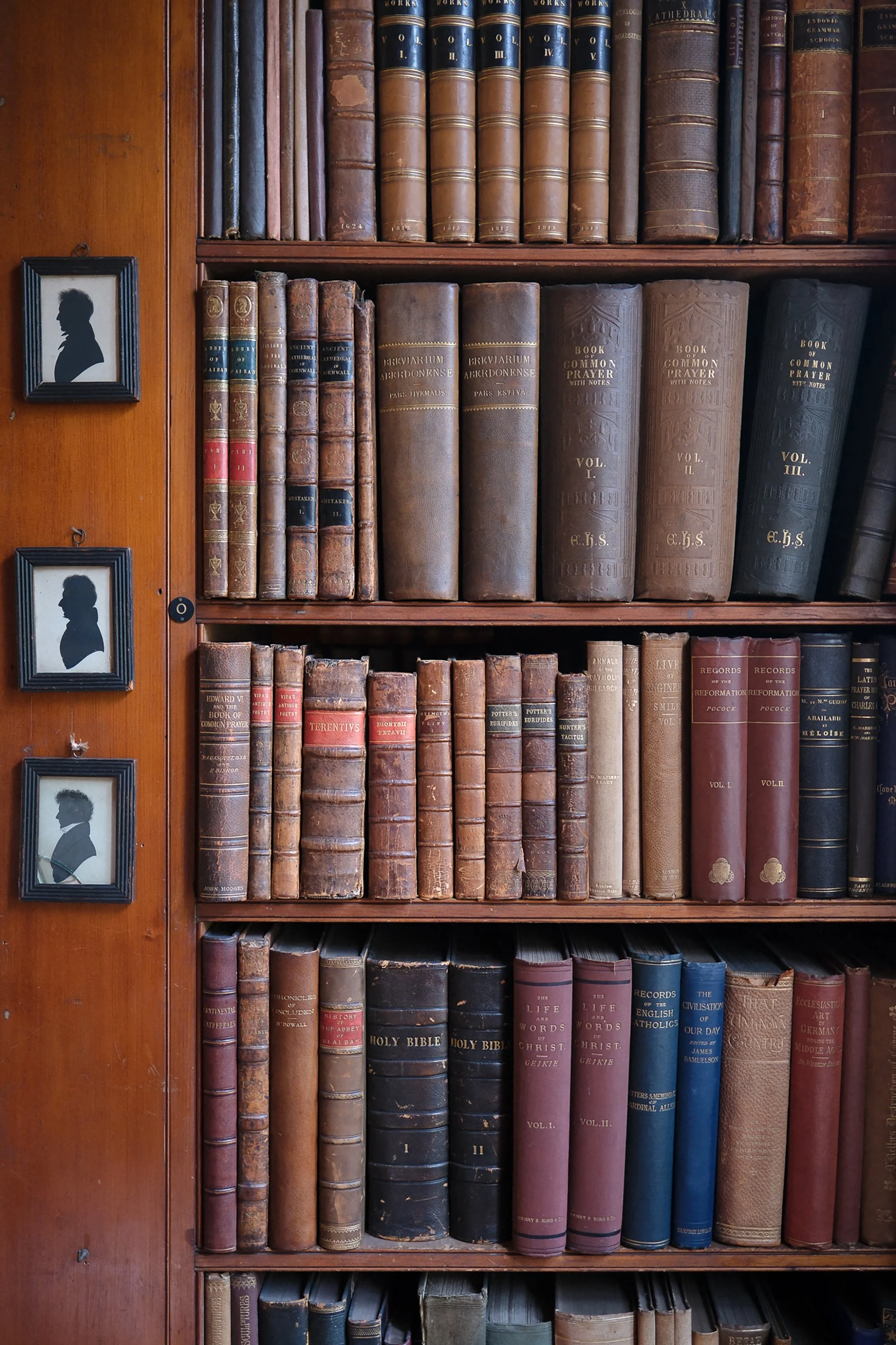
Next, Charlie and I visit William Gladstone’s study, which was known to the great man as his ‘Temple of Peace’. Charlie recalls that living in Hawarden as a child, the place felt like an unapproachable ‘Holy of Holies’; unsurprising given Charlie's father was a history teacher. Charlie has a lighter touch; credentials he proves when my travelling companion, Hershy, treads sheepishly into the study in a dressing gown, and is welcomed rather than vaporised.
The study is full of thrilling traces of the late prime minister, such as the many woodaxes leaning-to in the fireplace. Gladstone was known for his tree-felling hobby and it was said that the public would travel by train and queue for hours just to see him chopping. A portrait of him in his older age hangs over the fireplace, which prompts Charlie to tell us about William’s rule of chewing any mouthful 34 times before swallowing. I remark that he looks like he never ate anything at all; the sort of man who fuelled himself by pure intellectual torque.
**
One newer dimension of the Hawarden businesses is Hawarden Estates holidays; luxury accommodation set across the estate in various sections of the castle, its outbuildings and cottages. The grandest of these is the West End, an apartment in the castle, which my companion Hershy and I have the pleasure of staying in.
After a morning marching through the mizzle with Charlie, we twist the sculptural door knocker on the West End to find a series of lovingly furnished bedroom and living spaces, arranged over three floors with meticulous attention to detail: ‘Between my wife Caroline and I, every single picture, every single kitchen utensil, has been bought and installed and hung by us’. Contemporary pieces of design and furnishing compliment a quietly arranged patchwork of the house’s history. The stony looking Catherine Gladstone (wife of William) marshals the first landing; there are blades from boats rowed by Gladstones at Christchurch and documents stretching back two hundred years. The landing outside of the master bedroom is a vivid portal to Cecil Beaton’s intellectual world: glamorous, full of artifice, secret ire and tenderness. Three highly composed portraits of Beaton’s favourite sister Baba are adjacent to beautiful pen and ink designs for the costumes of My Fair Lady (1964) for which Beaton collected one of his two Academy Awards.
The master bedroom has a handsome fireplace and is distinguished by an enormous contemporary desk/workspace looking onto the ruins. Hershy takes the master suite; I the Don Quixote room; deliciously soft, heavy furnishings make it a dozy, hearty place to be in the wet afternoon. It is marked out by an enormous floor-to-ceiling canvas depicting the tiny, credulous Sancho Panza’s arrival as ‘governor’ of the Barataria. Later on, I find this scene of pranking a small, fat man makes a cosy backdrop for a night of very deep sleep.
Having installed ourselves, we sit by a roaring fire, enjoying an ecumenical record collection, including Aphex Twin and Frank Sinatra. I reflect on the outstanding commitment to quality evident throughout the apartment. Cushions and blankets from Gladstone/Hellen, make every seat a haven. The knife block in the kitchen is replete with the prizes of Japanese steelsmiths; the cutlery and glassware is all very considered and beautiful. Every need is anticipated – including those pertaining to radiation, with an infrared sauna tucked subtly into
the ground floor boot room. It is a very considered, personal form of luxury; I am reminded of Charlie saying, ‘The businesses I do best are the ones I would buy from myself. If I don’t feel it in my bones, it never quite works’.


**
As the short winter day is dying, Hershy and I head into the grounds of the estate: 3,500 acres of land hanging over a sandstone ridge, which is like a hinge between two countries; some of it is private, some public; some held by Hawarden’s many tenant farmers, some criss-crossed by pathways for the public and those holidaying here.
We take a path into the woods, crossing a stream, arcing over heathland and into the trees. Dense old growth mixes with new cultivation, including what looks like a Christmas tree farm. In the many corners of the 3,500 acres, there is a prevailing sense of careful stewardship.
The last moments of the day bring on a psychedelic quality. As the light scampers off to the west, it feels like the saturation levels have been adjusted; inside the forest, the Scots pines turn hot, whilst the neon grasses underfoot make my vision hum. Toward the hills in the south a wave of winter thrushes is ripping the ashy folds of cloud. Robins and blue tits dive from the branches in surprise. For us, our legs tiring, an about-turn to the pub is the only way. As William Hazlitt once wrote, “I like to have a mile or two of common or woodland before me, to lounge through, while I con over some old poet, or think of nothing; and then to have the prospect of a snug dinner afterwards.” No old poets for us, but speaking – as only best friends can – of the most gruesome methods of suicide we can imagine, we head on to dinner.


**
The Glynne Arms is a 200-year-old coaching inn on the cheerful High Street of Hawarden Village, abutting the estate to the north. On arrival we settle into pints of beer before trying the Welsh rarebit crumpet, a fishfinger sandwich, a steak sandwich, and a particularly delicious dish of salt-aged duck breast and beetroot ketchup. By the fire we play an encyclopedia game featuring: Polly Toynbee, Tottenham, Travertine and Troy Bolton; before wandering back to the estate in the gloaming; the Castle visible through the trees; the warm light of its many windows beckoning us along the driveway.
The only obvious way to spend the rest of the evening was in the West End’s private woodland garden, where we warmed the stove heated Hikki Swedish hot tub; an excellent way to pass a few hours. Laughing together and steaming under a very full moon we both resolve to be back as soon as we can.


**
In the morning, full of toast and coffee from the farm shop, we set off home, heading toward the enormous flaming chimneys of Connah’s Quay power station. I consider there how the fuel of individual effort is capable of making such an enormous difference to place. ‘Life is so complicated,’ Charlie told me, ‘I worked and worked and worked and now I’m very proud. But it's never just a system of sort of, you know, completion or whatever. It's always ongoing.’
Hawarden is a place where there is never a shortage of new ideas or energy to realise them. The power station to our left, I think of the little world, receding behind us in the shiny December, its own glowing, ancient turbine.

Pictures - @aniellaweinberger
Words - Isaac Zamet @isaaczamet
Hawarden Estate - @hawardenestate
www.hawardenestate.co.uk