
The Grace of Imperfection
Lucy Wayne’s Tender Observations of Blooming and Fading
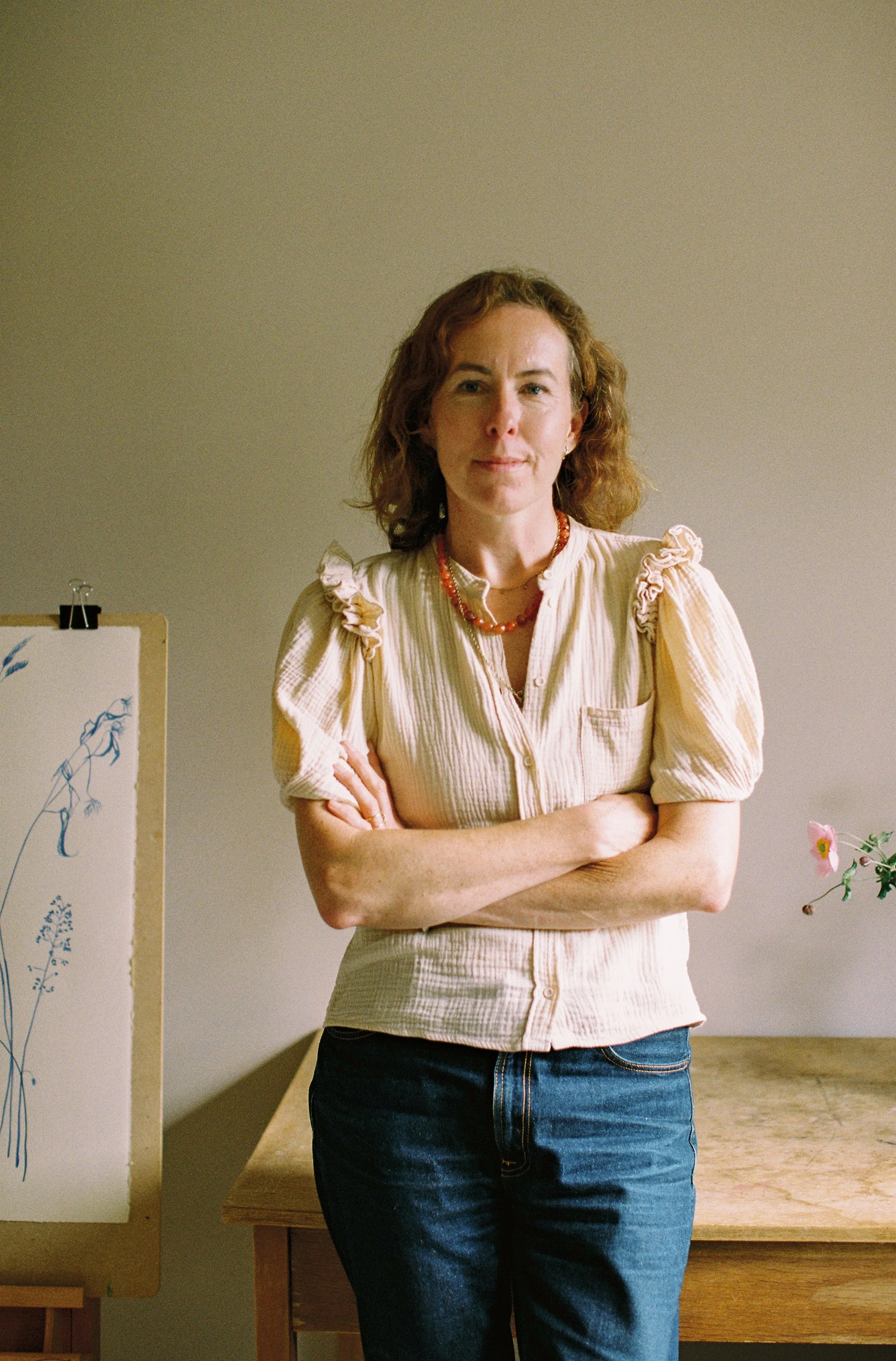
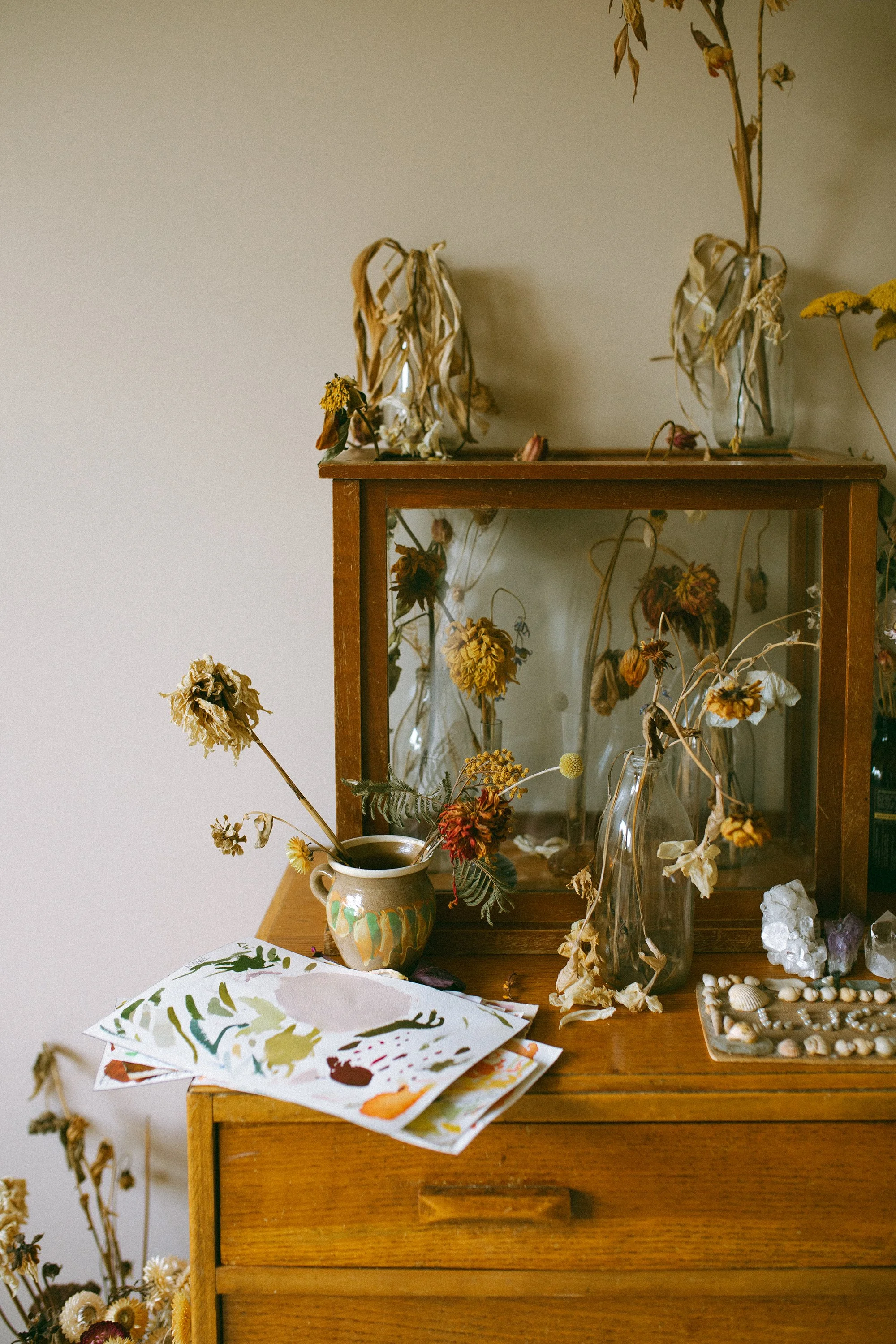
Lucy Wayne does not paint still life. She paints life in motion: the slow arc of a stem as it bends, the deepening hue of a petal as it fades, the quiet surrender of a flower that has passed its bloom. In her studio, flowers are not frozen at their peak. They are allowed to age, to curve, to dry. They are observed not as objects, but as companions in a process that unfolds across days.
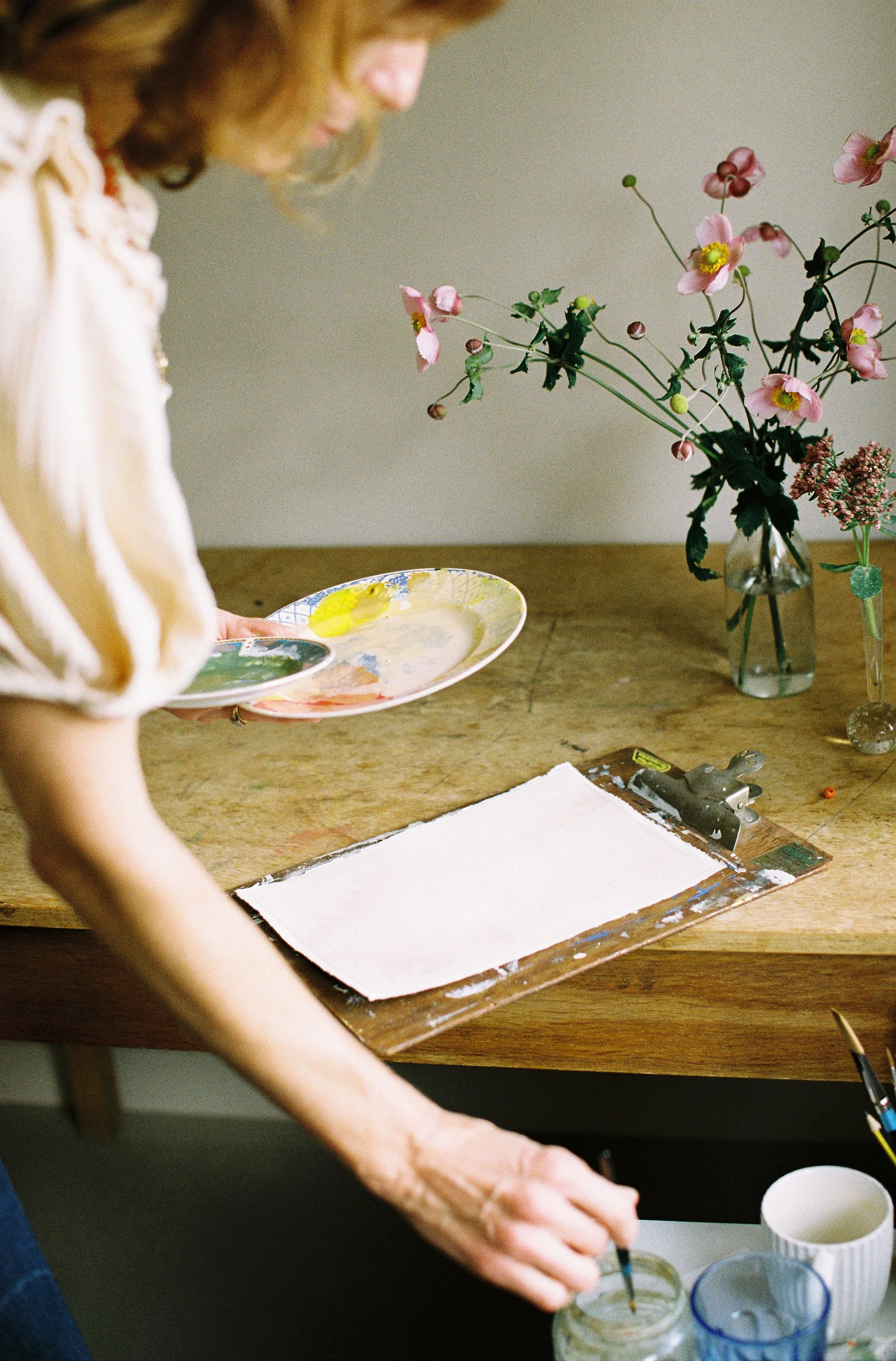
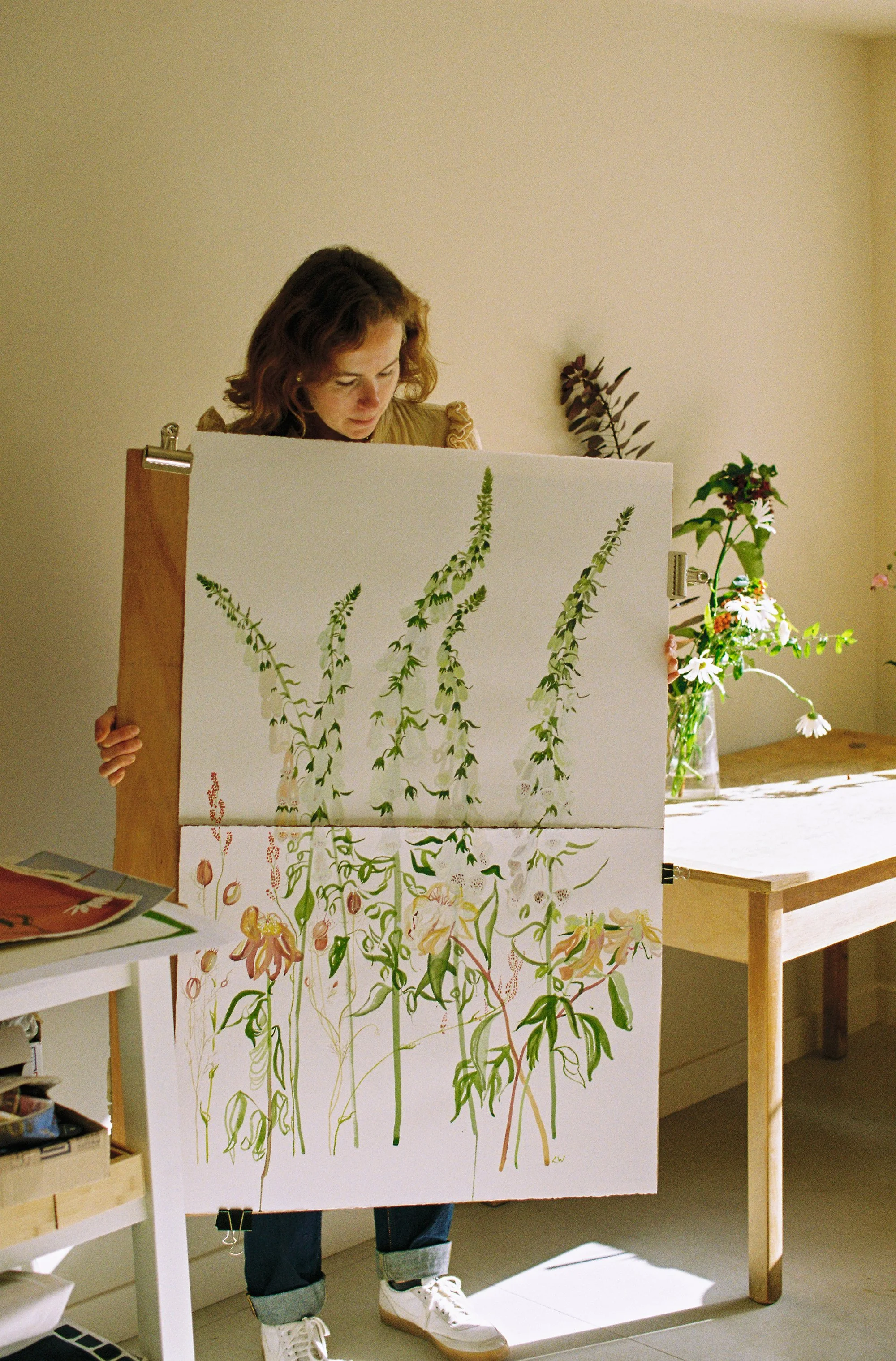
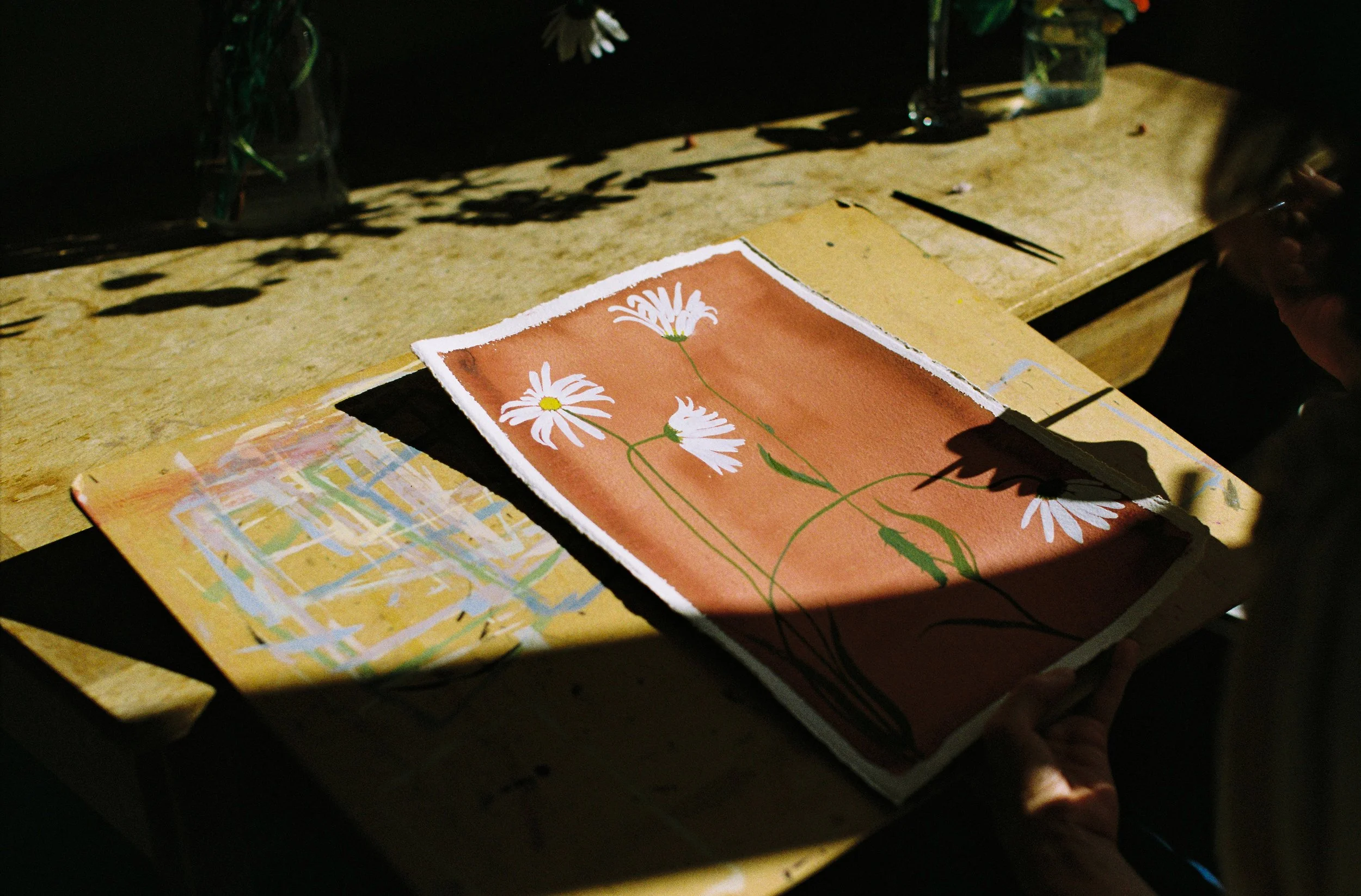
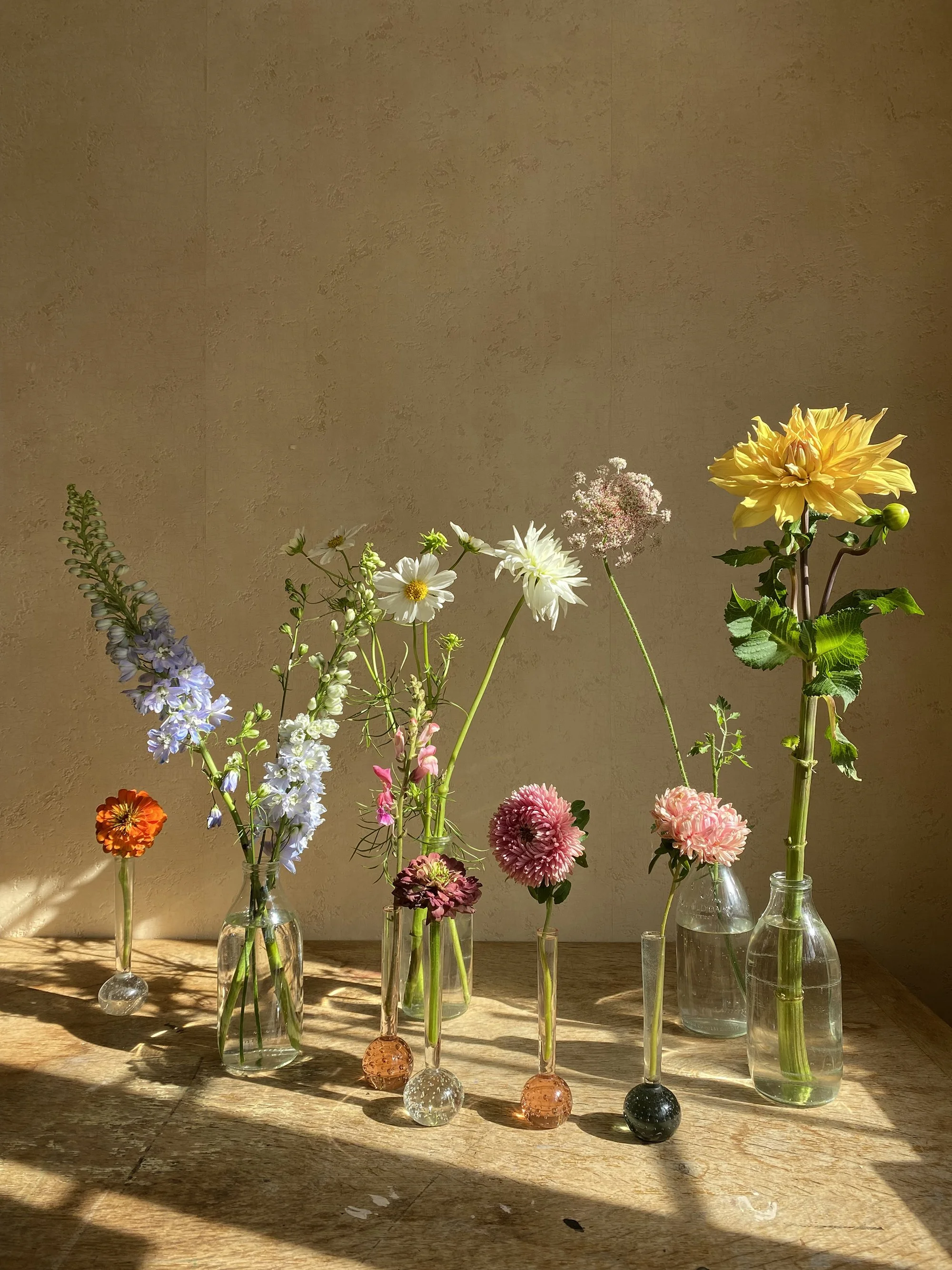
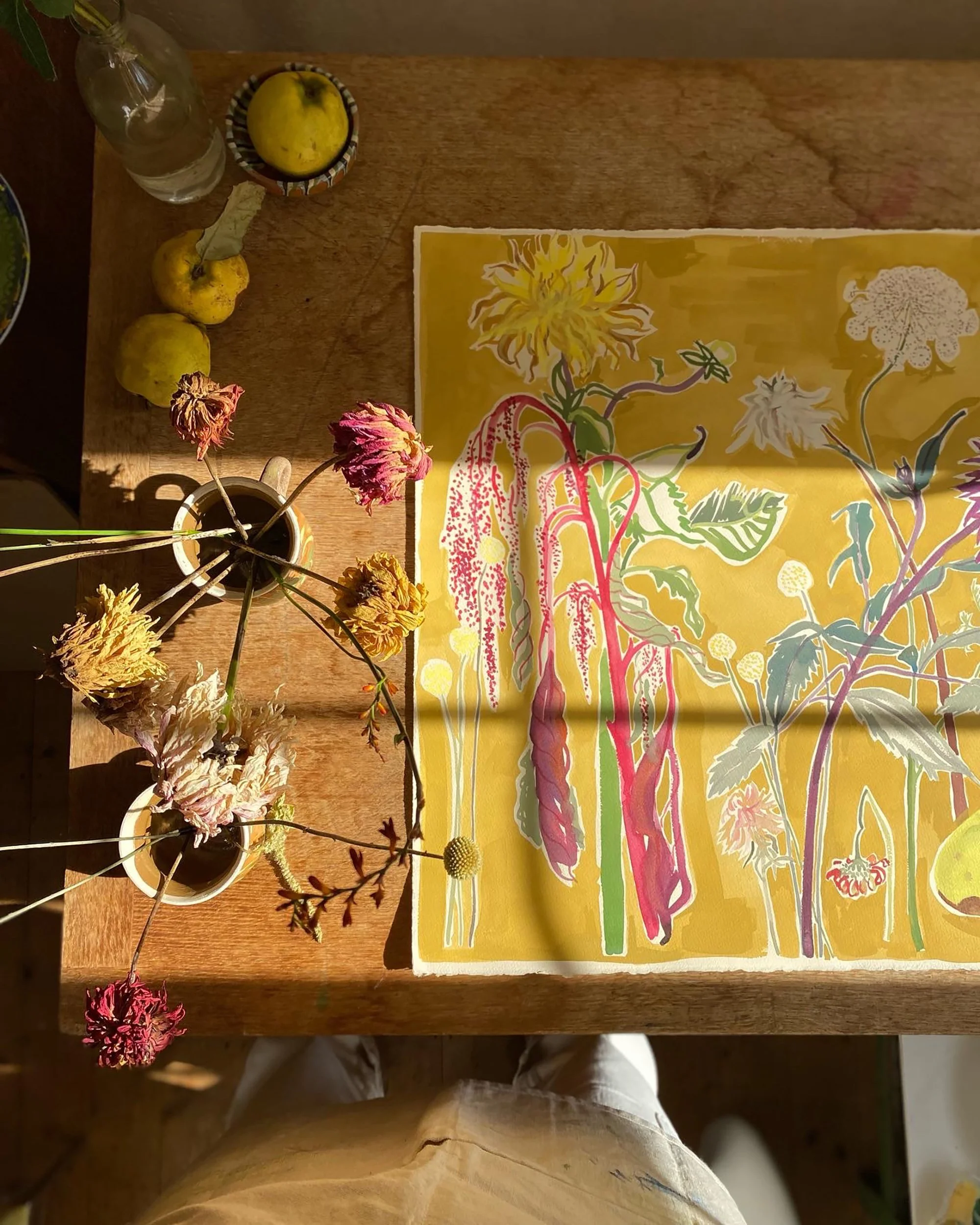
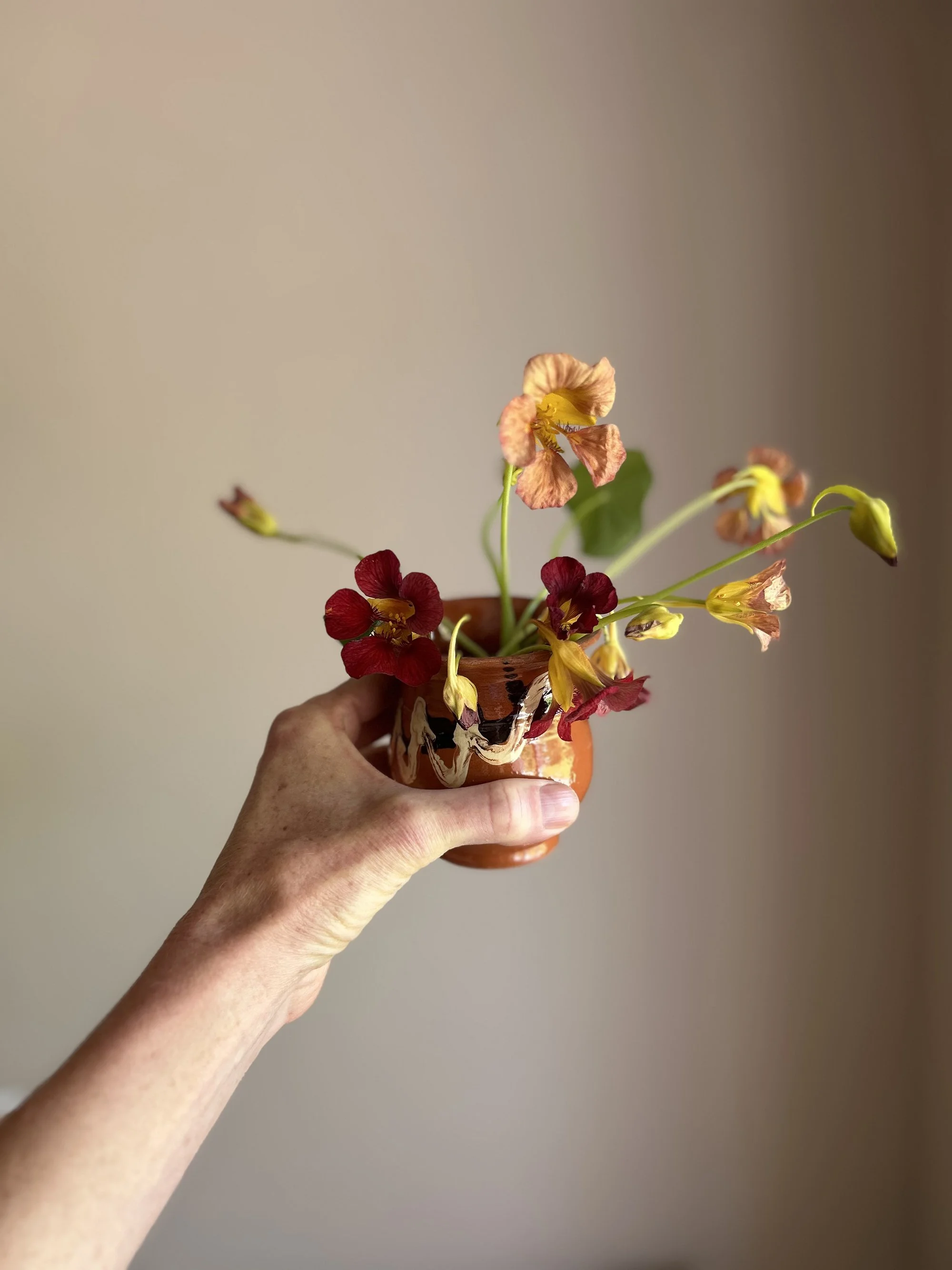
Her practice begins not at the easel, but in the garden. Wayne spends time among what is growing, watching what catches her eye, what feels right to bring inside. She cuts stems and carries them into her studio, where an old wooden table becomes the stage for a careful choreography. Stems are arranged in milk bottles, jars, vases, moved, reconsidered, adjusted. This is not preparation. It is already part of the work. The composition takes shape through touch, through play, through an intuitive sense of balance that cannot be sketched in advance.
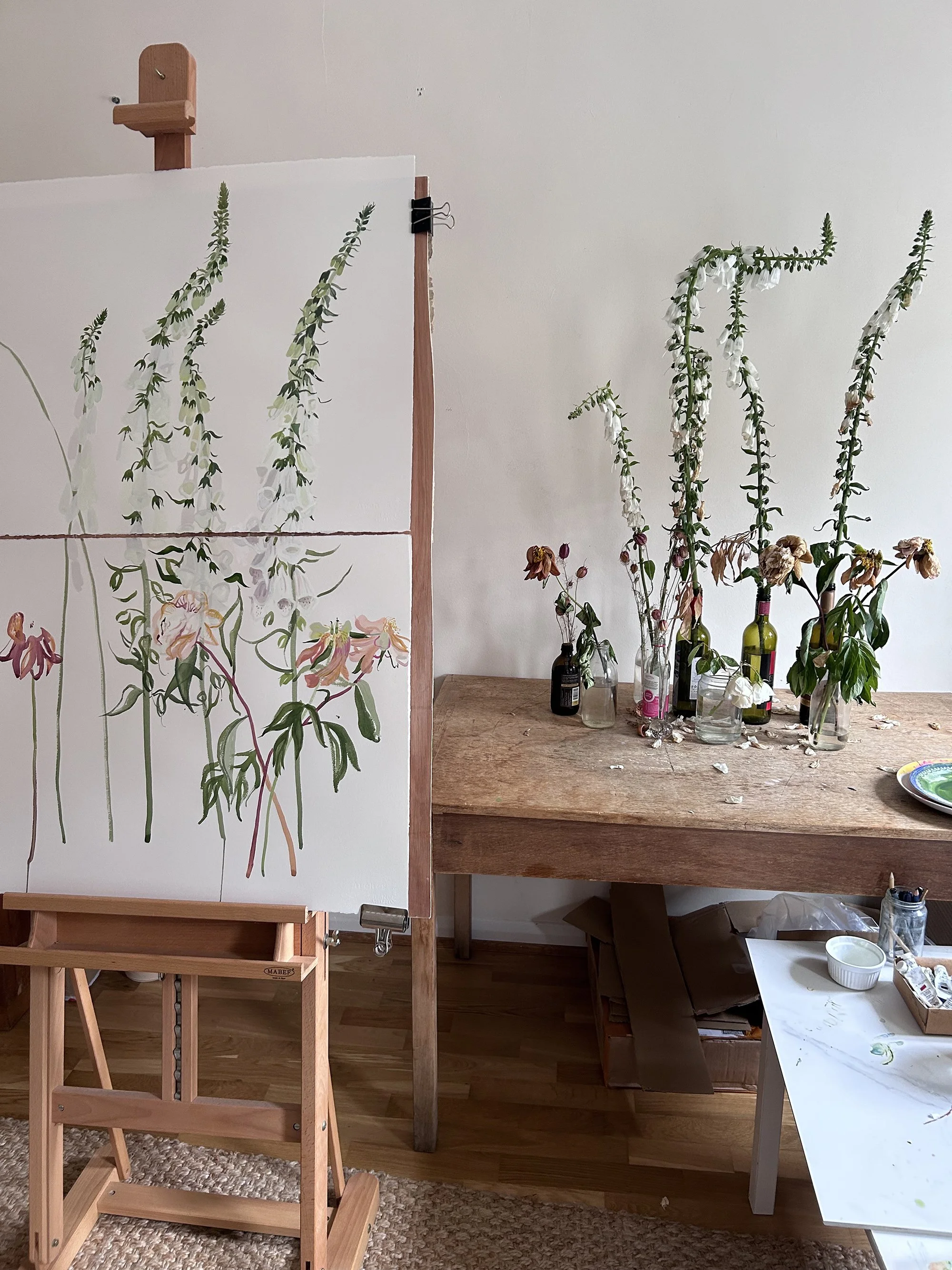
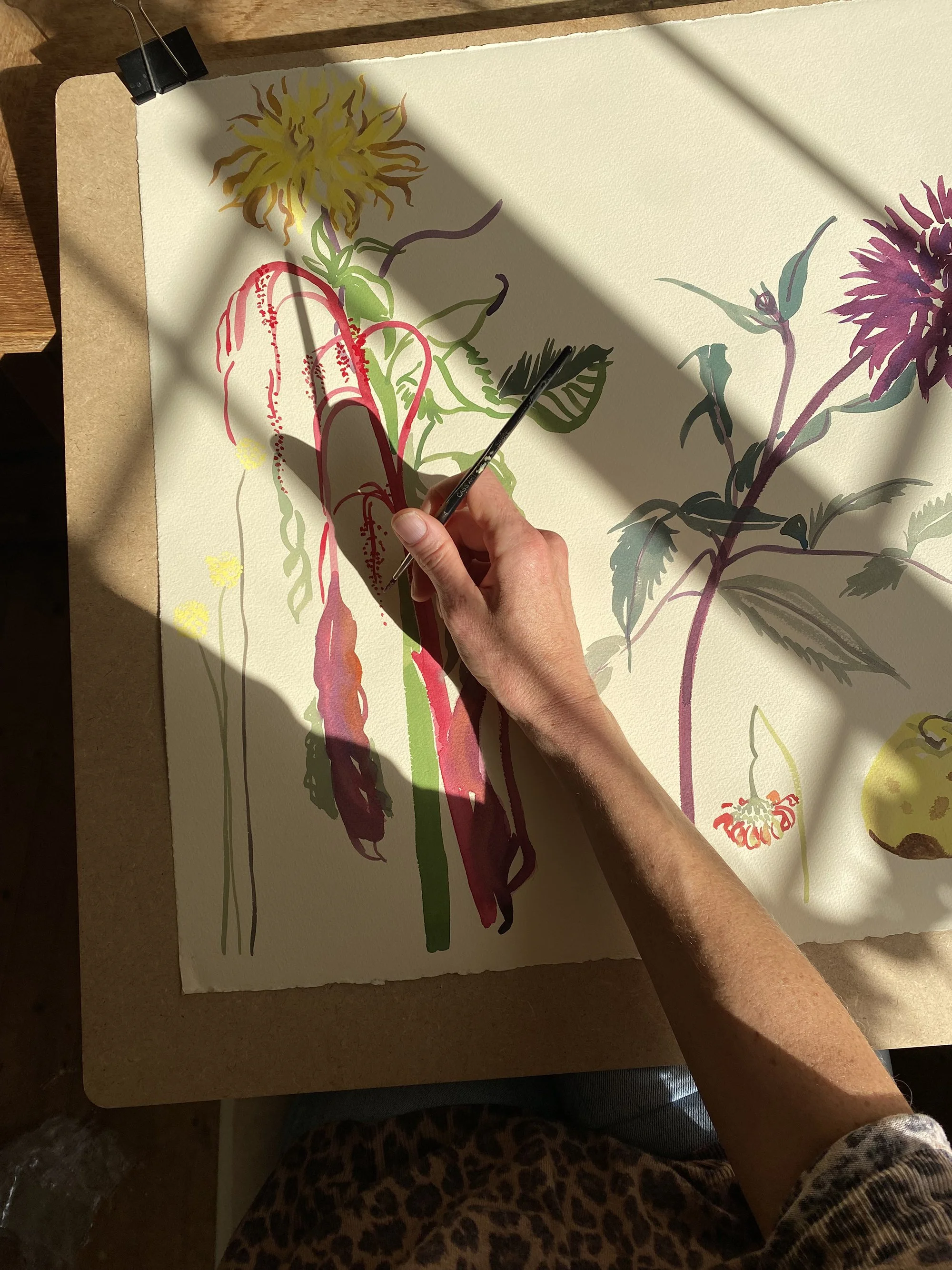
When she finally begins to paint, there is an act of trust involved. The first strokes require bravery, confidence, focus. She does not want perfection. She wants honesty. She wants something real, something from the heart. Once the process begins, she enters what she calls "the zone": a state of flow where colour mixing, observation, and mark-making become inseparable. There is liberation in this, a feeling of spontaneity. But there is also tension. A quiet holding of breath. A carefulness, a sensitivity, an awareness that every mark matters.
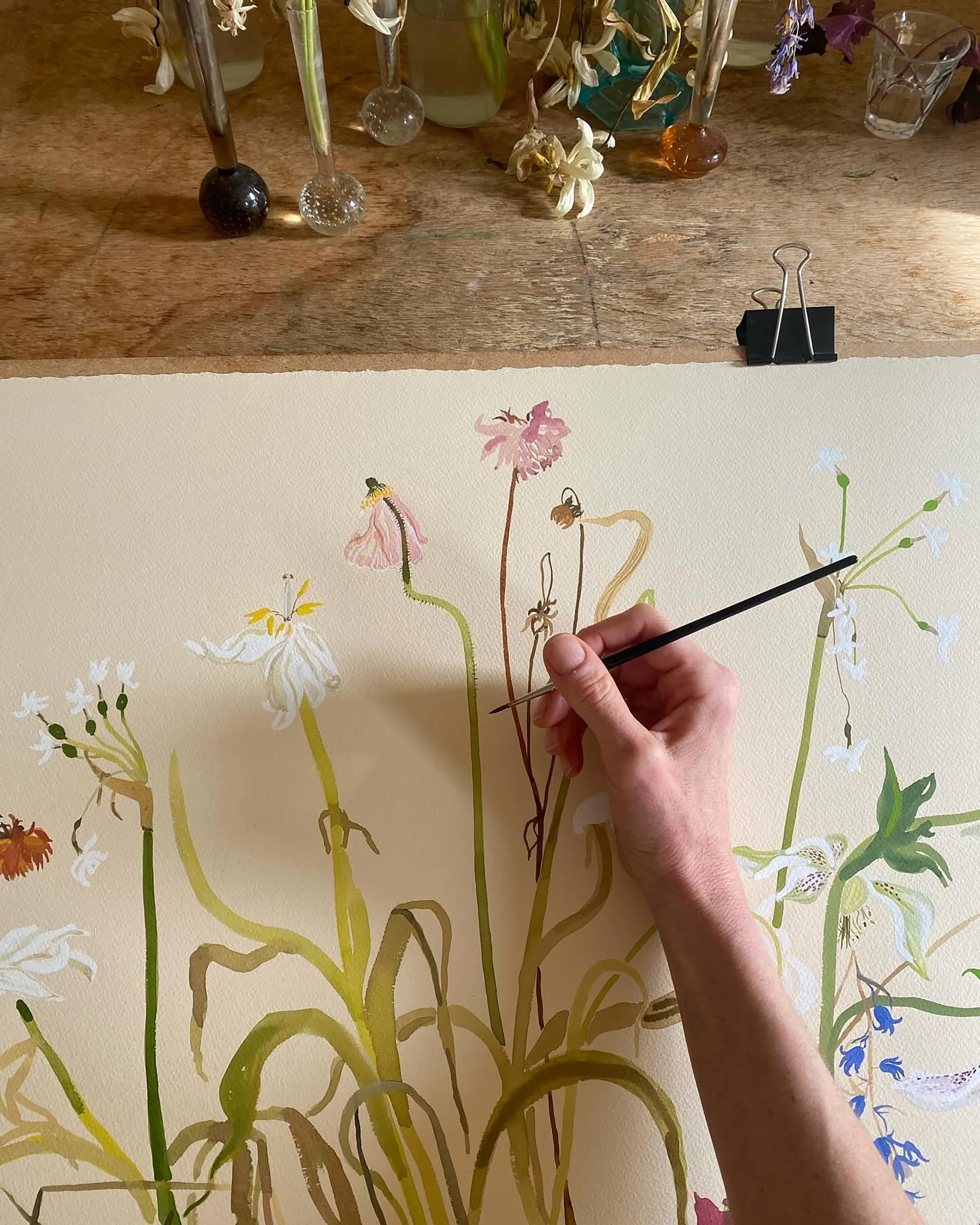
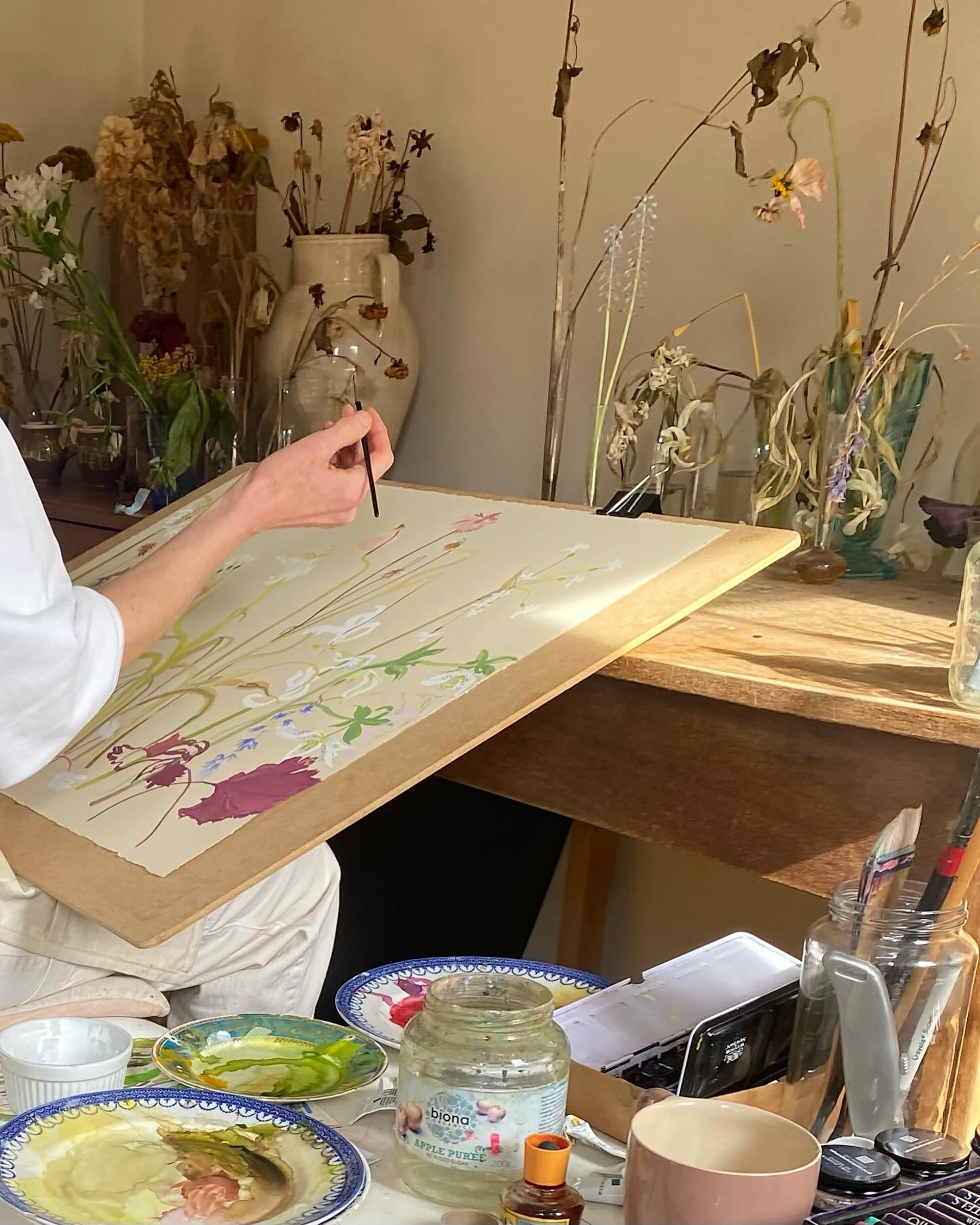
Wayne has worked with watercolour since childhood, painting alongside her sons as her own mother once painted with her and her sister. She describes children as the most wonderful artists, free and expressive in ways she still draws from. When her boys were small, watercolour became the natural medium: immediate, quick-drying, forgiving enough to work in short bursts between mothering. She loves the clarity of colour, the ability to dilute and build washes, the way mistakes become part of the journey. "It's an artwork," she says, "so there is no right or wrong."
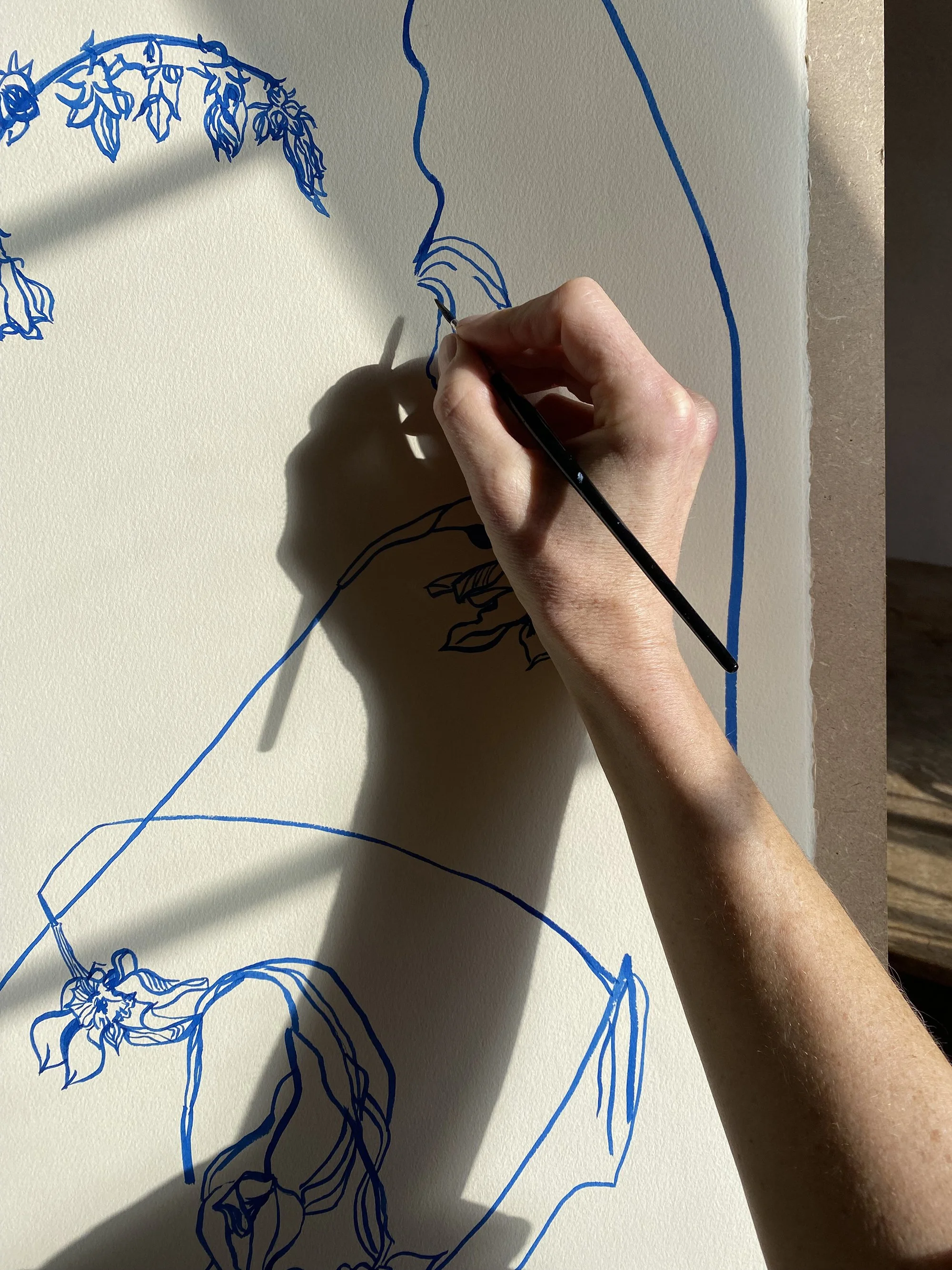
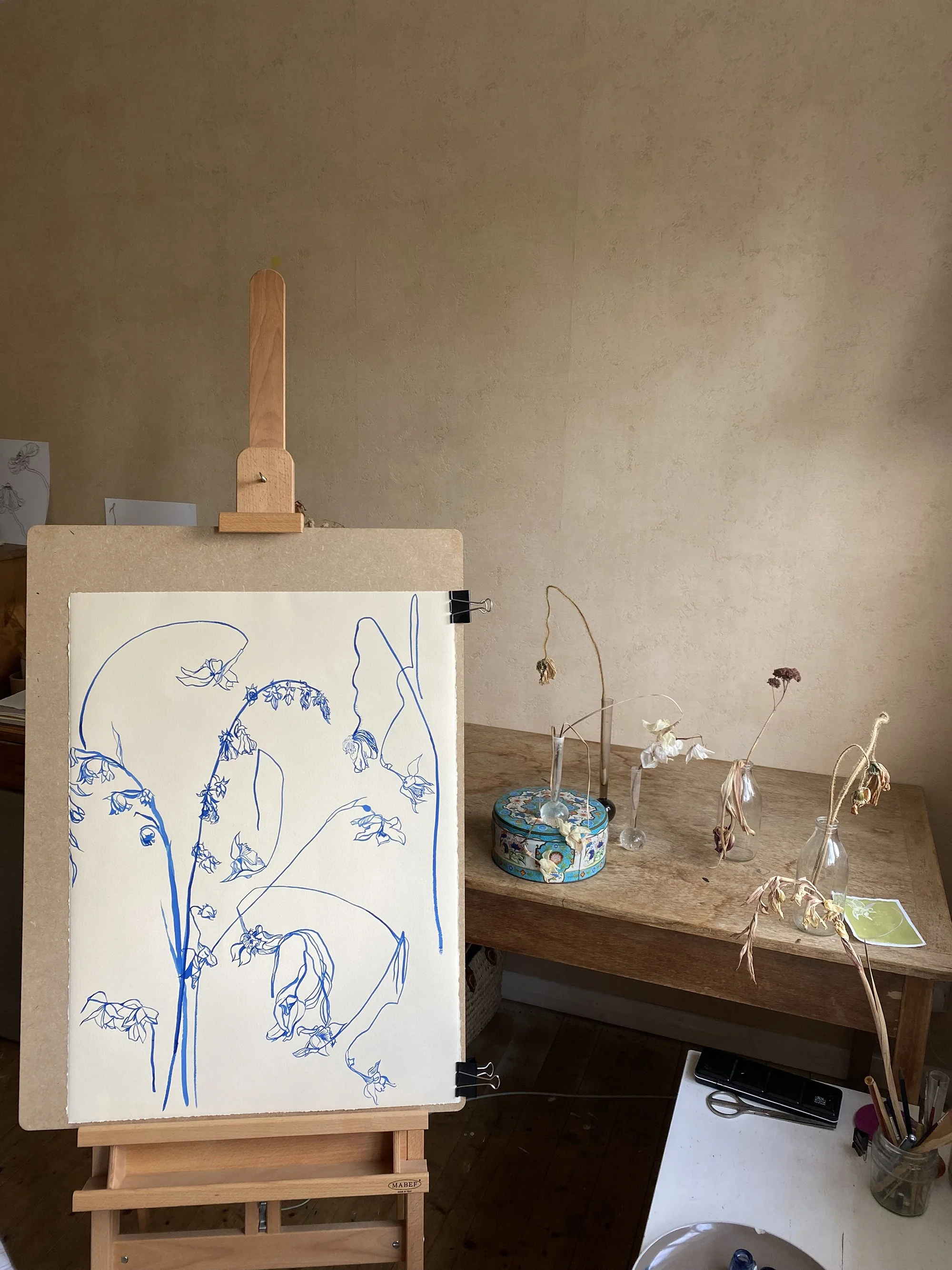
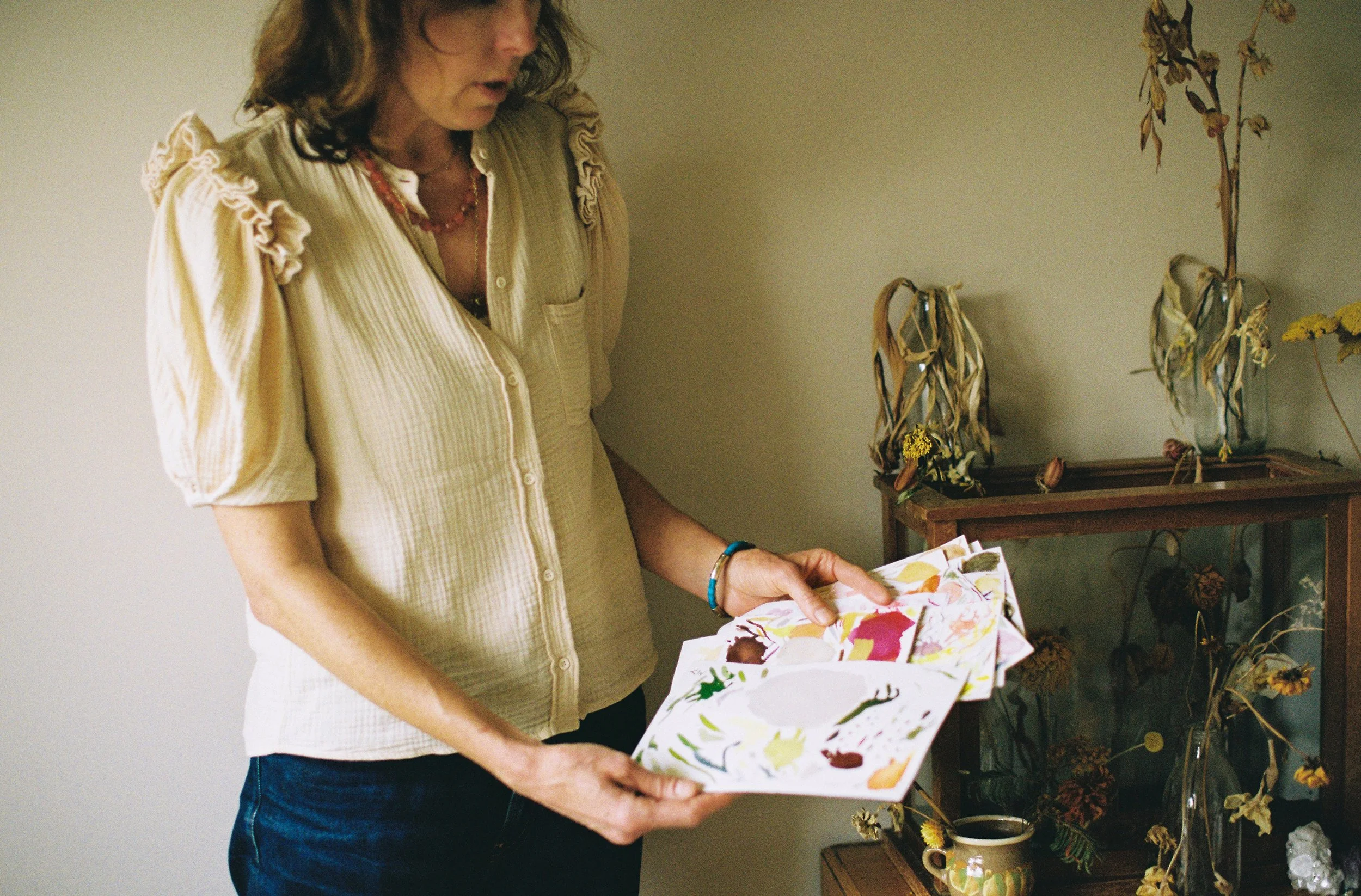
Still, precision matters. Before making marks on paper, she tests each brushstroke and colour on a separate sheet beside her palette. These test sheets have become another record of the work, layered, abstracted, alive with their own energy. She has ideas of developing a series from them. Her choice of surface is deliberate. She favours papers with a deckle edge, handmade Khadi or Arches, and leaves generous amounts of negative space. She is interested in the space between blooms, the relationship between forms, the way they interact. Her compositions often extend beyond the boundary of the sheet, following stems where they take her, letting things flow. In some ways, her works are like drawings in paint. She is always interested in what defines a painting versus a drawing.
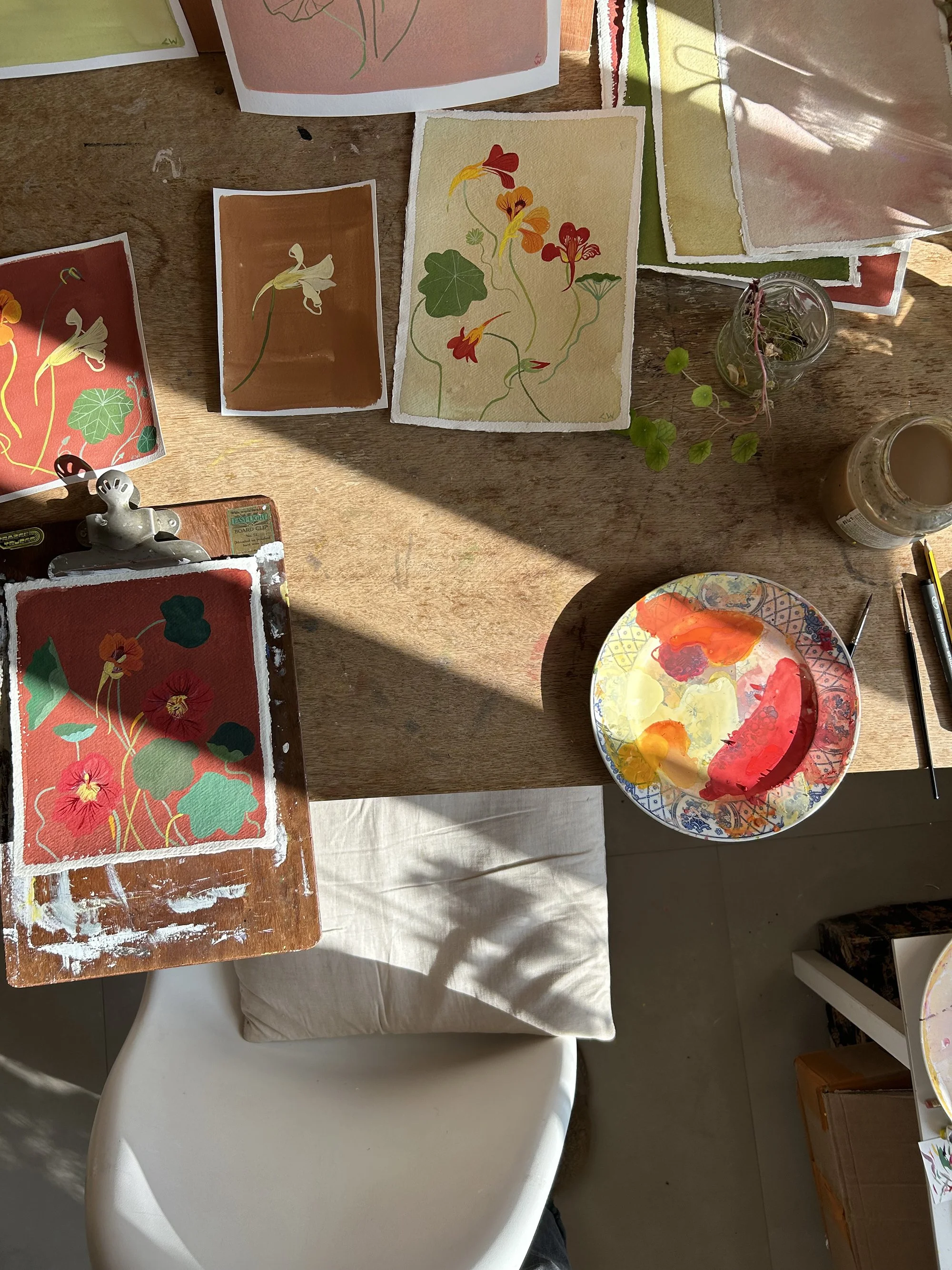
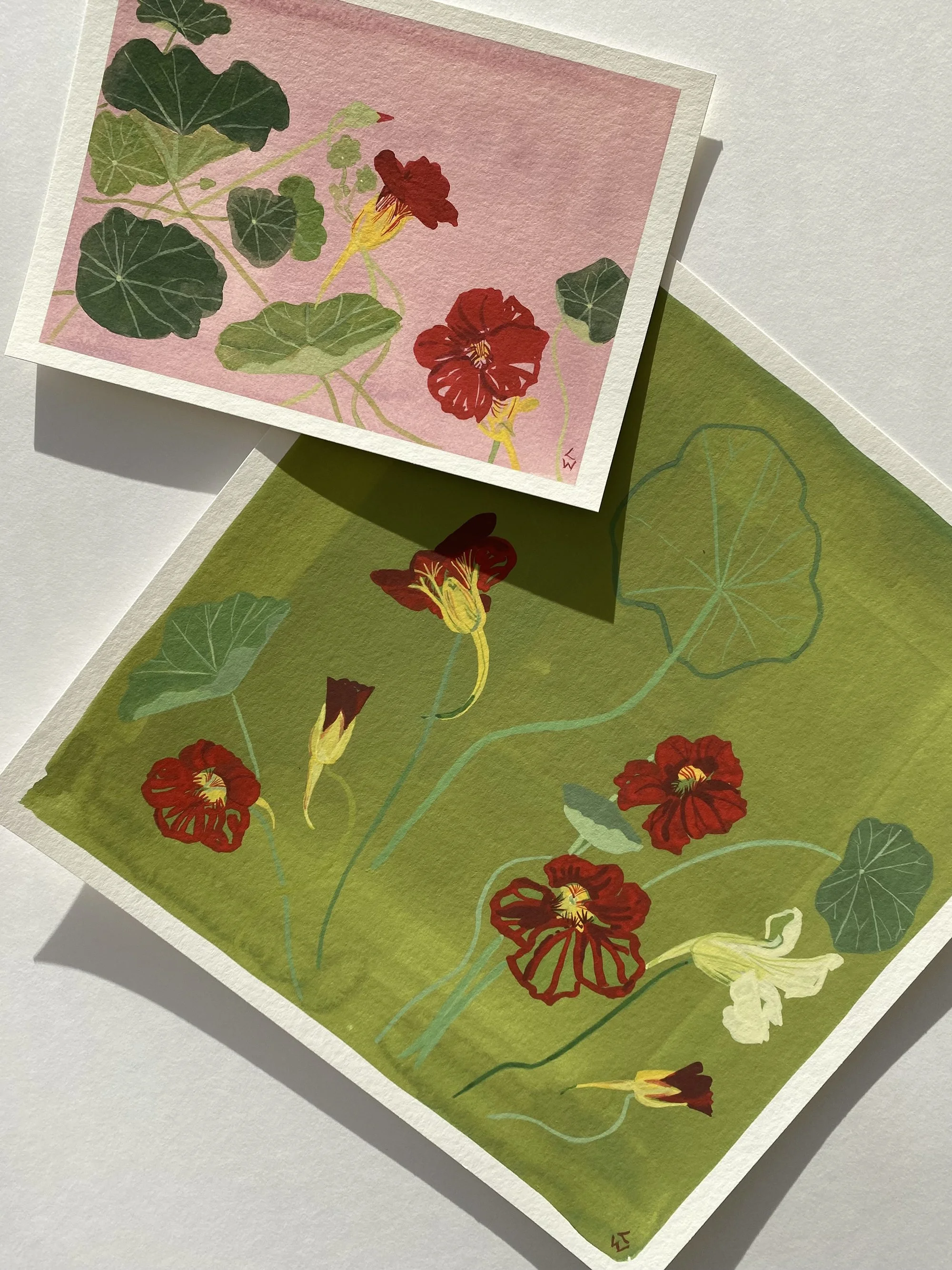
Colour is important to her. She mixes to get as close as she can to what she sees, though nature, she says, is always supreme. You can never actually come close. Light is so much part of it: the colour and luminosity of a flower or leaf changes from sunrise to sunset, even in moonlight, more alive than the plant itself. Sunlight is essential to her practice. It helps her see clearly, brings her energy. She finds it hard to paint under artificial light, even though she usually works inside her studio. She loves the sunlight coming in through the window.
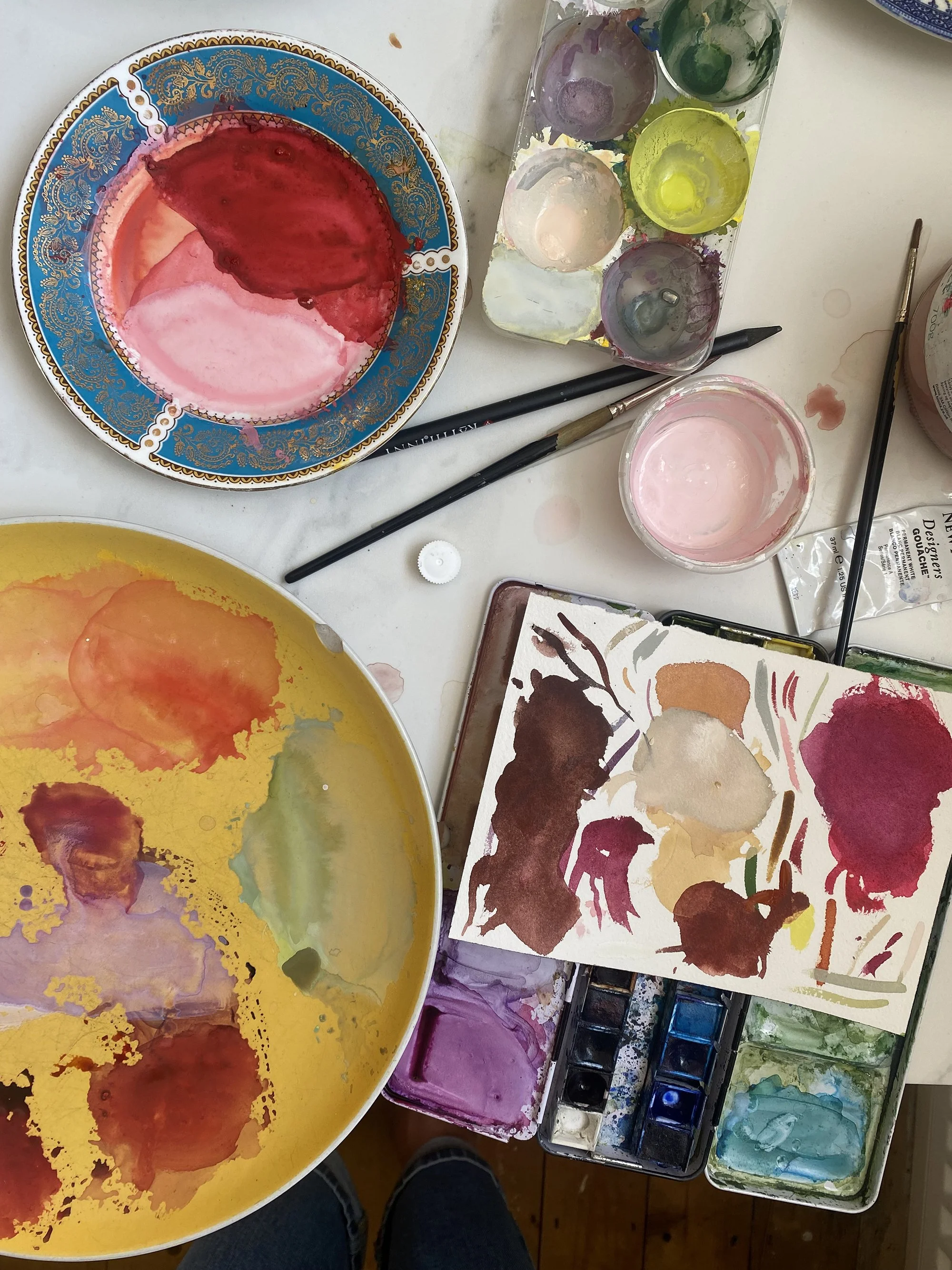
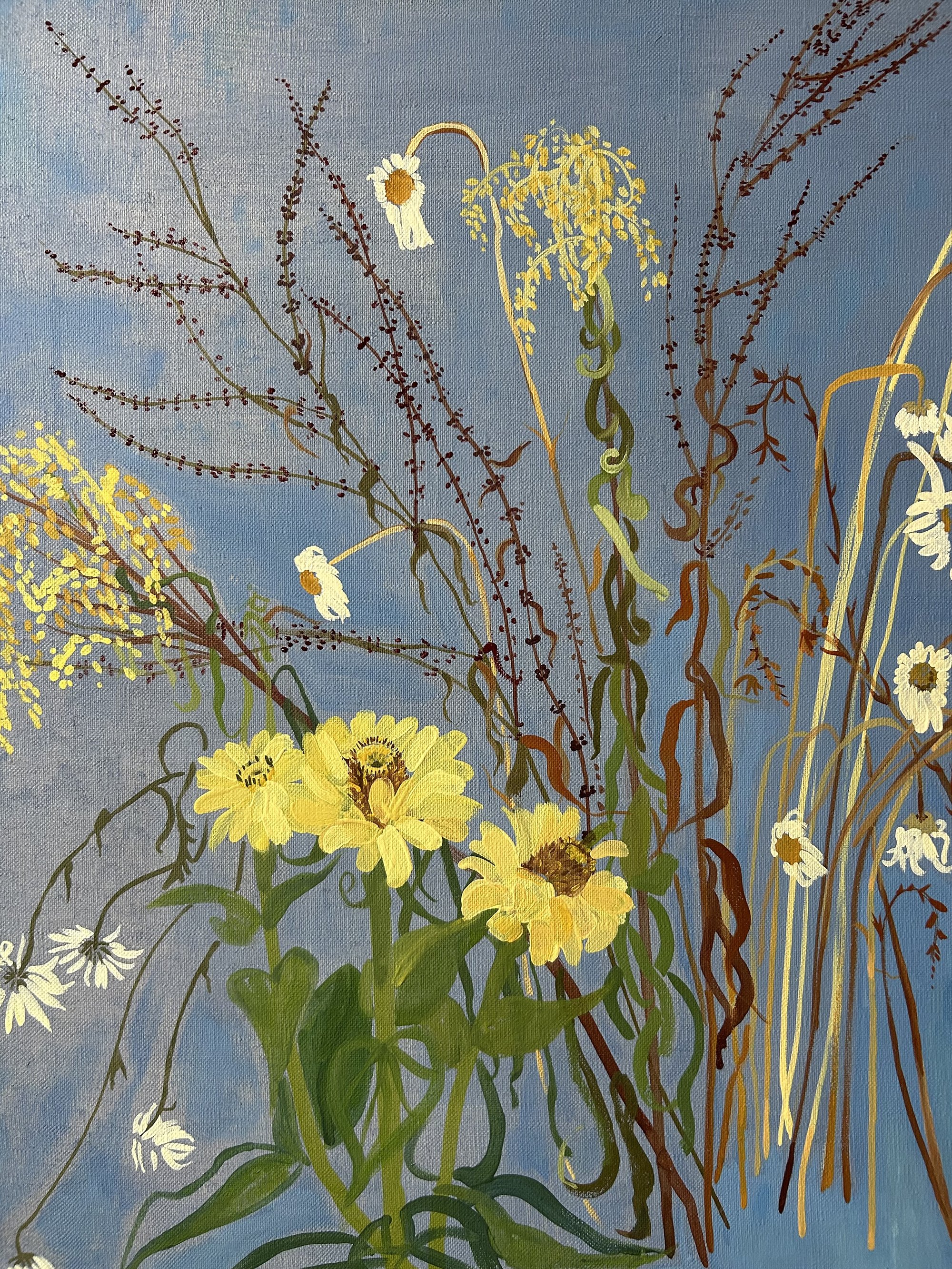
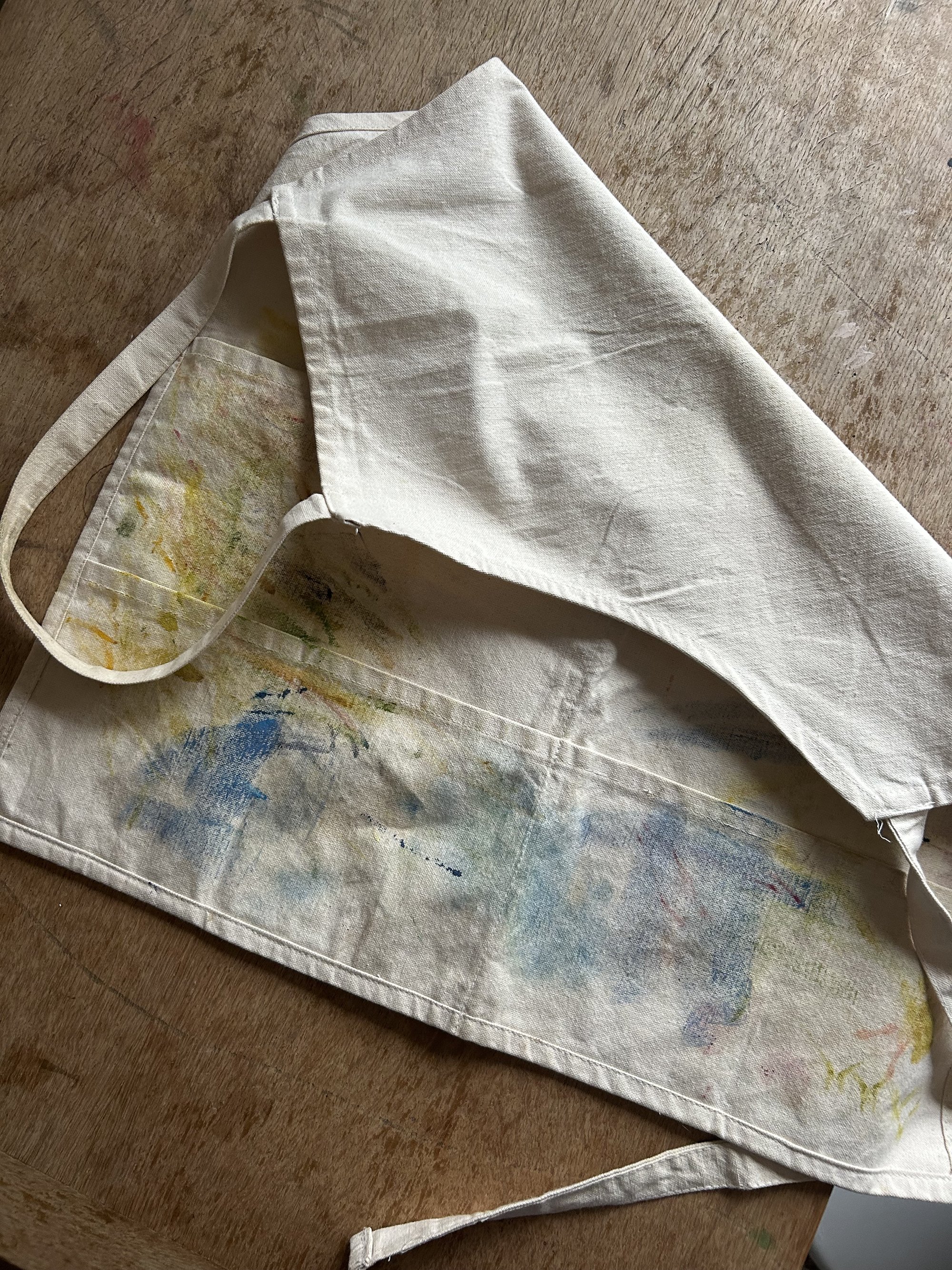
Recently, she has ventured into oils and made canvases with a mix of wall emulsion and gouache. Now that her boys are older, she doesn't worry about them touching drying paintings or getting their hands on the oils. She likes to mix up scale as well as medium, going from mini paintings to larger works, from brush and ink drawings to full colour paintings. They all inform each other.
The most precarious moment comes at the end: knowing when to stop. That final flower, that last stem, the one that might complete the painting or undo it entirely, requires the deepest trust. No going back.
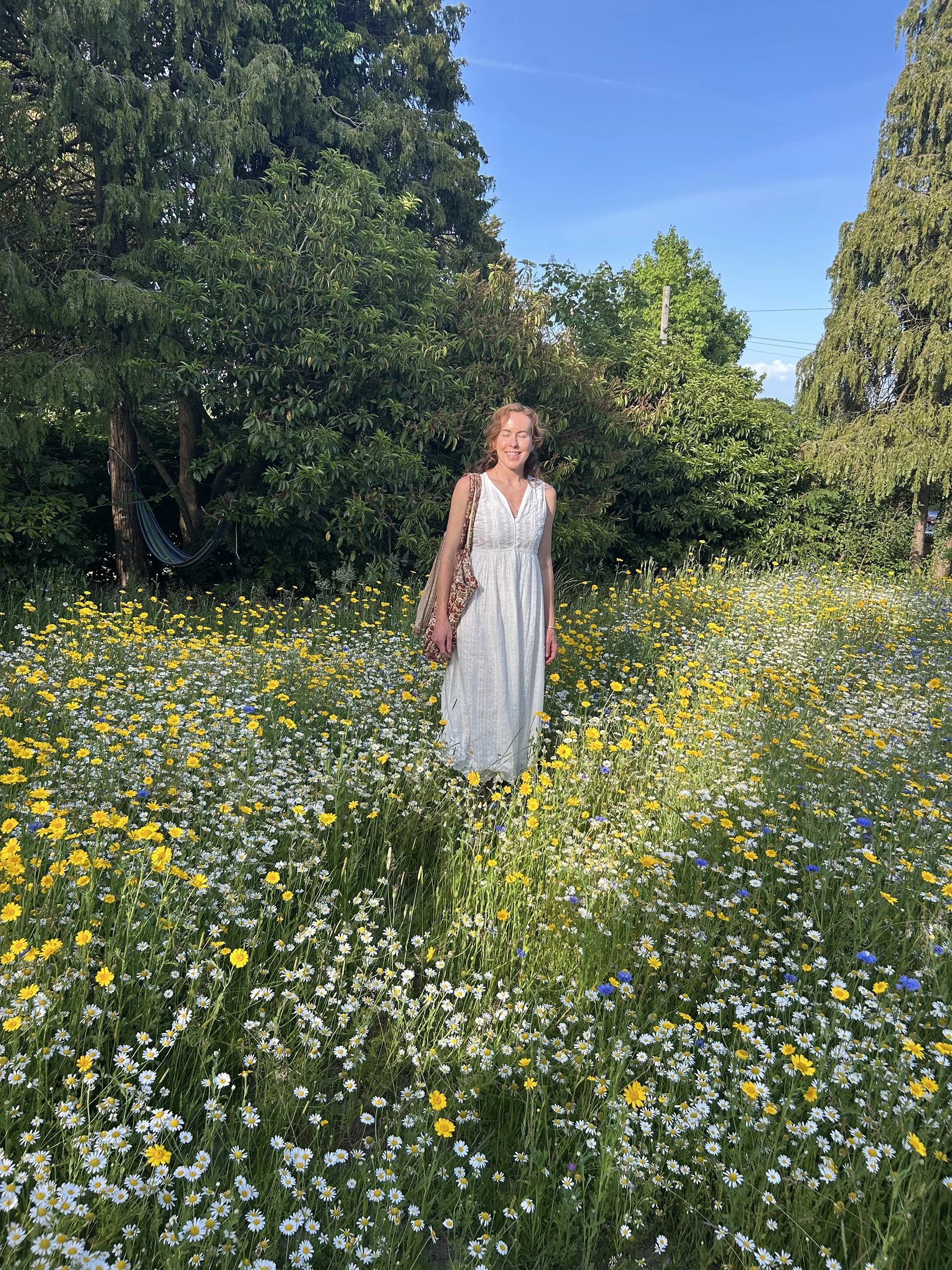
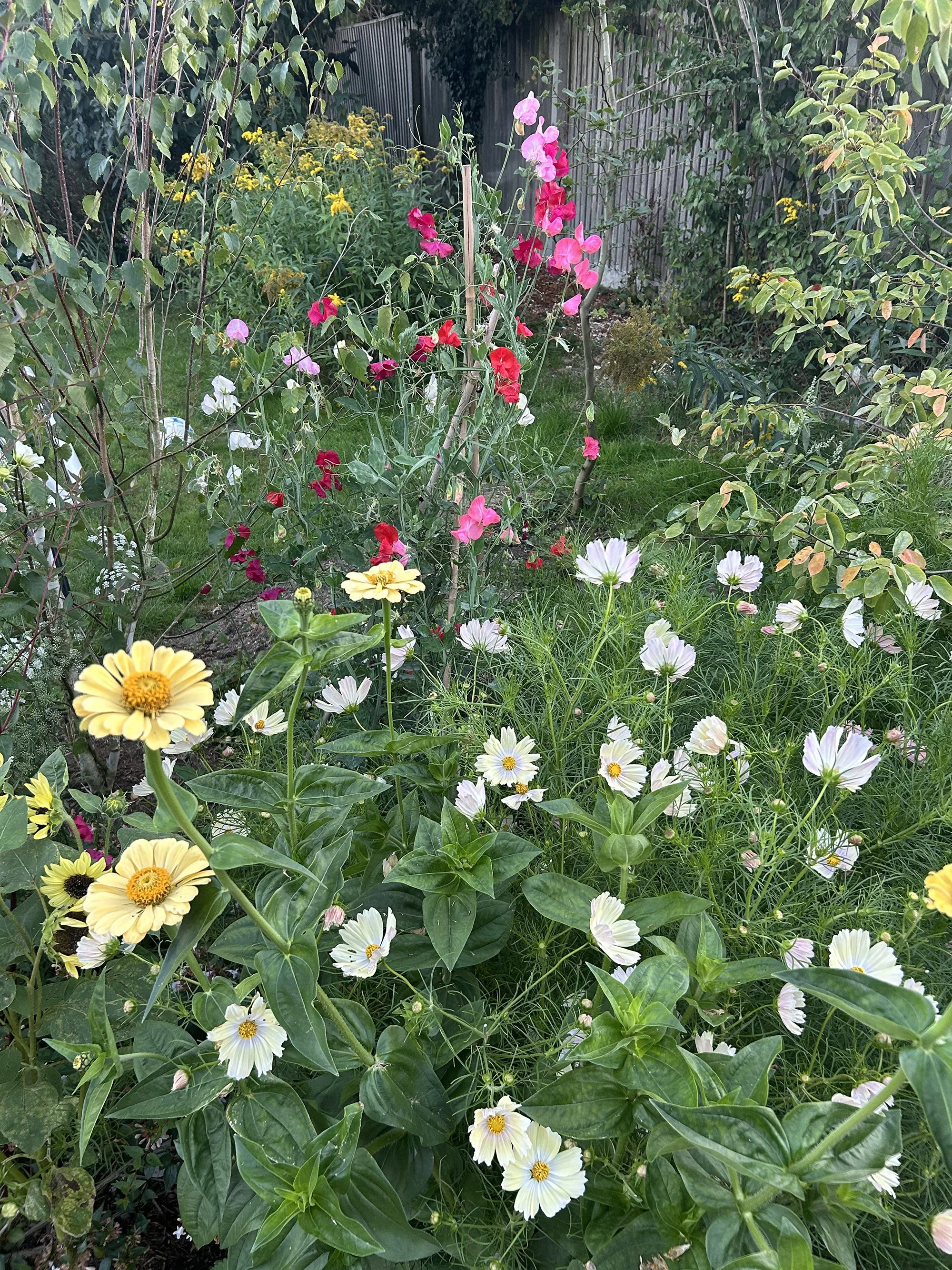
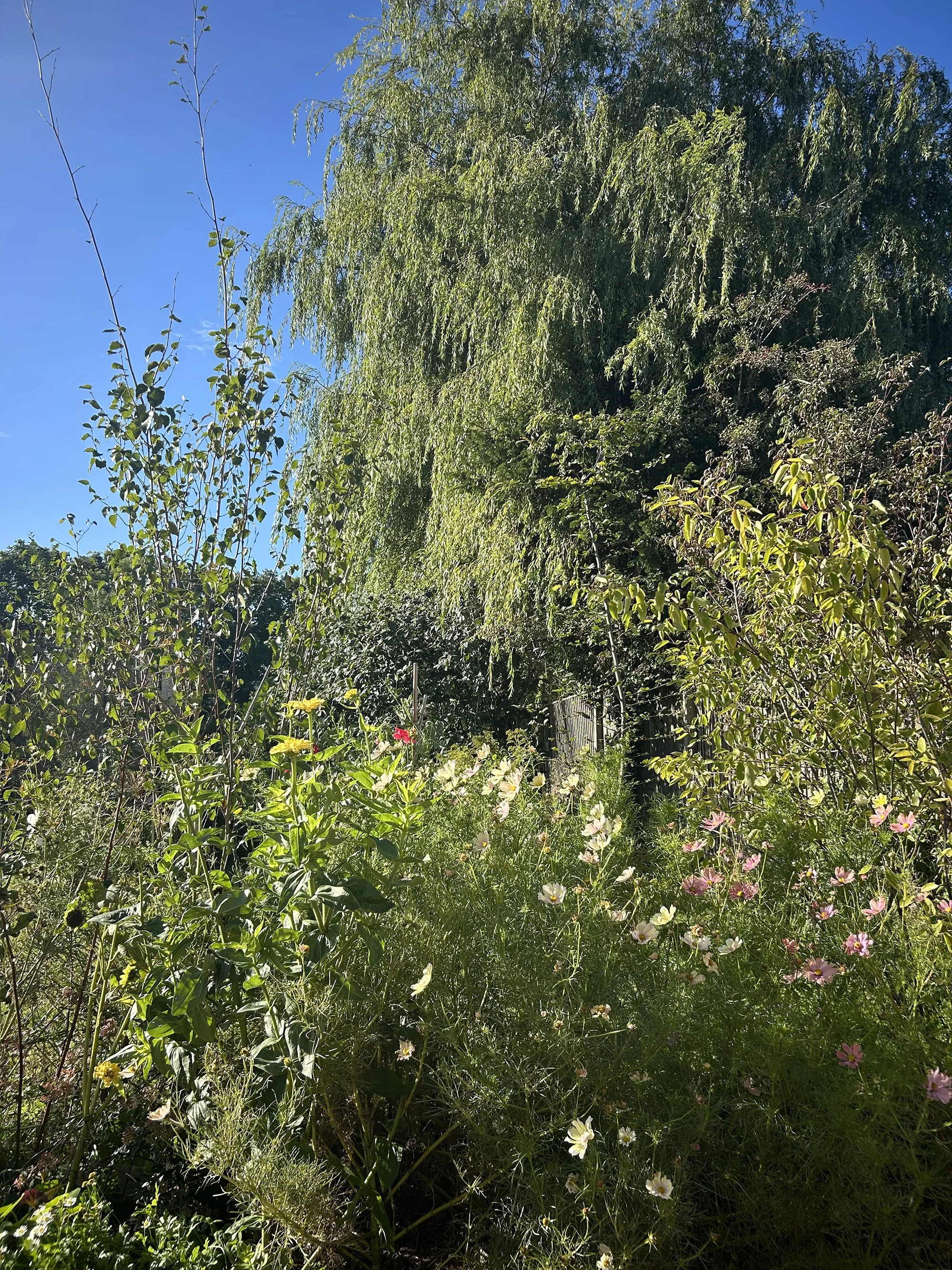
Wayne's garden is both muse and sanctuary. She grew up in a London flat, but her mother taught her to garden and to paint. On a balcony filled with pots, she learned the joy of tending, the wonder of watching something grow from a tiny seed into a plant covered in flowers, fruits, seeds of its own. That sense of wonder has never left her. Planting seeds each spring still feels miraculous. Gardening de-stresses her, connects her to the earth and the seasons. She walks in the woods, climbs the South Downs near her home. Her garden provides endless material: seasonal flowers alongside wild ones that invite themselves in from the meadow behind her house. She also visits Pitfield Barn, a nearby flower farm, where she finds blooms she cannot grow herself.
Her current practice, which she started when her second son was two years old, seven years ago now, was a way of reconnecting with herself as a woman and a person, carving out time for herself as a busy mum. These sessions of drawing and painting were rewarding and nourishing, and she kept going, growing her practice. She moved from a corner of the kitchen into a more private corner of the bedroom, and started photographing her work to share on Instagram. Gardening did this for her too. It was something she could do in the garden and at the allotment in West London whilst keeping an eye on the boys as they played. They enjoyed helping her, digging in the soil, planting seeds, picking and eating beans and raspberries.
An amazing community of other artists, gardeners, art dealers and collectors, mainly women, gradually grew and connected with her, encouraged her, worked with her. This continues to this day. Many of her collectors are florists, interior designers, artists, makers, people who love to garden and grow. Something about plants and nature connects us all, she feels. It's part of who we are, not something separate. So it feels natural to her to express her awe of this beauty, to surround herself with and share it. She is hugely grateful to be able to spend some of her time looking at and painting flowers, then sending out these paintings and prints all over the world to other people who share this love of the beauty of nature. It is an honour and a joy.
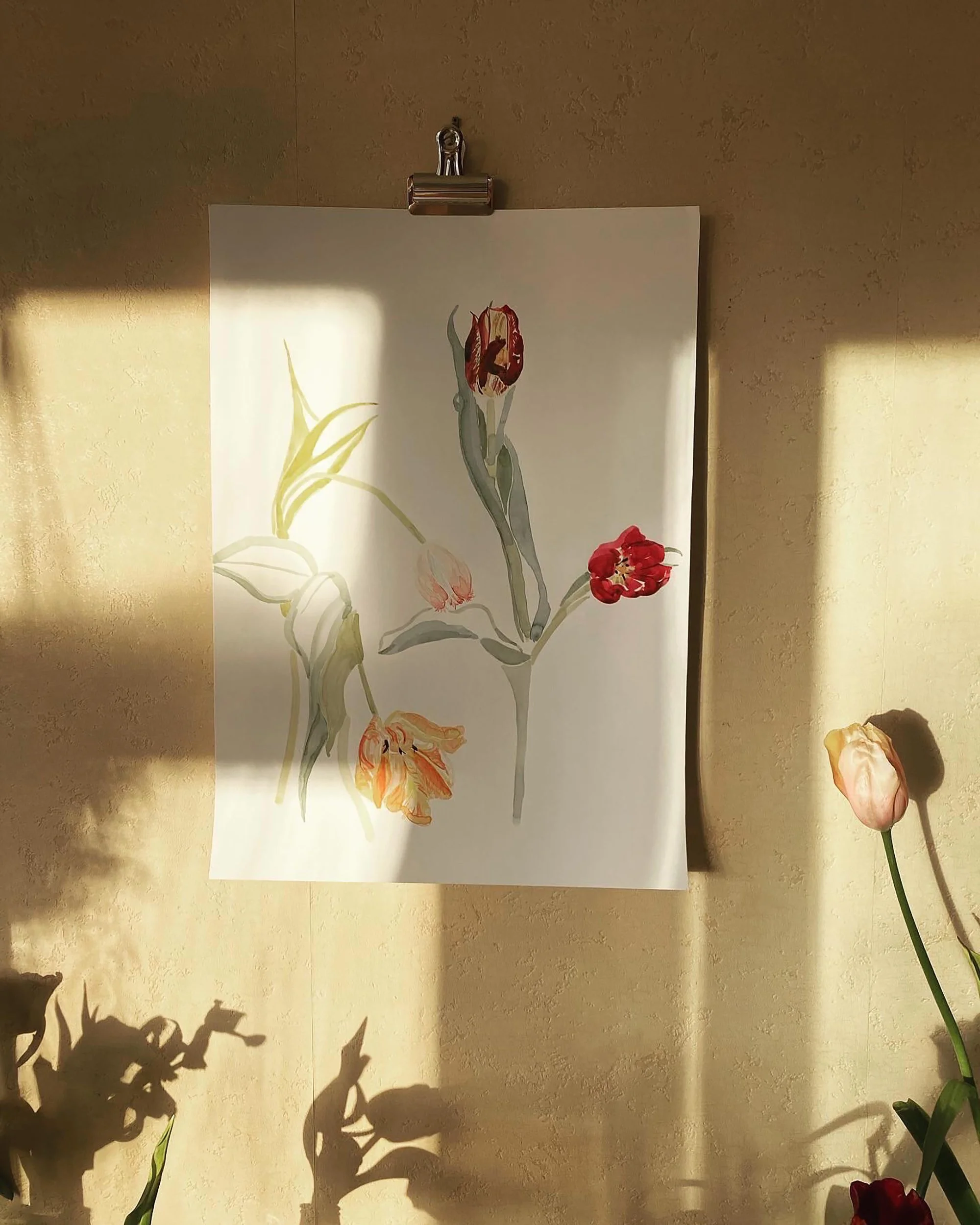
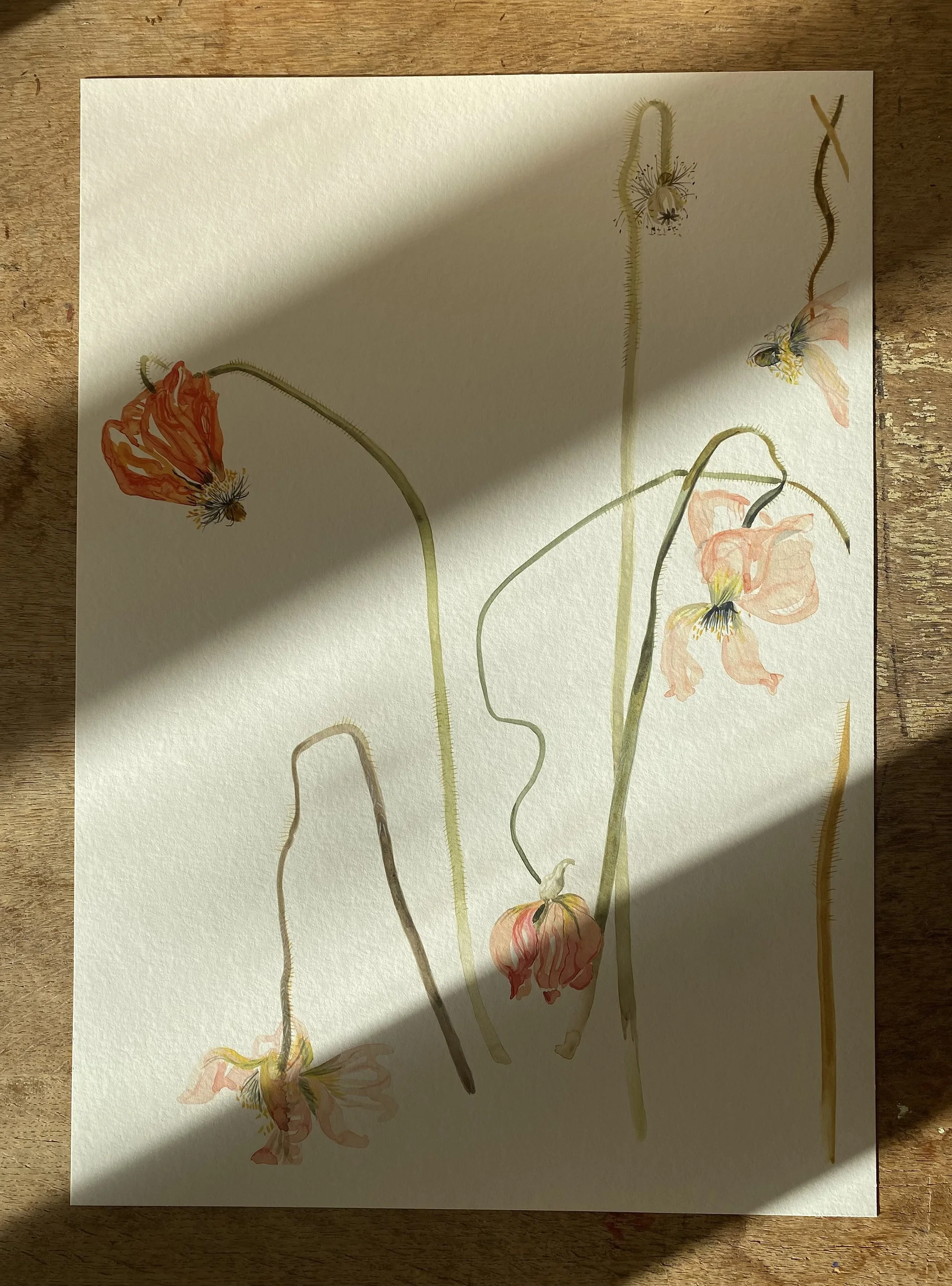
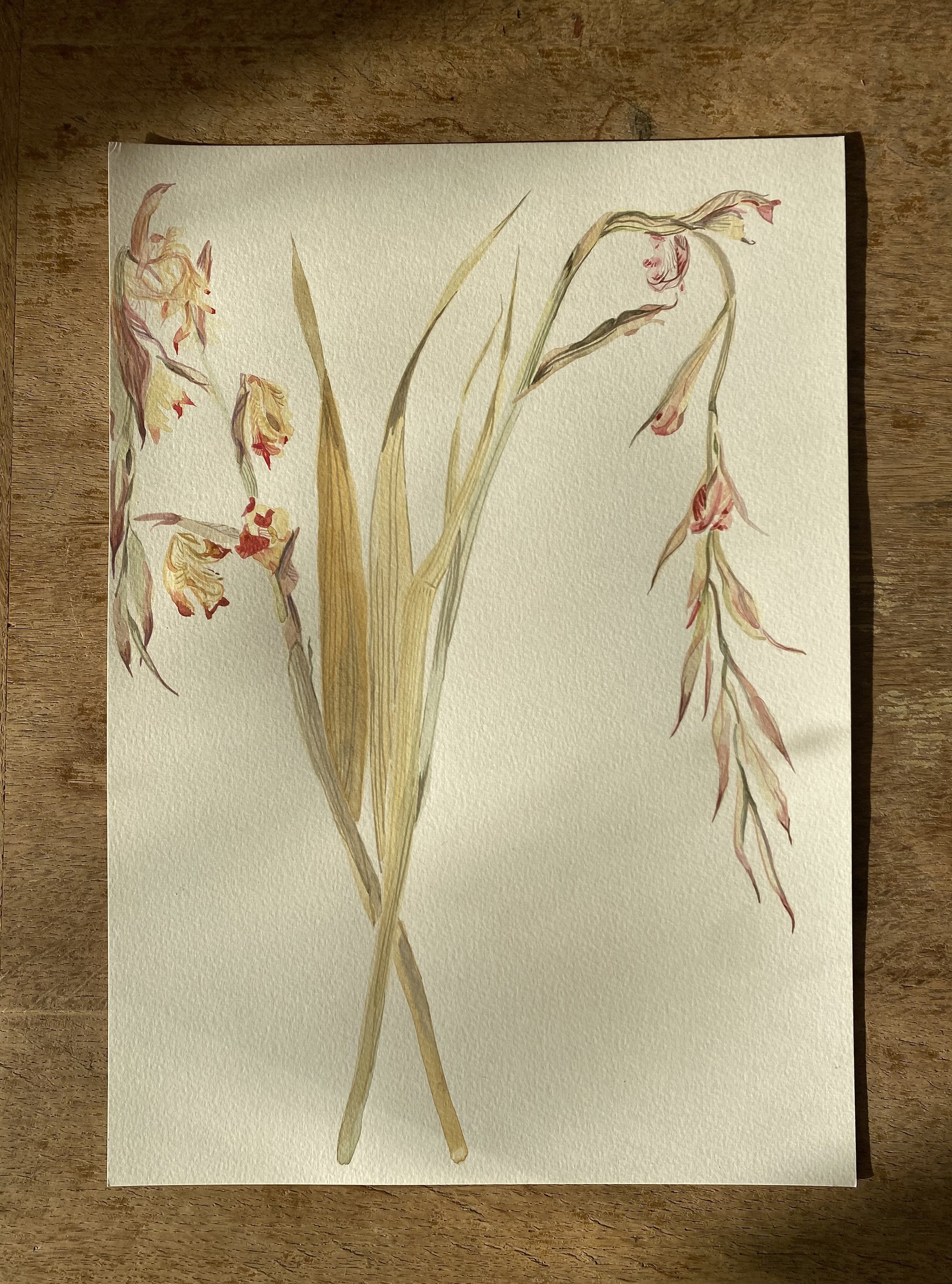
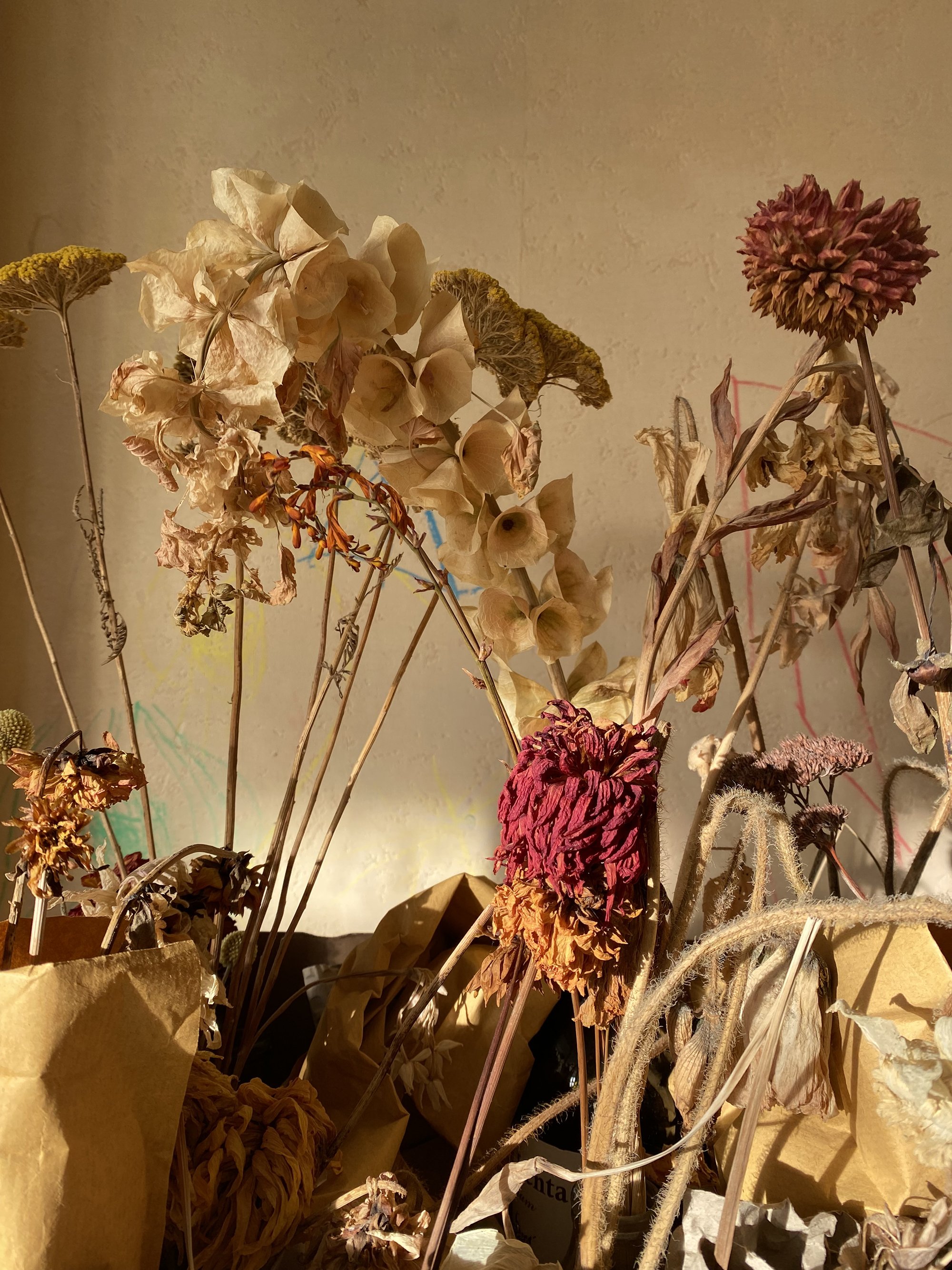
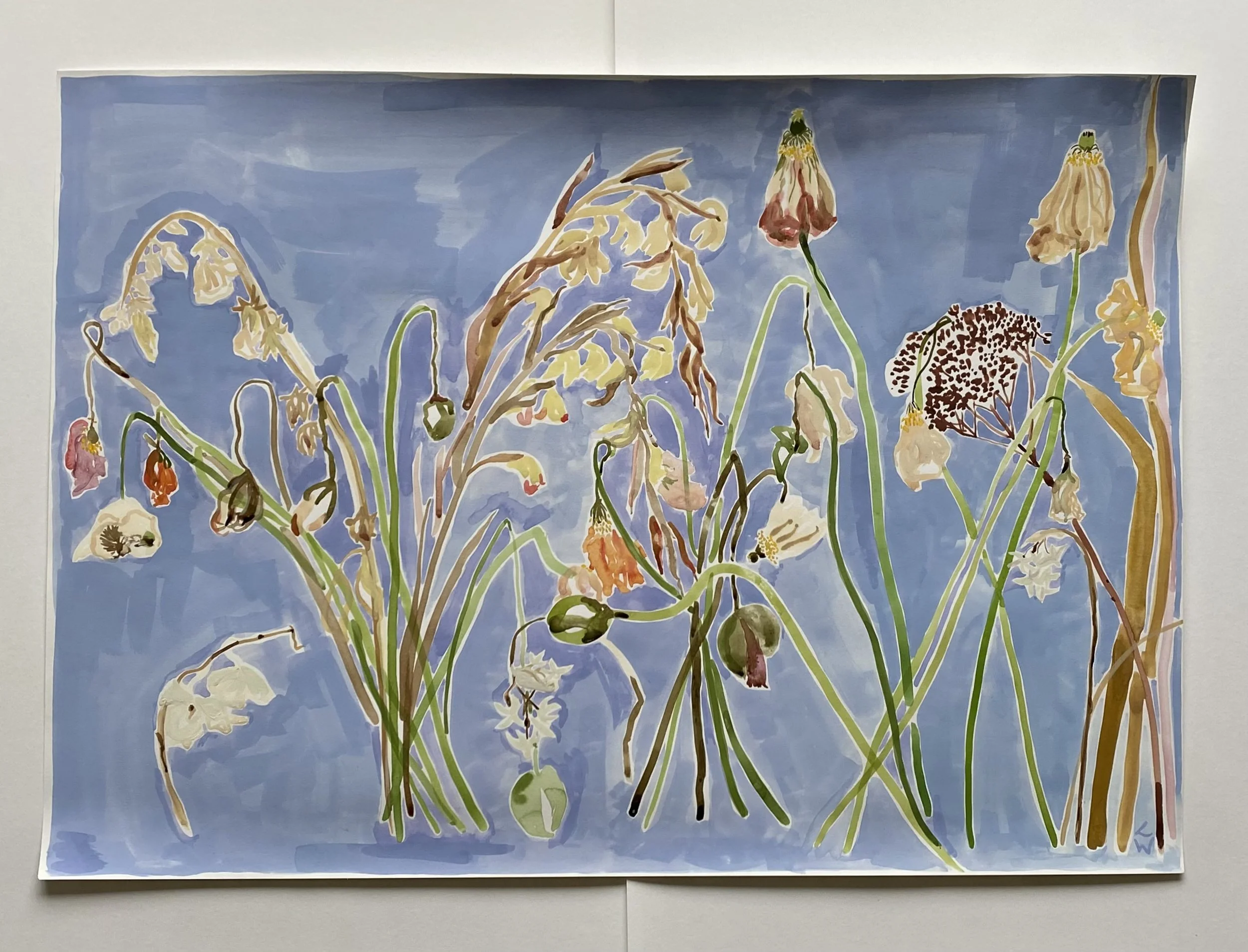
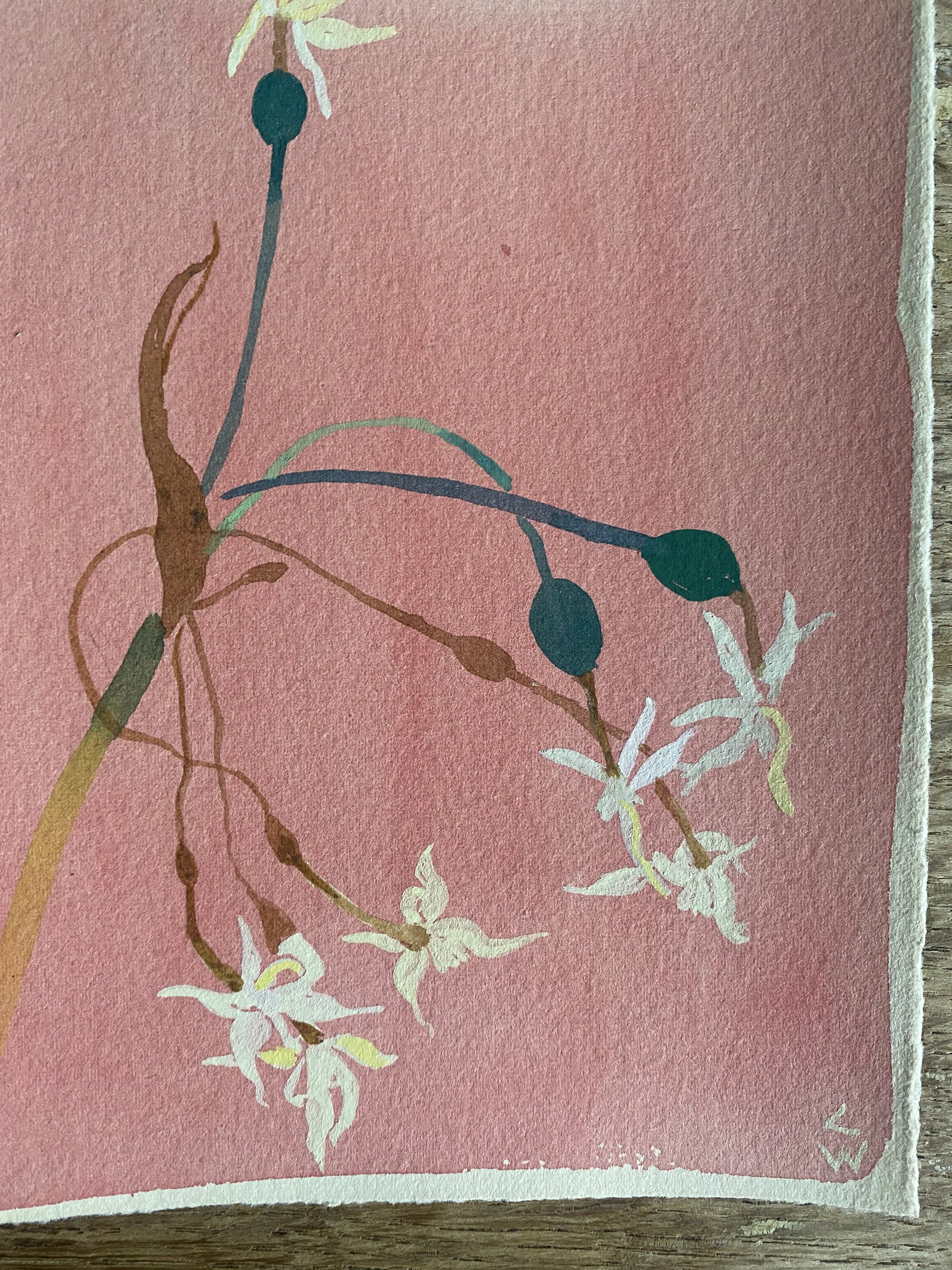
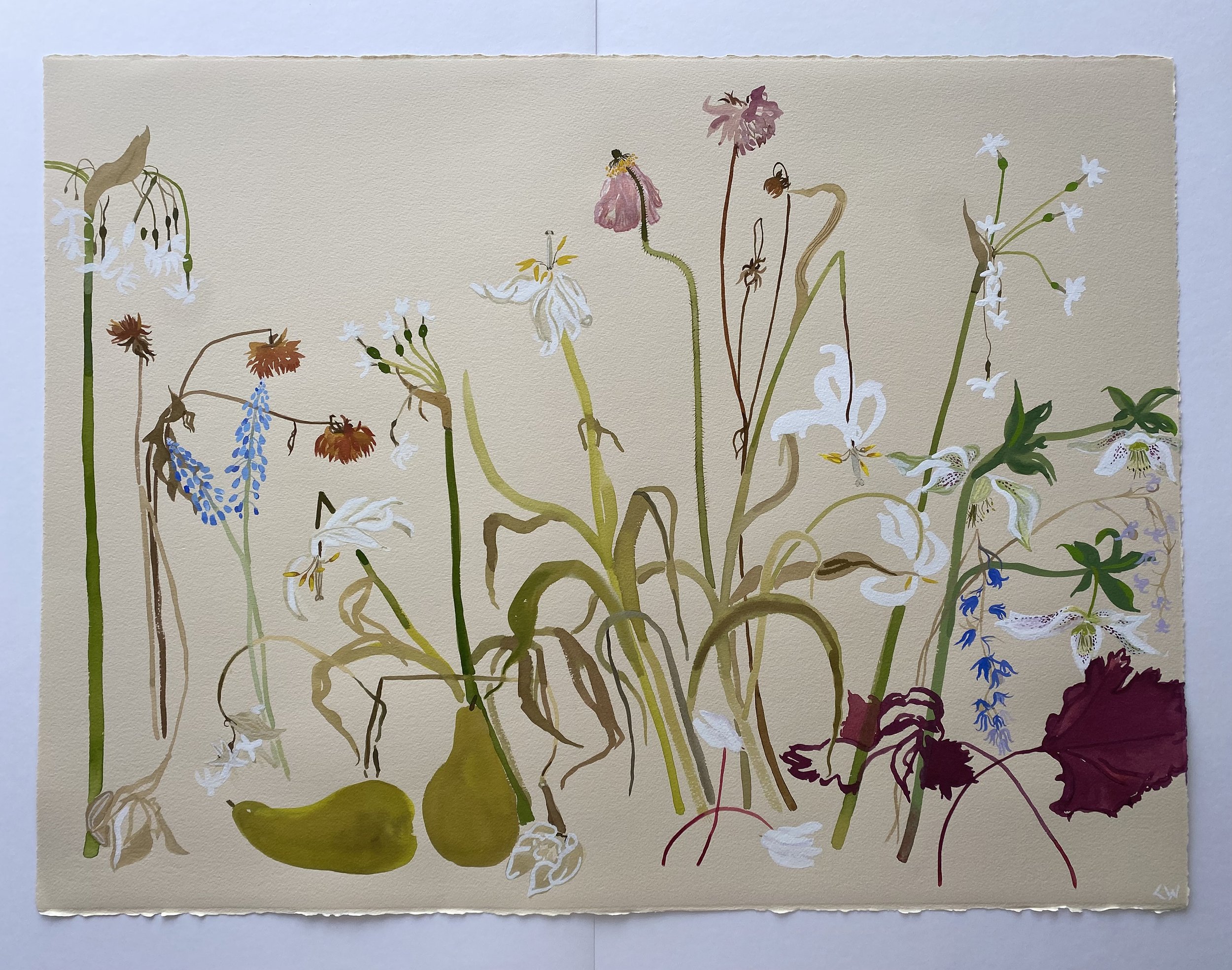
But it is not just the fresh flower that fascinates her. Wayne is drawn to the entire journey, from seed to full bloom to fading. She does not think of her paintings as still life, because even after being picked, flowers continue to move, to change, even throughout the day. As they age, they take on unexpected angles, arching curves, forms that become almost more interesting in their imperfection. Colours intensify or grow muted. Touches of brightness remain alongside beautiful browns and ochres. Textures and transparencies emerge. There is no melancholy in this for Wayne. Only beauty. Only intrigue. She often mixes dried, faded flowers with fresh ones in her compositions, things that would never naturally grow together, creating what she calls "a new magic garden for our imagination."
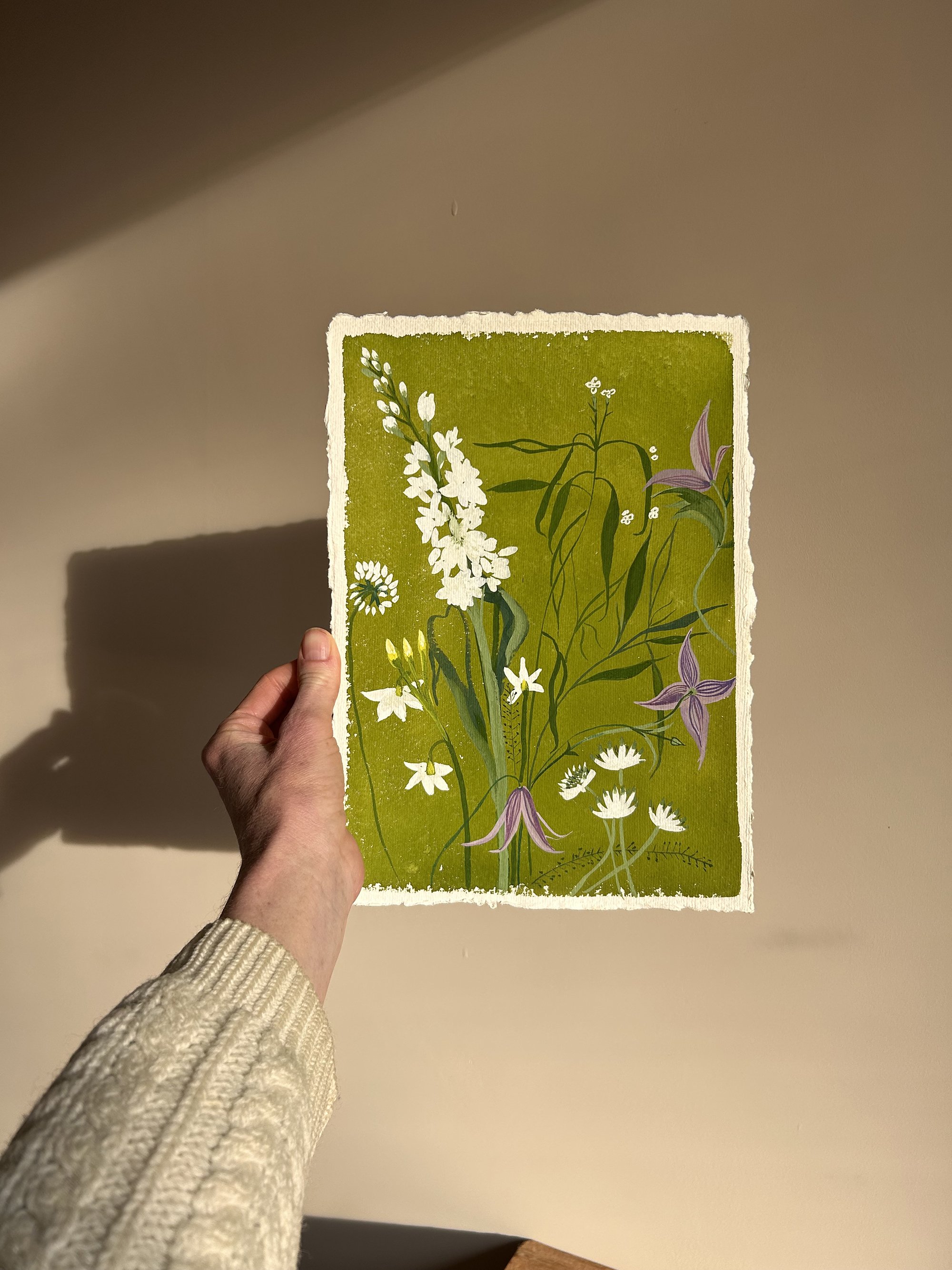
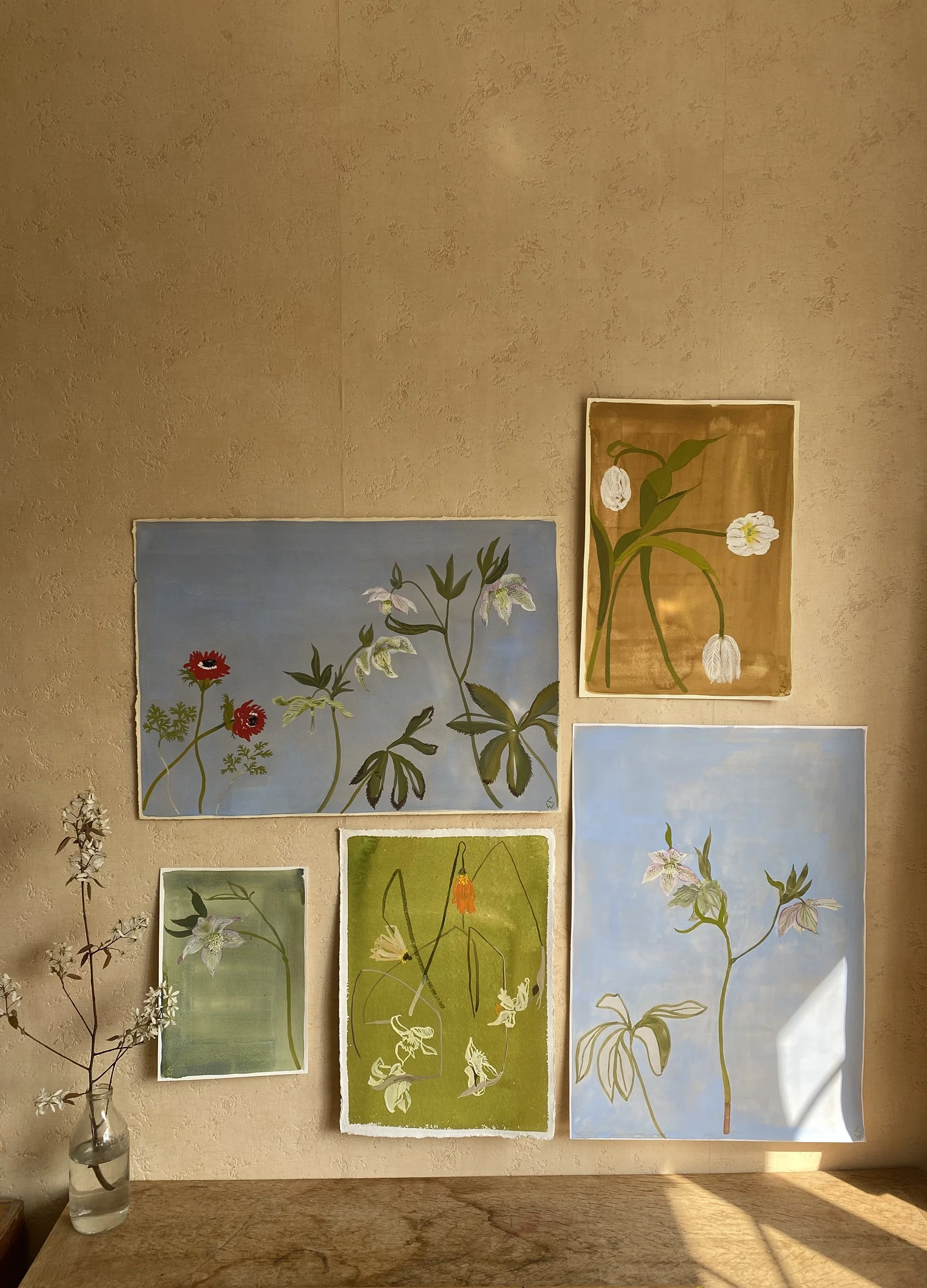
What makes Wayne's work singular is this refusal to idealise. She does not seek the perfect bloom, the flawless petal, the arrangement that feels composed. Instead, she follows the organism in its wilfulness, its asymmetry, its inevitable unravelling. Her paintings hold both the freshness of a stem just cut and the quiet dignity of one that has begun to bow. They are drawings made without sketches, compositions that spill beyond their edges, moments caught not at their climax but in their slow passage through time. Whilst undeniably beautiful, she does not think of flowers as superficial things. They are powerful and essential. None of us can live without them. Her art holds this seriousness lightly, tender and attentive and unafraid of what fades.
Text - Sarah Maria Lillig @sarahmaria_lillig
Art - Lucy Wayne @lucywayne_art
Pictures - Polly Geal @pollygeal.photo & Lucy Wayne