
The ancient worlds of Ivan Terestchenko
Through a chain of coincidences and fortunate twists of fate, Ivan Terestchenko has lived his life like an endless travel journal, guided only by his thirst for adventure and an unwavering artistic instinct. After several decades working as a photographer for the international press, Ivan is now a sculptor, equally influenced by ancient art and surf culture. In the small Tuscan village he now calls home, the artist reflects on his journey, his work, and his lifelong pursuit of beauty.
After two hours driving a Fiat 500 along the winding roads of Tuscany, our small expedition finally enters the village of San Donato in Poggio. We are slightly late for the meeting. A handful of walkers drift through the narrow streets, while the late-morning sun begins to warm the village’s honey-coloured stones. Lost in a maze of dead-ends and one-way streets, we pass the café before noticing an elegant silhouette seated outside. I immediately recognize Ivan Terestchenko: sky-blue shirt, cigarette at the corner of his mouth, sunglasses on, sitting on a plastic chair beside a cup of coffee. After we got lost in the village, we park the Fiat on the main street just a few steps from the terrace.
I have never met Ivan before. I first discovered his work on social media through a collaboration with Gato Heroi, a surfboard shaper based in the Basque Country, on a small series of scarves illustrated with old-school surf imagery. Later, it was Ivan’s sculptures and the delicacy of his Greco-Roman universe that truly caught my attention, though I never pursued further research into the artist, then living in Guéthary on France’s Basque coast.
Our Italian meeting, several years later, is itself the product of coincidence. My friends and I had been offered board and lodging at a beautiful Tuscan olive grove in exchange for helping with the harvest. One morning, before heading out to the fields, I scroll through social media and realize that Ivan Terestchenko now lives in a small Italian village just two hours away from our autumn’s residency. I reach out. A meeting is arranged. My friends will join as well. Ivan laughs at the idea: “the more, the merrier”.
At the café in San Donato, Ivan greets us like old friends. Despite holding a degree in narrative journalism and working as a freelance journalist for two years, I have done absolutely no research on him whatsoever - although I presented this encounter as an informal interview followed by photographs of his home and studio. Imagine my surprise when, only minutes into our conversation, I understand that Ivan Terestchenko spent most of his life working as a renowned photographer.
In the late 1980s, Ivan — twenty-eight years old and, by his own admission, "a very broke painter" — was giving watercolour lessons to make ends meet. When one of his students, a stylist for several Condé Nast titles including Vogue and House and Garden, missed a lesson, Ivan joined her as an assistant on a shoot with photographer Pascal Chevallier at the Château de Jussy-Champagne. The experience was a revelation : Ivan returns from that weekend convinced he could “become a photographer”.
He began working as one a year later. Assignments for Condé Nast, especially with The World of Interiors, opened the doors of magnificent European castles and, above all, allowed him to travel. “I discovered India, which I had only seen in magazines and painted as I imagined it. The first time I went there, I realized my fantasized India was very close to the real one”. Through these journeys, imagination and reality begin feeding one another. Ivan loses himself willingly in a life of adventure and discovery. Under the Tuscan autumn sun, he mentions the watercolor travel journals he has kept throughout his wanderings. Unfortunately, his most recent sketchbook, filled with scenes from his latest trip to India, was left behind in a Moroccan taxi.
As for sculpture, the subject of my visit, he came to it through yet another stroke of serendipity. Having nearly abandoned photography to return to painting, Ivan was living in Guéthary, painting silhouettes of surfers cut out like delicate paper sculptures. When attempting to sell them to a Californian surf shop, he was told the material seemed too fragile. He turned to ceramics instead. Painter Pierre Le-Tan admired the work, and Ivan Terestchenko's first exhibition as a sculptor was held at the Galerie du Passage in Lisbon.
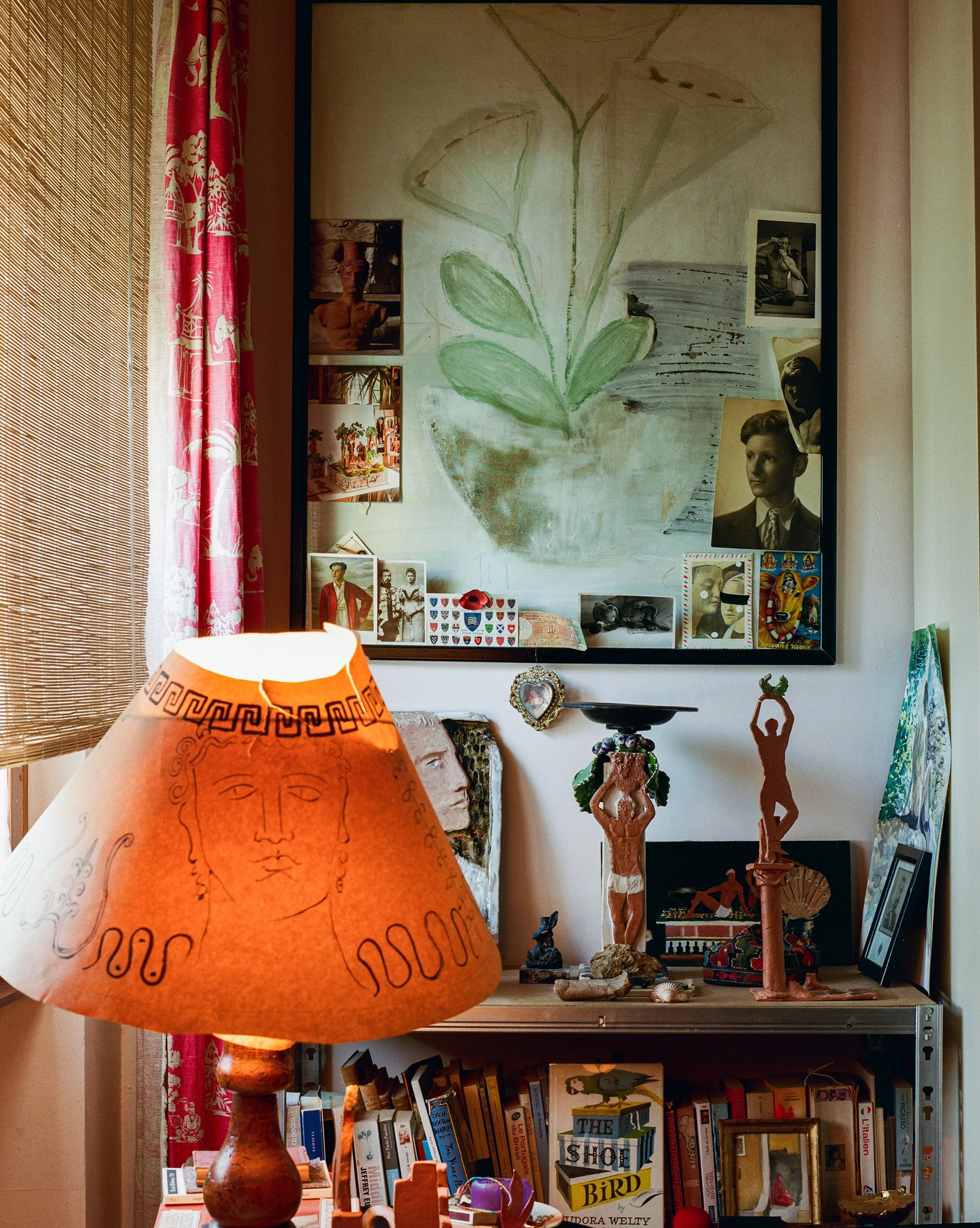
A few years later, Ivan brutally lost his home in Guéthary. The news reached him while he was working on a porcelain tableware for the Ginori manufacture in Florence. “That’s when I realized I could live anywhere”. By one more twist of fate, he found a listing for a small apartment in San Donato in Poggio, a Tuscan village a few kilometres away from a ceramic factory. Ivan thus settled in Italy, and traded his twelve-centimetre figurines for sculptures ten times taller.
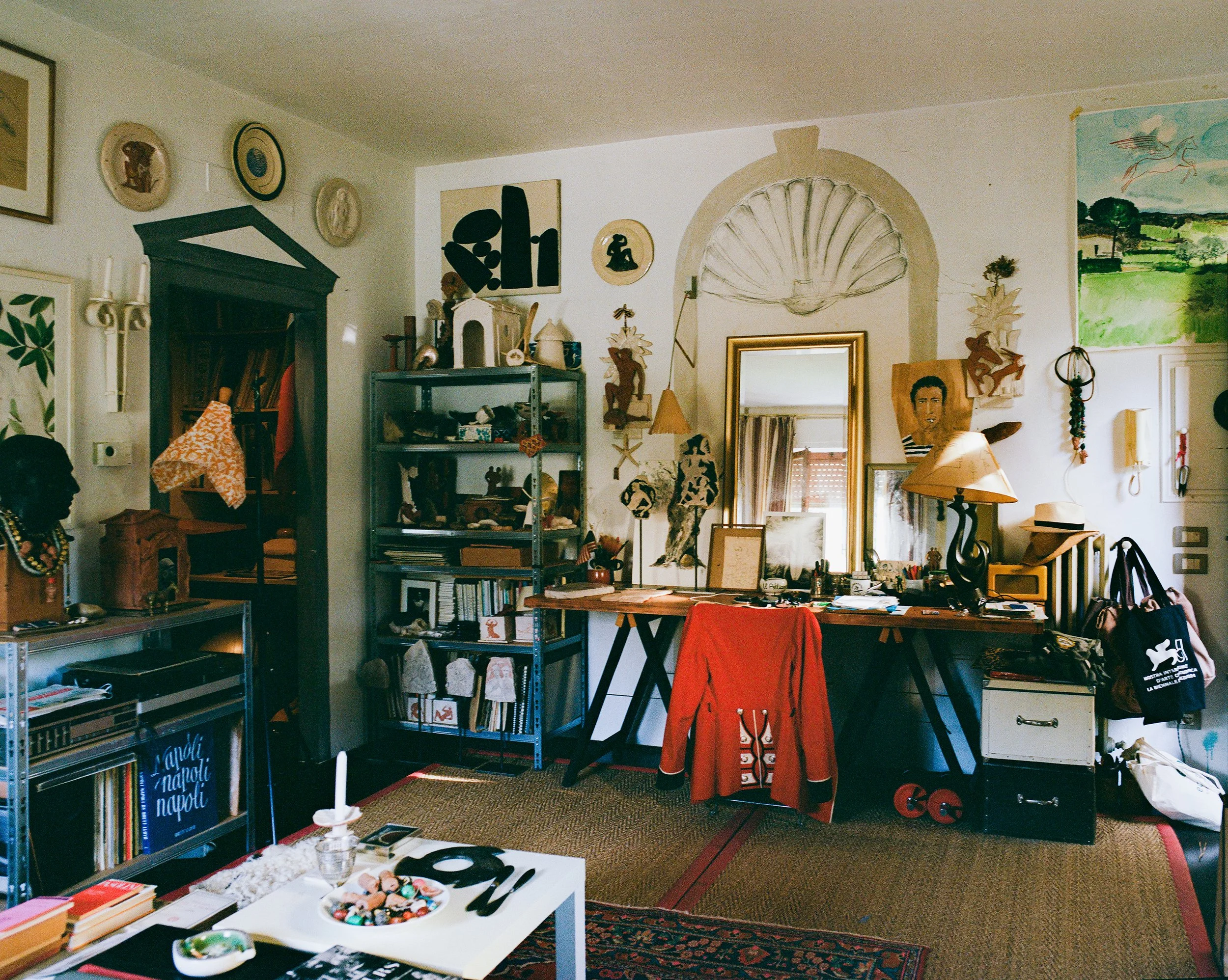
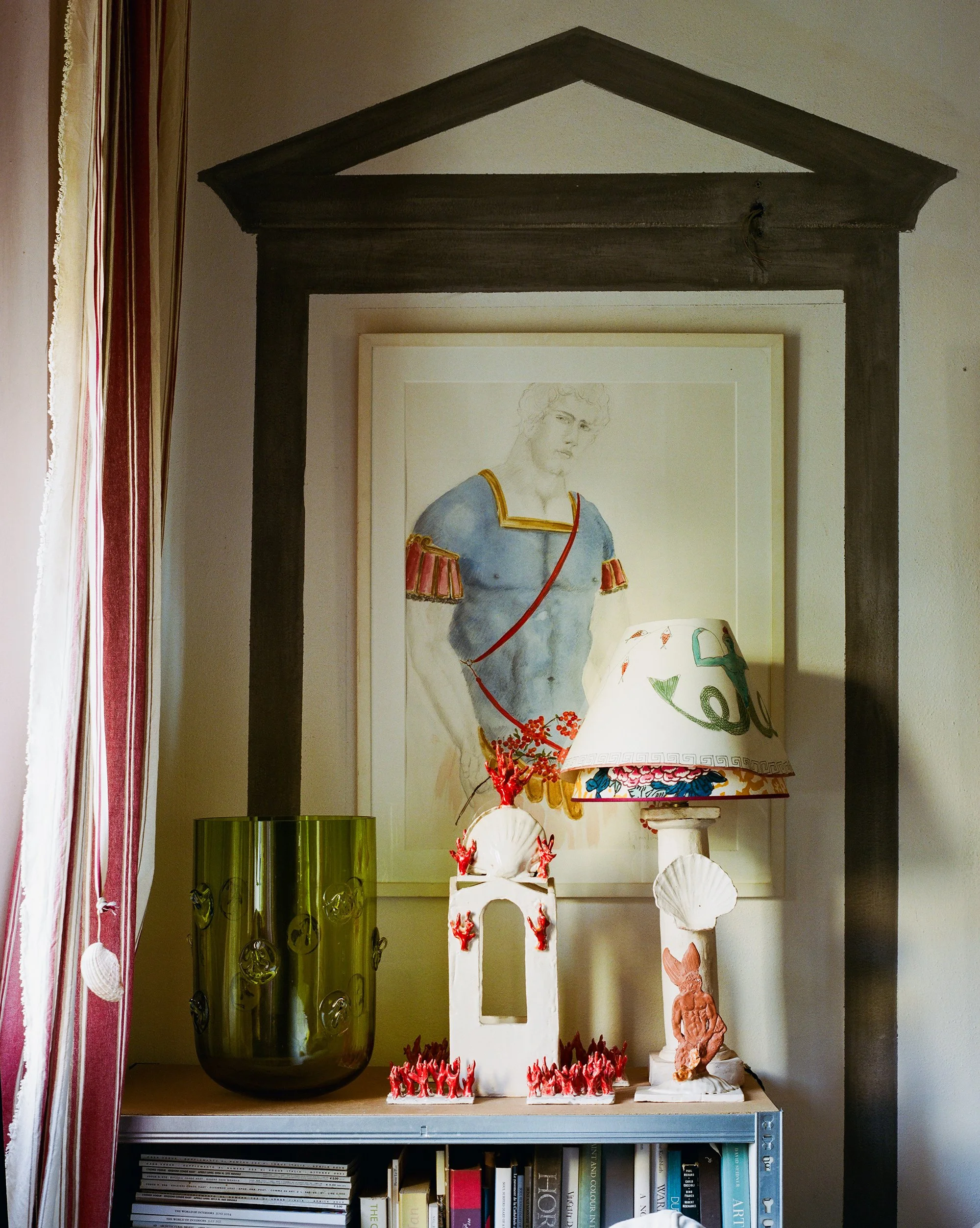
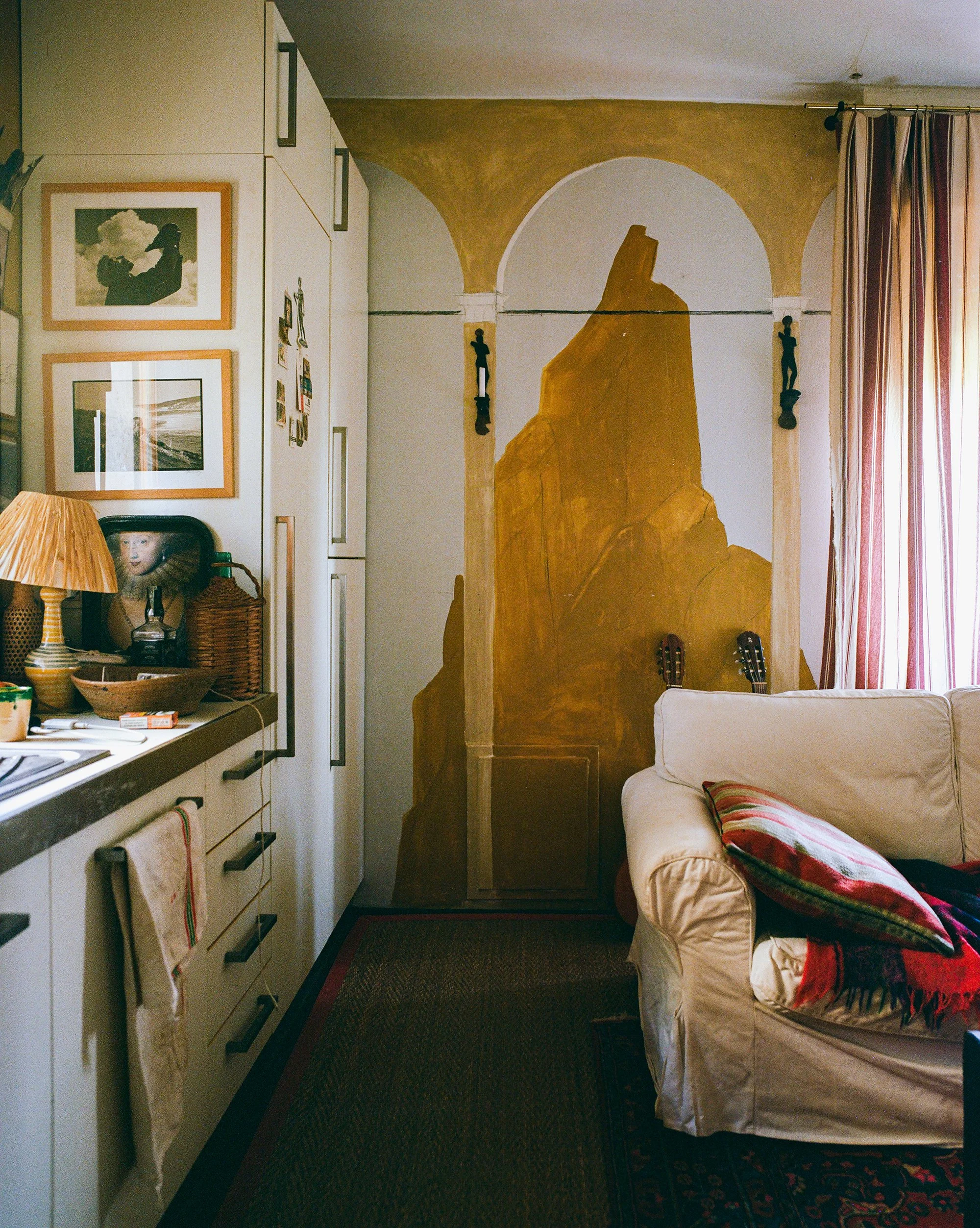
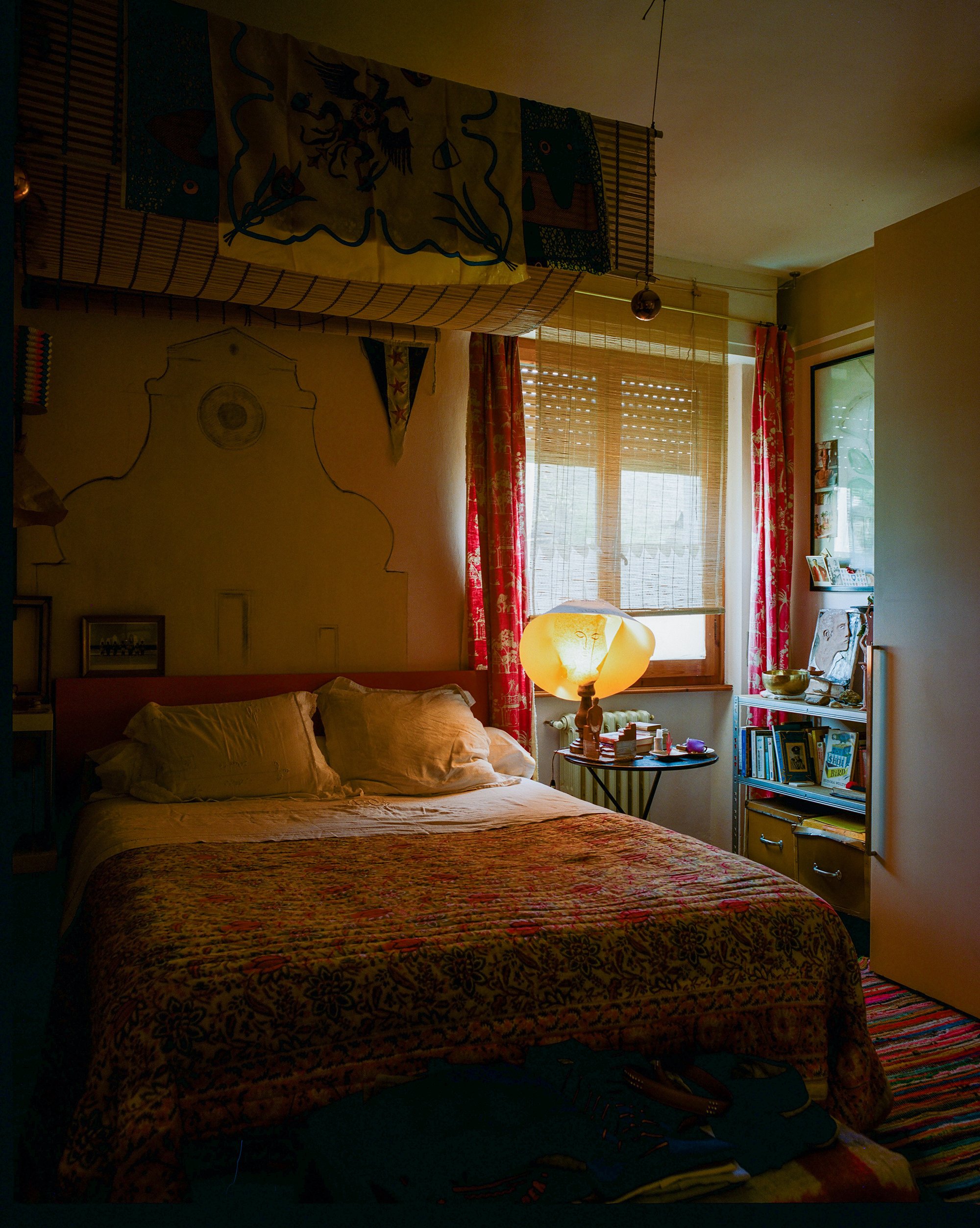
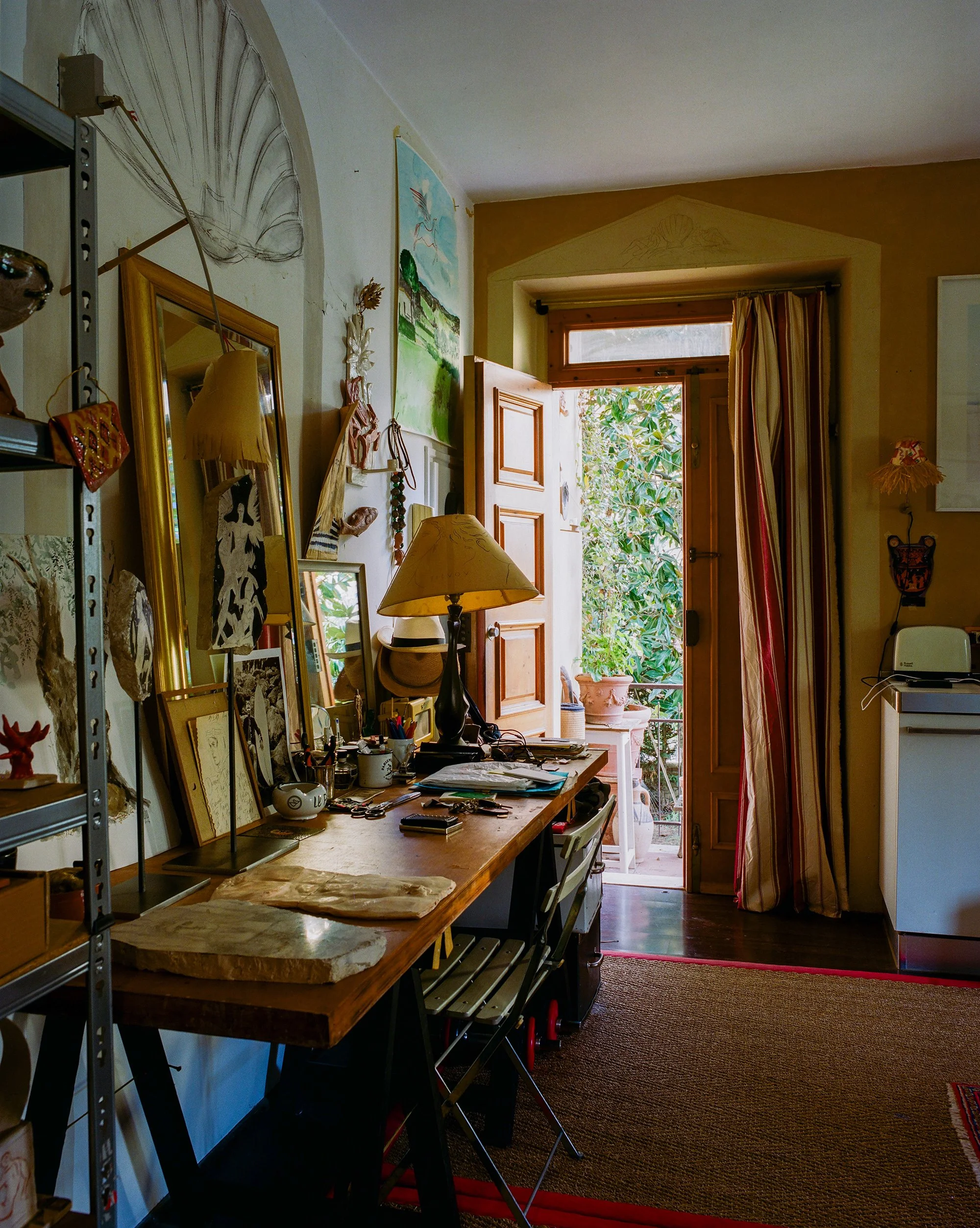
Espresso cups litter the bistro table, the ashtray steadily fills. We walk to his apartment, a modest two-room space on the ground floor of a small white house. Given everything I have heard, I expect something unusual - and I am not disappointed. Ivan has painted Greco-Roman arches and columns directly across the walls. Rugs cover the floors, textures and shapes melt in remarkable harmony.
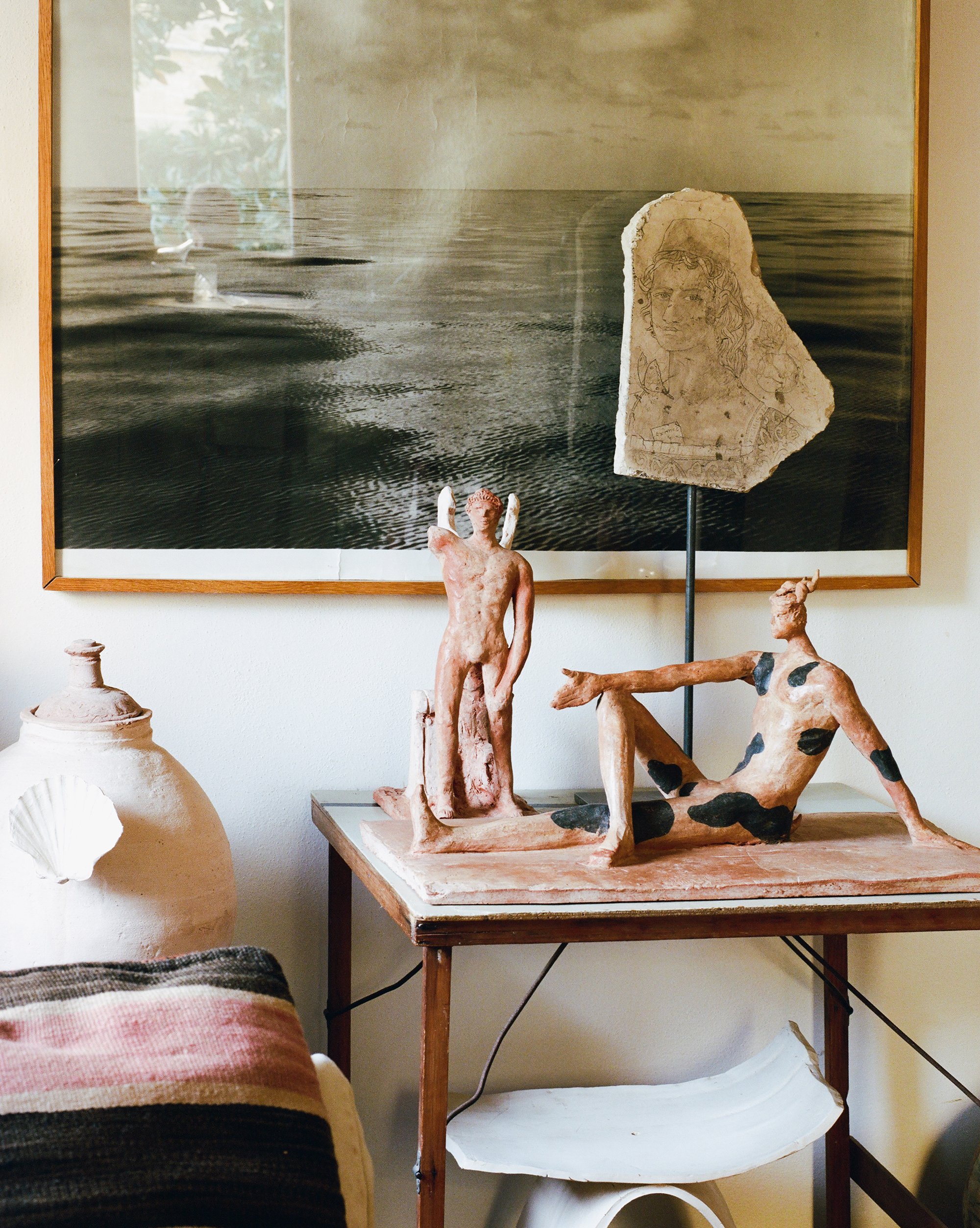
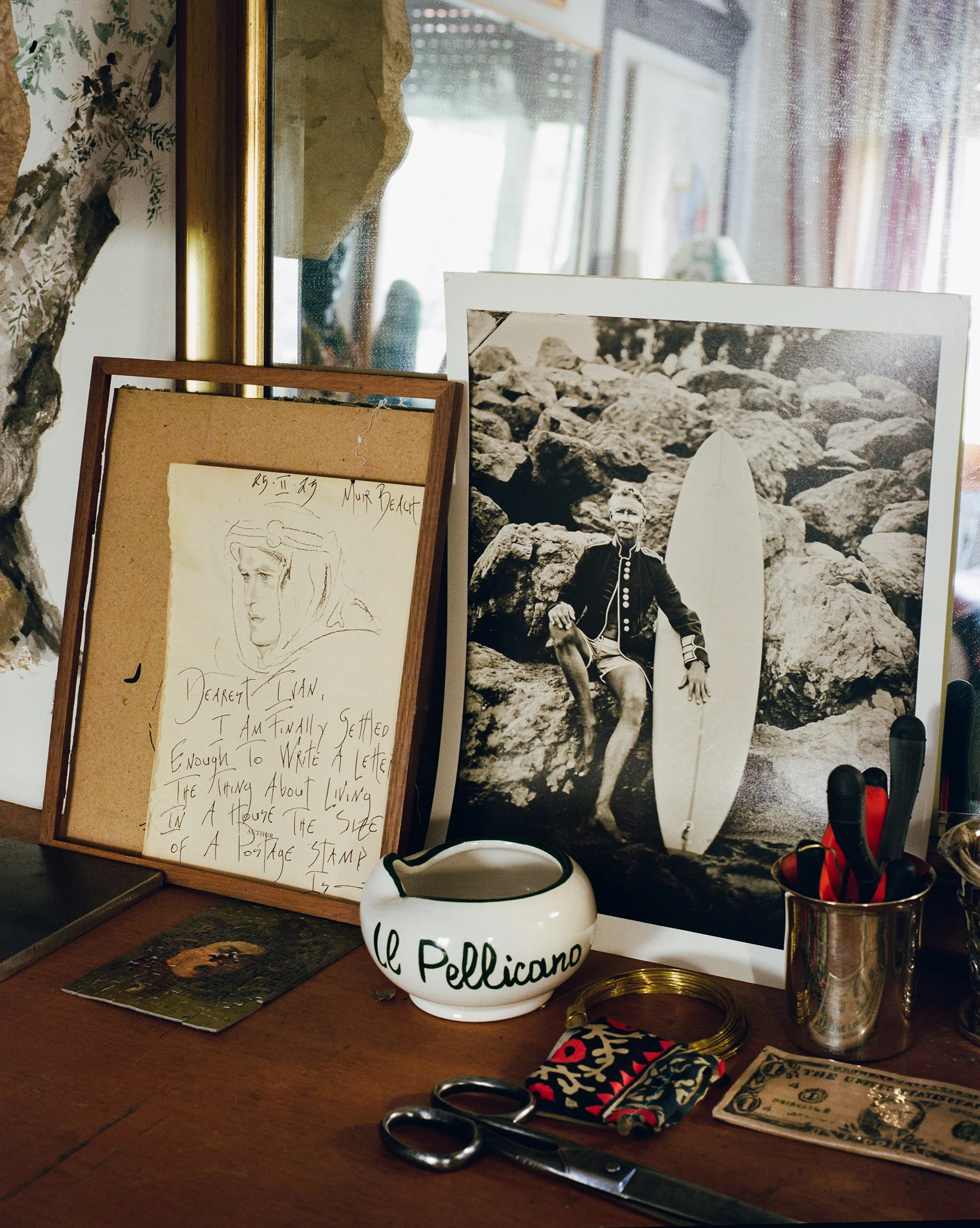
The apartment seems to function both as a personal gallery and a travel journal. Many of the paintings, sculptures, and photographs are Ivan's own works, while other artifacts are souvenirs or gifts collected along the way, tracing a life devoted to creation and wandering. Several pieces catch my attention — among them, a series of watercolours painted on small kraft paper bags from the only grocery shop of the Giannutri island, where Ivan regularly spends his summers. Even the lampshades become canvases for antique fantasies.
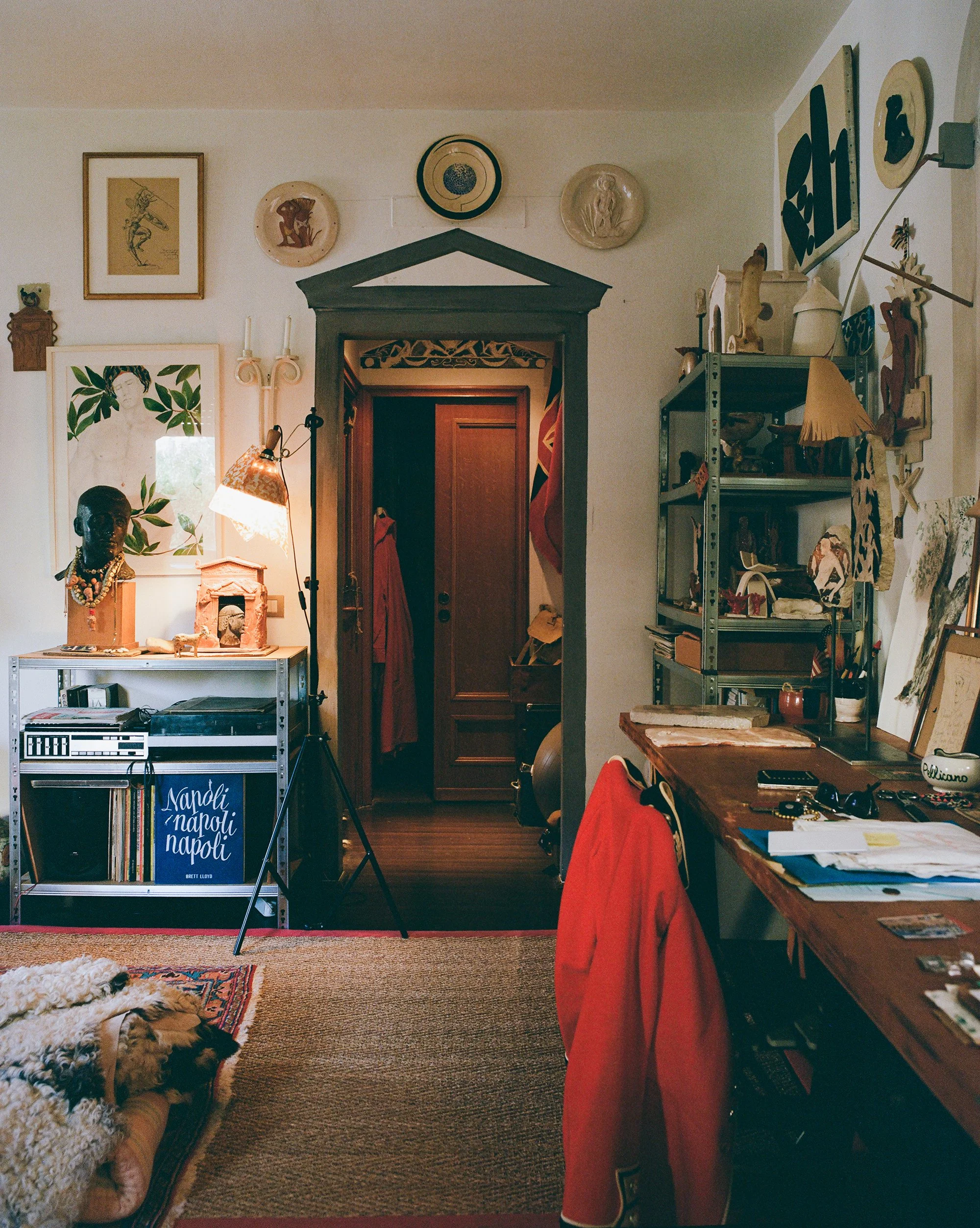
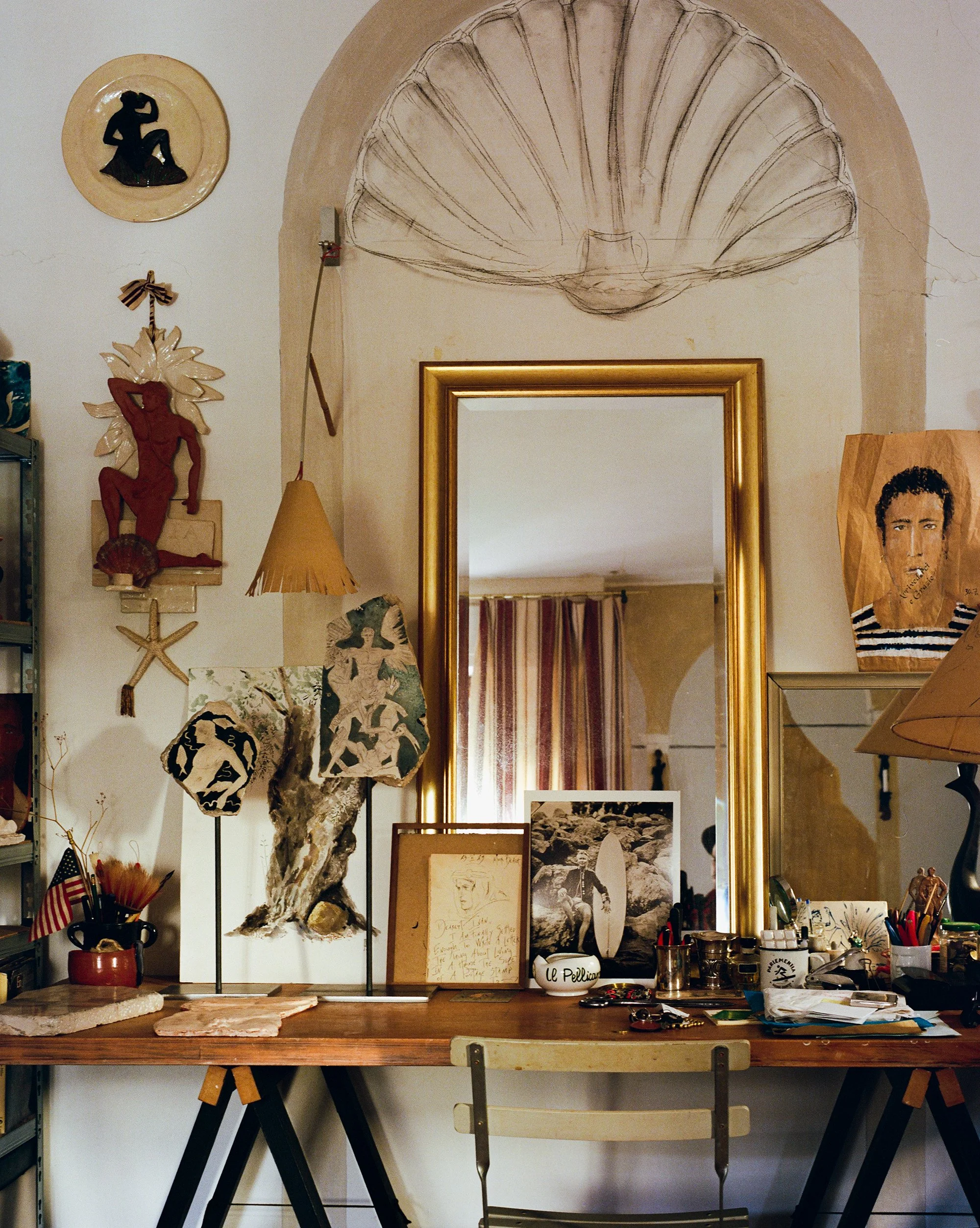
Exploring through his shelves, Ivan shows me parts of his archive: books documenting the interiors of Yves Saint Laurent and Pierre Bergé, photographs of Pierre Cardin’s Moroccan residence. He speaks passionately about decorative arts — as distinct from mere decoration — and more broadly about his fascination with interiors "that express a strong personal style, places shaped outside of fashion, yet with the same care artists apply to their work". The idea makes perfect sense as I let my eyes look across his walls, shelves, tables, and furniture.
He then presents contact sheets from a horseback crossing of the Atlas Mountains, and, as if struck by a sudden thought, picks up what appears to be a stone, small enough to nestle in the palm of a hand. It is a fragment of a granite mallet, collected in the Tassili n’Ajjer, a Saharan mountain range famous for its remarkable prehistoric rock paintings. Ivan seems deeply moved by the object. “This tool was held by a human hand more than ten thousand years ago. To me, it is mystical, shamanic even”.
Time is slipping away. My friends and I must return to the olive grove to bring the last harvest to the press. Ivan is horrified. “You can’t leave without seeing the atelier”. And so we find ourselves speeding through the Tuscan countryside in his Golf IV black cabriolet, Ivan dressed in his British officer's jacket, foot down through the bends towards his workspace. That jacket, he jokes, has saved him from trouble more than once — most recently when he was pulled over by the carabinieri, leaving Florence after an evening of cocktails in good company. "They didn't even ask for my papers when they saw the uniform", he says, amused.
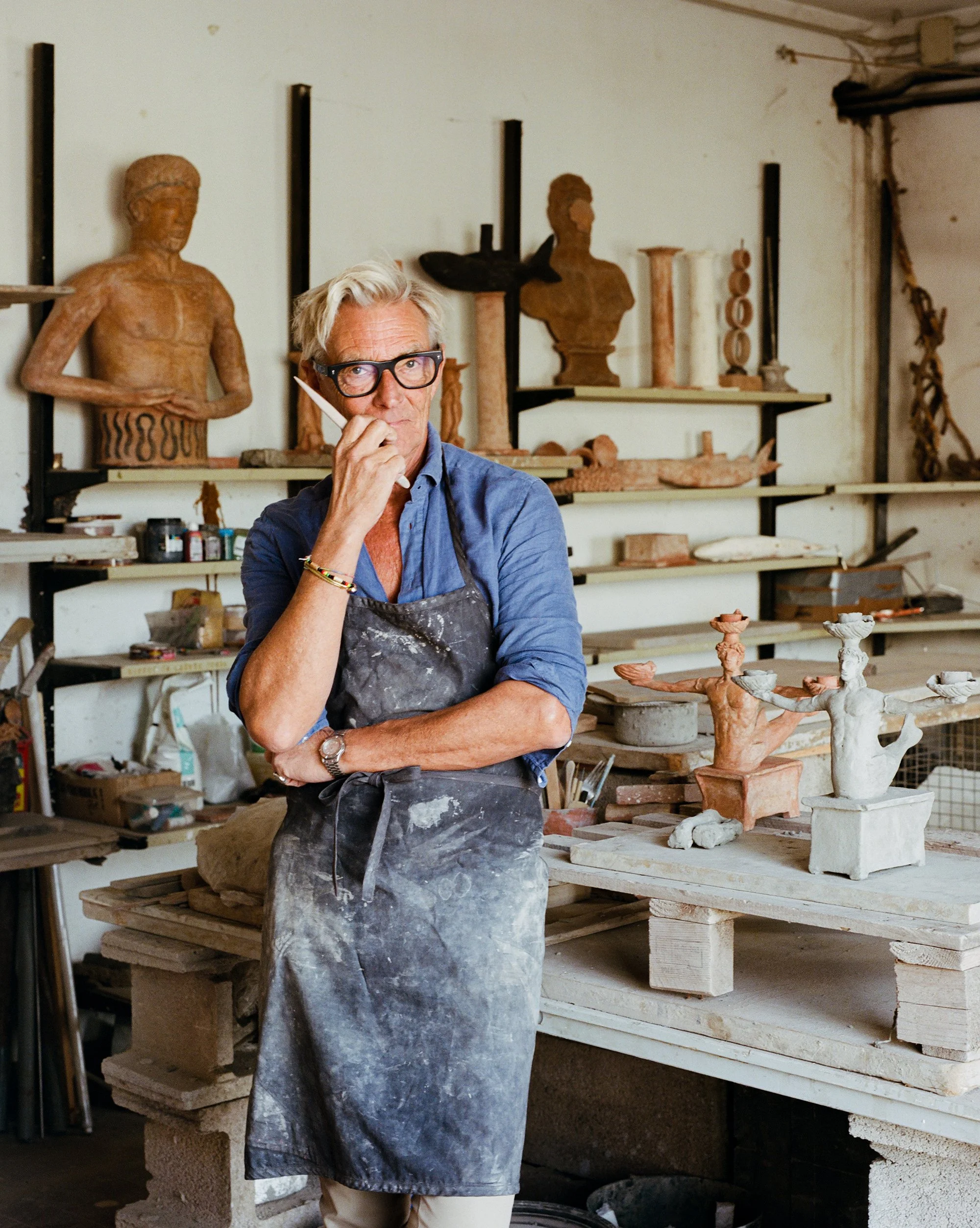
We pull up at the factory. Ivan unlocks the studio, trades his jacket for an apron, and shows me what he is working on. His sculpture evokes antiquity, recalling the world described in Marguerite Yourcenar's Memoirs of Hadrian, radiating a profound serenity and a deep sense of timeless beauty. "My current work comes from obsessions that have haunted me for as long as I can remember. I believe antiquity came close to a mystical, absolute form of beauty. These are among the most sublime creations of all humanity. So I went back to the art of the fifth century BCE, to Greek art, and I keep going further back, toward the earliest origins".
Temples, deities, symbols and life scenes weave a mythology dreamed and reinvented by their maker, through which he expresses something of his own spirituality : "I believe that beauty is an incarnation of the spiritual — that it is the language of the divine". I didn’t know it then, but I will see several of these pieces in their final form in the spring of 2026, at their exhibition in Paris, at Pierre Passebon's Galerie du Passage.
As our timing becomes critical, Ivan and I rush through the rest of the factory, passing artisans shaping molds, amphorae, and an endless catalogue of terracotta objects that I can no longer follow as he names them, my attention drifting toward to the dozens of crates of olives waiting to be pressed overnight — and toward the final photograph I want to take: a portrait of Ivan in his studio, flooded with light.
We return to the atelier. Ivan approaches his tools, the photographer is photographed. As I rewind my film, he offers a few final words of encouragement about my own work, unexpectedly reassuring, praising the virtues of both patience and action like a Zen master. I am struck by the kindness, the optimism, and the quiet ease he carries with him.
Back at the Fiat 500, my friends and I find a parking ticket tucked beneath the windshield wiper. A few minutes earlier, perhaps, our host’s officer jacket might have saved us. We drive away from the village, Ivan Terestchenko’s ancient worlds slowly fading into the rearview mirror.
Photos & text - Paul Labourie @paul_labourie
www.paullabourie.com
@ivanterestchenko.official