
The Shape of Freedom
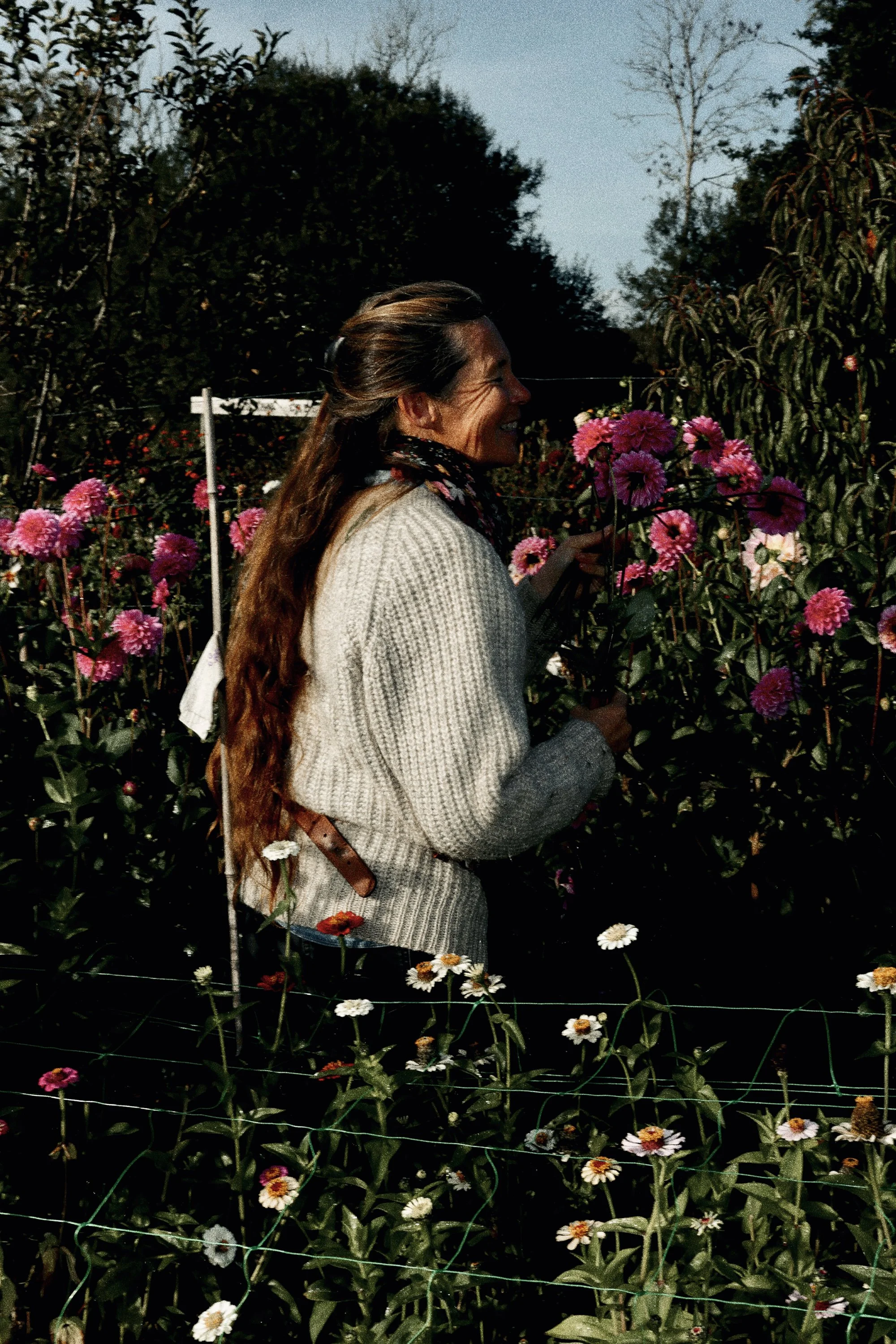
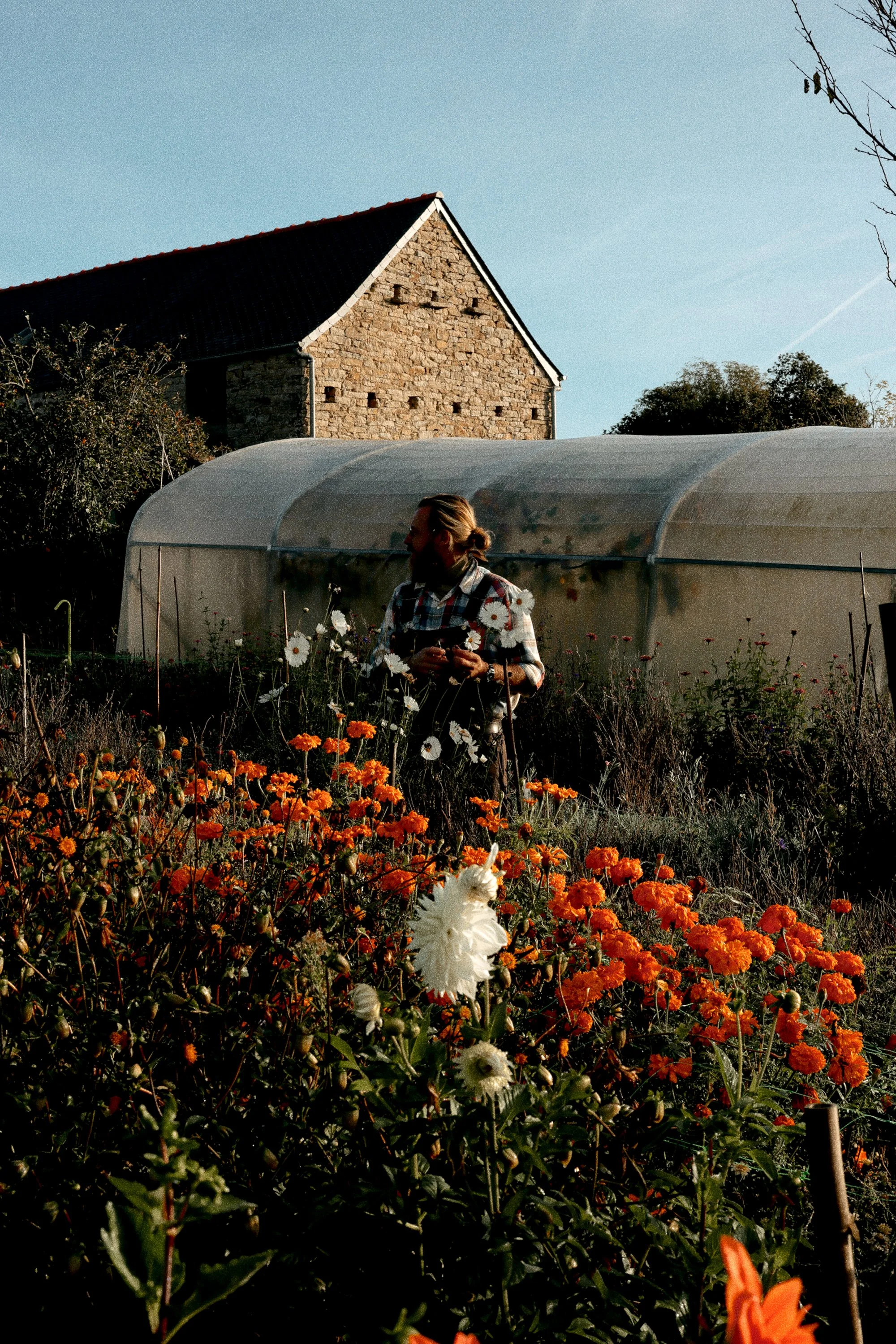
It took all of five minutes for Valérie, Alexis and their four children to fall for Guizec. After years of restoring wooden boats and sailing together, they were ready for a different kind of adventure. One involving a stretch of land near the sea, a river, old stone buildings and the prospect of making a home, quite literally, with their own hands.
Both practising doctors, they had something rather particular in mind: to grow some of their own food, live more gently on the land and teach their children the pleasure of knowing how to make things themselves. Flowers weren’t originally part of the plan. They came later, finding their place somewhere between the orchard, the vegetable garden and the animals.
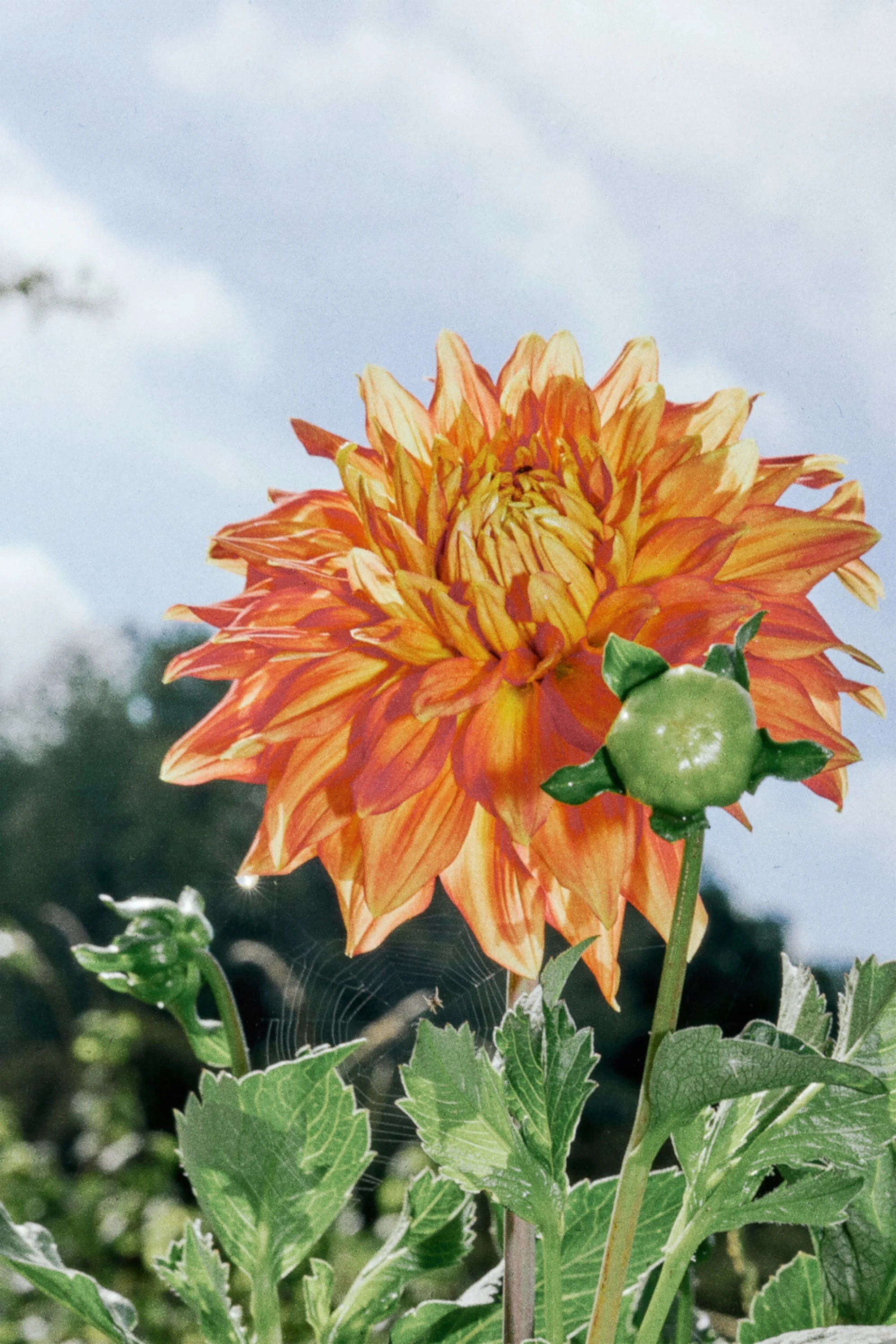
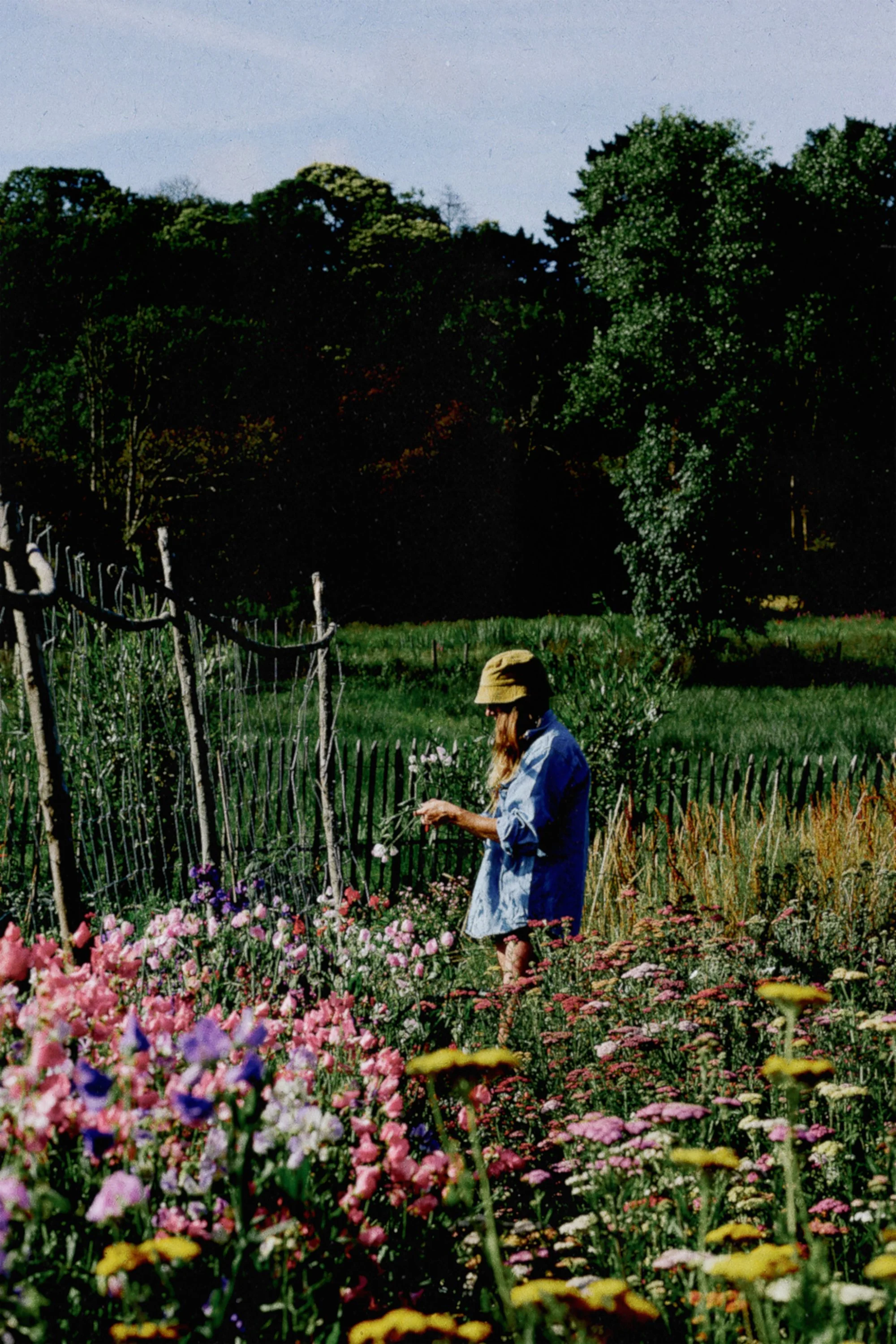
Today, flowers grow organically and in the open air, in soil that receives almost as much attention as the blooms themselves.
We meet a couple who have made freedom something of a daily practice. One that involves restoring a house, sowing seeds and knowing when to stop everything to admire a cornflower.
Where did the idea of starting a flower farm come from? And what were you both doing before Guizec?
Alexis: Having a farm was a childhood dream of mine. I'd more or less forgotten about it until my growing environmental awareness brought it back. I wanted to feel that I was doing something useful, being part of the solution. We had this rather romantic idea of the old-fashioned farm, the sort of place where you could stop by for eggs or butter. Only we couldn't find one anywhere around us. So we thought, why not make one ourselves?
The idea was to grow some of our own food, build things with our hands and show our children that another way of living was possible. It was always a family project before it was a business. Before that, we spent our time restoring wooden boats and sailing as a family. Eventually, we had to decide whether to buy a bigger boat or settle on dry land. With four children and a Newfoundland dog, things were getting rather crowded on board! We're both doctors, and we still practise medicine. Keeping our jobs means we can let the farm develop at its own pace, without expecting it to provide for the entire family.
Valérie: The flowers came afterwards. We already had vegetables and fruit trees, but we needed to find something we could grow and sell.
Alexis: We were looking through some old photographs of the farm and noticed just how many flowers there used to be. In the old days, farms were always full of them. And we thought, instead of selling our vegetables and keeping the flowers for ourselves, why not do the opposite?
It felt like a way of bringing together our environmental convictions and something a little more poetic.
Valérie: And our youngest daughter is called Fleur, which means flower. We named her long before the farm came along!
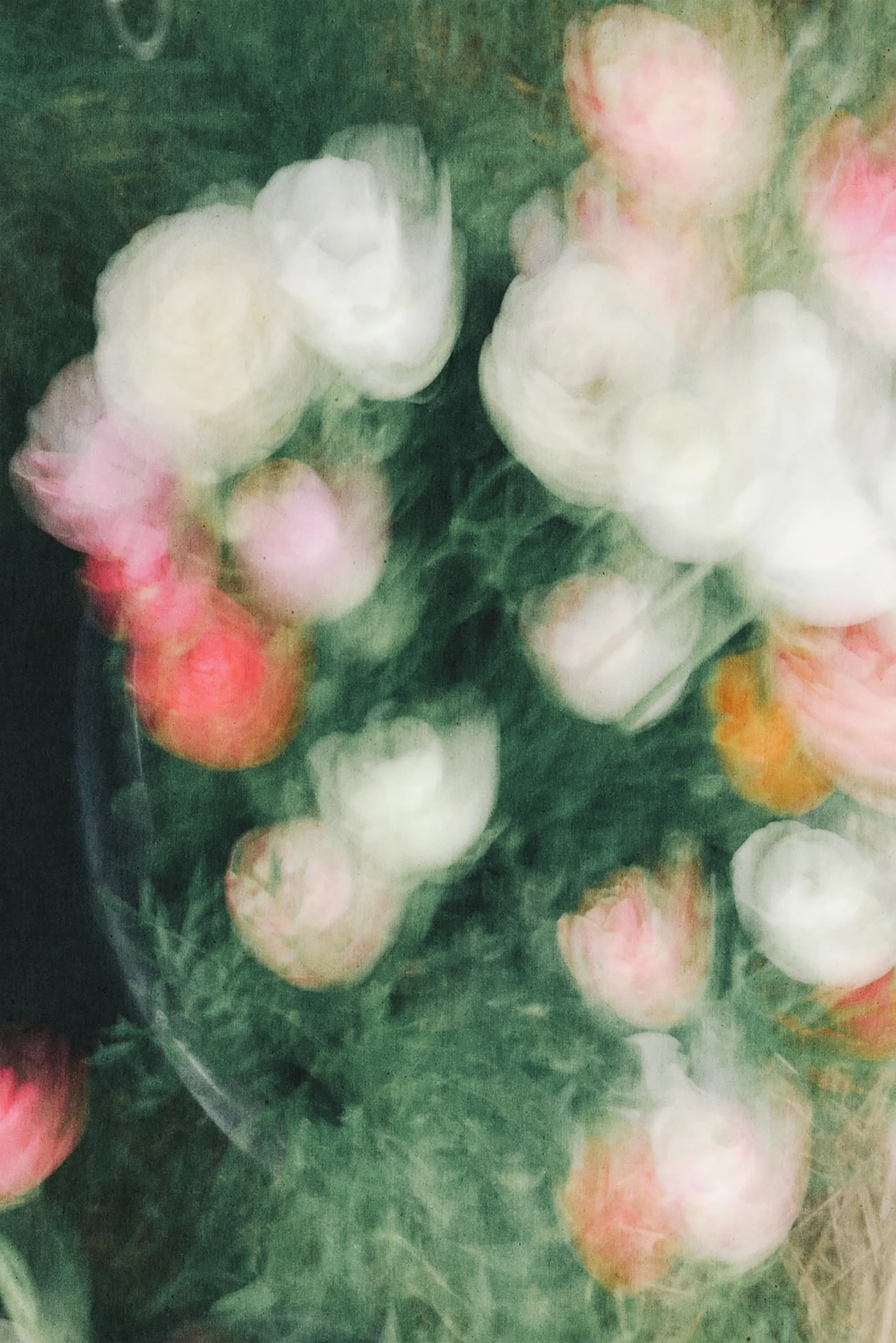
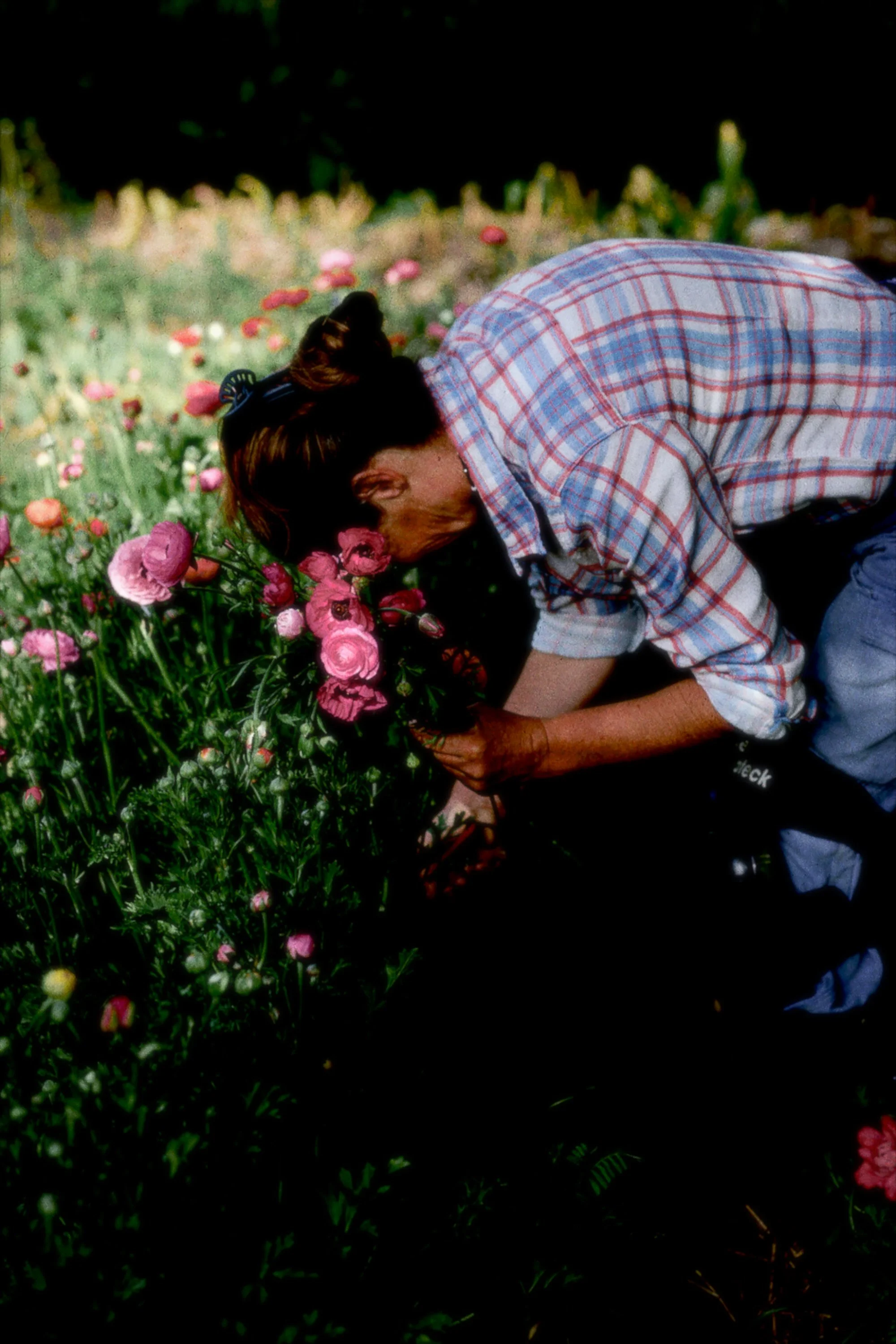
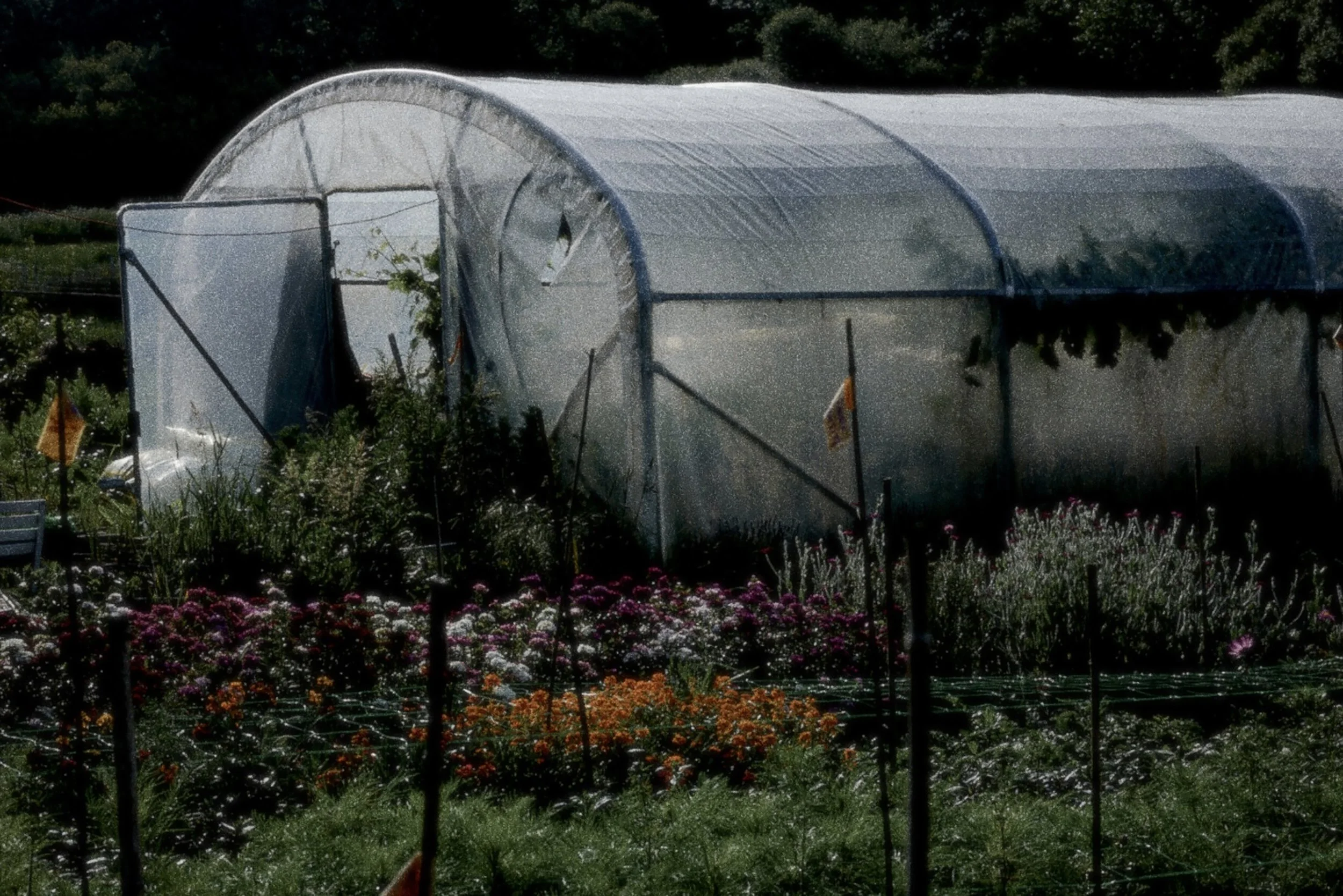
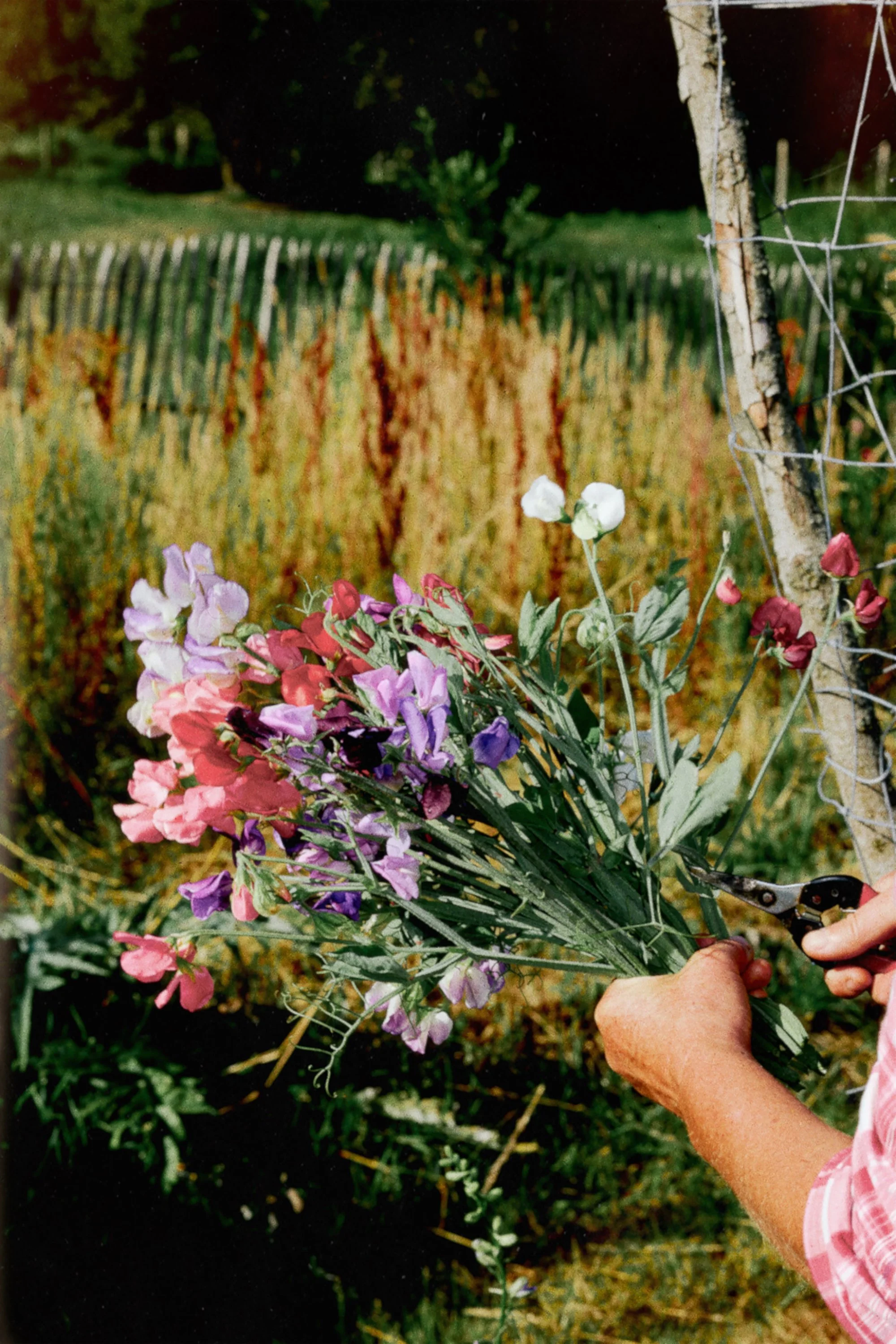
How did you find Guizec? What was it about this particular place that made you want to stay?
Alexis: We bought the farm ten years ago and moved here eight years ago. At the time, we were still living on the island of Groix and would come over at weekends. We were looking for somewhere unspoilt, close to the sea, with water nearby and old buildings that hadn't lost their character. We'd already restored several houses and wanted to start again with the simplest materials: stone, earth and wood. An estate agent told us she thought she'd found exactly what we were looking for. We came to see it, walked around the land, saw the river and looked at each other. That was it. The children felt exactly the same. Within five minutes, all six of us knew.
Valérie: Then came the renovations. We lived in the house while we worked on it, moving from one room to another as each became habitable.For quite a long time, our bathroom was a basin beside the fire. It was essentially camping indoors. The children thought it was wonderful.
Alexis: We did everything ourselves, using stone, earth and wood. There's a real sense of freedom in knowing how to make and repair things with your own hands.
Do you remember the very first flowers you planted?
Valérie: Twenty little packets of seeds. That was our starting point.
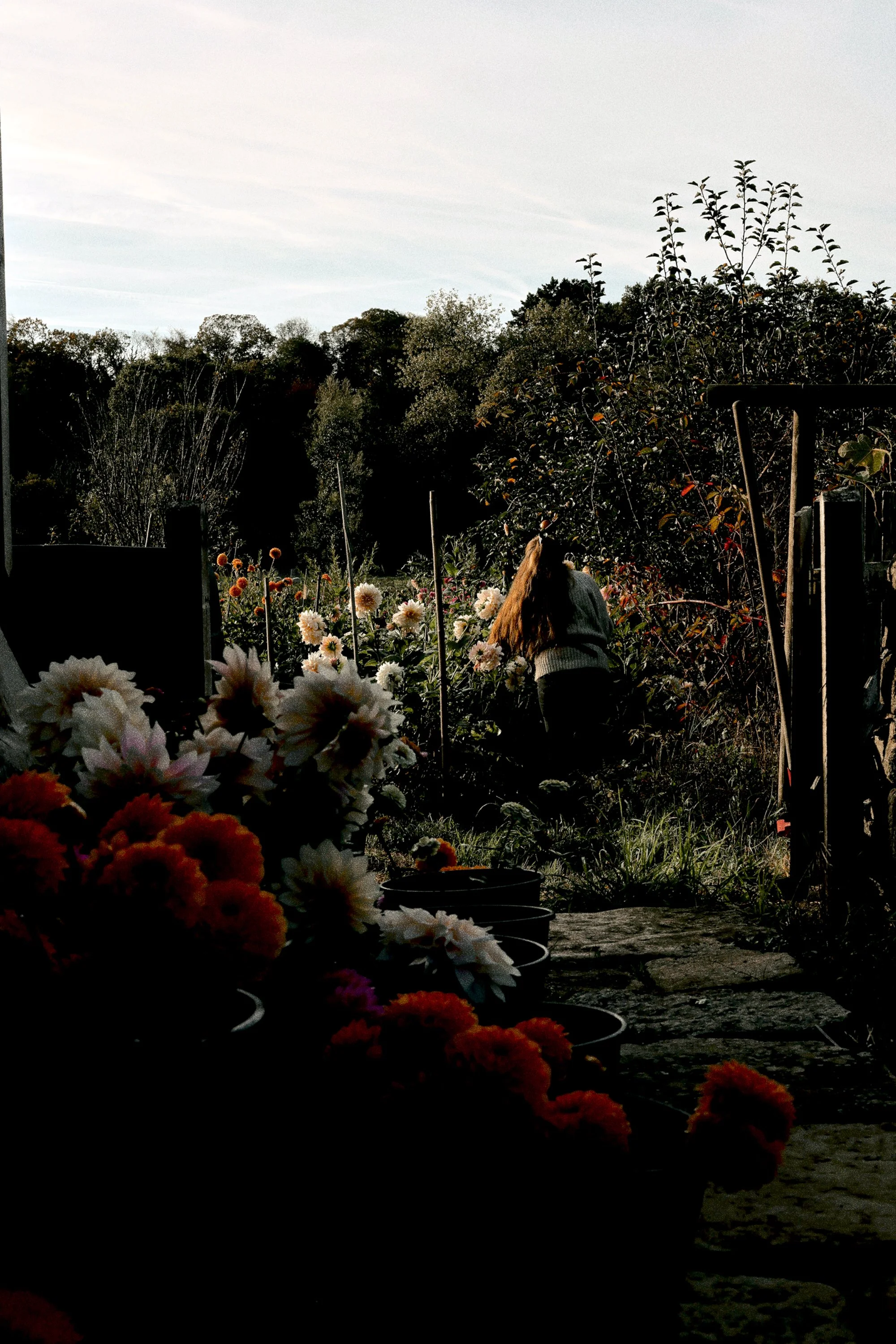
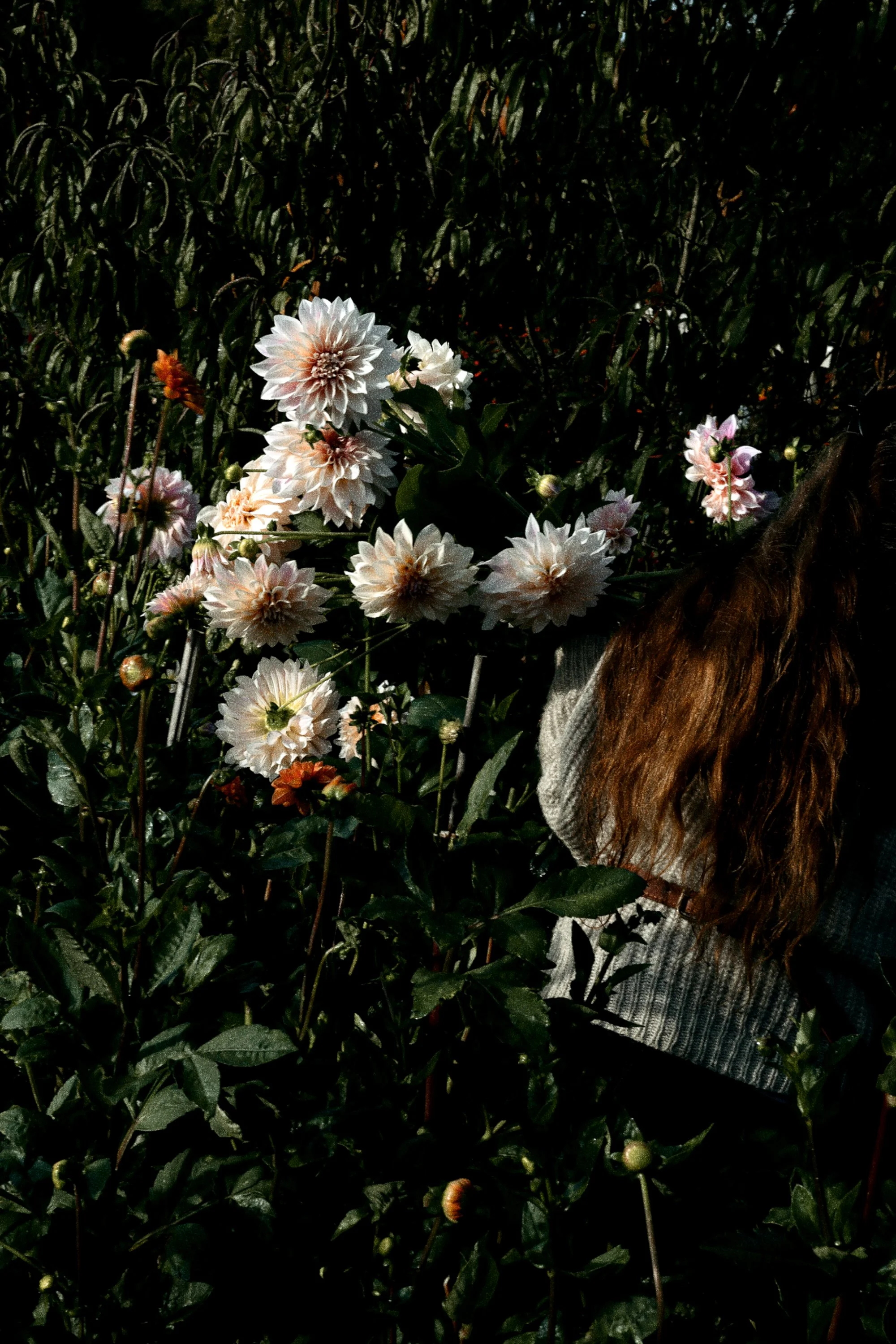
Alexis: We began with annuals because they required very little investment. With the money from our first sales, we bought a few bulbs and perennials. Then a few more the following year. Everything we earned went straight back into the farm.
Valérie: Perennials take years to establish themselves, and bulbs need time to multiply. You can see the garden slowly becoming more generous, but it doesn't happen overnight. Or even over one season.
How did you learn to grow flowers professionally? Was it through training, other growers or simply trying things out?
Alexis: We knew how to garden, but growing flowers to sell was another matter entirely. I completed a professional agricultural qualification in horticulture, although much of what we were taught was based on large greenhouses and specialised production. It wasn't really the model we had in mind. So we read a great deal, took permaculture courses and eventually discovered the world of North American micro-farms through blogs and online training. That gave us a starting point. But of course, their climate isn't ours, and neither is their soil. In the end, you learn by doing. Flower by flower, season by season. We also talk a lot with other organic flower growers, sharing what works and, just as importantly, what doesn't.
What are the principles that guide the way you grow flowers at Guizec?
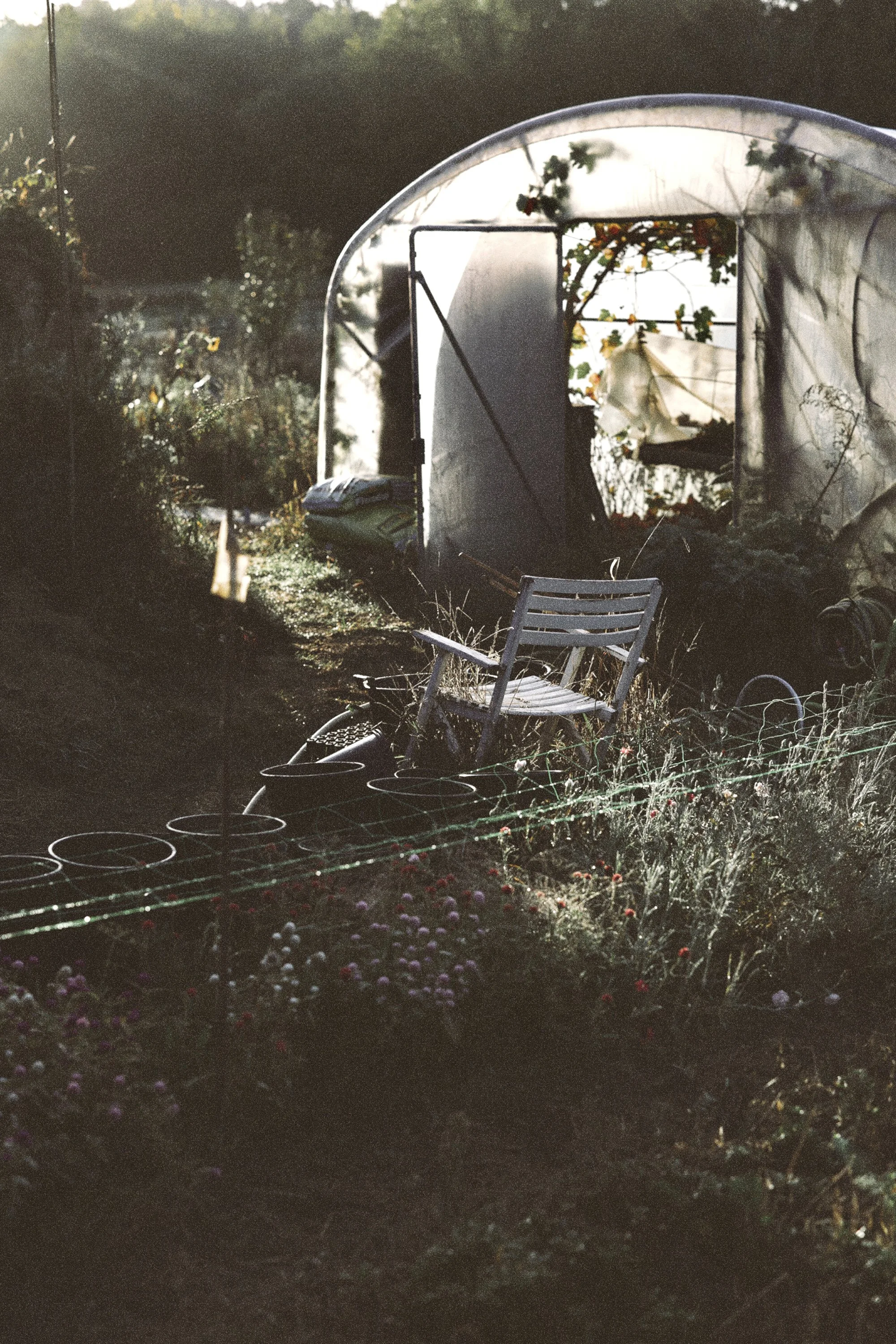
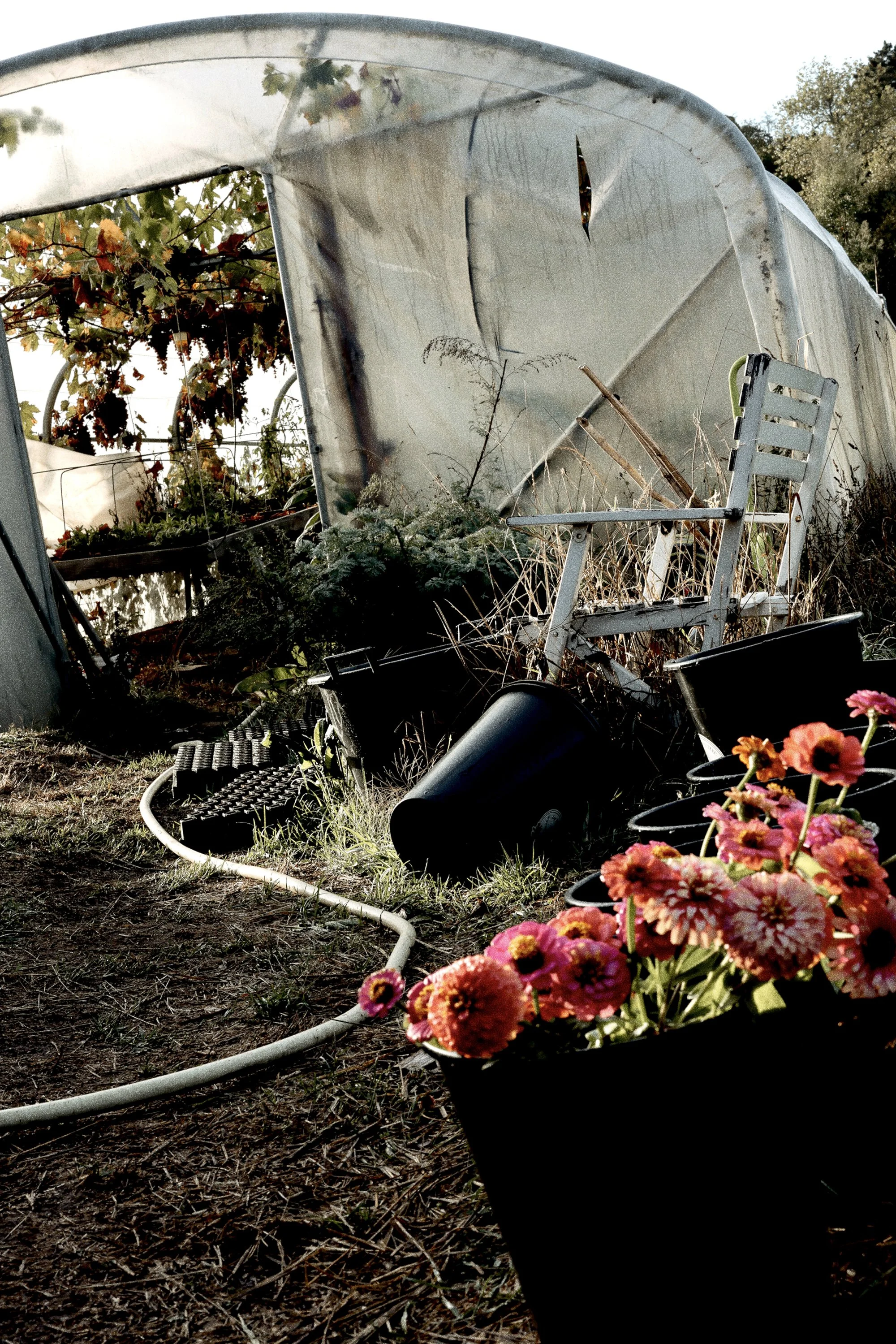
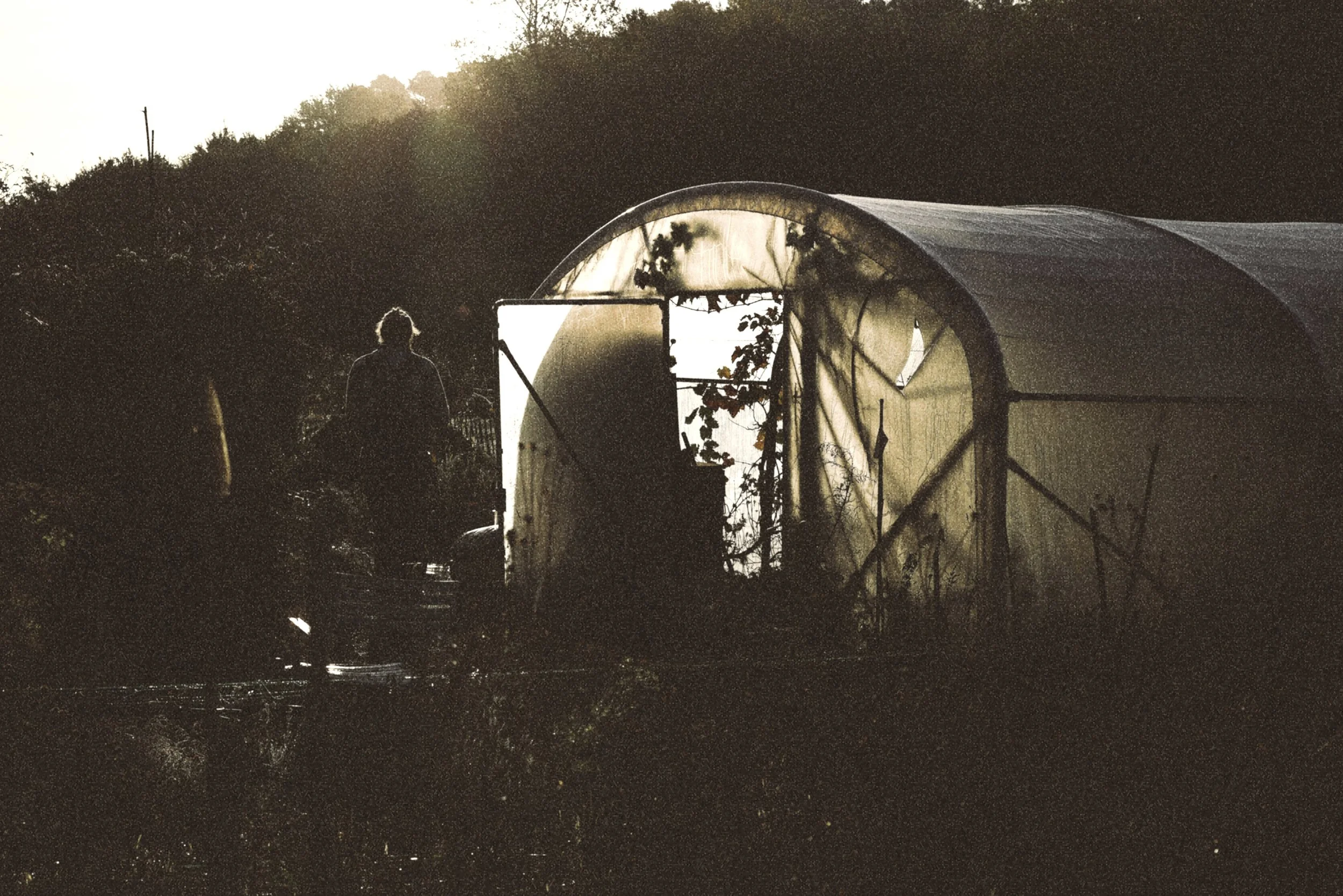
Alexis: We're rather obsessed with our soil. We feed it with plenty of organic matter to keep it rich and alive, then choose flowers that will be happy growing in it. Everything is organic, grown outdoors and according to the seasons. We have a small greenhouse for sowing seeds and raising young plants, but once they're ready, the flowers grow outside. We see the farm as one interconnected place. The hedges and manure from the animals help nourish the soil, the fruit and vegetables feed us, and everything has its role. We didn't create all this diversity just to turn part of it into a monoculture. And there's something else that matters to us: the farm should remain a beautiful, simple place to live. Somewhere we enjoy being. That influences our decisions just as much as anything else.
How do you decide which flowers to grow?
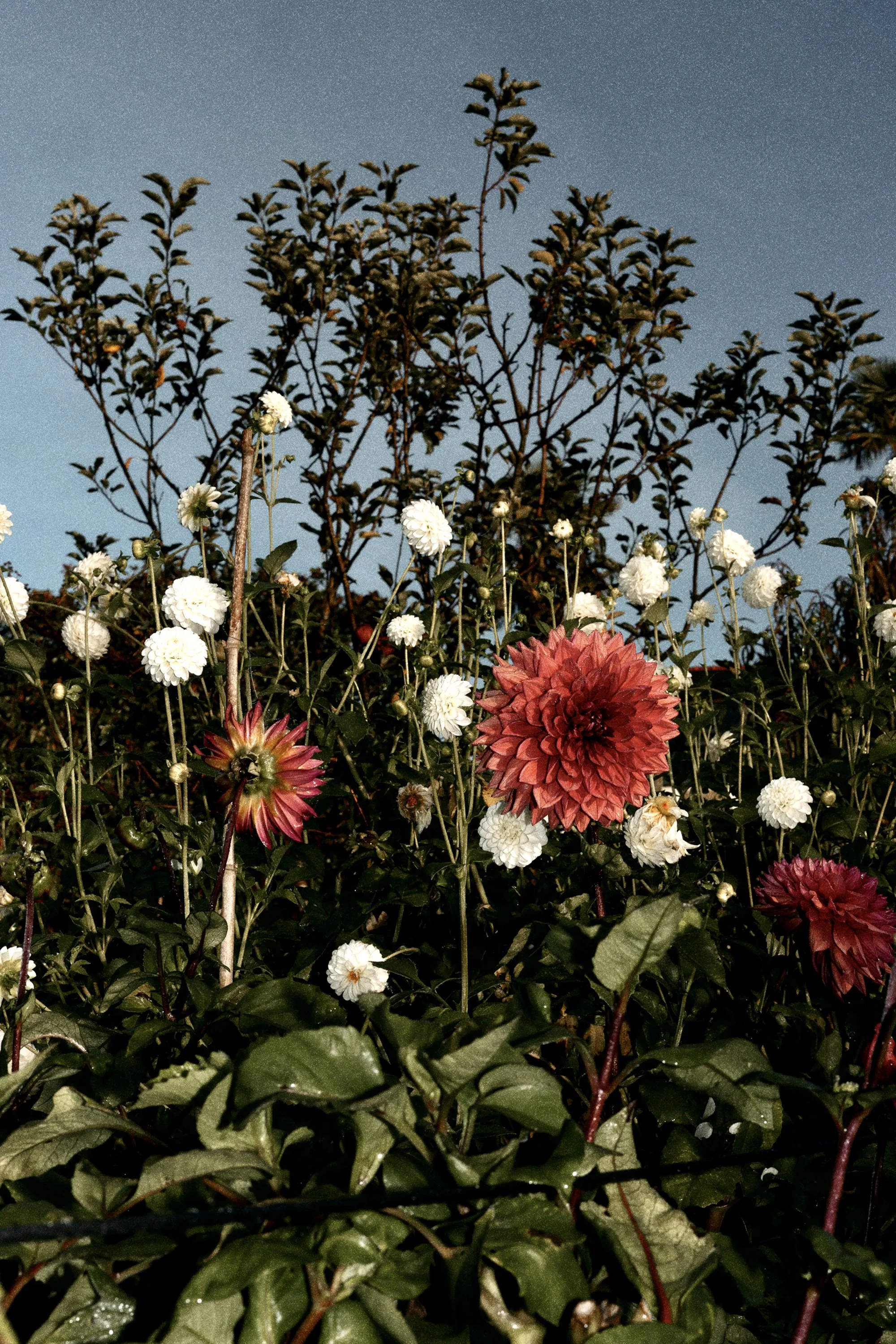
Alexis: We have a soft spot for country garden flowers, the sort you'd find in your grandmother's garden. But the soil tends to have the final say. Ours is heavy, clay-rich and sometimes rather wet. For years, we struggled to find the right place for our bulbs. Then we discovered a corner of the orchard where previous generations had added sand to the soil. The drainage was much better there. We had a similar experience with honesty, or Lunaria. We kept planting it in the sunshine, only to discover that it was much happier beneath the oak trees. Even after all this time, the land is still teaching us things.
Valérie: We collect our own seeds too, which means we don't always know what colours will appear the following year. Sometimes the garden makes its own decisions. And sometimes they're rather lovely.
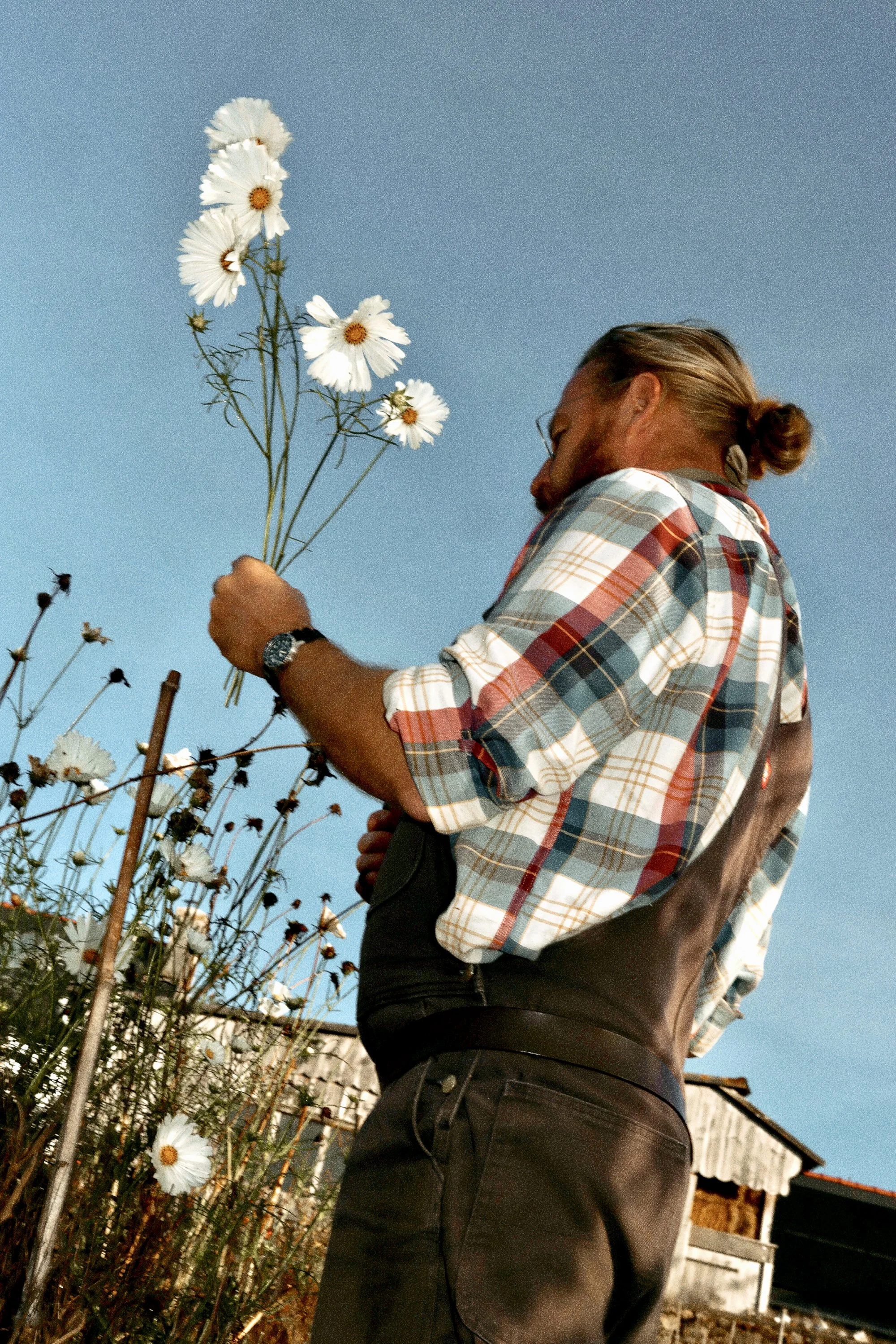
What does a typical week look like during the busiest part of the season? How do you share the work?
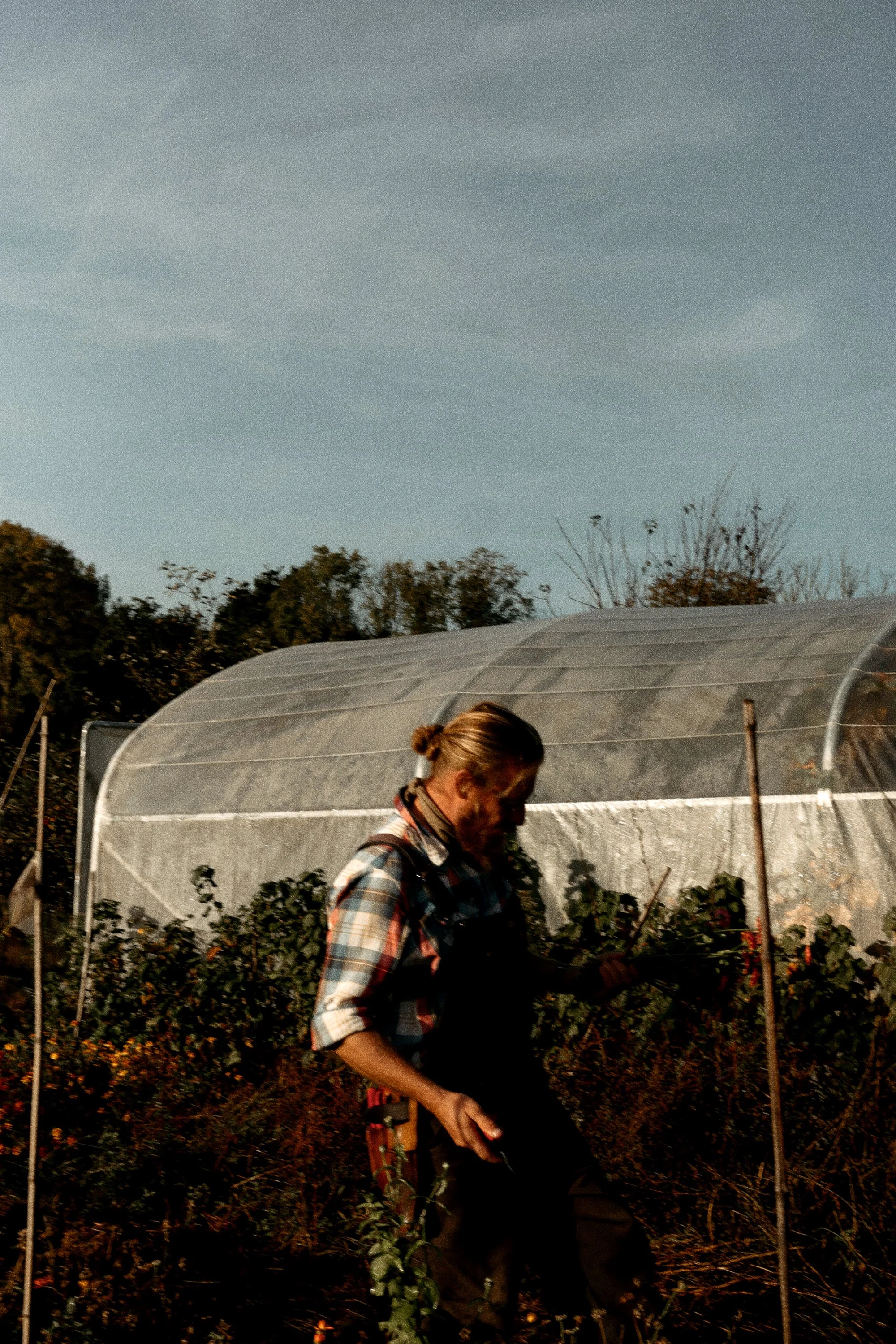
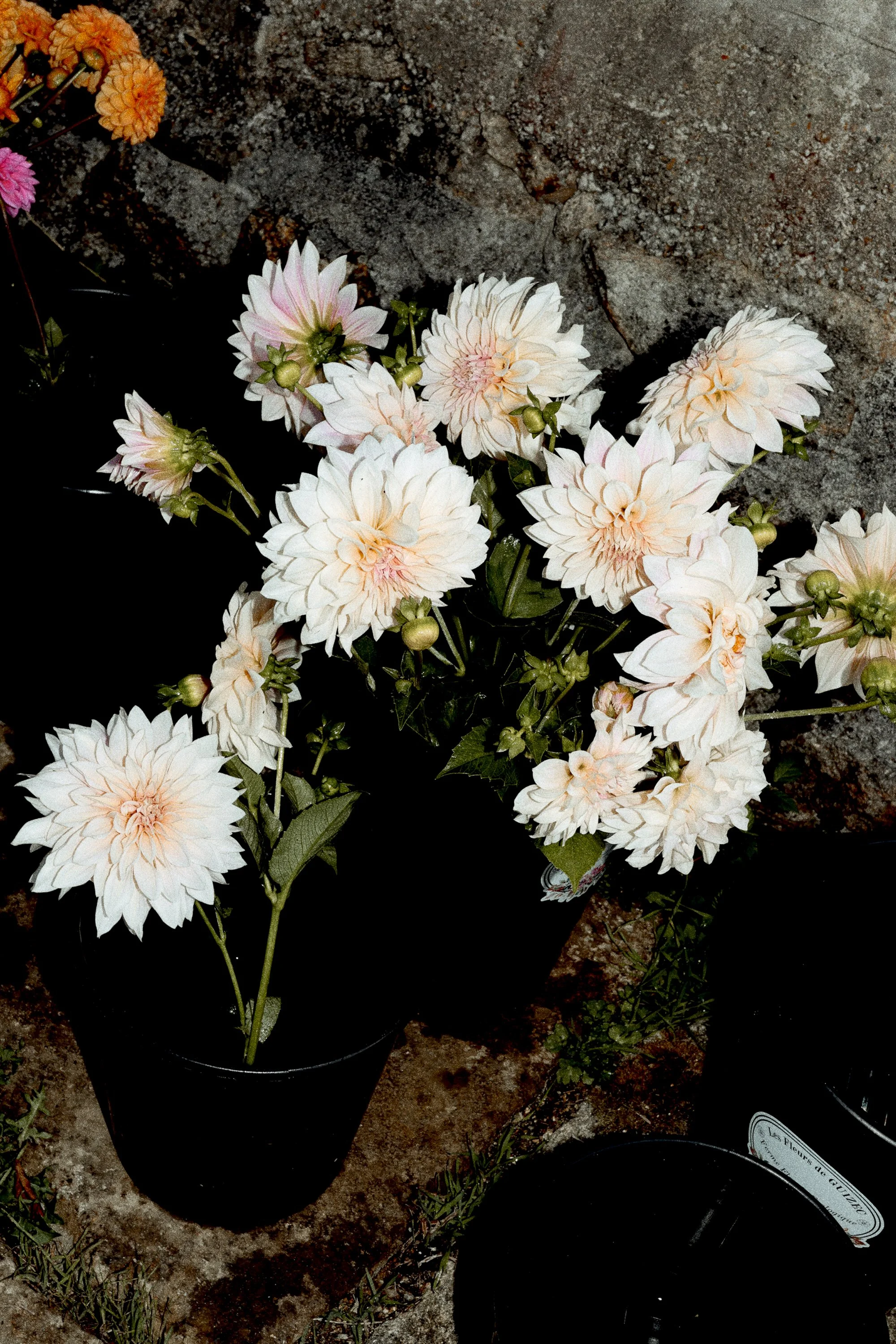
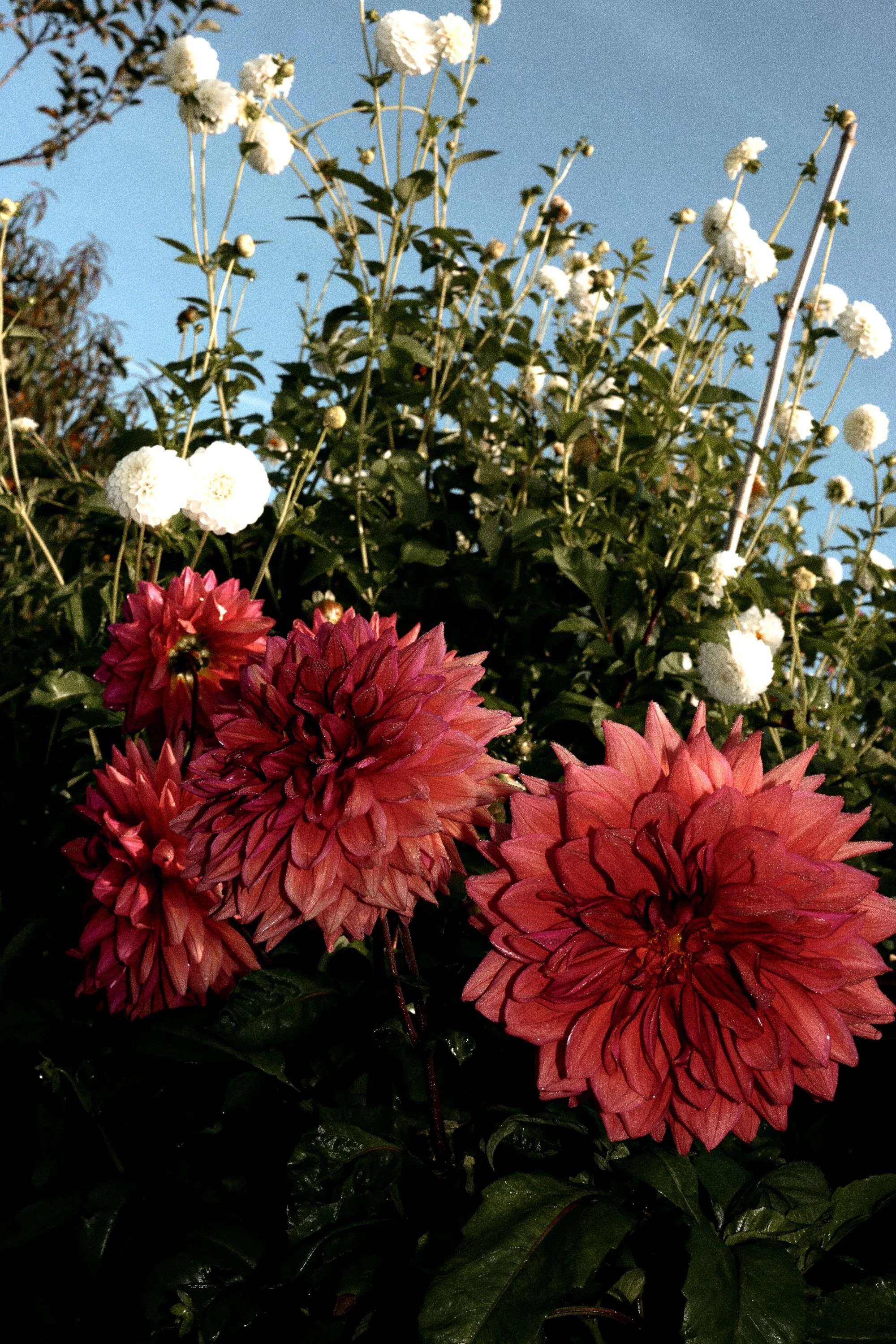
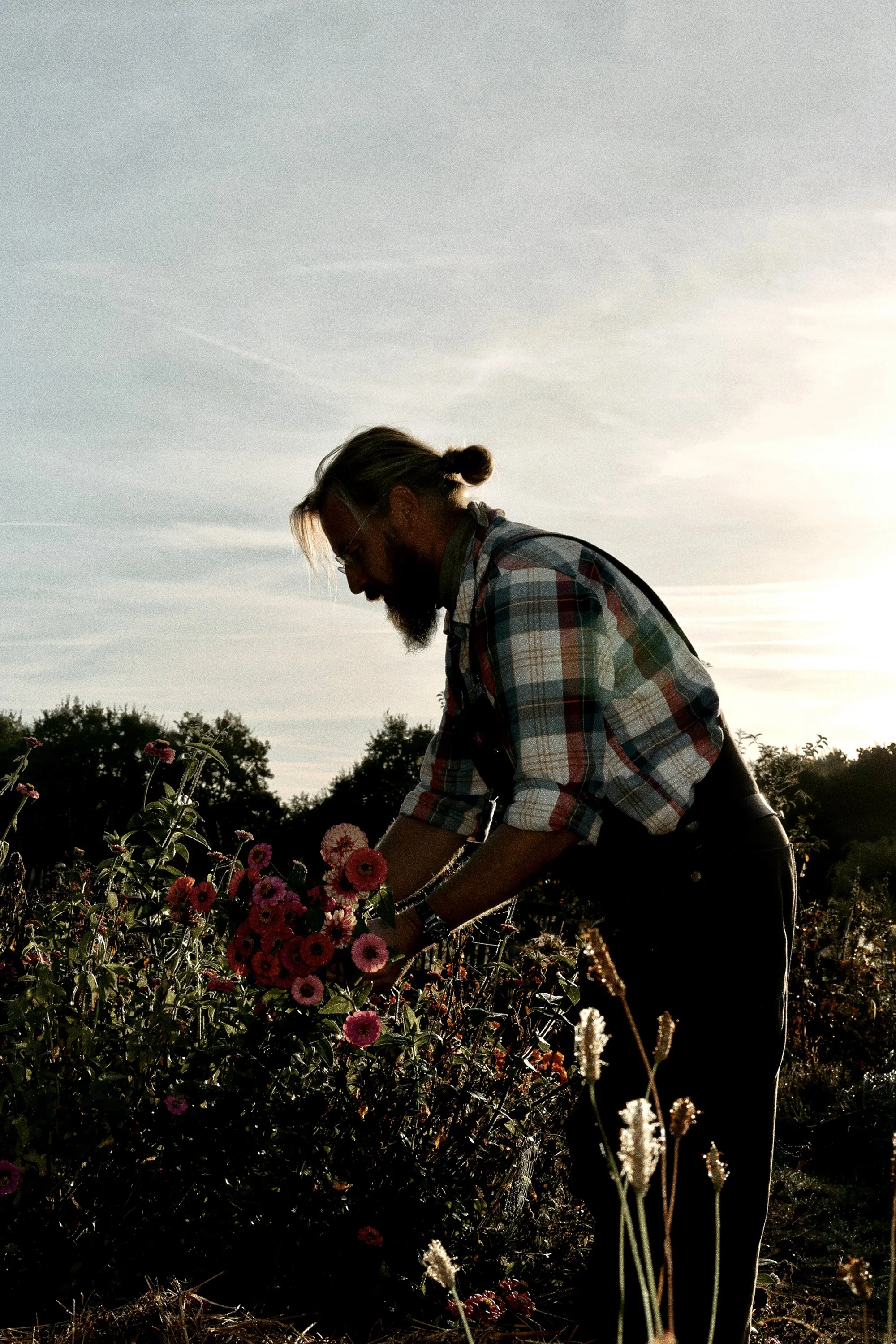
Alexis: In summer, mornings are mostly spent picking flowers before it gets too hot. When we have a big market coming up, we sometimes start harvesting the evening before. There's now more to pick than the two of us can manage, so we have people helping us. Afternoons are for the animals, moving fences, maintaining the farm. And naps. Especially when I've just come home from a night shift in the emergency department.
Valérie: I tend to do more of the sowing and transplanting, while Alexis takes care of building things and looking after the animals. But really, we both do a bit of everything. We often work together. We like that. We talk a lot.
Alexis: We need both our brains. I'd happily order thousands of seeds without having the slightest idea where to plant them. Valérie is the one who brings me back to reality.
What do you each enjoy most about life on the farm?
Valérie: I love sowing and transplanting, all those little precise jobs in the greenhouse. And I really enjoy the markets. After all the work that goes into growing the flowers, seeing how happy they make people is incredibly rewarding. It's also nice to leave the farm occasionally!
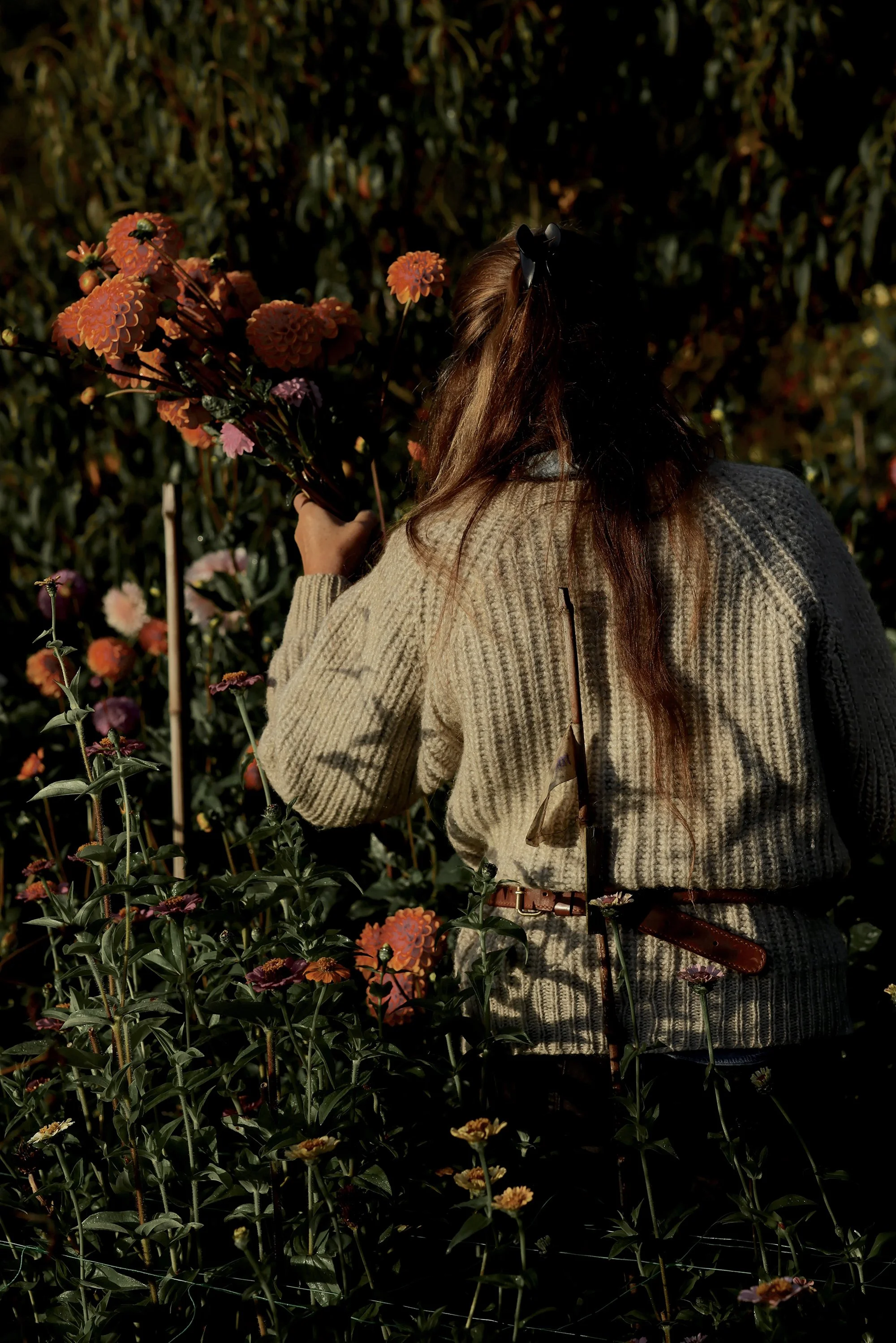
Alexis: I love creating new growing spaces, preparing beds and imagining what might grow there. And making bouquets. We're not trained florists, so we've learned to arrange flowers in our own way. At the beginning, we had lots of flowers and almost no foliage. Our bouquets were rather extravagant. Almost too many flowers, if such a thing is possible.
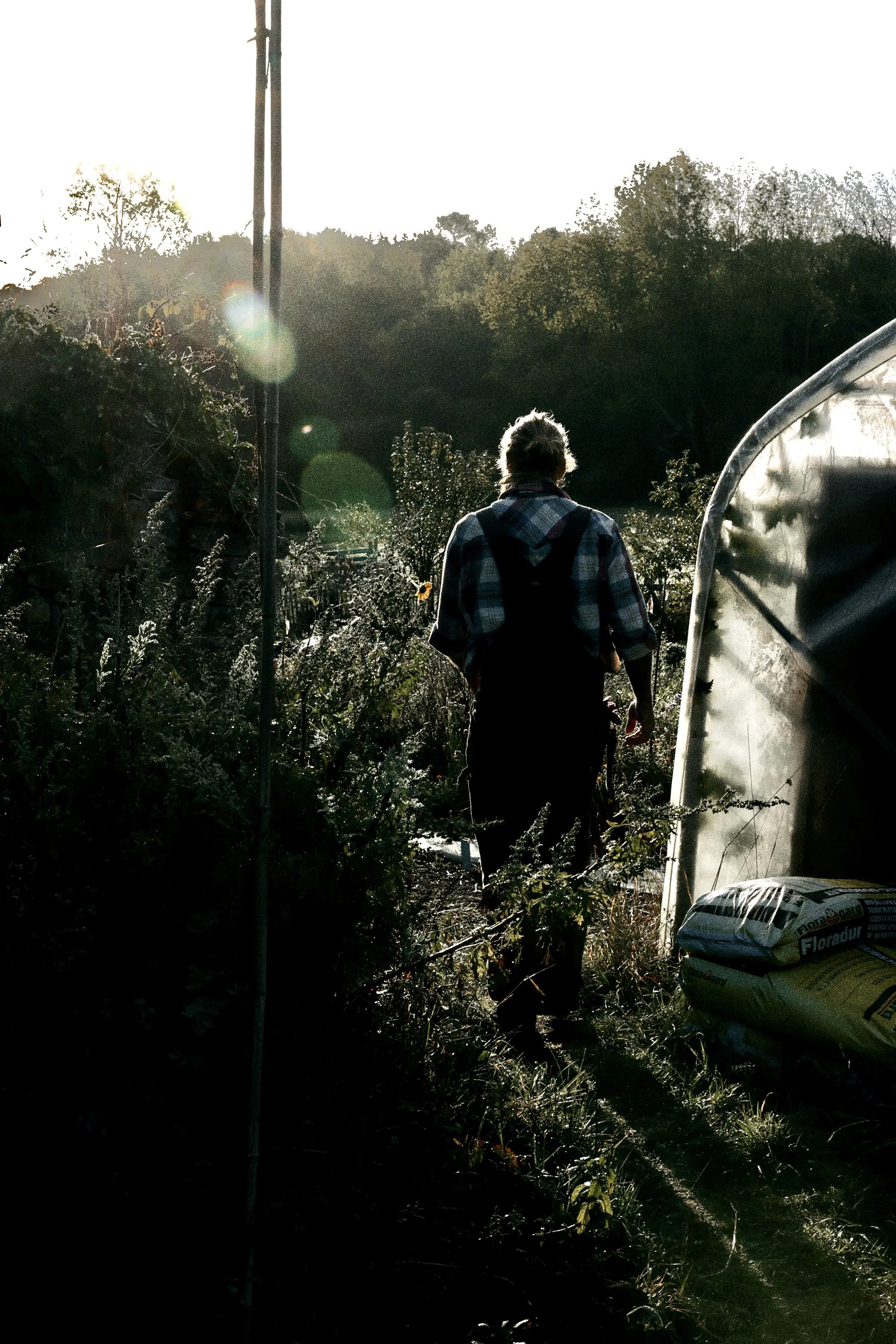
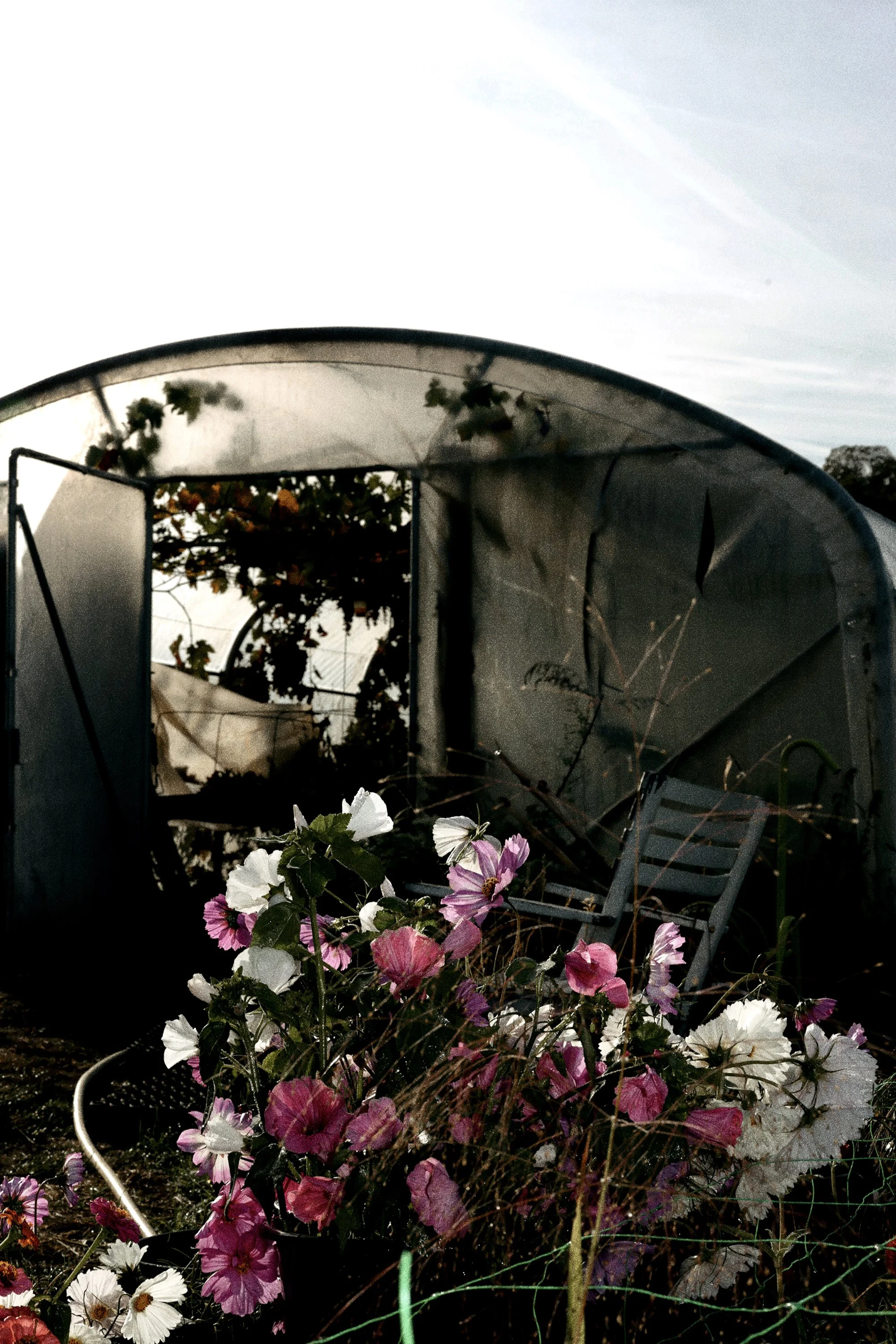
What happens at Guizec during the winter months?
Alexis: Winter is really about preparing for what comes next. In a way, our new season begins in autumn. We're still picking flowers while planting bulbs and perennials for the following year. Once the annuals have finished, we shred the remaining plants and leave them to feed the soil, then cover the beds with mulch. We try to take a little break in December. By January and February, we're back to planning everything on paper and on the computer: ordering seeds, deciding what goes where and working out which flowers should follow which.
Valérie: In March, the greenhouse begins filling up with seedlings. We watch all those tiny seeds come to life. And then the bulbs we planted in autumn begin to flower. That's when we know it's nearly time to return to the markets.
What's the most challenging part of running a flower farm? Is it the physical work, the weather, the planning, or something people might not expect?
Valérie: Planning, without a doubt. We hadn't realised quite how much of it there would be. You have to work out how many flowers you'll have at any given time, how many you'll be able to sell and what you'll plant in their place. And then, of course, the weather comes along and changes everything.
Alexis: You're constantly thinking about two different moments: what needs picking today and what you hope will be flowering several months from now. No matter how carefully we plan, something always catches us by surprise. Harvesting is also incredibly time-consuming. In summer, picking alone can take eight hours, and you can't do it during the hottest part of the day. We're still learning how to make it all work without completely wearing ourselves out.
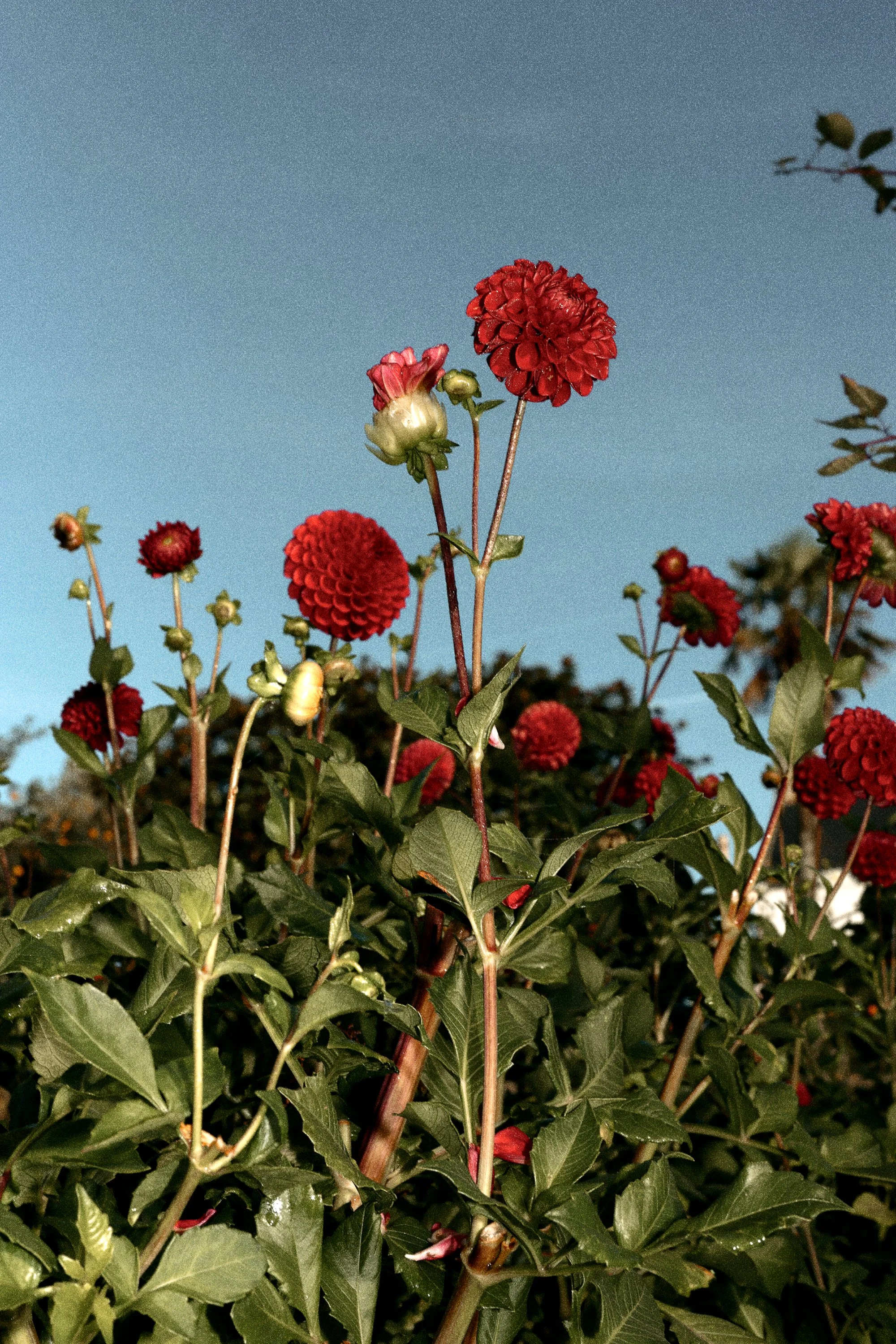
This summer brought some unusually high temperatures. How did the heat affect the farm?
Alexis: It started in spring. Flowers that should have bloomed one after another all came into flower at the same time. We simply couldn't pick or sell everything, so some of them stayed in the garden. It looked beautiful, of course, but bulbs are a significant investment for us. Later in the summer, certain parts of the farm really suffered, even with the mulch. We hadn't installed irrigation everywhere, particularly around shrubs we'd never needed to water before.
Valérie: We even brought home the leftover water from our flower buckets at the market to give to the young hydrangeas. We also started working earlier in the morning and sometimes went back out in the evening.
Alexis: We're now thinking about growing climbing plants above some of the beds. Clematis, roses, vines. Something that could create natural shade. It's another reminder that you have to keep observing, learning and adapting.
Has spending so much time with flowers changed the way you look at them? Do you notice things you might once have walked straight past?
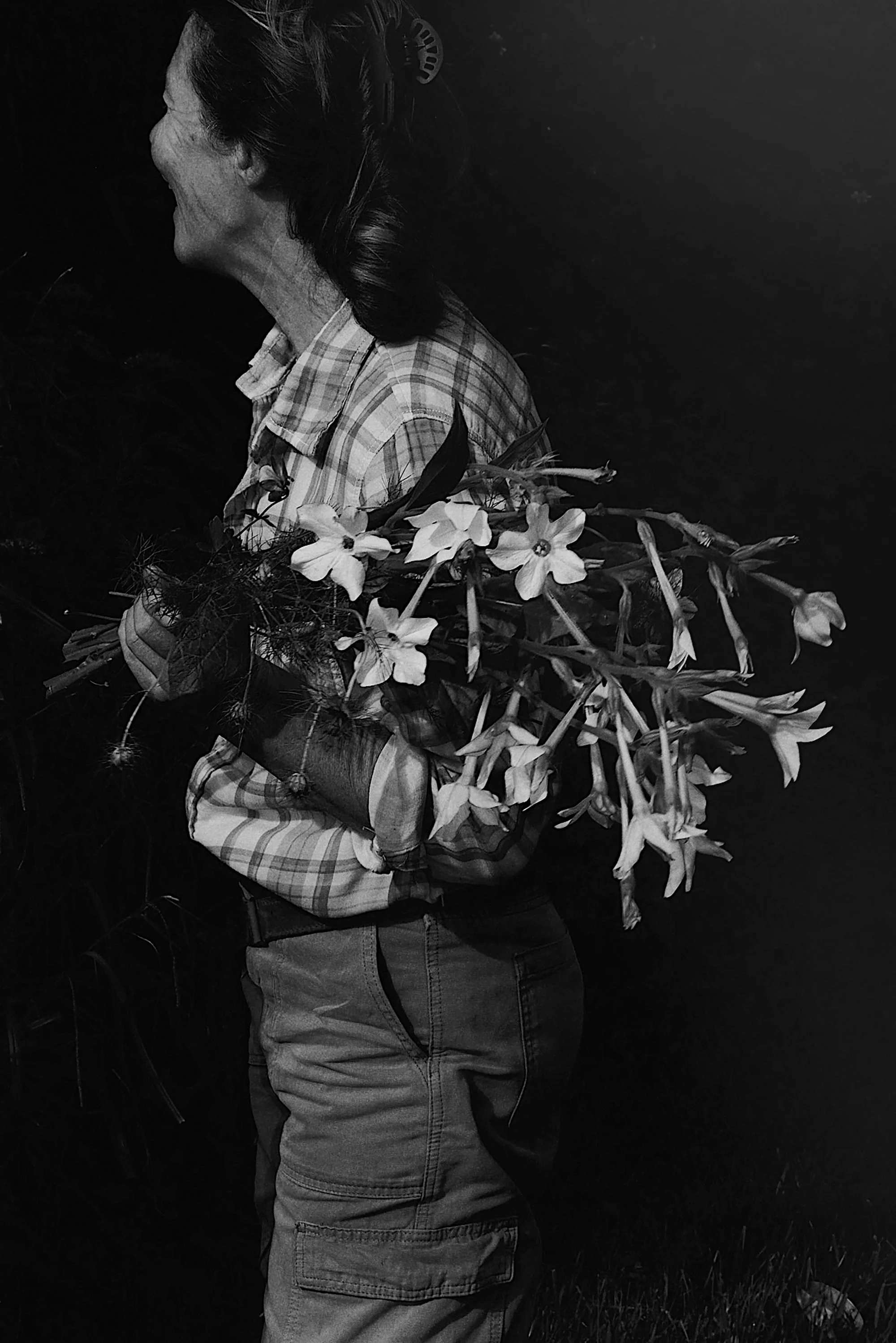
Valérie: Completely. Whenever we go for a walk now, we notice all these tiny wildflowers growing everywhere. And even after several years, we still call out to each other across the garden, full of excitement: “Come and look at this flower!”
Alexis: I think we used to miss so much of the beauty around us. Now, the smallest spot of colour catches our attention. We stop, look more closely, try to work out what it is. Foraging for wildflowers has made us even more observant. And it isn't just flowers. It's the birds, the meadows, the animals, the morning light. We've learned to stop and look. And I think that's become an essential part of our life here.
What's next for Guizec? Is there anything you'd particularly love to develop?
Valérie: We'd love to welcome more people. So many people ask if they can visit the farm, and we'd really like to share the place with them, rather than simply selling the flowers we grow.
Alexis: We imagine workshops, perhaps a little café where people could stop for herbal tea and a slice of cake. Nothing complicated. Just somewhere welcoming for people passing through on foot, by bicycle or even on horseback. And speaking of horses, we'd love to give our working horses a more important role on the farm. They could help with transporting wood, moving things around and certain agricultural tasks. Perhaps one day we'll even take our flowers to market in a horse-drawn cart. But it has to be genuinely useful, not just a pretty idea. It's something we care about very much.
One last question. If you could each choose just one flower from Guizec, which would it be?
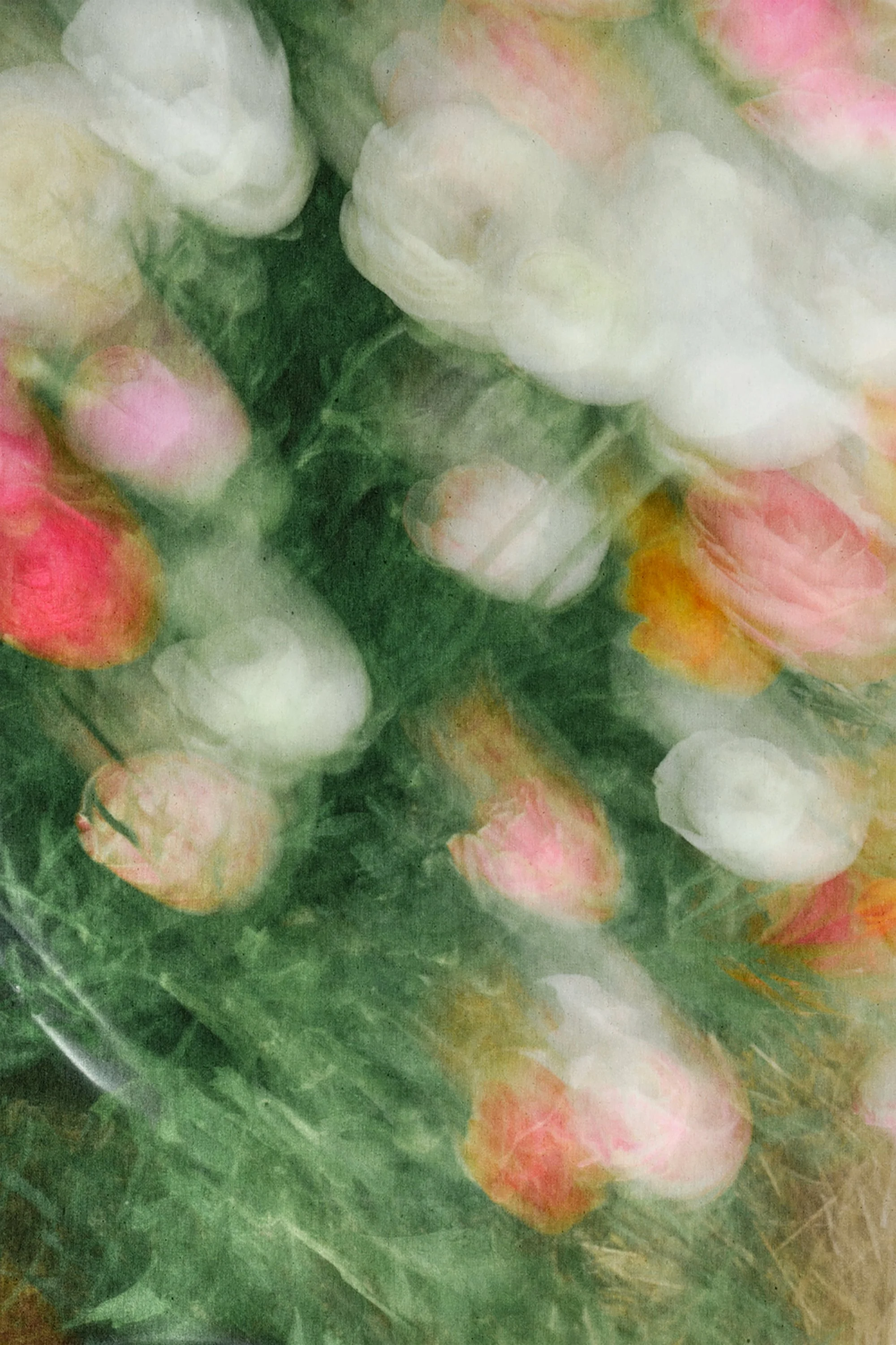
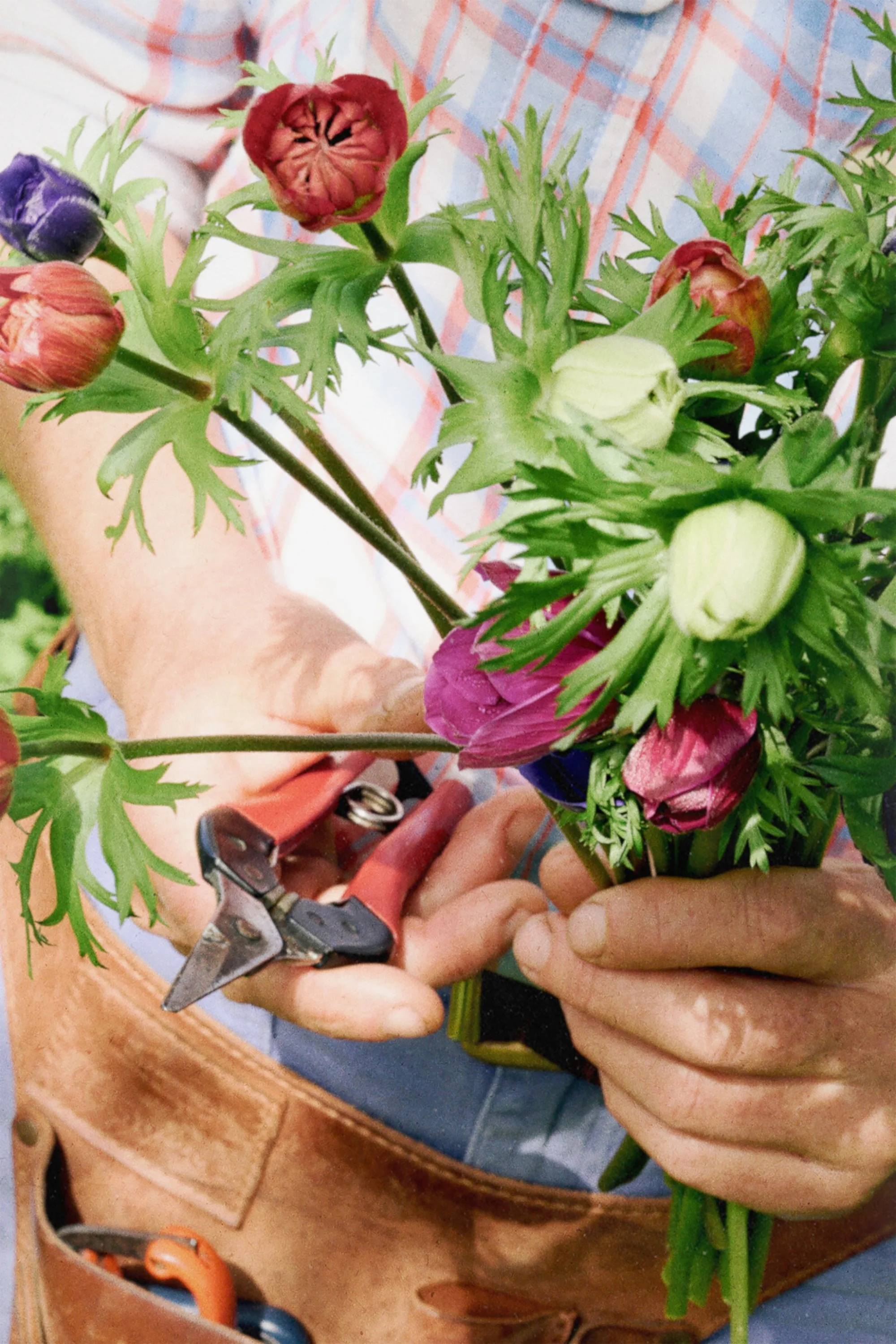
Valérie: The anemone. It was one of the flowers we sold at our very first markets. I love its colours and its simplicity. And those little bunches of anemones seem to bring back so many memories for people. They often tell us about the ones that used to grow in their grandmother's garden.
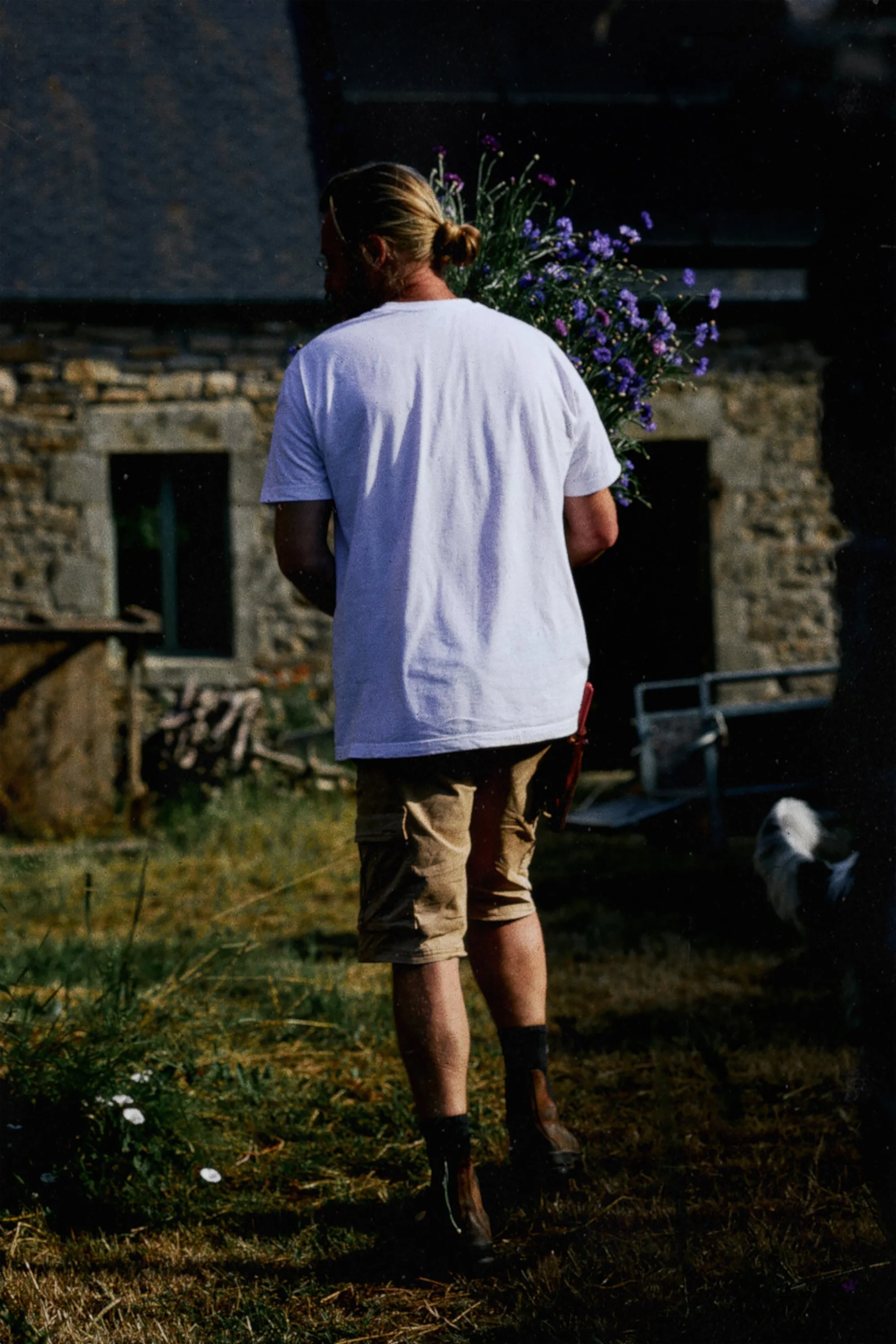
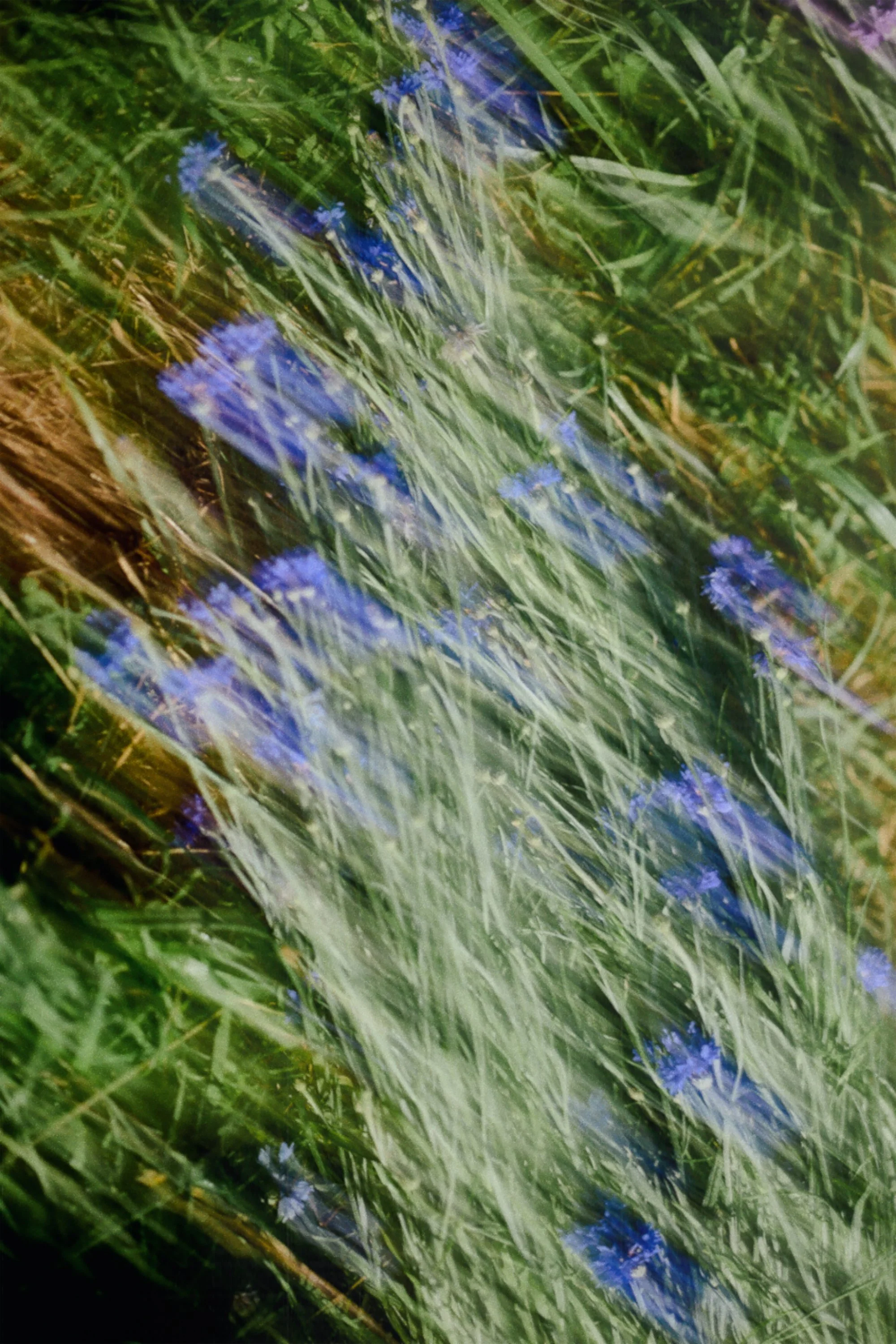
Alexis: For me, it's always the cornflower. It's such a common little flower, but it represents everything I love about meadows and the freedom of the countryside.
Valérie: Even though you hardly ever put them in your bouquets!
Alexis: Well, they're not the easiest flowers to pick. They grow into these big, tangled bushes. But that blue, that wonderfully wild, meadow-flower quality... I always come back to them.
Text & pictures - Léa Sauer @leasauer
@ferme.de.guizec
www.leasauer.cargo.site