
Behind Buchanan Studio is a husband-and-wife duo and a creative partnership built on balancing romance with edge. From West London interiors and sculptural furniture to outdoor living and immersive storytelling, Charlotte and Angus Buchanan share how set design, advertising, and everyday family life shape spaces that feel warm, unexpected, and deeply human.
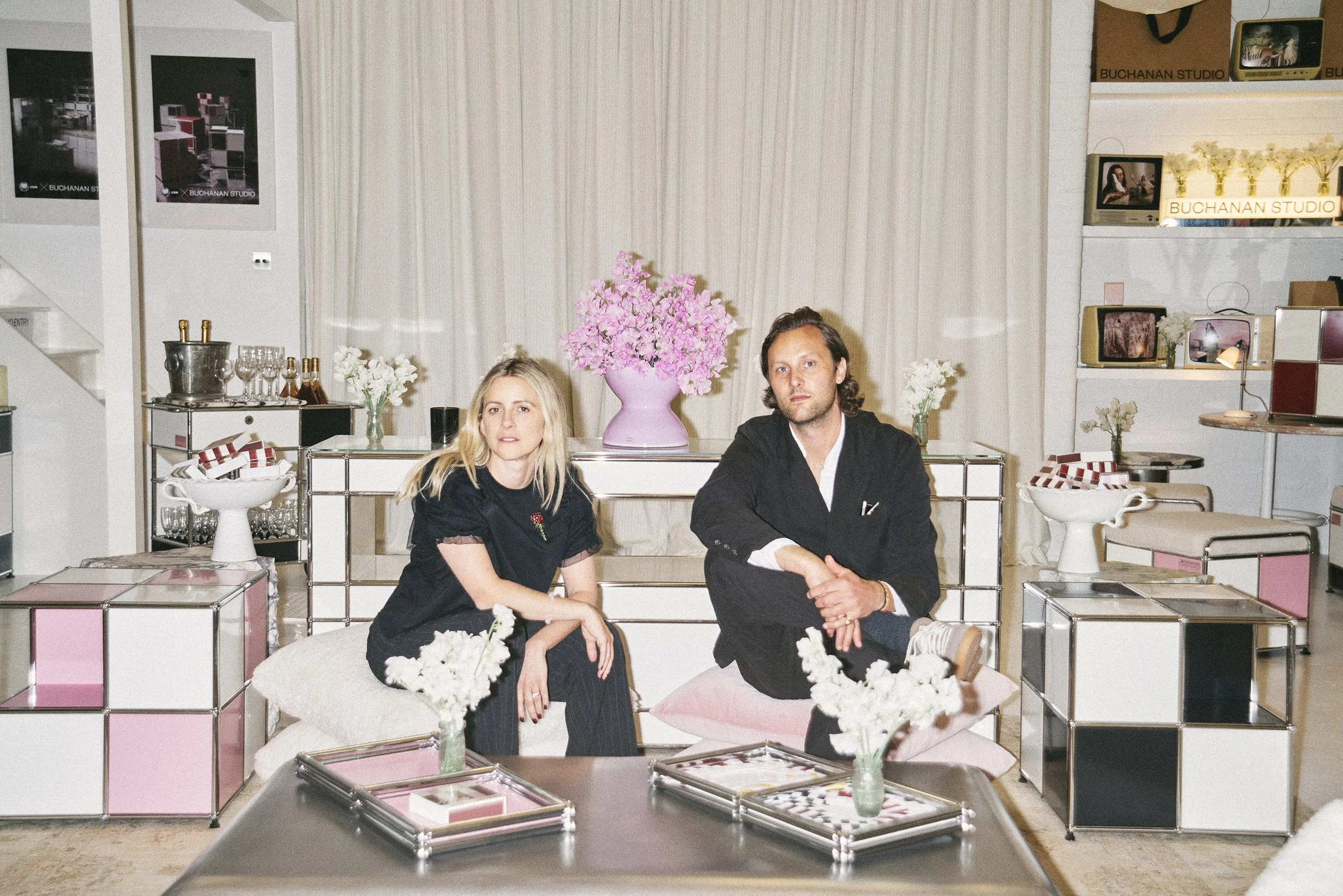
Hello Charlotte & Angus, how are you? Can you tell us a bit about yourself, who you are, where you’re based, and what you do?
We're Charlotte and Angus Buchanan, the founders of Buchanan Studio, based in West London and we're also husband and wife. We set up the studio in 2018. Which feels like a long time ago now but also no time at all. Before we started, Angus trained in set design– working under Mario Testino and Michael Howells and Charlotte had a career in advertising, brokering partnerships between brands and talent. When our first child arrived, we felt the pull to do something together, so we found a small office, gave ourselves six months, and Buchanan Studio was born.
What we do is quite hard to put in a box, which we like. At its core, we're an interior design and creative studio– we design private homes, restaurants, events and installations. But we also have our own line of furniture and textiles, which has become a huge part of who we are. There are eight of us in the team now, and everything we make or design is rooted in the same idea: that spaces should tell a story, and that beauty and function should never have to be in opposition.
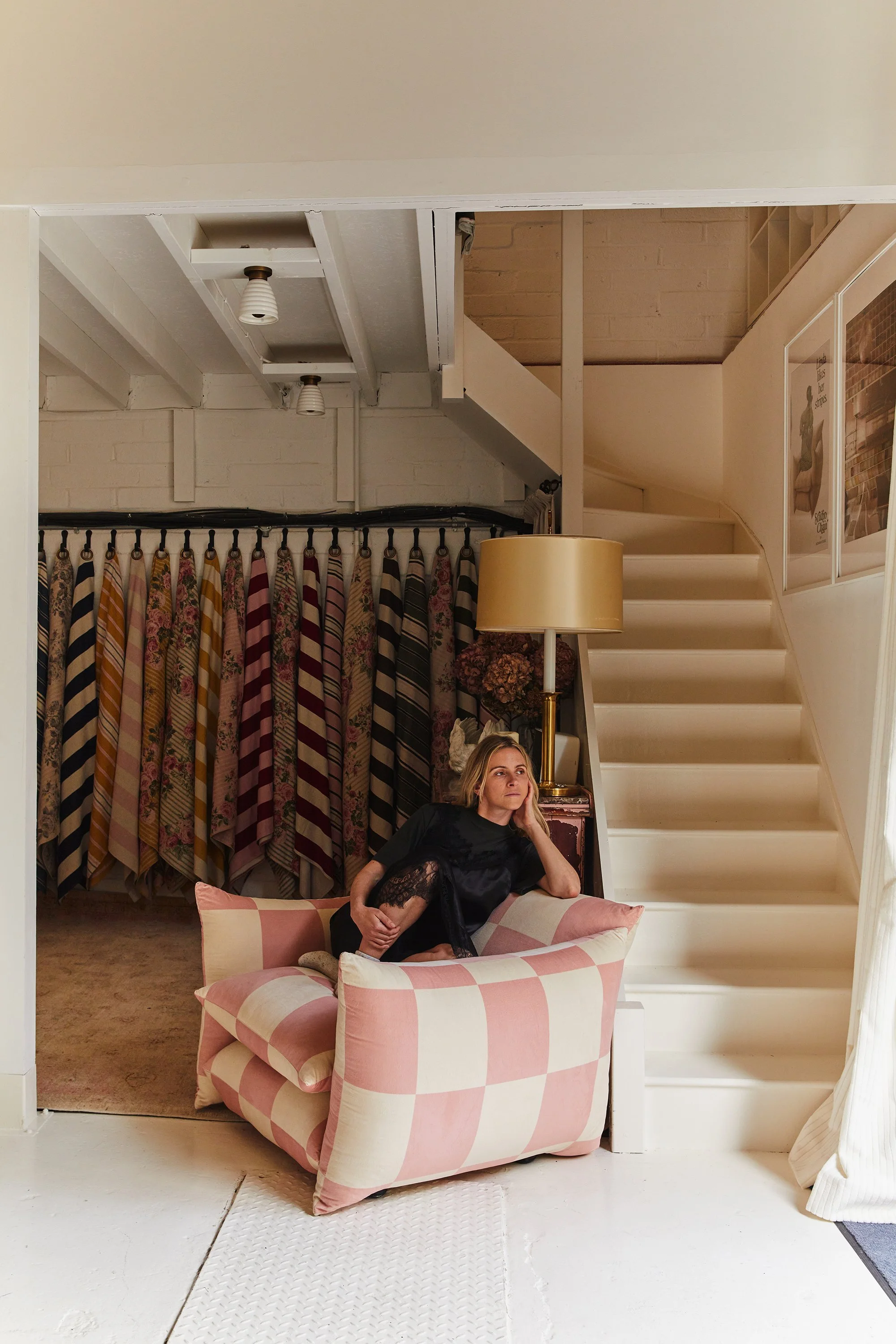
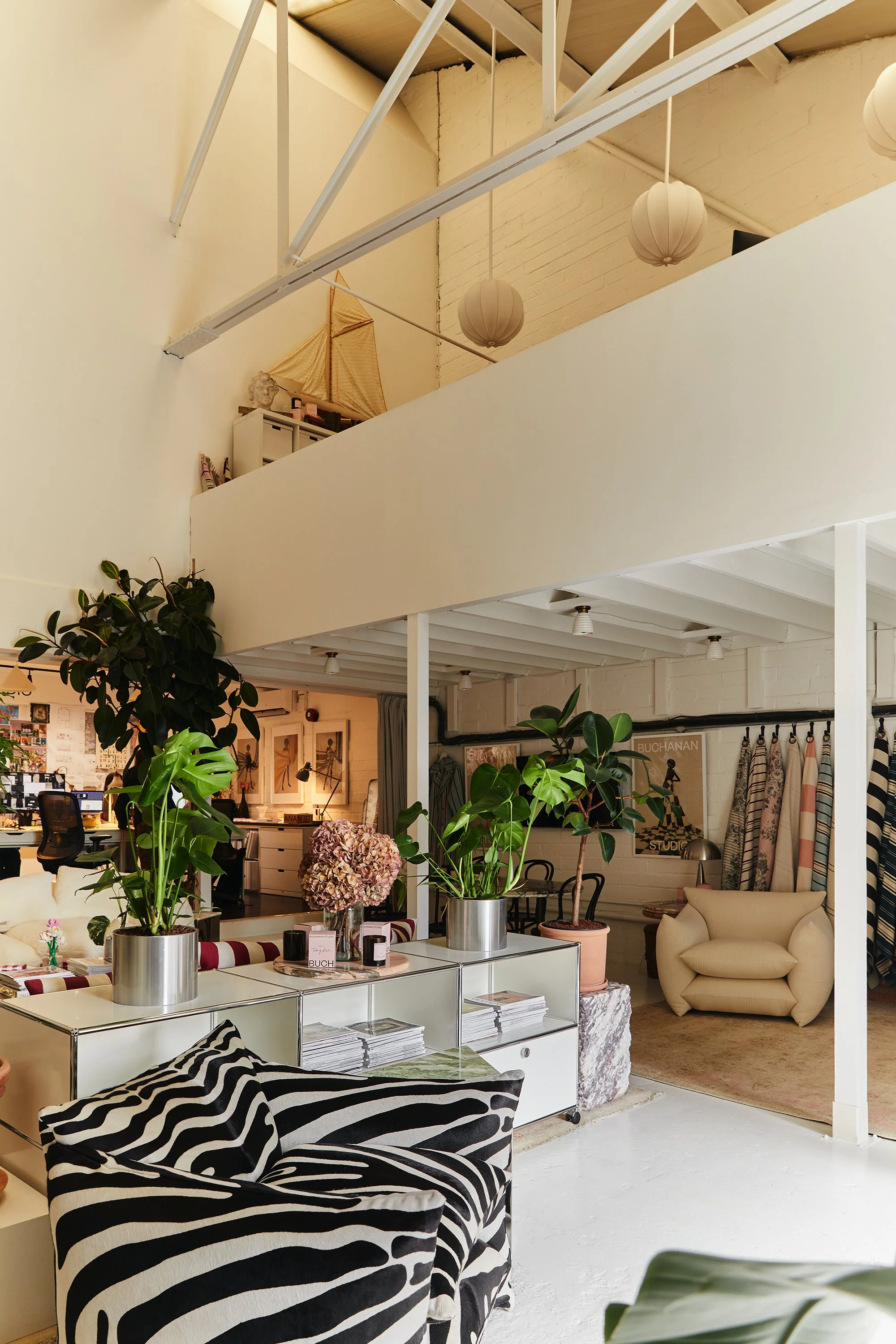
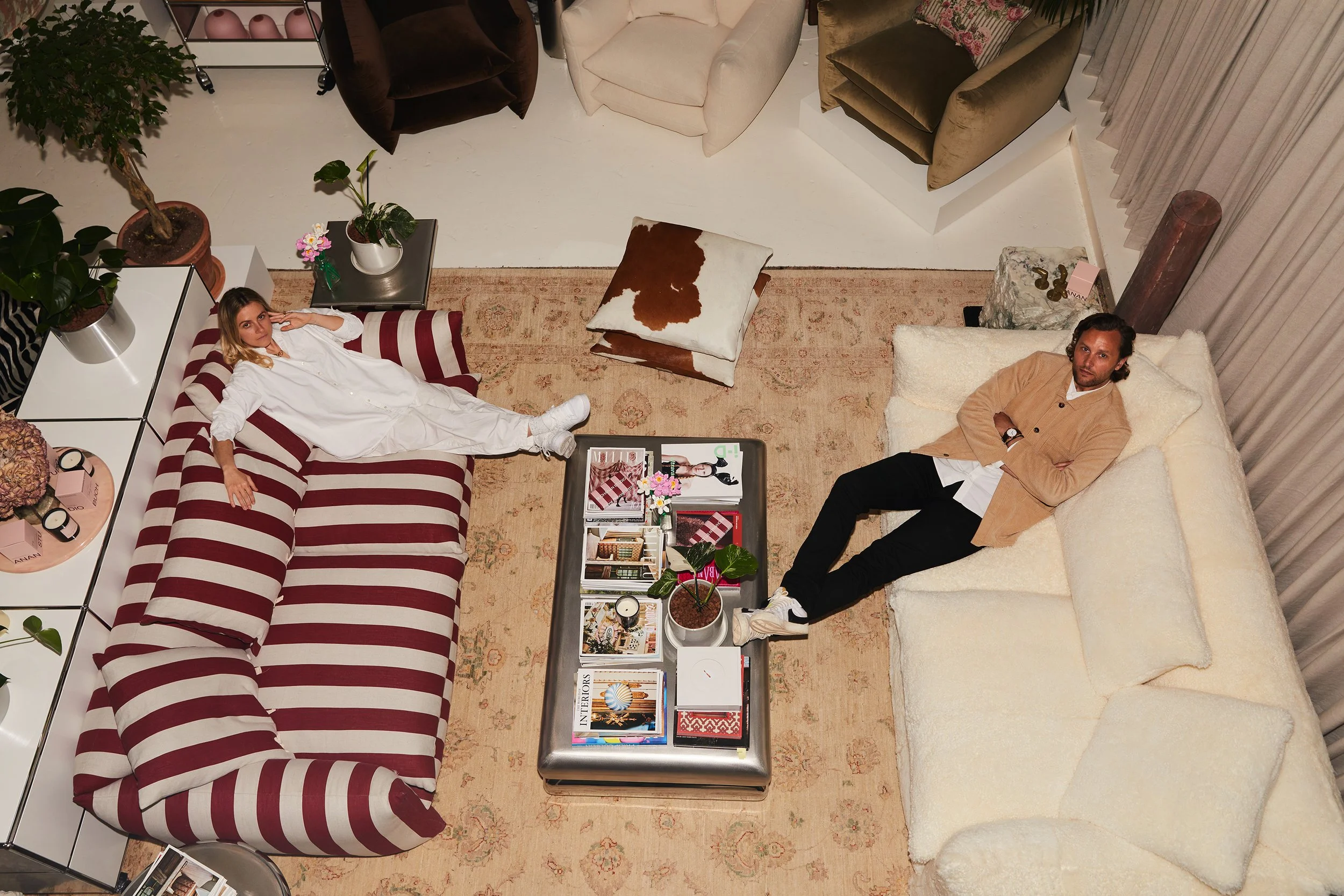
Angus, you are the creative director, and Charlotte, you are the chief executive. How do your individual strengths and professional backgrounds- Angus in set design and Charlotte in advertising- complement each other in leading the studio?
Angus: My background is entirely visual and instinctive. Set design teaches you to build a world from nothing. You have a brief, a deadline, a budget, and you have to make something that transports people completely. Working under Michael Howells and on shoots with Mario Testino, I learned to think theatrically, to consider every detail as part of a larger picture. Which is still how I approach everything, whether it's a private home or a product.
Charlotte: And my background is almost the opposite in some ways– advertising is about communication, strategy, understanding what a brand is and how to get that across to the world. What works for us is that we have a very clear division. Angus leads the creative output and I lead the business, but we share the same vision of what Buchanan Studio should be and where it's going. We always have. That common ground is what makes it work.
The studio’s work is often described as having a bohemian sensibility and a "touch of eclecticism." What does this distinctive style mean to you, and how is it reflected in your projects?
For us, a ‘bohemian sensibility’ is really about authenticity, spaces that feel lived in rather than looked at. We're not interested in designing show homes. We design for real life, for families and entertaining and everyday mess, and we think that's actually where the best interiors reveal themselves. Things that get better with age, that accumulate personality over time, that's always the goal.
There's also a levity to what we do. We don't want our work to feel precious or intimidating. A touch of wit, an unexpected material, something that makes you smile, those details are just as important to us as the grander gestures.
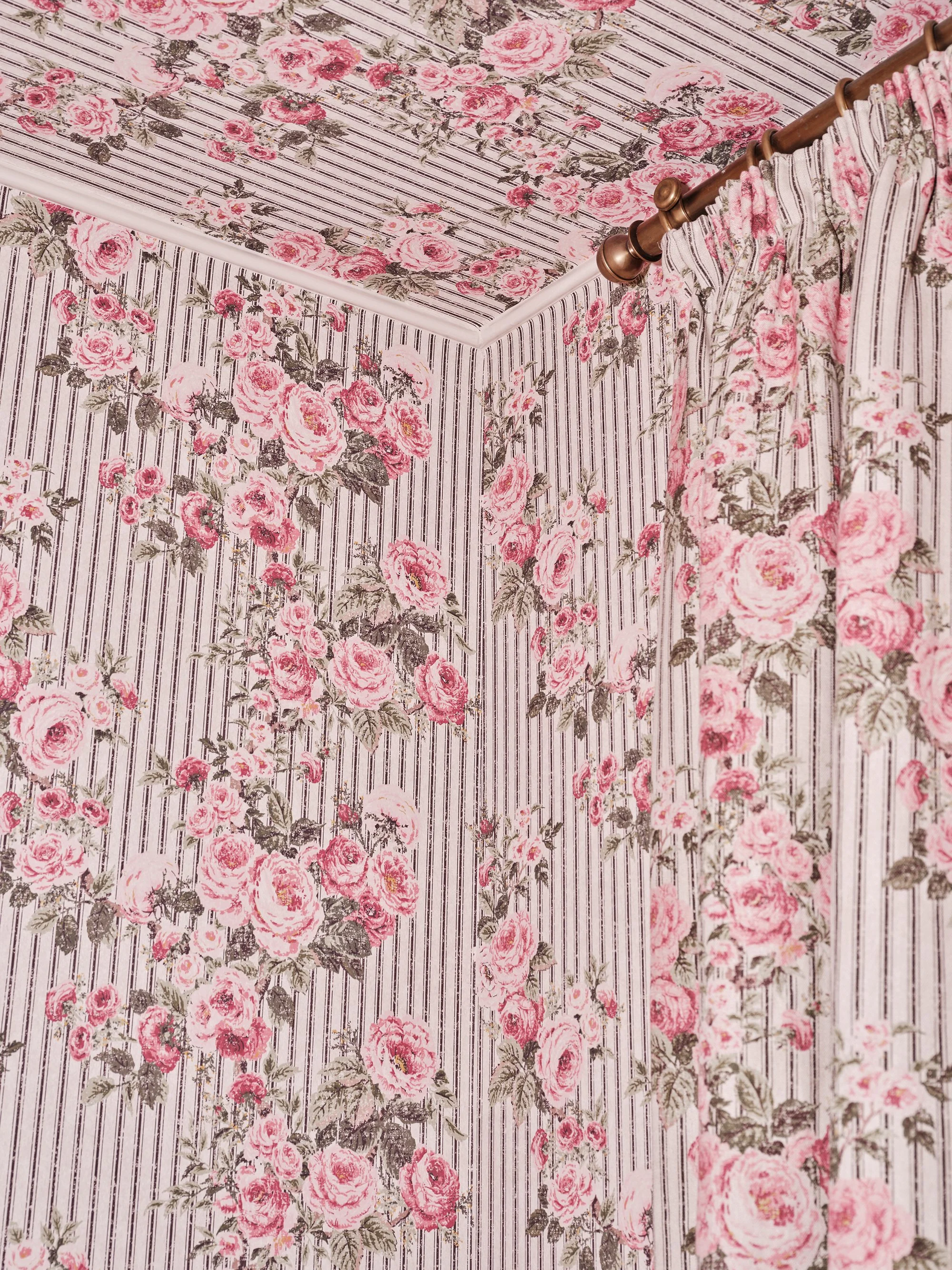
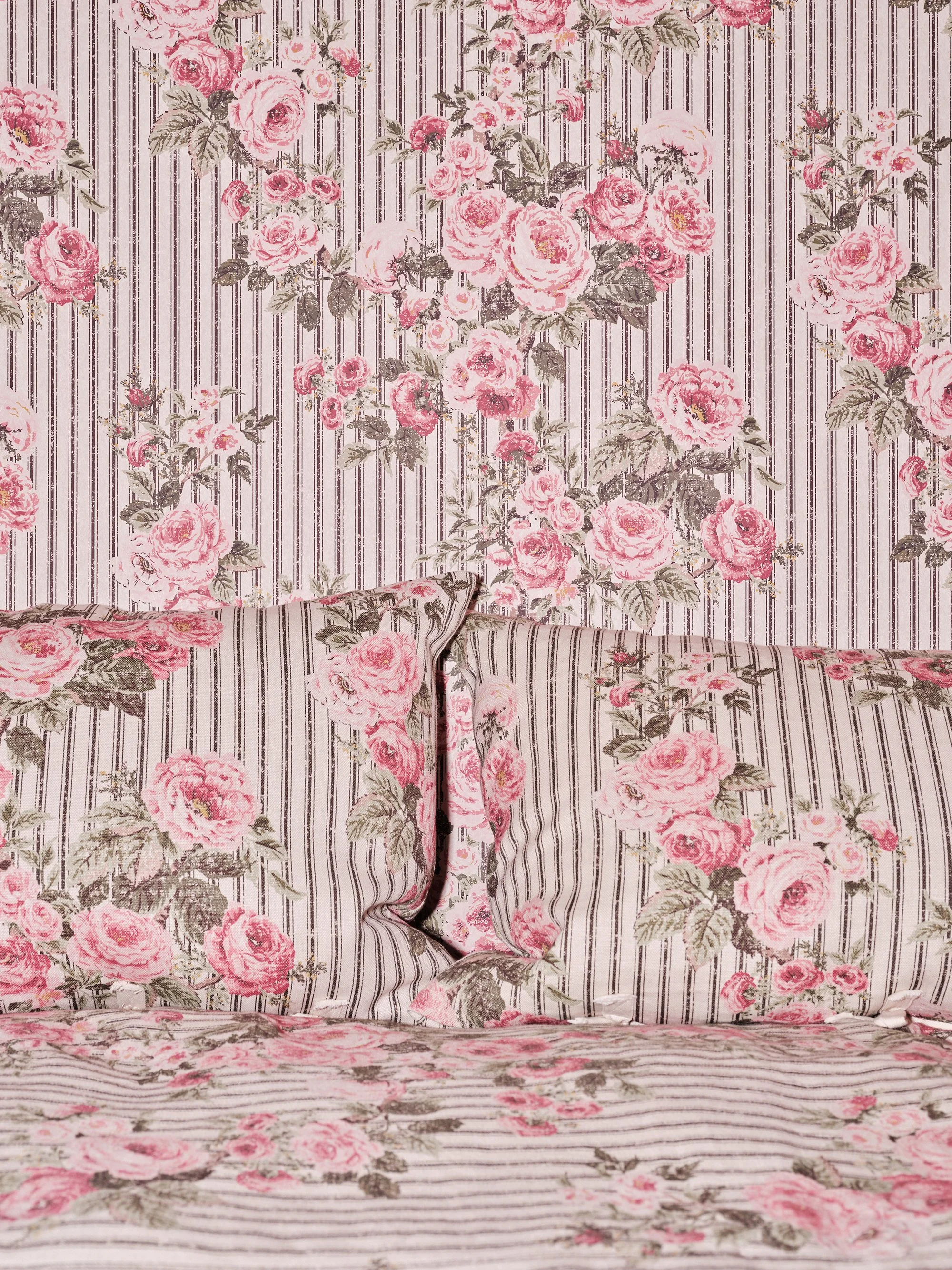
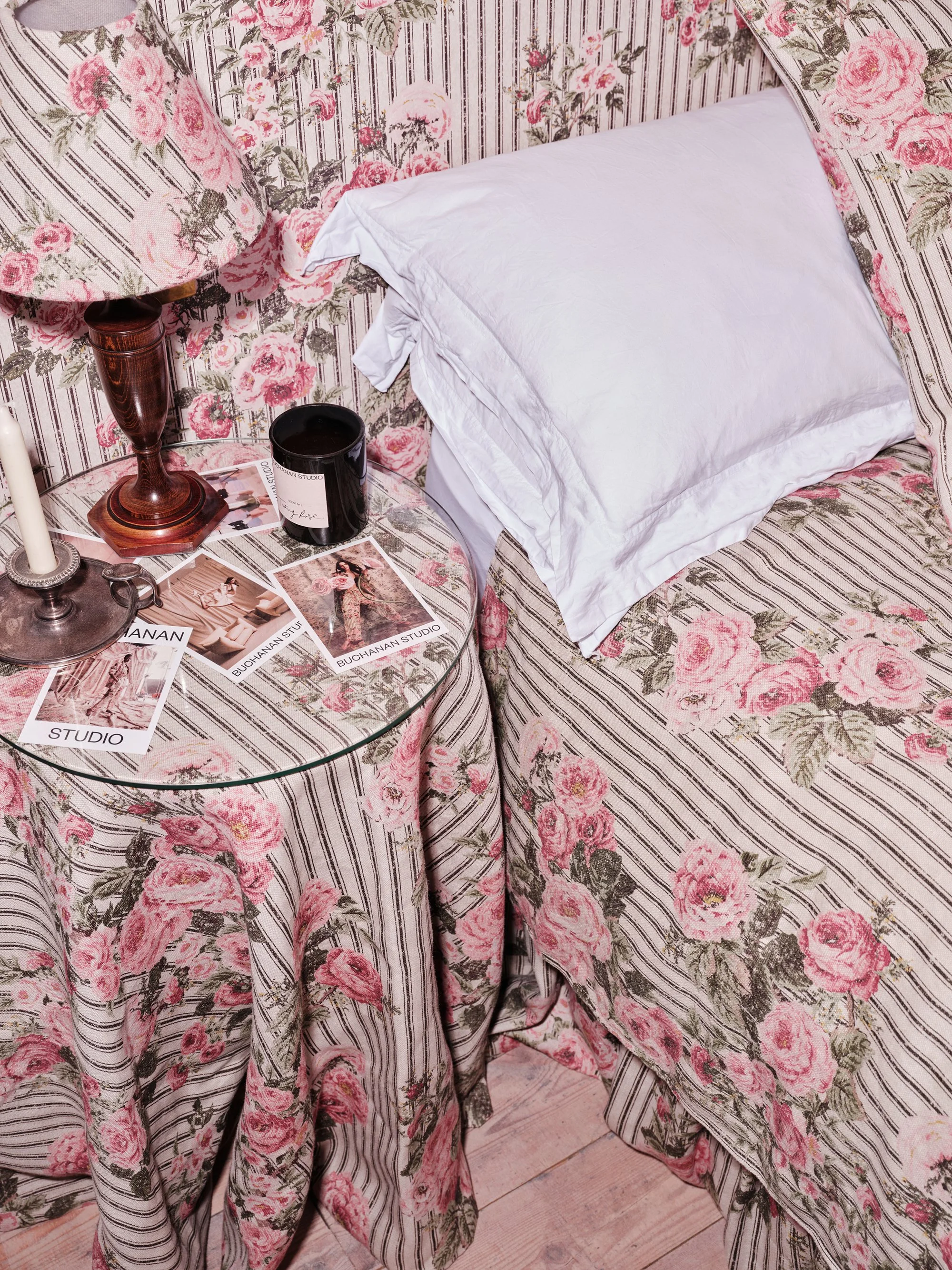
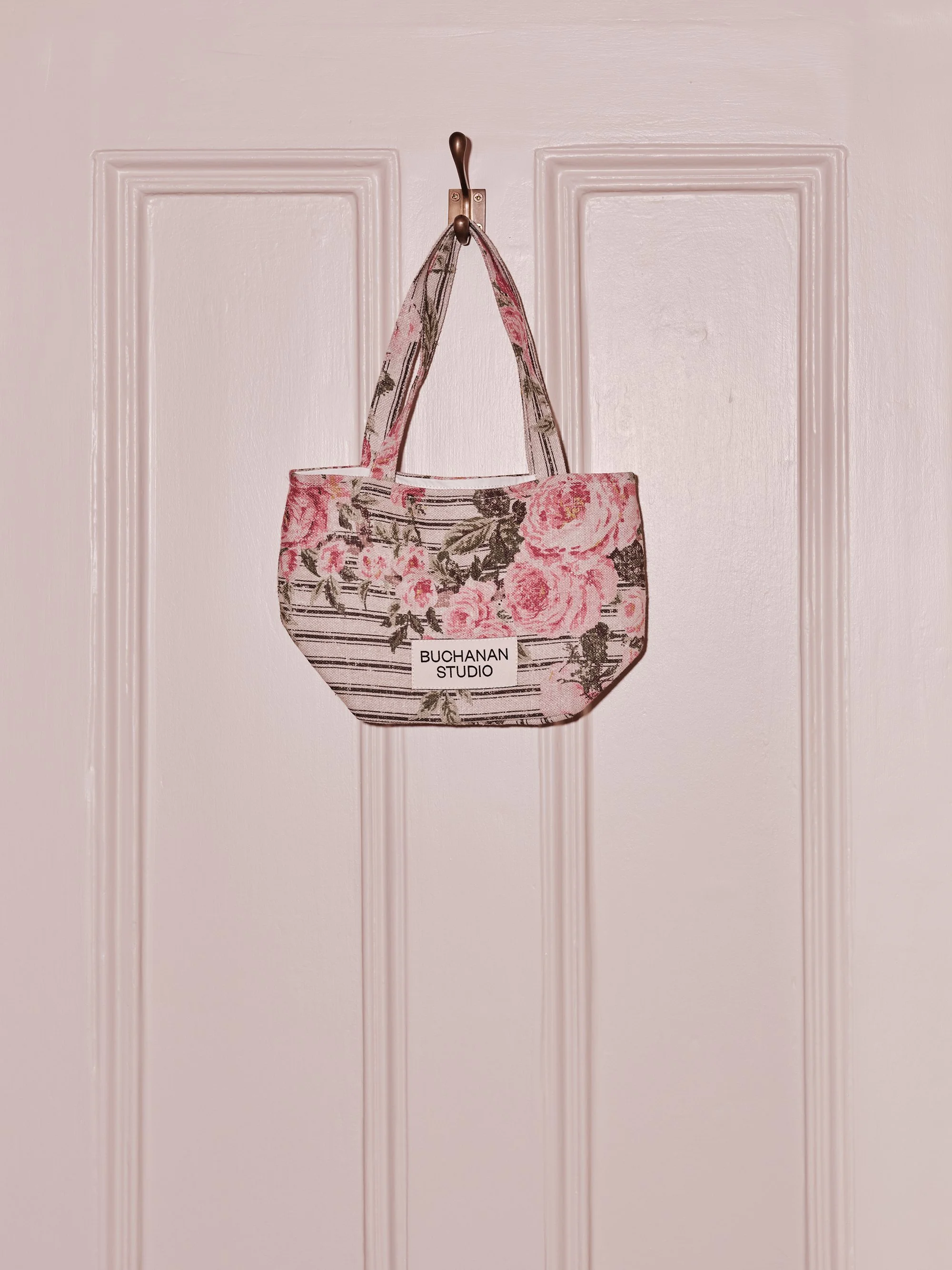
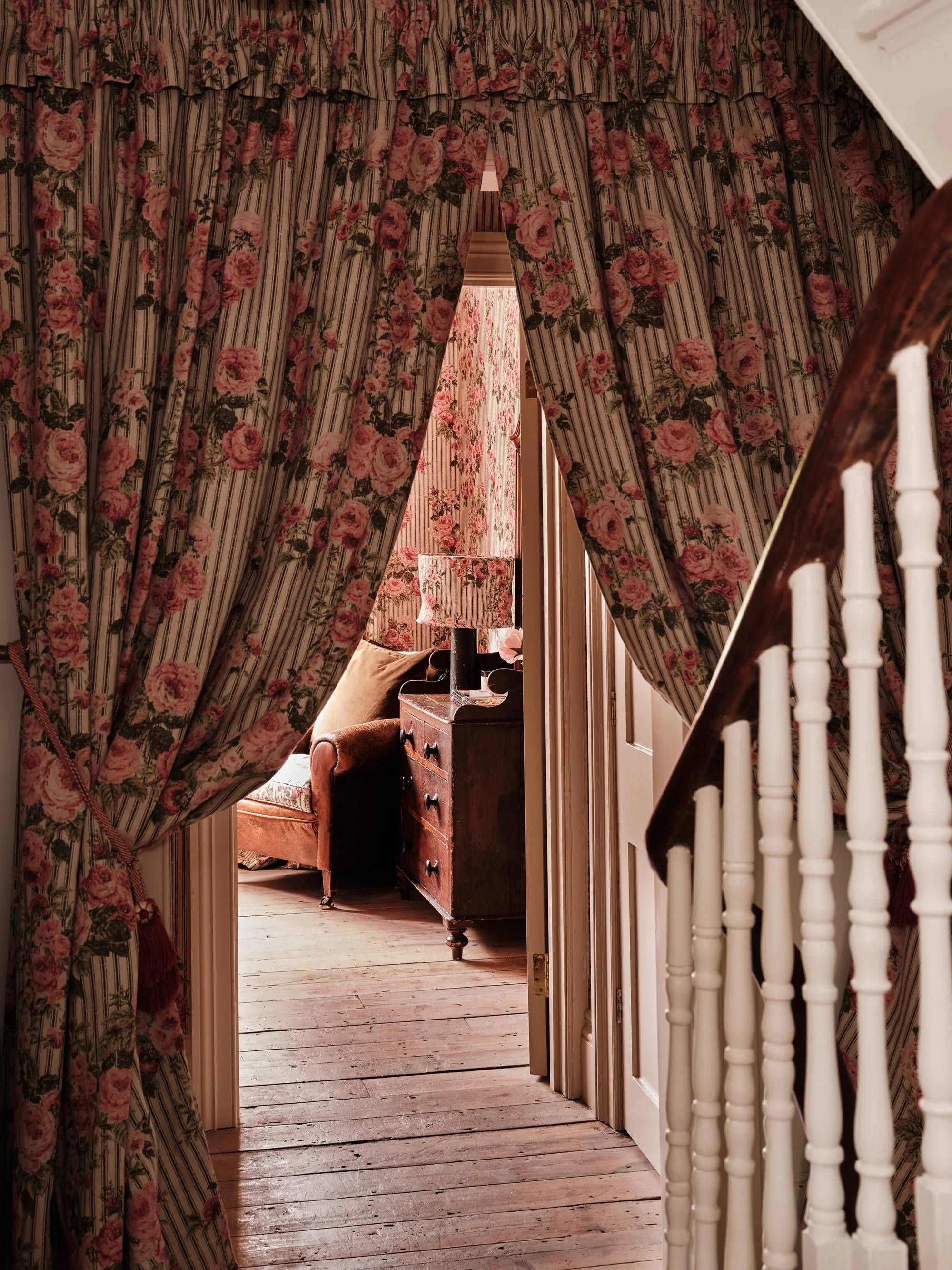
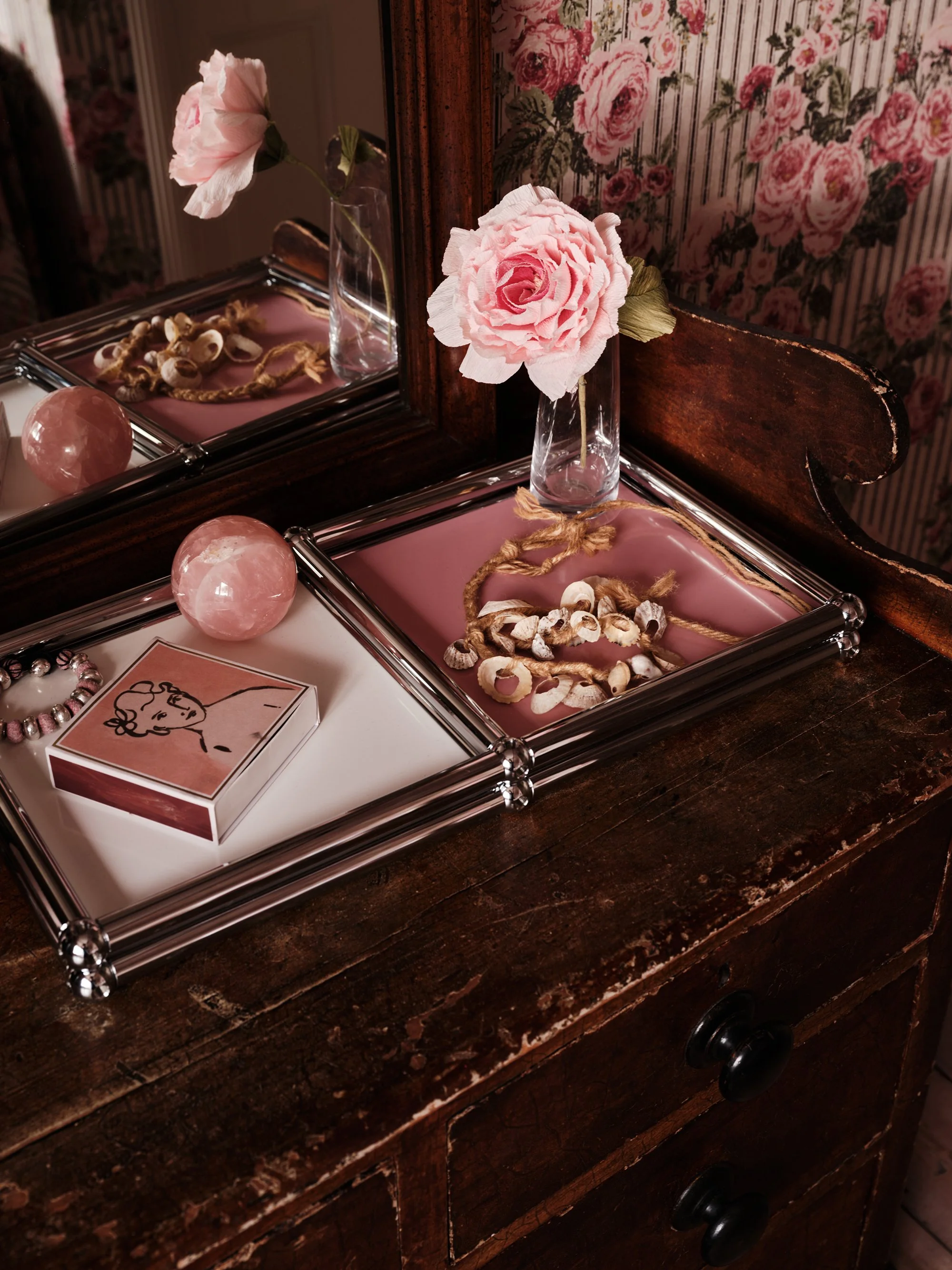
The 'Ticking Rose' pattern, with its "all over" use on walls, ceilings, and furniture in the photos by Alessandro Tear, is very distinctive. What inspired this bold design choice, and what effect are you trying to create with such an immersive approach?
It is quite a traditional English take on decorating to use the same print on everything, so there is that as inspiration. But it’s also very theatrical and not dissimilar to set design. Again, it goes back to this idea of creating a fully immersive world that transports you somewhere else entirely. Which is a big reason why we are so excited to have recently launched wallpaper! Which means you can now take that immersive approach even further in your own home.
Buchanan Studio is known for creating "extraordinary worlds." What does "world-building" entail for your team, whether it's for a private home or a high-profile event?
Our approach to design is rooted in storytelling, something we call editorial living. The idea that any space, whether it is a home, a restaurant or event, should have a narrative. Just like a story or a film, there needs to be pace– moments of visual drama, moments of quiet, a crescendo etc. The spaces that you remember almost always have something to say, or some way to make you feel. So, world-building always begins with the same question: what world are we inviting someone into, and how do we communicate that story?
For a home, that process is deeply personal. We spend a lot of time understanding how a client actually lives, not just what they want it to look like, but how they move through a space, what they collect, what excites them. We want every detail to feel a part of their story, resulting in a home that is almost autobiographical in nature.
Events are where the ‘world-building’ instinct goes into overdrive, because you have the opportunity to be truly immersive and transportive, hitting all the senses at once. It's not just about how something looks; it's about the scent when you walk in, the soundscape, the lighting. All of those elements converge to tell a story and make the inhabitant feel something.
The comfort of your pieces is undeniable. How important are touch and comfort in the design of your furniture and textiles, and how do you approach this in your material choices?
Comfort plays just as big a role in the design process as form does. The Studio Chair is a good example of this. It was inspired by 1970s Italian design, that whole era of freeform furniture that was soft, pillowy, and unapologetically all about comfort. We spent a huge amount of time on the engineering, so that it has this quality of five cushions appearing to float together, while still holding its shape over years of use. It had to feel as good as it looks.
We're also drawn to the tension between textures– gloss with matte, rough with smooth, hard with soft. The Daydream Collection came from that instinct, stainless steel as a deliberate counterpoint to all the upholstered pieces but still designed to feel considered rather than cold. That push and pull between comfort and edge, romance and utility, is really at the heart of how we make things.


In terms of patterns and colours, the "Studio Stripe" seems iconic. Do you have a favourite pattern or colour palette, and how do you decide on the visual aesthetic for each collection?
When it comes to our fabrics, the common thread is for things to feel worn in and nostalgic. We don’t want them to ever look too new. And so, everything is designed in a way that as the colours age and fade with time, they become more beautiful rather than less. This lived in feeling is of course juxtaposed by some of our pieces of furniture, like the daydream collection which is very contemporary. While there is a romanticism to our colours and patterns, such as our love of pink, it is always contrasted with some kind of masculine edge– whether it be a stainless steel coffee table or the utilitarian forms of our USM collaboration.
Deciding on a visual aesthetic always starts with a gut feeling. It is almost never logical but rather influenced by whatever it is that we feel pulled towards at that time, which often means a gap we want filled in our own lives and home. For example, we started out in textiles and upholstery, so it felt obvious that the next move would be sculptural metal– the opposite but they harmonize.


What sources of inspiration, outside of design, feed your creative work, such as music, travel, literature, or cinema?
It's really a tapestry of things rather than any single overriding reference. We're drawn to the cinematic and the theatrical– Tim Walker's photography, Yorgos Lanthimos films like The Favourite and Poor Things, the work of Es Devlin. What connects all of them is this ability to hold something very beautiful and something slightly jarring in the same frame. That tension between the exquisite and the offbeat is something we're always chasing.
Angus's upbringing is probably the deepest well– a very English eccentric household, summers in Cornwall and outdoor living in all weathers. That relaxed, unprecious relationship with beauty is baked into everything we do.
And then travel, particularly Italy and Greece– that way of living that is completely unstuffy, built around communal dining, friends, family, a real connection to the environment. Call Me By Your Name captures something of that feeling perfectly– that understated, almost accidental luxury.


You recently launched an outdoor collection inspired by your family's love of year-round outdoor living, not just in spring and summer. How did this personal passion influence the design process, and what were the key challenges in adapting your signature sculptural curves and playful spirit into hard wearing pieces for the outdoors?
This collection came from a very personal place. We live in our outdoor space year-round, it's not something we pack away in September. So, we'd always felt there was a gap in the market for outdoor furniture that had the same soul and considered design as what you'd find indoors, rather than the slightly soulless, purely functional pieces that tend to dominate the outdoor category.
The challenge was that we were essentially asking our signature pieces, the Studio Chair and Studio Stool, to do something new. The curves and softness had to survive rain, sun, mould, and time. So, we had to completely re-engineer from the inside out. Marine-grade timber frames, hidden drainage channels, breathable mesh bases, waterproof inner linings, rust-resistant hardware throughout. None of that is visible in the finished piece, which is exactly the point– the utilitarian rigour is entirely hidden beneath the form.
The fabrics were probably the most exciting part of the process. We developed the Wild Fabric Collection specifically for this, Italian-woven, 100% Trevira CS performance textiles that are fade-resistant, water-repellent, mould and stain-proof, but still feel soft and tactile in your hands.


Angus, your experience includes designing sets for major photographers and fashion brands. How does that experience influence your approach to creating interior spaces and experiential installations today?
Working with Michael Howells and Mario Testino was a masterclass in creating a feeling. The set itself is never the point, but the experience it produces is. Everything else is in service of that. Set design also teaches you enormous discipline. You're building worlds to tight deadlines and tight budgets, so you become very decisive about what actually matters and what is just noise. That rigour is definitely still in everything we do.
Buchanan Studio designs a collection of furniture and textiles. How do you balance romanticism with a utilitarian approach when creating these pieces?
Utilitarianism for us isn't just about function (though that’s certainly a big part of it) it's also a design language. It's about restraint and not adding flourishes just for the sake of it. There's a real purity to that approach that we're drawn to. While romanticism is about expression. It is emotion, softness and the unexpected. On its own, either code can feel flat. What excites us is the tension between the two, knowing when to let one breathe against the other.
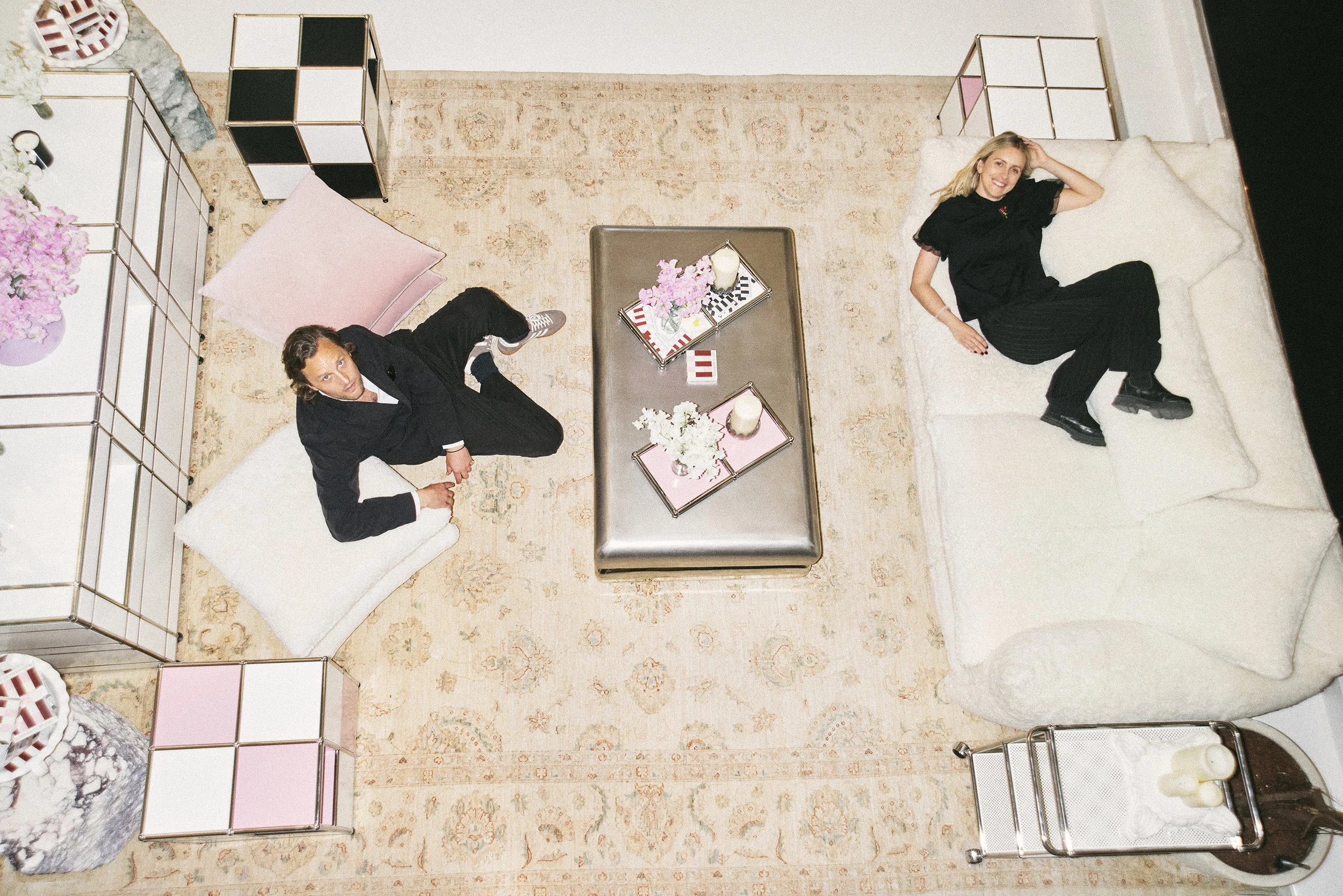
Our collaboration with USM is probably the clearest example of that balance in practice. USM is a peak utilitarian brand– born out of 1960s office systems, modular, architectural and completely resolved. With this as the base, we could lean fully into the romantic: pink, marble, shapes like the kiss, as well as the way we style and contextualise the pieces. The contrast is what gives both sides their power. And that is really the defining principle we carry into our furniture and textiles more broadly– beauty found in the contrasts.


Buchanan Studio works with a wide range of clients, from private homeowners to major brands like Belmond. How do you maintain the studio's unique identity while catering to such diverse clients and projects?
There are principles that run through everything we do– a commitment to contrast, materiality, craftsmanship, a certain approach to colour– and those don't change regardless of the client or the brief. That's what gives the work its consistency, even when the projects look very different from one another.
But within that, our job is to disappear a little. Particularly with private homes, we're not trying to stamp our aesthetic onto someone's life– we're trying to create something that is entirely autobiographical to them. Something that could only belong to that person.
We tend to attract clients who are creative or entrepreneurial themselves, who come with strong instincts and genuine points of view. That's something we actively love. The most interesting work happens when two strong identities meet and produce something neither could have arrived at alone. It's less about us imposing a signature and more about finding the version of Buchanan Studio that belongs specifically to them.
What is the most rewarding part of running the studio together, and what do you hope for its future?
The most rewarding thing is probably the shared experience of it– the highs and lows and goals all belonging to both of us. When things are hard, you get through it together. When something goes well, there's no one you'd rather celebrate with. And there's something genuinely lovely about seeing a different side of your partner– when your lives are separate professionally, you miss that.
In terms of where we want to take the studio, we feel a real sense of responsibility towards British and European craftsmanship, and that will certainly continue. We want to move into new categories beyond furniture and textiles, and continue taking on the kind of diverse, ambitious special projects that keep us on our toes. The work should always feel like it's pushing us somewhere new.
@buchanan.studio
www.buchanan.studio
photos - Alex Bramall, Alessandro Tear, Alicia Waite