
Bread, Metal & Poetry
A Conversation Between Two Crafts
What happens when the living rhythm of sourdough meets the timeless strength of metal? Discover the poetic collaboration between Ombre Claire founder Aude Durou and chef & bread artist Justine Lebas. From transforming surplus dough into bronze “fossils” to reviving ancient solstice rituals, they explore the boundary between the ephemeral and the eternal. Dive into a conversation where nature, fire, and craftsmanship merge to turn a simple loaf into a lasting talisman.
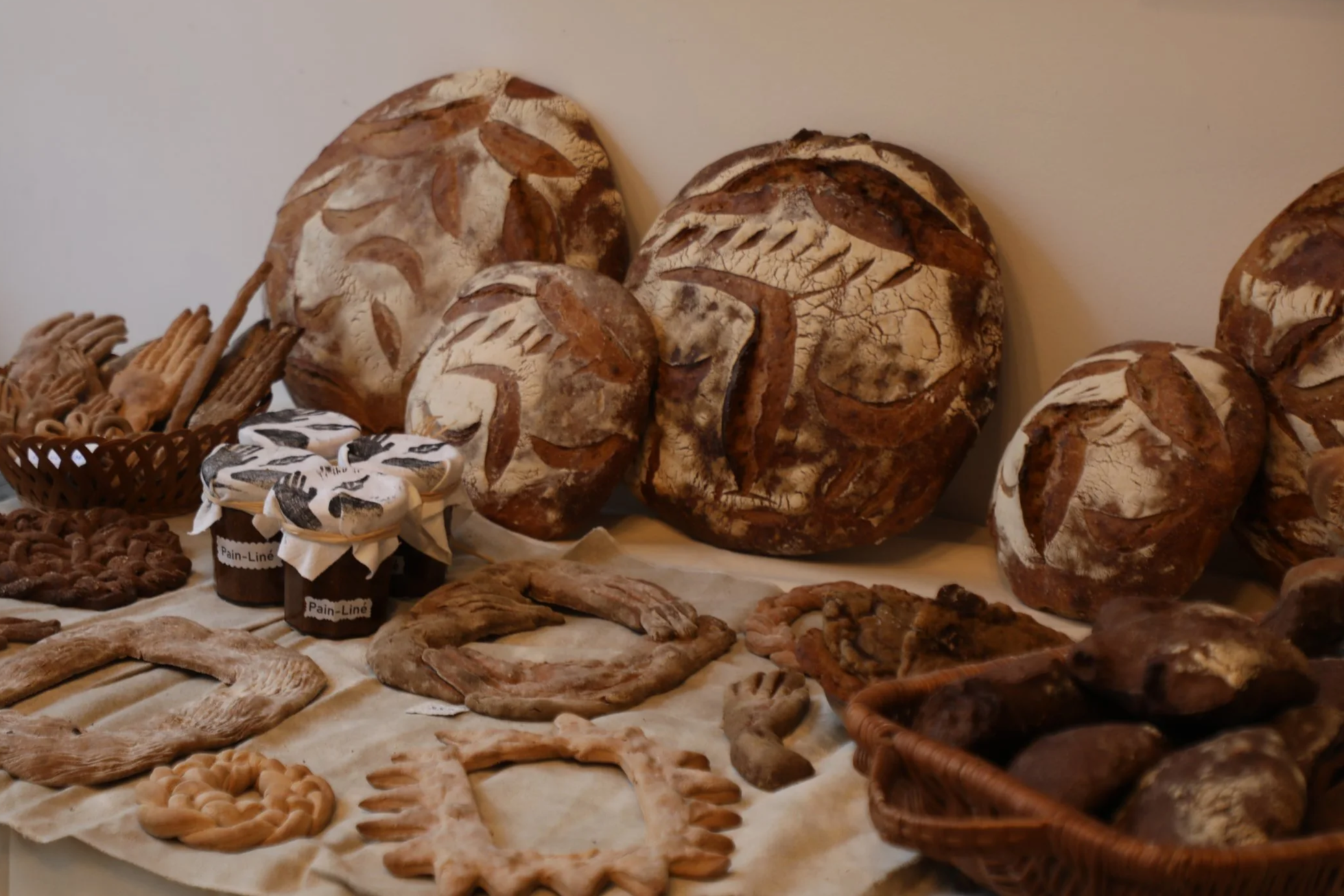
How did the two of you first meet, and at what point did you realize that the world of jewelry and the world of baking could merge into a single creative project?
Justine: During our first meeting, I was struck by our shared sensitivity. We first connected through images of Scandinavian bread. Despite the many differences between our two crafts, we met through curiosity and a desire to understand. Through meeting Aude, I feel closer to the artist-artisans who excel in the gestures and know-how that have always fascinated me. Even through my baking practice, I relate to this image of the artisan and artist. My art is ephemeral compared to Aude’s work, which endures through the ages.
Aude: I would add that we quickly realized upon meeting that we both shared a common approach and loved to imbue our work with poetry and meaning.
What was the most surprising thing you learned about each other’s craft during this collaboration?
Justine: What surprised me the most was the creation of our collaborative piece. It was a real challenge and a true step into the unknown. Can a piece of bread become eternal? Thanks to Aude, it has.
Aude: And what I found fascinating in Justine’s work is all the time spent, all that energy, and all that love poured into creating something ephemeral! It’s pure poetry!
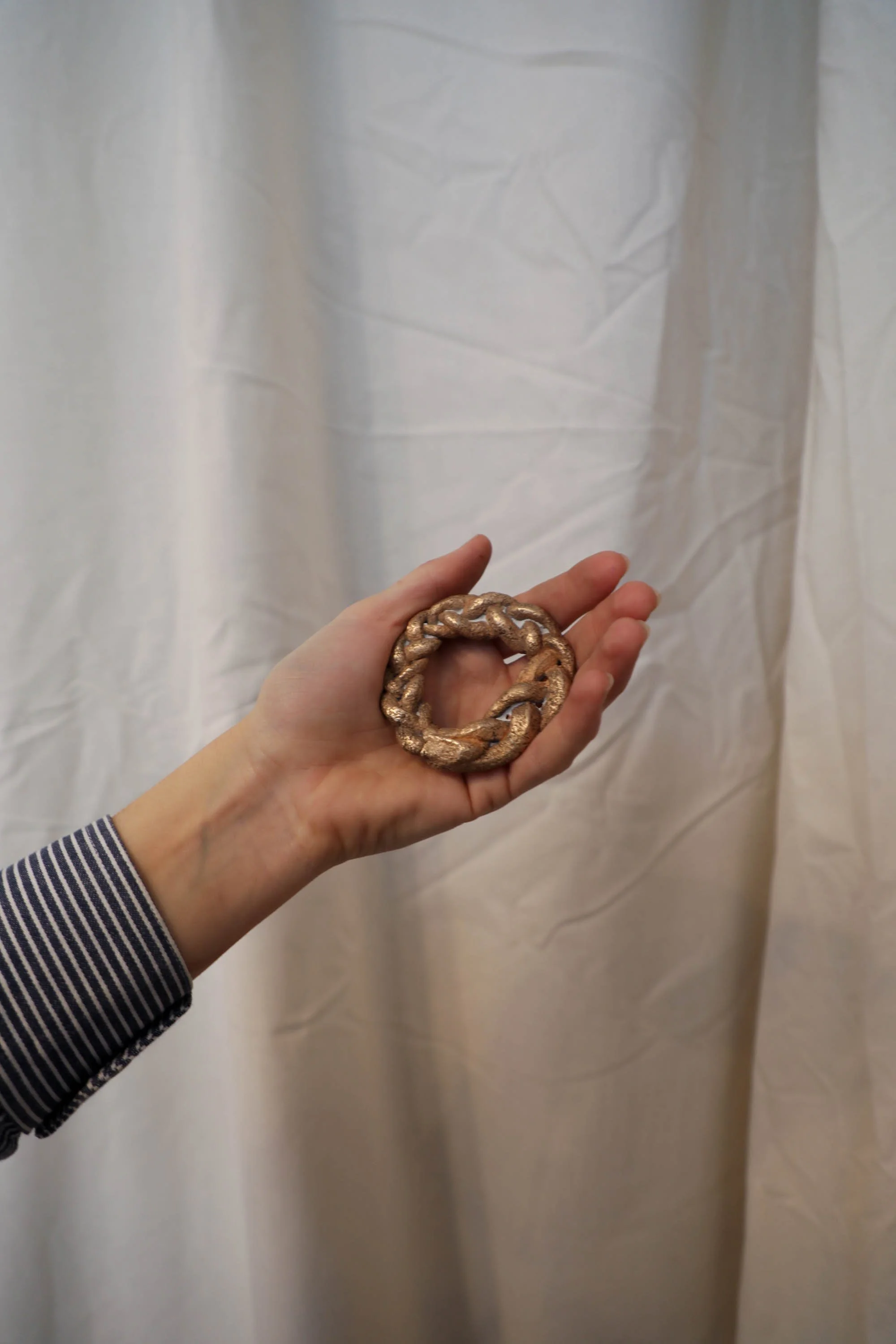
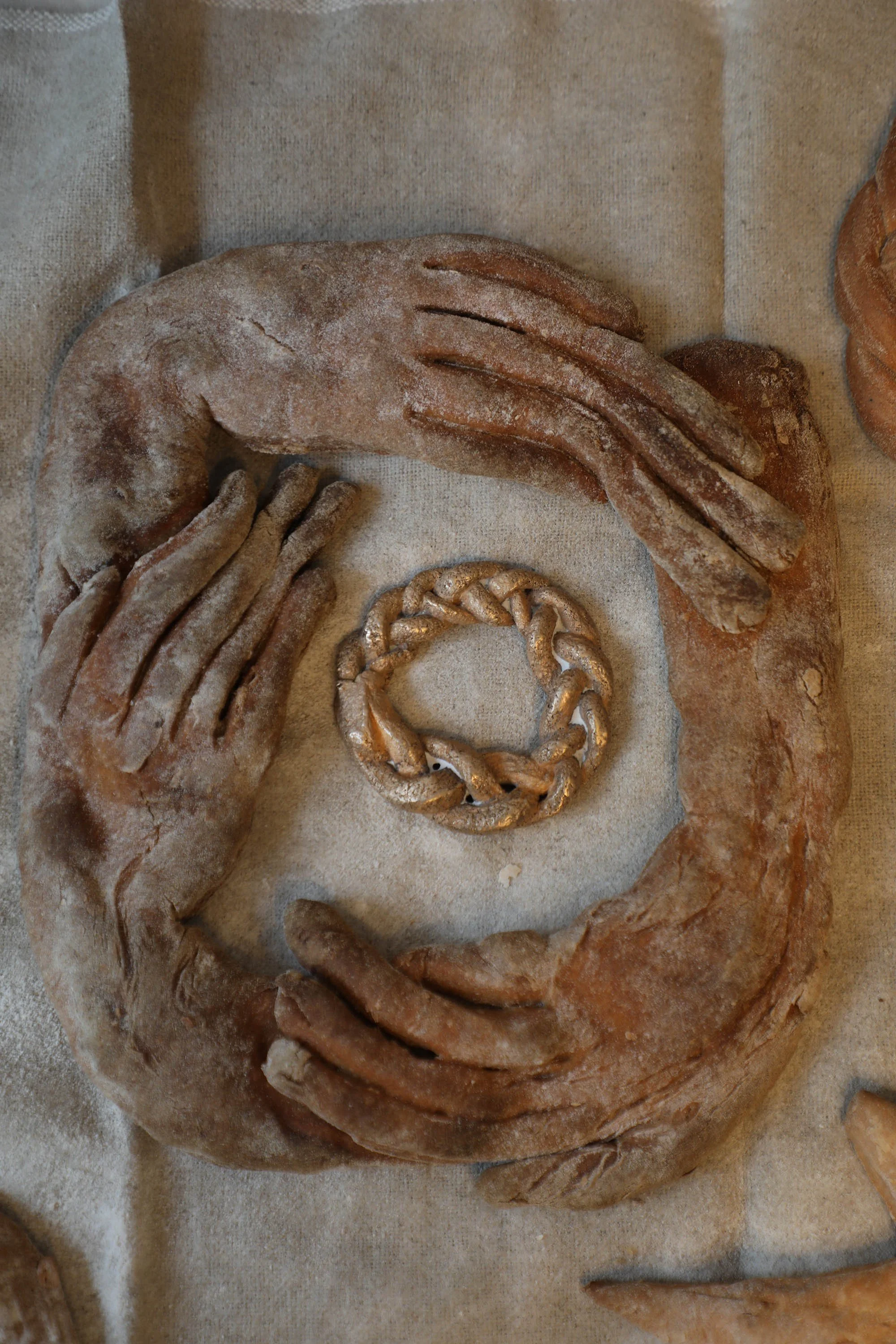
The "Bread" collection feels very poetic. How did you manage to translate the soft, ephemeral nature of dough into the hard, lasting medium of metal?
Justine: For my part, it was a real leap into the unknown. The curiosity and strong inspiration I felt during this collaboration convinced me it would be a success. Metal and bread, despite their differences, both remain matter from the earth. It’s as simple as creating with nature. The first time I saw and handled the piece, the raw texture and the nuances of the metal attracted me as much as the crust of a loaf of bread.
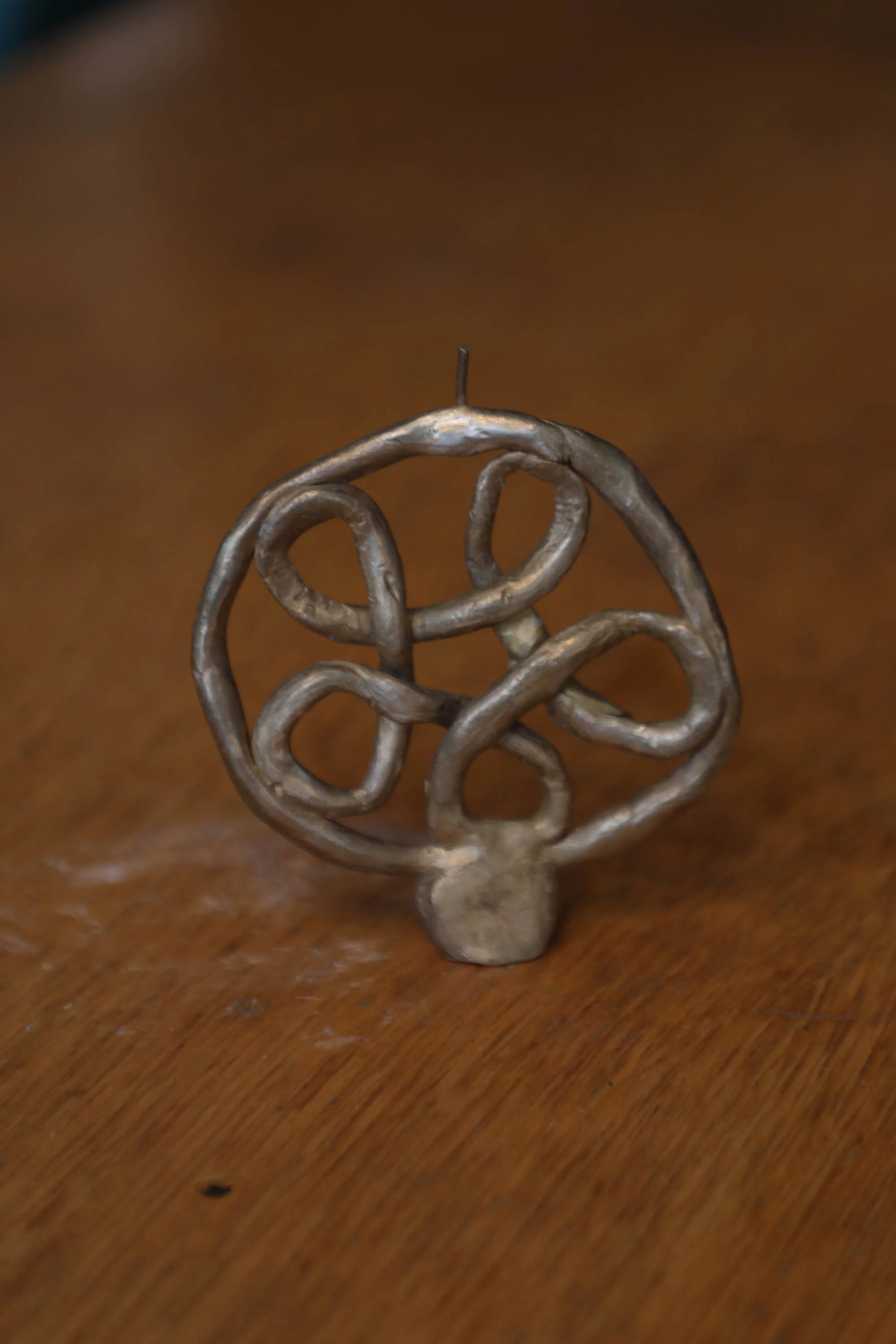
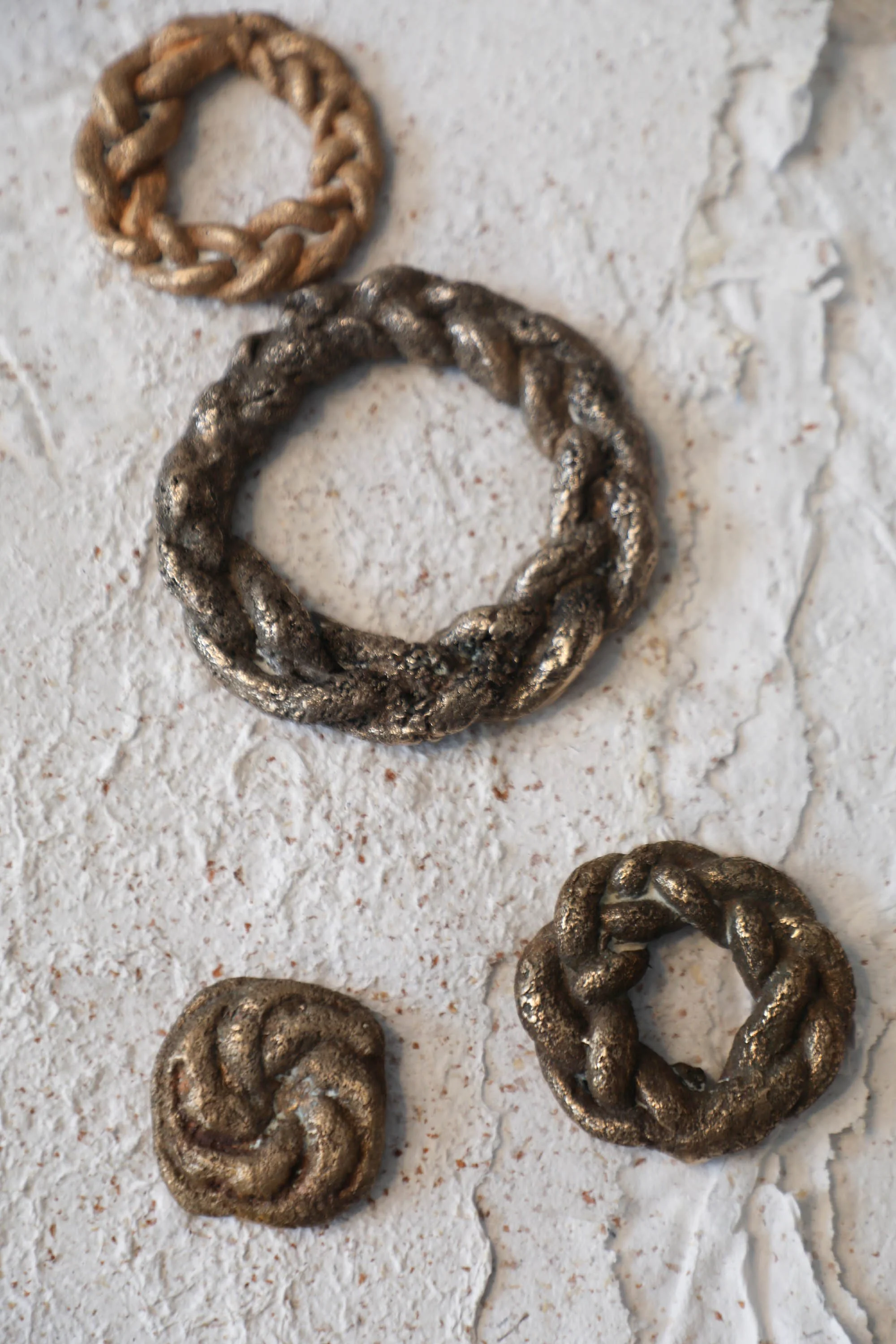
Aude: I have a deep affection for archaeological objects—the remnants of a bygone era. When bread was transformed into metal, I felt as if I were holding an archaeological artifact. They reminded me of the excavations at Pompeii.
Aude, you often work with artisans in Niger and Paris. How did working with Justine change your usual design process?
When I design jewelry for Tuareg artisans to craft, I usually work alone in the creative process. I think about their specific skills and their graphic strengths, and I create the jewelry with their expertise in mind. However, Justine and I created these tableware pieces together; it all started with a simple conversation. It is incredibly rewarding to work through this kind of creative exchange.
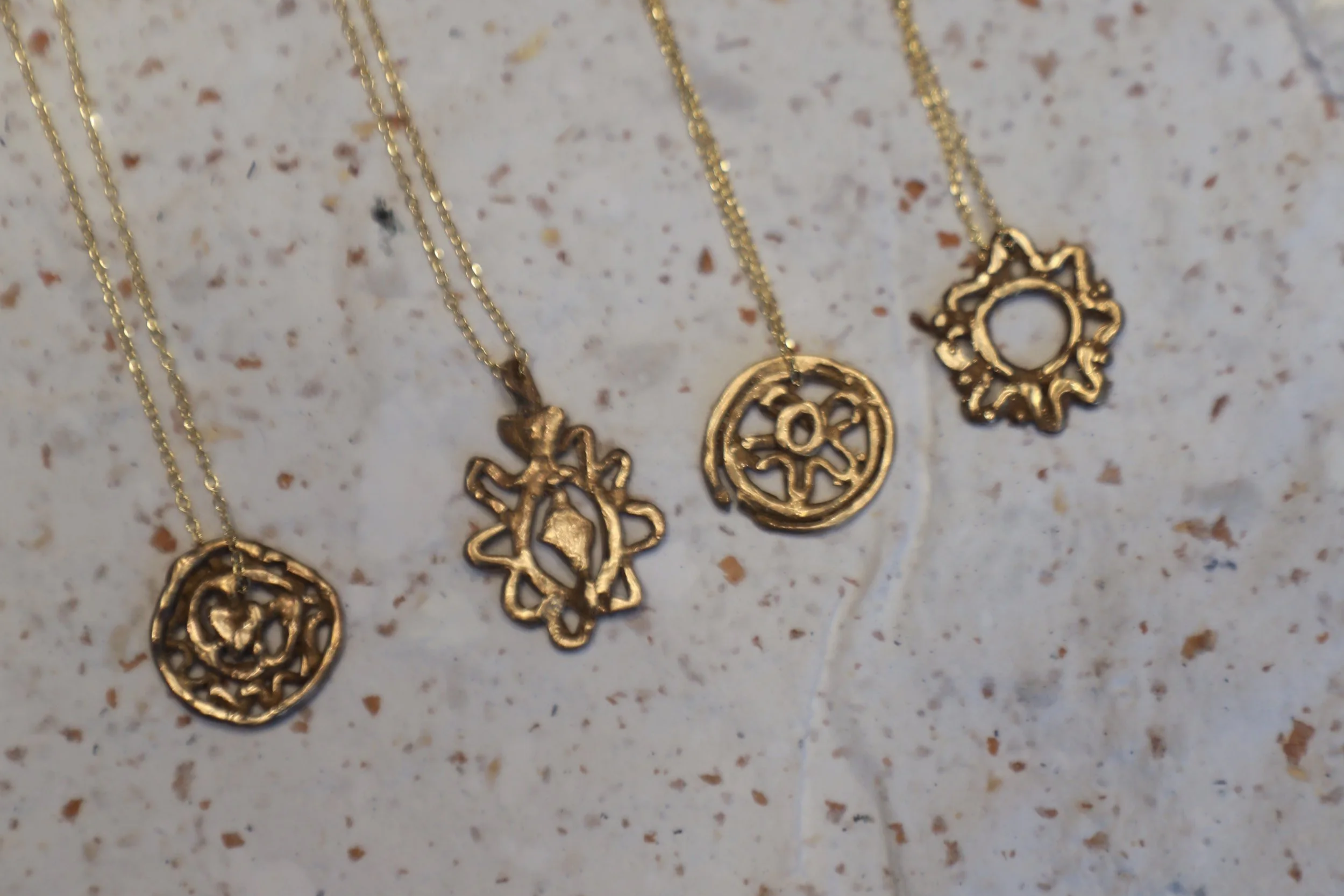
Aude, you’ve mentioned that you love when an idea "takes on its own material form." What was it like to see a real piece of bread literally freeze in liquid metal?
I wasn’t sure at all that it would work; I was afraid everything would burn and that nothing would remain once the metal was poured. And then, a miracle! It worked! I was so happy to have tried a new technique. Experiencing something new is incredibly exciting, and I was absolutely charmed by the finished piece.
Aude, the Solstice is a major theme in your new designs. Why was it important for you to bring this ancient, sun-seeking ritual into your jewelry?
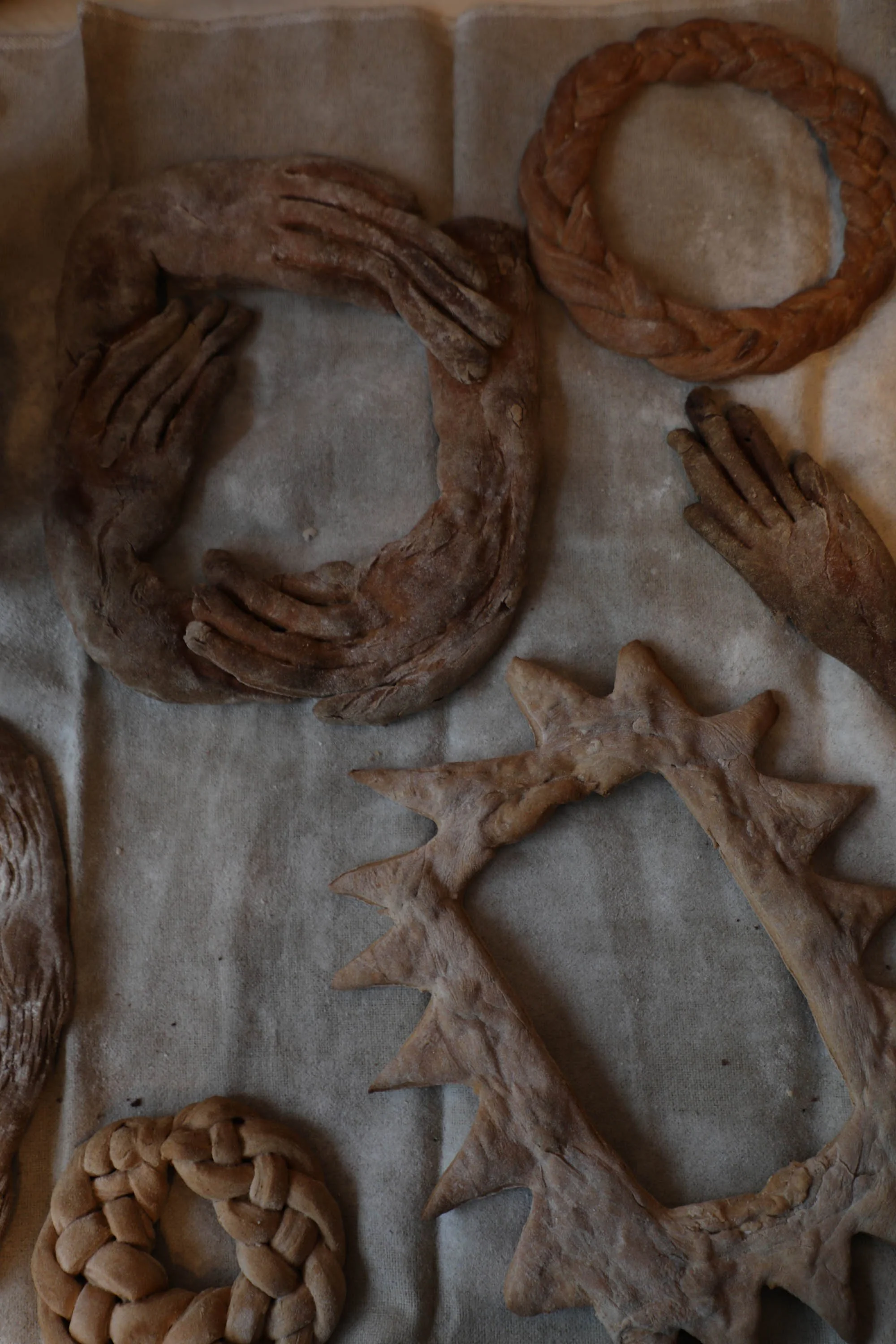
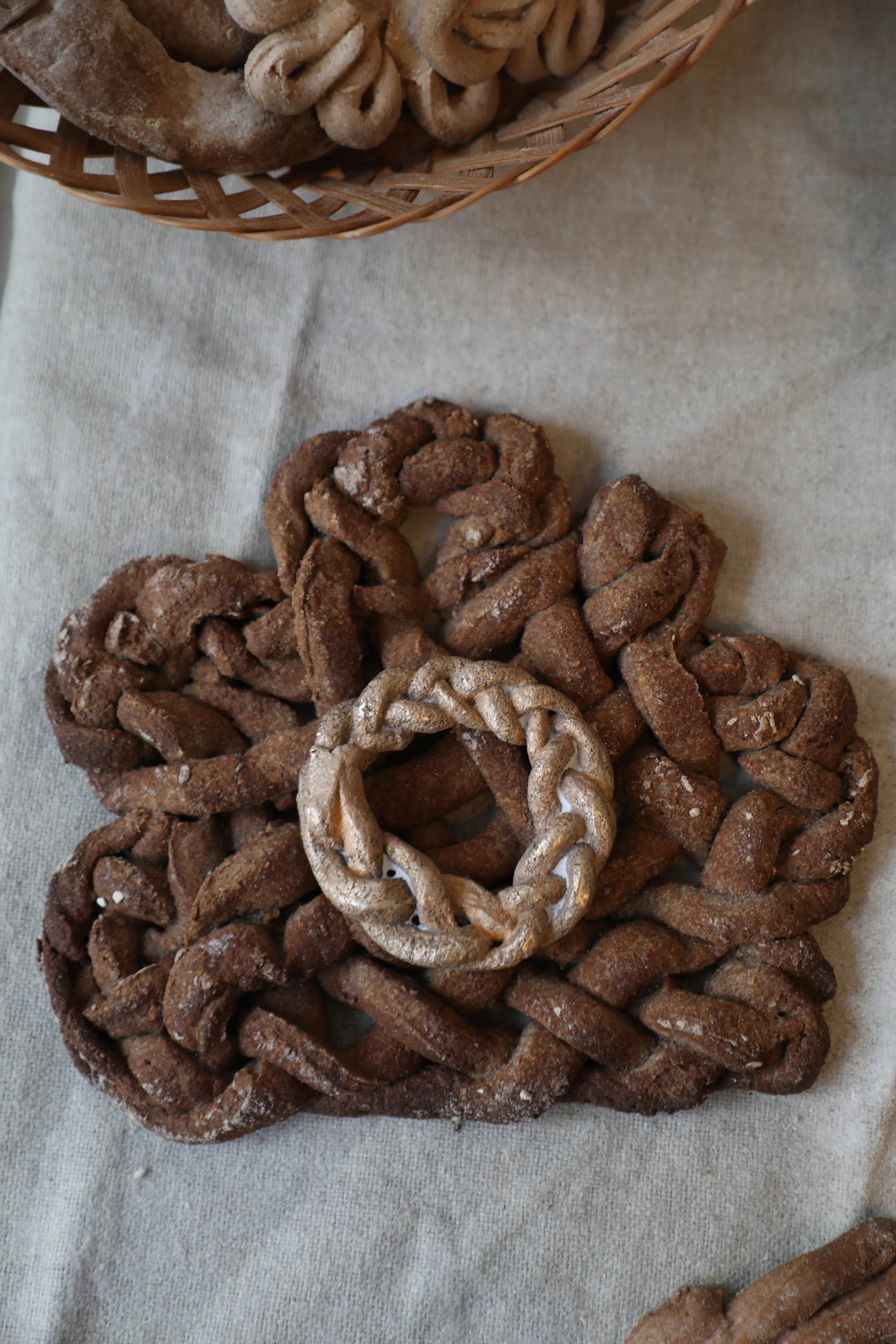
I was initially drawn to the shape of the bread traditionally made to bring back the sun at the solstice. They have circular forms that follow the direction of the sun, yet they also bear the marks of the hands that shaped them. Some of them look like flowers. I imagined a grandmother making these in front of her grandchildren, telling them it was a ritual to bring back the spring. When I discovered their meaning, it moved me deeply. It speaks to me of those austere, cold moments when we wait for the light to return. We long for the sun to share its warmth with us once more.
Justine, you work with wild gathering and fermentation—processes that are very “alive.” How does it feel to see your edible creations turned into “fossils” that will last forever?
My life and the materials I use in my art are always about finding a rhythmic balance. I strive to create the right conditions for life and the development of flavors. In the fermentation of bread and food, I guide them to create new recipes or shapes. It is much like foraging, where I must adapt to the environment around me. Until now, the only way to permanently showcase my work was through photos, writing, and, of course, the meals themselves. This is central to my passion and motivation as a chef and bread artist. Despite this, I have always wanted to create a lasting object, though I wasn't sure which direction to take. It happened naturally; I began keeping certain loaves to dry them for display. Today, I satisfy this desire by using my surplus sourdough to create decorative pieces. They aren’t eternal yet, but thanks to my collaboration with Aude, I am moving toward that goal.
Justine, can you tell us about the specific technique of "levain écarté" (discarded sourdough) and how you transformed it into decorative objects for this collection?
When I make bread, I need sourdough—a fermented dough made of water and flour, home to a multitude of wild bacteria and yeasts that develop to create the bread. To be effective, the starter must be used at its precise peak of freshness. Over time, the life within this dough fades; it becomes acidic and liquid. Every day, I “feed” or refresh this ecosystem to maintain its vitality.
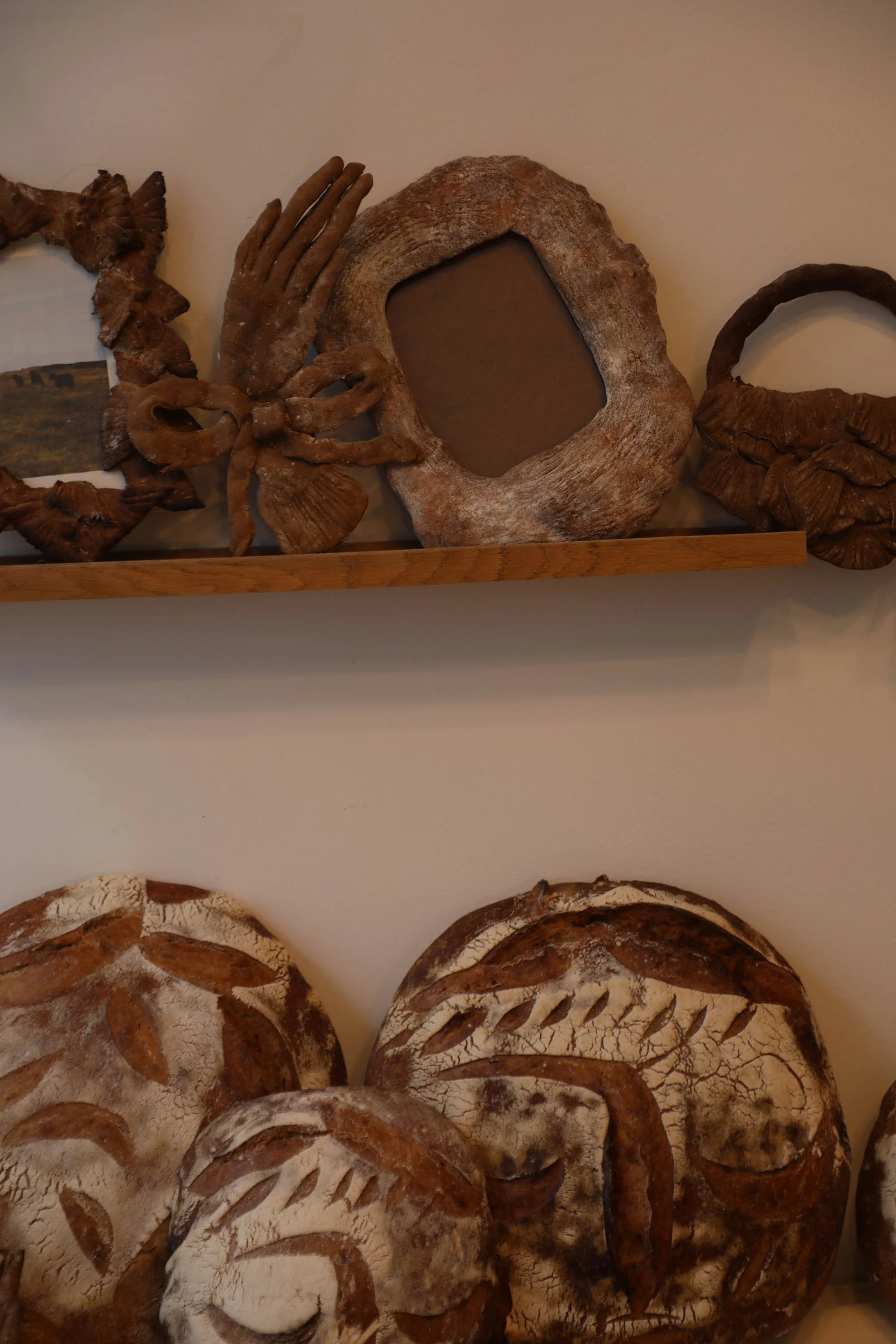
It is during this stage that I am left with extra dough, known as “discard”. Initially, I only used this for edible recipes. Today, I also create non-edible recipes to craft objects. These pieces first appeared on my tables during workshops at home before eventually finding their way onto my walls. Through specific symbolism, shaping, and braiding, I create bread frames, sculptures, tableware, or ex-votos. It is a practice that brings me immense joy and fascination as I observe how each piece evolves over time.
Justine, your work is usually meant to be tasted. In this collaboration, the bread is meant to be admired. Did this shift your perspective on how you shape your dough?
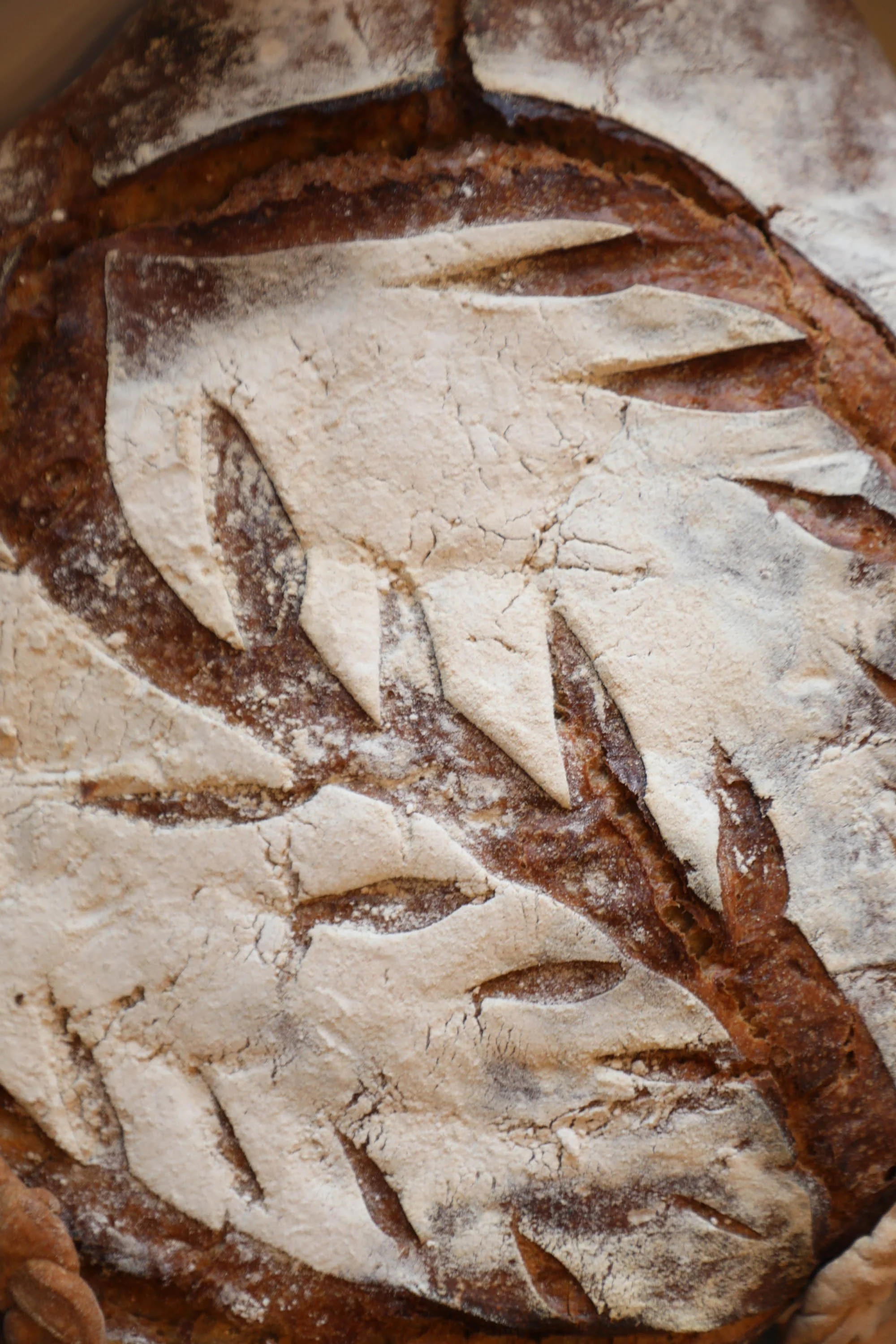
I don’t think I’ll ever stop making edible pieces; quite the contrary. I am deeply familiar with creating flavors through fermentation and a close understanding of my ingredients. For me, creating non-edible pieces is a complementary way to value my resources. It is also a way to assert the dreamlike and obsessive universe that I want to bring to life. Today, my house is filled with bread—both edible and decorative—on the walls and in every corner. It takes me back to my childhood; during my first ten years, I grew up with bread displayed on a shelf in my room that I was strictly forbidden to touch.
If you had to describe the “spirit” of this collaboration in only three words, which ones would you choose?
Justine: I think these three words capture the spirit of this collection:
Hands, representing the mutual shaping we both brought to the work.
Alive, because in many cultures, the word for “bread” is the same as the word for “life”.
Ex-voto, as across different ages and cultures, bread is shaped to embody a symbol, a rhythm, or a passage of life.
Aude: I would add “Hearth”—like a table where we gather to exchange ideas, share, and eat!
What do you hope people feel when they place one of your bronze bread crowns on their table or wear one of the bread-inspired pieces?
Aude: I hope they find it beautiful! I would like this object to make them think of the earthn the seasons, and the passing of time. Perhaps by thinking about this, they will want to take that time!
Justine: I hope that the people who will wear or have these pieces of bread at their disposal will awaken the curiosity of their guests or surroundings. Let them come up with bread and the discussions will follow on a memory of sharing, of transmission or joy.
I myself wear a medallion from the collection around it as a symbol of art, heritage, and strength.
Discover the collection - www.ombreclaire.com
Ombre Claire - @ombre_claire
Justine Lebas - @lebasjustine
Photos - Justine Lebas